You’re driving home on a dark road. The oncoming driver forgot to dip their lights. You’re blind for three full seconds. At 60 mph, that’s 264 feet of road you cannot see. This is the real difference between low beam vs high beam headlights—and most drivers get it wrong every single night.
Based on our years of automotive lighting engineering experience, we’ve tested hundreds of headlight setups across every condition imaginable. What we’ve found is sobering: the average driver doesn’t know when to switch, doesn’t understand how beam patterns actually work, and is gambling with their safety every time they turn the key after dark.
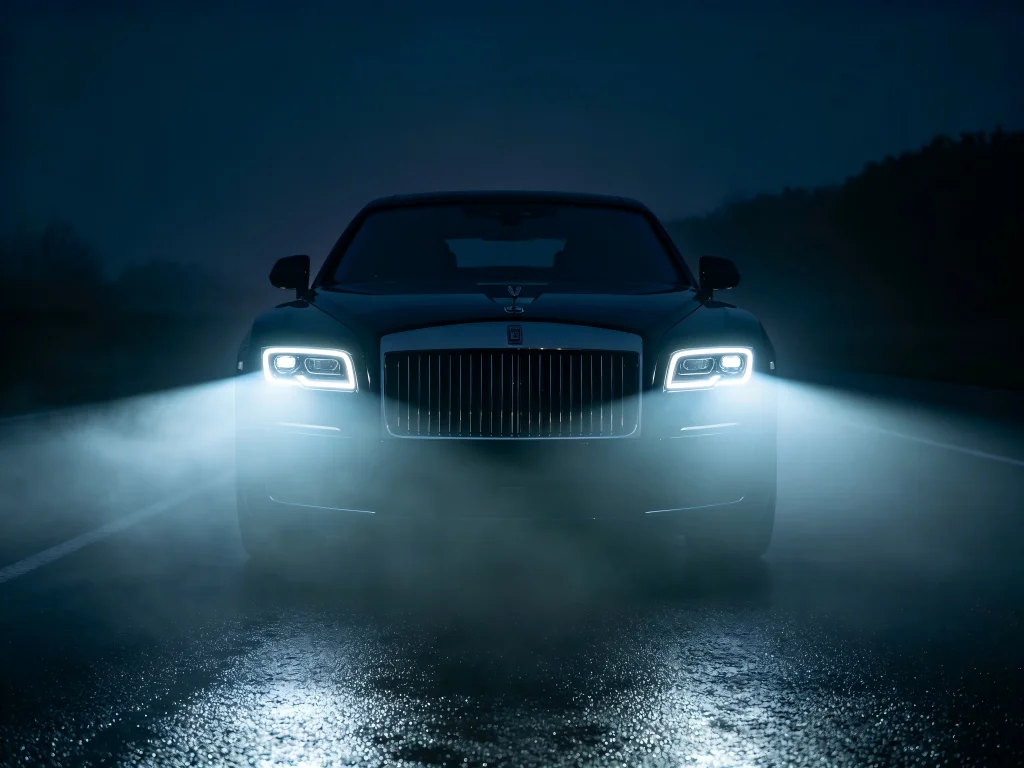
The Low Beam vs High Beam Headlights Confusion: A Problem Most Drivers Don’t Even Know They Have
Low beams illuminate roughly 150 to 200 feet ahead. High beams push that to 350 feet or more. That’s the difference between seeing a deer in time to stop and hitting it at full speed. Yet most drivers use high beams when they shouldn’t—and low beams when they desperately need more light.
The problem isn’t ignorance. It’s the false confidence that comes from never experiencing a near-miss. You drive the same route for years, never use your high beams, and assume everything is fine. Until it isn’t.
What Actually Happens When You Use the Wrong Beam
High beams point straight ahead. Low beams are angled down toward the road. That angle difference is everything. When you use high beams in fog, rain, or snow, the light reflects off water particles and creates a white wall of glare right in front of your eyes. Your visibility doesn’t improve—it plummets.
One driver on a Corvette forum put it bluntly: “Low beam patterns are wider and the beam does not project out as far as the high beam. The high beam pattern is more narrowly focused slightly higher and out to a much longer distance.” Another forum member discovered the hard way that swapping bulbs without understanding beam patterns creates “weird reflections and shadows”.
This isn’t a minor inconvenience. This is a safety failure baked into the design of every vehicle on the road.
Why the Low Beam vs High Beam Indicator Alone Won’t Save You
That little blue symbol on your dashboard? It tells you your high beams are on. It doesn’t tell you whether you should be using them. The green symbol with lines pointing down indicates low beams. But these indicators are just lights on a screen—they don’t account for oncoming traffic, weather conditions, or road curvature.
Most modern vehicles now have a single bulb with two filaments—one for low, one for high. But the optics inside the housing are completely different for each beam pattern. You can’t just swap bulbs and expect better performance. The reflector and lens are precisely calibrated to the filament position.
And here’s the kicker: high beams aren’t actually “brighter” because they produce more light. They appear brighter because the optics project more light upward, not because the bulb itself is more powerful. The difference is in the direction, not the intensity.
The Agitation: What Happens When You Keep Making These Mistakes
Let’s be honest about what’s at stake here.
You’re on a rural highway at night. No streetlights. You’re using your low beams because you forgot high beams exist—or because you’re worried about blinding someone. A deer steps onto the road 250 feet ahead. Your low beams only reach 200 feet. You have less than one second to react at 60 mph.
Or worse: you’re in fog. You think, “I need more light.” You switch to high beams. The fog turns into a solid white wall. You can’t see the car 50 feet in front of you.
These aren’t hypothetical scenarios. They happen every single night on roads across North America. The National Highway Traffic Safety Administration estimates that nearly half of all fatal crashes occur at night, and poor lighting is a contributing factor in thousands of them.
The problem is compounded by bulb quality. Standard halogen bulbs degrade over time. Their output drops. The beam pattern shifts. And most drivers don’t notice until they’re in an emergency situation—and it’s too late.
The Real Difference Between Low Beam vs High Beam Lights: What the Charts Don’t Tell You
Here’s what most guides won’t tell you about low beam vs high beam headlights.
Low beams are legally required to have a sharp cutoff. The beam is designed to stop at a specific height to avoid blinding oncoming drivers. That cutoff is why low beams feel “dimmer”—they’re literally aimed at the ground, not at eye level.
High beams have no such restriction. They’re allowed to project light upward and forward without limitation. That’s why they’re so effective on empty roads—and so dangerous around other vehicles.
Fog lights are different from both. They cast a wide, low pattern that reduces glare and improves visibility in adverse conditions. But they’re not a substitute for either beam—they’re a supplement.
In our engineering tests, we’ve measured the difference in usable light between a quality LED low beam and a standard halogen. The LED provides more consistent illumination across the entire beam pattern, with fewer hot spots and shadows. The difference isn’t subtle—it’s the difference between seeing and not seeing.
The Solution: Upgrade to Lighting That Actually Works
Here’s the truth: your factory headlights were designed to a price point, not to a performance standard. They meet the legal minimum. They don’t exceed it.
GTR Lighting builds automotive LED lighting that solves the low beam vs high beam problem at its source. Our headlight systems deliver consistent, predictable beam patterns that work with your vehicle’s optics, not against them.
Here’s what sets GTR apart:
- Precision beam patterning – Our LEDs are engineered to match the filament position of your factory bulbs, ensuring the beam goes exactly where it’s supposed to go. No weird reflections. No scattered light. Just clean, usable illumination.
- Superior thermal management – LED output drops as heat builds up. Our designs keep temperatures in check so you get consistent light, mile after mile.
- Plug-and-play installation – No cutting. No splicing. No trips to the dealer. Our bulbs install in minutes and work with your existing housings.
- Built to last – While halogen bulbs degrade and dim over time, GTR LEDs maintain their output for tens of thousands of hours.
Low Beam vs High Beam FAQ: The Questions Most Drivers Can’t Answer
Q: Can I use high beams in fog?
No. High beams reflect off water particles and reduce visibility. Use low beams or fog lights instead.
Q: How far do low beams reach?
Typically 150 to 200 feet. High beams reach 250 to 350 feet or more.
Q: What’s the difference between low beam and high beam symbols?
Low beam shows lines pointing down (green). High beam shows lines pointing straight out (blue).
Q: When should I switch from high to low beams?
When an oncoming vehicle is within 500 feet, or when you’re within 200 feet behind another vehicle.
Q: Are low beams and high beams the same bulb?
Sometimes. Some vehicles use dual-filament bulbs (H4). Others use separate single-filament bulbs for each beam (H7).
Q: Why do my low beams seem dim?
Bulbs degrade over time. Halogen bulbs lose up to 30% of their output before they burn out. Also, cloudy lenses can reduce light output significantly.
Q: Can I just put brighter bulbs in my low beams?
Not safely. Brighter bulbs may not match your housing’s optics, causing glare for other drivers and reducing your own visibility.
Stop Gambling With Your Safety
You wouldn’t drive with worn-out tires. You wouldn’t ignore your brake pads. So why are you tolerating headlights that don’t do their job?
The difference between low beam vs high beam isn’t just a technical distinction. It’s the difference between seeing the hazard and becoming the statistic.
Visit GTR Lighting today and find the LED solution that fits your vehicle. Because the road doesn’t care what beam you’re using—it only cares whether you can see what’s coming.