你在一条黑暗的道路上开车回家。对面来车忘记切换近光灯。你有整整三秒钟的时间眼前一片空白。以每小时60英里的速度行驶,这意味着你看不到264英尺的路面。这就是近光灯与远光灯之间的真正区别——而大多数驾驶员每晚都在犯错。.
基于我们多年的汽车照明工程经验,我们在各种可以想象到的条件下测试了数百种前照灯设置。我们发现的情况令人警醒:普通驾驶员不知道何时切换,不理解光束模式实际上如何工作,并且每次天黑后转动钥匙时都在拿自己的安全冒险。.
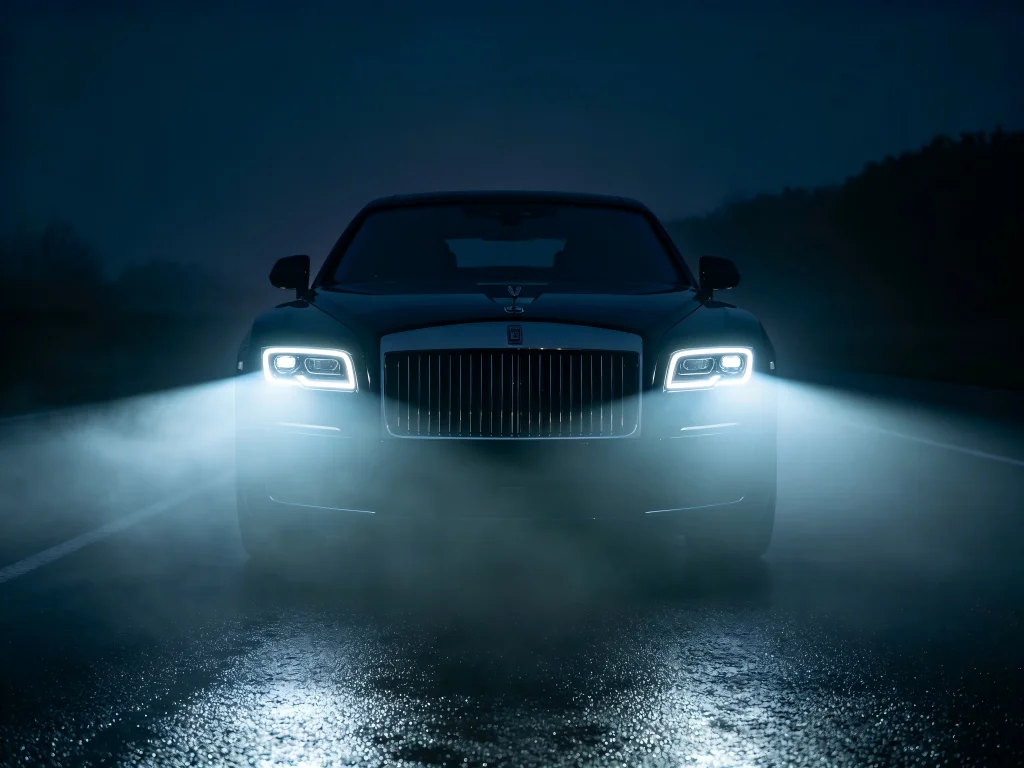
近光灯与远光灯的困惑:大多数驾驶员甚至不知道自己存在的问题
近光灯照亮前方大约150到200英尺。远光灯则将其提升到350英尺或更远. 。这就是及时看到鹿并停下来与全速撞上它之间的区别。然而,大多数驾驶员在不该使用远光灯时使用远光灯——而在迫切需要更多光线时却使用近光灯。.
问题不在于无知。而在于从未经历过险情所带来的虚假自信。你年复一年地走同一条路线,从不使用远光灯,并假设一切正常。直到情况不再如此。.
使用错误光束时实际会发生什么
远光灯直射前方。近光灯则向下倾斜朝向路面。这个角度差异至关重要。在雾、雨或雪中使用远光灯时,光线会反射在水颗粒上,在眼前形成一道刺眼的白色光墙。你的能见度不会提高——反而会急剧下降。.
一位在Corvette论坛上的驾驶员直言不讳地说: “Low beam patterns are wider and the beam does not project out as far as the high beam. The high beam pattern is more narrowly focused slightly higher and out to a much longer distance.” Another forum member discovered the hard way that swapping bulbs without understanding beam patterns creates “weird reflections and shadows”.
This isn’t a minor inconvenience. This is a safety failure baked into the design of every vehicle on the road.
为什么仅靠近光灯与远光灯指示灯无法拯救你
That little blue symbol on your dashboard? It tells you your high beams are on. It doesn’t tell you whether you should be using them. The green symbol with lines pointing down indicates low beams. But these indicators are just lights on a screen—they don’t account for oncoming traffic, weather conditions, or road curvature.
Most modern vehicles now have a single bulb with two filaments—one for low, one for high. But the optics inside the housing are completely different for each beam pattern. You can’t just swap bulbs and expect better performance. The reflector and lens are precisely calibrated to the filament position.
And here’s the kicker: high beams aren’t actually “brighter” because they produce more light. They appear brighter because the optics project more light upward, not because the bulb itself is more powerful. The difference is in the direction, not the intensity.
困扰:当你不断犯这些错误时会发生什么
Let’s be honest about what’s at stake here.
You’re on a rural highway at night. No streetlights. You’re using your low beams because you forgot high beams exist—or because you’re worried about blinding someone. A deer steps onto the road 250 feet ahead. Your low beams only reach 200 feet. You have less than one second to react at 60 mph.
Or worse: you’re in fog. You think, “I need more light.” You switch to high beams. The fog turns into a solid white wall. You can’t see the car 50 feet in front of you.
These aren’t hypothetical scenarios. They happen every single night on roads across North America. The National Highway Traffic Safety Administration estimates that nearly half of all fatal crashes occur at night, and poor lighting is a contributing factor in thousands of them.
The problem is compounded by bulb quality. Standard halogen bulbs degrade over time. Their output drops. The beam pattern shifts. And most drivers don’t notice until they’re in an emergency situation—and it’s too late.
近光灯与远光灯之间的真正区别:图表未告诉你的内容
Here’s what most guides won’t tell you about low beam vs high beam headlights.
Low beams are legally required to have a sharp cutoff. The beam is designed to stop at a specific height to avoid blinding oncoming drivers. That cutoff is why low beams feel “dimmer”—they’re literally aimed at the ground, not at eye level.
High beams have no such restriction. They’re allowed to project light upward and forward without limitation. That’s why they’re so effective on empty roads—and so dangerous around other vehicles.
Fog lights are different from both. They cast a wide, low pattern that reduces glare and improves visibility in adverse conditions. But they’re not a substitute for either beam—they’re a supplement.
In our engineering tests, we’ve measured the difference in usable light between a quality LED low beam and a standard halogen. The LED provides more consistent illumination across the entire beam pattern, with fewer hot spots and shadows. The difference isn’t subtle—it’s the difference between seeing and not seeing.
解决方案:升级到真正有效的照明
Here’s the truth: your factory headlights were designed to a price point, not to a performance standard. They meet the legal minimum. They don’t exceed it.
GTR 照明 builds automotive LED lighting that solves the low beam vs high beam problem at its source. Our headlight systems deliver consistent, predictable beam patterns that work with your vehicle’s optics, not against them.
以下是GTR与众不同的地方:
- 精准光束图案 – 我们的LED灯经过精心设计,以匹配您原厂灯泡的灯丝位置,确保光束准确投射到应照之处。无怪异反射,无散光,只有干净、实用的照明。.
- 卓越的热管理 – LED输出会随着热量积聚而下降。我们的设计能控制温度,让您行驶数英里后仍能获得稳定的光线。.
- 即插即用安装 – 无需切割,无需拼接,无需去经销商处。我们的灯泡几分钟内即可安装完成,并兼容您现有的灯壳。.
- 经久耐用 – 卤素灯泡会随时间衰减变暗,而GTR LED灯能保持输出数万小时。.
近光灯与远光灯常见问题解答:大多数驾驶员无法回答的问题
问:雾天可以使用远光灯吗?
不可以。远光灯会反射水粒子,降低能见度。请改用近光灯或雾灯。.
问:近光灯照射距离多远?
通常为150至200英尺。远光灯可达250至350英尺或更远。.
问:近光灯和远光灯符号有什么区别?
近光灯显示向下倾斜的线条(绿色)。远光灯显示水平向前的线条(蓝色)。.
问:何时应从远光灯切换至近光灯?
当对向来车距离在500英尺以内,或您跟随前车距离在200英尺以内时。.
问:近光灯和远光灯是同一个灯泡吗?
有时是。一些车辆使用双灯丝灯泡(H4)。其他车辆则分别为每个光束使用单独的单灯丝灯泡(H7)。.
问:为什么我的近光灯看起来暗淡?
灯泡会随着时间推移而老化。卤素灯泡在烧毁前会损失高达30%的光输出。此外,模糊的灯罩也会显著降低光输出。.
问:我可以在近光灯中直接安装更亮的灯泡吗?
不安全。更亮的灯泡可能与您的灯罩光学设计不匹配,导致对其他驾驶员造成眩光,并降低您自己的能见度。.
别再拿你的安全冒险
您不会开着磨损的轮胎行驶。您不会忽视刹车片。那么,为什么您要忍受无法正常工作的前照灯呢?
近光灯与远光灯的区别不仅仅是一个技术上的区分。它是看到危险与成为统计数据之间的区别。.
立即访问GTR Lighting 并找到适合您车辆的LED解决方案。. 因为道路不在乎您使用哪种光束——它只在乎您是否能看清前方。.