If you have been searching for halogen light bulbs on Google lately, chances are you are dealing with the same frustrating reality millions of homeowners and drivers face every year. Your bulbs blow out every few months. Your energy bill keeps climbing. And every time you reach up to change a bulb, you burn your fingers or worry about safety. That is not bad luck. That is the inherent nature of halogen technology itself.
Based on our years of manufacturing expertise in the automotive and commercial lighting industry, we have analyzed thousands of customer complaints and failure reports. What we discovered may surprise you: most people do not realize how much money they are losing on halogen technology, because the real costs are hidden in replacement frequency, air conditioning bills, and wasted energy. In this guide, we will walk you through why halogen light bulbs behave the way they do, why typical solutions miss the mark entirely, and what actually works for good.
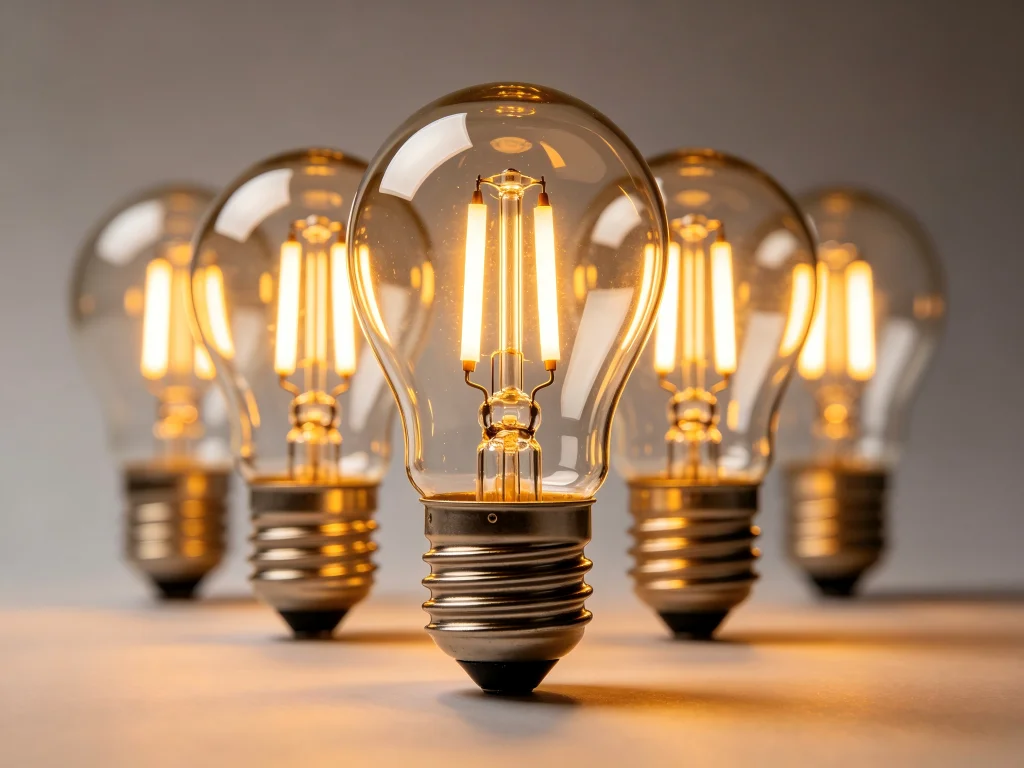
Problem: The Hidden Costs of Halogen Light Bulbs No One Talks About
On the surface, halogen light bulbs seem like a reasonable choice. They cost less upfront than LEDs, produce a warm natural light that many people prefer, and work with just about any dimmer switch. But scratching below that surface reveals a very different picture.
Halogen bulbs may seem affordable at first. But once you factor in their 2,000-hour lifespan, high heat output that drives up air conditioning costs, and energy consumption that can reach five times that of modern LEDs, the true cost is far higher than most consumers realize.
Your Bulbs Are Burning Out Much Faster Than They Should
A typical halogen light bulb lasts around 2,000 hours under ideal conditions. In real-world settings, especially in enclosed fixtures or high-vibration environments like vehicles, that lifespan often drops to 500 to 1,000 hours. For context, a standard LED bulb easily reaches 25,000 to 50,000 hours.LED vs halogen lifespan comparison puts that gap into perspective: while you replace a halogen bulb every one to two years, an LED bulb in the same socket could last two decades.
A forum user on EEVblog shared a common experience: “During the past 6 months, I replaced 3 Halogen G9 bulbs. Each one failed just after 1.5-2 months. They are rated as 40W/220V.”Forum discussion on early halogen failure This pattern appears across households worldwide — bulbs failing far before their rated lifespan, leaving users frustrated and out of pocket.
The culprit? Halogen bulbs rely on a tungsten filament that burns at extremely high temperatures (over 2,500°C). Each time you turn the light on and off, thermal expansion and contraction stress that filament. Over time, the tungsten evaporates unevenly, creating weak points that eventually snap.
The Heat Problem Nobody Warned You About
Halogen bulbs convert approximately 90% of the electricity they consume into heat, not light.Energy conversion data on incandescent lighting Only the remaining fraction produces illumination. That is why a 50-watt halogen feels like a small space heater — because it essentially is one.
This excessive heat creates three costly problems. First, it makes halogen bulbs unsafe for enclosed fixtures, children’s rooms, or any space near flammable materials. Second, that heat forces your air conditioning system to work harder during warmer months. Third, the thermal load degrades bulb sockets and wiring, sometimes to the point of fire hazard.
One user described a 40W G9 halogen in a chandelier: “Yes, it will get hot — halogen lamps operate at high temperatures and the envelope of G9 lamps is very small.”Discussion on halogen heat output That small glass envelope can reach temperatures approaching 300°C, hot enough to ignite dust or melt nearby plastic components.
Your Energy Bill Is Paying for Heat, Not Light
Think about your monthly electricity bill. Now consider this: switching a single 50-watt halogen bulb to its LED equivalent reduces energy consumption by up to 85%. That is not a small percentage — that is a transformation.Halogen to LED energy savings calculator
Most of the power consumed by a halogen bulb is wasted as heat. That is why the efficiency numbers are so poor. A typical halogen produces around 15 to 25 lumens per watt, while a quality LED delivers 80 to 100+ lumens per watt. If you have multiple halogen bulbs in your home or on your vehicle, the cumulative waste adds up quickly.
Dimming Problems Shorten Lifespan Even More
Many people use dimmer switches specifically because halogen bulbs dim smoothly and predictably. But here is the catch: dimming a halogen bulb does not extend its life the way you might think. In some cases, it actually accelerates failure.
When you dim a halogen bulb, the halogen cycle requires specific operating temperatures to function properly. At lower temperatures, tungsten evaporation may not redeposit correctly, or worse, the halogen gases may attack the filament instead of protecting it.
The halogen cycle works by evaporating tungsten from the filament and redepositing it back onto the filament surface. This process requires high temperatures. When you dim the bulb, the filament runs cooler. If the temperature drops too low, the halogen cycle stops entirely. In some poorly designed lamps, the halogen gases may even corrode the filament instead of preserving it.Technical analysis of halogen dimming effects
Industry research suggests that prolonged running at reduced intensities can decrease halogen bulb life.Discussion on halogen dimming lifespan The solution is using dimmers with soft-start features that ramp power gradually, but even then, you are working against the physical limitations of the technology.
Agitation: Why Typical Replacements Fail to Solve the Real Problem
Most people respond to these problems by buying the same halogen bulbs again. Maybe they think their first batch was defective. Maybe they believe the low upfront price justifies the hassle. Or maybe they simply do not realize how much better alternatives have become.
Let us run the real numbers. A household with 20 halogen bulbs — not unusual for a mid-sized home with recessed lighting, vanities, and accent fixtures — spends roughly £75 to £150 per year just on bulb replacements, assuming each bulb is replaced once. But that is only the beginning.
The energy costs tell a different story. Those same 20 bulbs, averaging 50 watts each and running 3 hours daily, consume approximately 1,095 kilowatt-hours per year. At average UK electricity rates, that adds up to about £185 annually. Switch to LEDs with equivalent light output (around 8-10 watts each), and that drops to roughly £35 per year.Energy cost comparison tool for halogen vs LED
Over five years, factoring replacements and energy together, a halogen setup costs around £1,000 to £1,200 to maintain. An LED setup? About £200 to £250. The difference is not small — it is nearly fivefold.
And this is before considering the safety concerns, the environmental impact of discarding bulbs every few months, and the simple frustration of climbing ladders or opening hoods to replace failed bulbs in the dark.
Solution: A Better Way Forward That Eliminates the Problem Entirely
Rather than fighting the inherent limitations of halogen technology, the real solution is to replace the technology itself. Modern LED lighting has evolved to the point where it matches or exceeds halogen light quality while eliminating the weaknesses entirely.
What to Look for When Moving Away From Halogen Bulbs
If you are ready to stop replacing bulbs every few months and start saving real money, here are the key factors that matter for a successful transition:
True Longevity That Actually Delivers
A quality LED bulb rated for 30,000 hours will outlast 15 halogen bulbs. That is not a theoretical advantage — it means you may never need to replace that bulb again. For automotive applications, this is especially critical. Replacing headlight bulbs in many modern vehicles requires removing bumper covers or wheel well liners, making frequent replacements a genuine burden.
Beam Pattern Precision Matters More Than Lumens
The single biggest mistake people make when moving from halogen to LED is focusing only on brightness. Raw lumen numbers mean nothing if the light scatters incorrectly. This is particularly important for automotive headlights, where beam pattern determines whether you can see the road clearly and whether you blind oncoming traffic.
In reflector housings originally designed for halogen bulbs, the exact position of the light source relative to the housing determines beam shape. An LED bulb that places chips even one millimeter off from the original filament position can cause dangerous glare and reduced visibility.
This explains why many generic LED replacements fail in performance despite impressive brightness claims. They may produce more total light, but if that light scatters instead of projecting down the road, your effective visibility actually decreases.Technical analysis of LED beam pattern issues in halogen housings
Thermal Management Without Overheating
While LEDs produce much less heat than halogens, they are more sensitive to temperature. Without proper heat dissipation, LED chips degrade over time, dimming gradually before failing. Quality LED bulbs use aluminum heat sinks or integrated cooling fans to maintain optimal operating temperatures.
Canbus Compatibility for Vehicles
Modern vehicles monitor bulb circuits for electrical load. An LED bulb draws far less power than a halogen, which many vehicle computers interpret as a burned-out bulb, triggering dashboard warnings or hyper-flashing turn signals. Quality LED replacements include canbus-ready circuitry or decoders to prevent these issues.Overview of CANBUS decoder functionality for LED upgrades
The GTR Difference: Engineered for Excellence
At GTR, we have spent years engineering LED solutions that genuinely outperform halogen light bulbs rather than just claiming to. Our approach addresses every weakness of halogen technology while preserving the benefits users care about.
Exceptional Longevity That Eliminates Replacement Cycles
Our Ultra Series LED bulbs are engineered to last for tens of thousands of hours — effectively the lifetime of the vehicle or fixture they serve. Independent testing confirms that the GTR Lighting Ultra Two delivers 709% brighter output than original halogen bulbs while consuming a fraction of the power.Independent testing data on GTR vs halogen brightness
In real-world vehicle tests, the GTR Lighting Ultra 3 produced 2,005 maximum lux at distance, a 294% increase in usable brightness over standard halogens.Real-world test results for GTR Ultra 3 For Toyota Tundra applications, our third-generation bulbs measured nearly 350% brighter than original halogen units in low-beam comparisons.Vehicle-specific testing of GTR Gen 3 LED headlights
Precision Beam Engineering for Safety and Performance
Where generic LED bulbs scatter light aimlessly, GTR bulbs are engineered with digitally precise LED placement that mirrors factory halogen filament positions. Our Ultra 3.0 H4 bulbs feature LED chip positioning that matches the exact location of original halogen filaments, ensuring sharp beam patterns with minimal scatter.Technical specifications of GTR Ultra 3 beam engineering
This matters because every lumen stays aimed where it belongs — on the road ahead rather than into oncoming drivers’ eyes. For vehicle owners, this means confident night driving without safety compromises.
先進熱管理
Our Ultra 2 and Ultra 3 series use active cooling systems with enclosed fans within the heatsink design.Engineering analysis of GTR active cooling design This ensures stable light output over the entire lifespan of the bulb, with no gradual dimming or premature failure from thermal stress.
Plug-and-Play Simplicity With Canbus Readiness
Upgrading to GTR LEDs requires no permanent modifications. Our bulbs work as direct replacements for standard halogen sockets (H1, H3, H4, H7, H11, 9005, 9006, 9012, and many more). For vehicle owners, our bulbs include canbus integration circuitry that eliminates dashboard error codes and hyper-flashing issues common with generic LED upgrades.GTR Canbus integration technology overview
What Others Are Saying: Real Feedback From Users Who Made the Switch
On automotive forums, GTR users consistently report satisfaction after moving away from halogen light bulbs. “I use GTR Ultra 2 LEDs. They are not cheap, but they come with a lifetime warranty. And they are adjustable to ensure a proper light beam pattern.”User review of GTR Ultra 2 on Tahoe Yukon Forum
Another experienced user noted: “The GTR Ultra Series 2.0 are the best you are going to get. Installed those last year and have been pleased. Previously had the Morimoto 2Stroke 2.0 and a few off-brand Amazon specials.”Comparison feedback from experienced automotive lighting user
For classic car enthusiasts, the feedback is similarly positive: “In the MG I use GTR Mini LEDs and they work great, excellent beam and tech, low draw. No, they are not inexpensive, yes they are superior to halogens.”GTR user review on classic car forum
Test results speak clearly: in controlled comparisons, the GTR Lighting Ultra 2 measured 1,867 maximum lux, outperforming competing LED options by significant margins.Independent lux measurement comparison for GTR Ultra 2 For the Carbide series housing upgrade, testing showed 187% brighter output than stock halogens.Carbide series brightness test results
Frequently Asked Questions About Halogen Light Bulbs and LED Upgrades
Q1: Are halogen light bulbs being phased out in 2026? Yes. The UK announced a ban on the sale of most halogen bulbs for general household use effective September 1, 2023, with similar restrictions now in effect across many countries.UK halogen ban legislation overview While not fully banned worldwide, availability is rapidly decreasing.
Q2: Can I use LED bulbs in fixtures designed for halogen? In most cases, yes, provided the LED bulb matches the base type (E26, E11, G9, etc.) and wattage rating of the fixture. However, for automotive applications, ensure the LED bulb’s light source position matches the original halogen filament location to maintain proper beam pattern.
Q3: Why are halogen bulbs still available if they are banned? Specialist applications such as automotive headlights, stage lighting, ovens, and certain industrial equipment remain exempt from bans. General household bulbs, however, are rapidly disappearing from retail shelves.
Q4: How much money can I save switching from halogen to LED? A typical household with 20 halogen bulbs saves £150 to £200 annually on electricity alone after switching to LED equivalents. Add replacement cost savings, and the five-year total exceeds £800.
Q5: Do halogen bulbs produce better light quality than LEDs? Halogen bulbs have a color rendering index (CRI) of 100, matching natural sunlight. Modern high-CRI LEDs now achieve CRI ratings of 95+, making the difference imperceptible to the human eye in most applications.
Q6: Why do my halogen light bulbs keep burning out in my car? Automotive halogen bulbs experience additional stress from vibration, temperature extremes, and voltage fluctuations. These factors combine to reduce lifespan further than in static indoor applications.
Q7: Can I dim LED bulbs on existing halogen dimmers? Not reliably. Most standard dimmers designed for halogens do not work correctly with LEDs. You may need to replace your dimmer with an LED-compatible model for smooth, flicker-free dimming.
Q8: Are G9 40W halogen bulbs being replaced with LED versions? Yes. G9 LED equivalents are widely available, though note that dimming compatibility requires LED-rated dimmers. G9 LEDs also run much cooler, eliminating the extreme heat that made G9 halogens hazardous in enclosed fixtures.Discussion on G9 halogen to LED replacement compatibility
Q9: How do I know what wattage halogen bulb to buy? Your fixture has a maximum wattage rating printed on the socket or in the manual. Never exceed this rating, as overheating can damage the fixture or create fire hazards.
Q10: What is the difference between 2700K and 3000K halogen bulbs? 2700K produces a warm, yellowish light similar to traditional incandescent bulbs. 3000K appears slightly brighter and whiter, closer to natural daylight. Both are considered warm-white.
Comparing Halogen vs LED: What the Numbers Actually Mean
| 特點 | Halogen Bulb | Premium LED (GTR Grade) |
|---|---|---|
| Typical lifespan | 2,000 hours | 30,000+ 小時 |
| 能源效率 | 15-25 lumens per watt | 80-100+ lumens per watt |
| Heat emission | ~90% of energy as heat | Minimal heat |
| 5-year replacement cost (20 bulbs) | £150-£300 | £0 (no replacements needed) |
| 5-year energy cost (20 bulbs, 3hr/day) | ~£925 | ~£175 |
| Total 5-year cost of ownership | ~£1,075-£1,225 | ~£175 + initial purchase |
| Color Rendering Index (CRI) | 100 | 95+ (visually indistinguishable) |
| Dimming compatibility | Works with all standard dimmers | Requires LED-compatible dimmers |
| Environmental impact | High carbon footprint, frequent waste | Low carbon, one-time purchase |
Your Next Step: Stop Replacing, Start Saving
The math is simple. The science is settled. Halogen light bulbs cost you money, time, and peace of mind with every replacement. Every burned-out bulb is a reminder that you are fighting against fundamental physics — the thermal cycle that heats your spaces, stresses your fixtures, and empties your wallet.
At GTR, we engineer solutions that break this cycle completely. Our LED bulbs deliver the light you need — bright, clear, natural — without the constant failure, without the dangerous heat, and without the ongoing expense. Whether you are a vehicle owner tired of replacing headlights in the cold or a homeowner looking to cut energy bills permanently, GTR has a solution engineered specifically for your application.
Are you ready to stop replacing bulbs every few months and start enjoying reliable, efficient lighting that just works? Visit our full product lineup at https://www.rhgtr.com to find the perfect upgrade for your home or vehicle. Join thousands of customers who have made the switch and never looked back.