Your Bi-Pin Halogen Bulbs Are Burning Money and Testing Your Patience — Here‘s the Fix That Sticks

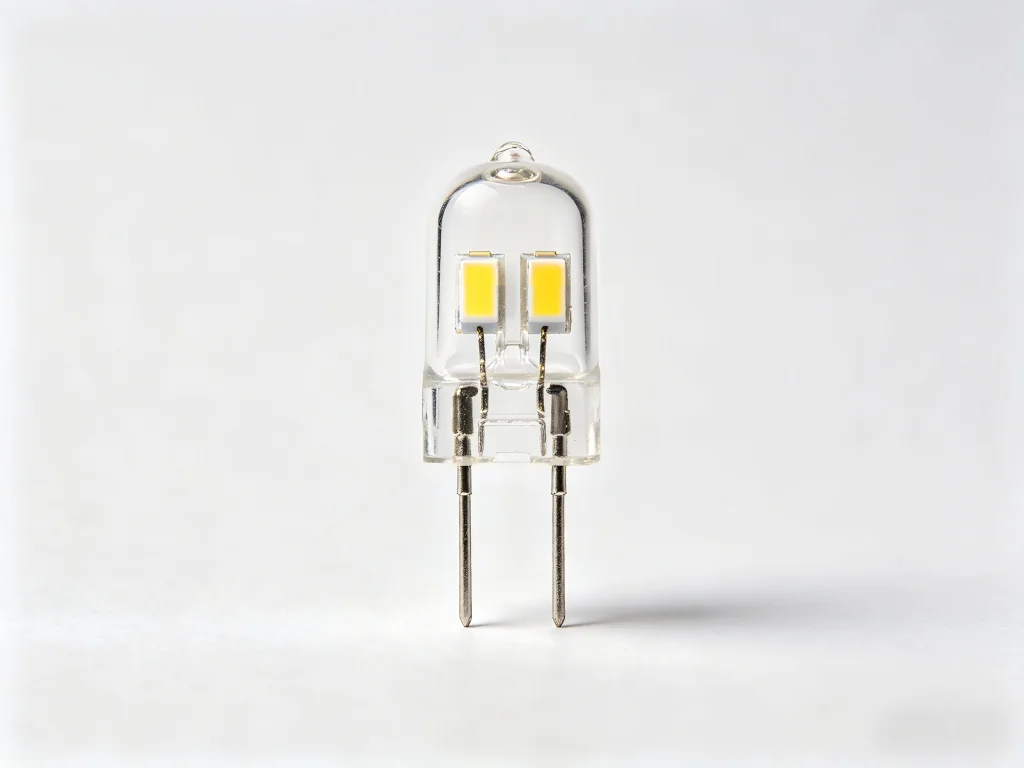
You open the cabinet, flick the switch, and nothing happens. Or worse, a faint, sickly yellow glow staggers to life, flickering like it can’t decide whether to work. You sigh, grab the step ladder, and reach for the same halogen replacement you’ve bought three times in the last five years. A bi pin led light bulb wouldn‘t just end this drill. It’d save you money, time, and the slow-burning frustration of watching another filament give up in a fixture that‘s impossible to reach. At GTR, we’ve spent years engineering LED lighting that thrives in the exact places halogens fail — and we‘ve watched too many owners blame their wiring when the bulb was the culprit all along.

Your Bi-Pin Halogen Bulbs Are Burning Money and Testing Your Patience — Here‘s the Fix That Sticks

The Silent Failure of Every Halogen Bi-Pin Light

The Burnout Cycle Nobody Warns You About

Most halogen bi-pin bulbs — G4, G9, T3 — are rated for about 2,000 hours of use. That number sounds decent until you do the math. Under a cabinet that runs four hours a night, a halogen burns through those hours in under seventeen months. In a landscape fixture running from dusk to midnight, it can be dead inside a year. Compare that to a g4 bi pin led light bulb 20w equivalent, you’re looking at 25,000 to 50,000 hours. The halogen will die and be replaced twenty to thirty times before the LED has even dimmed appreciably. Each replacement means another trip to the hardware store, another halogen carcass in the landfill, and another twenty minutes hunched over a fixture that was clearly designed by someone who never had to replace a bulb.

Worse, halogens don’t just fail — they fade. Bi-pin halogens lose roughly 5% of their output every few hundred hours as tungsten deposits coat the inside of the glass capsule. You don‘t notice because your eyes adjust. But six months in, you’re getting 15-20% less light than the day you installed it. By the time the filament finally snaps, that bulb had been underperforming for most of its life.

The Heat Problem You Can Feel

Touch a halogen G4 capsule after it‘s been on for five minutes — actually, don’t. It‘ll burn you. Halogen bi-pin bulbs convert roughly 80% of their energy into heat, not light. That heat has to go somewhere, and in an enclosed fixture — a cabinet puck light, a sealed landscape path light, a chandelier with tight glass shades — it cooks the socket, the wiring, and the fixture itself.

We’ve pulled apart failed halogen fixtures in our test lab where the socket pins had annealed and lost spring tension from repeated heat cycling. The bulb pins transfer heat to the socket receptacles, which soften and lose grip, creating resistance, then arcing, then a dead fixture. The owner blames the wiring. The real culprit was a bulb technology designed in the 1950s shoved into a sealed housing never meant to handle that kind of sustained thermal load.

Why Your 12-Volt Landscape Lights Keep Eating Bulbs

If you‘ve got 12 volt led bi pin light bulbs in your landscape setup, you’ve likely noticed something: halogen replacements rarely run at their rated voltage. Most landscape transformers run slightly hot — 12.5V, 13V — and halogen lifespan drops exponentially with over-voltage. Run a 12V halogen at 13V, and a 2,000-hour bulb becomes a 1,000-hour bulb. This is why the path light at the end of a long cable run lasts forever, but the one closest to the transformer burns out twice a year.

LEDs handle this differently. A quality g4 bi pin led light bulb includes an internal driver circuit that regulates current to the emitter regardless of minor supply fluctuations. Plug in 11V or 14V, and it’ll draw what it needs. The bulb near the transformer and the bulb fifty feet away run at the same brightness. No more replacing bulbs in clusters because your transformer has a favorite victim.

The Flicker That Refuses to Leave

LED flicker on bi-pin circuits almost always traces back to one root cause: the transformer was designed for halogen bulbs, not LEDs. Halogen transformers are often magnetic and output AC, while LED emitters need stable DC current. The mismatch creates visible 50Hz or 60Hz pulsing that your eye registers as flicker.

This is the single most common complaint we hear from first-time LED retrofitters: “I swapped in the LED bulbs and now they flicker. Are they defective?” In nine out of ten cases, the bulbs are fine. The transformer is the problem. Magnetic transformers designed for halogen loads expect a minimum current draw — typically 20VA or more — to operate stably. A 2W or 3W LED replacement barely registers on that transformer, and the result is unstable output that may also buzz from the transformer itself.

The fix comes in three tiers:

  1. Leave one halogen in the circuit. It’s a stopgap, but the halogen provides enough load to stabilize the transformer. This works, but you’re still burning power on the halogen and you’ll still be replacing it when it dies.
  2. Swap the transformer for an LED driver. Constant-voltage LED drivers output clean, regulated DC power that LEDs thrive on. This is the proper long-term fix for any low-voltage bi-pin circuit.
  3. Buy LEDs with built-in rectification and wide-range input. Some bi pin led light bulb designs incorporate bridge rectifiers and switching regulators directly on the bulb’s PCB, allowing them to accept AC or DC input from 8V to 24V or more without flickering. If you’re retrofitting an existing system without changing the transformer, this is the path of least resistance.

In our testing, the flicker problem consistently separates generic, price-driven LED bulbs from properly engineered ones. A 2W LED bulb with no rectifier is a flicker waiting to happen on AC. Dimmable g9 led light bulb bi pin base designs add another layer — they must be compatible with your specific dimmer type. Trailing-edge dimmers work with LEDs. Leading-edge dimmers, designed for incandescent loads, often don’t. Wrong dimmer, and even a quality LED bulb will buzz and flicker at low settings.

What a Properly Engineered Bi-Pin LED Does Differently

The Internal Architecture That Halogens Don‘t Have

A halogen bi-pin bulb is elegantly simple: a tungsten filament in a glass capsule filled with halogen gas, stuck onto two pins. That’s it. No electronics, no regulation, no protection. It‘s a pure resistive load. That simplicity is also its weakness — it has no way to adapt to voltage swings, no thermal protection, and no means to optimize its own output.

A modern bi pin led light bulb is an electronic device, not just a light source. Inside the base, a miniature PCB carries:

  • A bridge rectifier (in quality bulbs) that converts AC to DC, eliminating 50/60Hz flicker regardless of transformer type.
  • A constant-current regulator that feeds the LED emitter a steady, controlled current even as input voltage wanders between 8V and 24V.
  • Thermal feedback circuitry that reduces output if the bulb’s internal temperature exceeds safe thresholds — protecting the emitter and extending lifespan.
  • Film capacitors (in flicker-free designs) that smooth rectified DC and eliminate residual ripple that can cause subtle, eye-fatiguing shimmer.

These are the components that separate a led bulb philips or similarly engineered product from a no-name LED that costs half as much and flashes like a strobe light the moment the transformer drops below its minimum load.

Heat Management: Why LEDs Can (Finally) Live in Enclosed Fixtures

The conventional wisdom for years was “don’t put LED bulbs in enclosed fixtures — they’ll overheat and die.” That wisdom was earned. Early LED bi-pin bulbs ran their emitters hot with no thermal management, and in a sealed glass enclosure, the heat had nowhere to go. The result was rapid lumen depreciation, driver failure, or both.

Today‘s better bi-pin LEDs handle heat through deliberate design. Look for bulbs with an aviation-aluminum body that acts as a heatsink, pulling thermal energy away from the LED junction and radiating it outward — even inside a sealed fixture, the bulb’s internal thermal resistance is low enough to keep the emitter within spec. Ceramic bases offer another thermal pathway, conducting heat to the socket pins and dissipating it through the fixture‘s wiring. Some designs even incorporate small heat-dissipation slots in the bulb body itself, promoting enough convection to keep the LED chip temperature below the 85°C threshold where accelerated degradation begins.

This is why you now see g9 bi pin led light bulb products rated for fully enclosed fixtures — something that would’ve been unthinkable a decade ago. The engineering caught up to the application.

Real-World Results: Where the Numbers Lead

The Energy Math You Can Take to the Bank

A halogen landscape system with fifteen 20W G4 bulbs draws 300 watts. Swap to 2W bi pin led light bulb equivalents, and that same system draws 30 watts. At $0.14 per kilowatt-hour, running four hours a night, the halogen system costs about $5.04 a month in electricity. The LED system costs $0.50. Over a year, the difference is roughly $55 — enough to pay for the LED bulbs themselves, and then some.

Factor in replacement costs — a halogen bulb that burns out annually at $2.50 each, and you’re spending another $37.50 a year on replacements for fifteen fixtures. LEDs that last twenty-five years eliminate that line item entirely. The payback period for a full LED retrofit on a typical landscape system is well under two years.

Here’s how the comparison breaks down across common bi-pin formats:

Metric 20W Halogen G4 3W LED G4 (20W Eq.) 35W Halogen T3 4W LED T3 G4
Power Draw 20 watts 2–3 watts 35 watts 3–4 watts
流明输出 250–300 lm 250–350 lm 400–500 lm 300–400 lm
寿命 2,000 hrs 25,000–50,000 hrs 2,000 hrs 25,000–35,000 hrs
Annual Energy Cost (4hrs/day) $4.08 $0.51 $7.14 $0.72
Heat Generation Very high — 80%+ wasted Low — ~20% internal loss Very high
Voltage Sensitivity High — overvoltage kills fast Low — regulated internally
Dimmable Option Yes (native) Some models — check spec Yes (native) Some models

Source: GTR internal testing data and manufacturer specifications. Energy costs calculated at $0.14/kWh, 4 hours daily use. Actual results vary by product model and installation conditions.

The Light Quality Nobody Discusses

Halogen light sits at 2,800–3,000K — warm and yellow. That’s fine for cozy indoor spaces, less so for task lighting or landscape visibility. The yellow tint suppresses contrast perception. A walkway edge, a step, a garden hose left across the path — under halogen light, these details blur into the surrounding shadows.

LED bi-pin bulbs are available from ultra-warm 2,400K through daylight 6,500K, but the practical sweet spot for most applications is 3,000K (warm white) to 4,000K (natural white). At 3,000K, the light feels familiar — that halogen warmth — but with a CRI (Color Rendering Index) of 80 or higher, meaning reds, greens, and blues actually look like themselves. Halogens technically have a perfect CRI of 100, but their low color temperature muddies certain colors regardless. At 4,000K, the light is crisper and cooler, better for task lighting under cabinets or in workshops where you need to see detail. At 5,000K–6,500K, you’re in daylight territory — excellent for outdoor security and landscape lighting where maximum contrast matters most.

One nuance worth knowing: shorter wavelengths (blue light, above 5,000K) scatter more in fog and rain. For landscape path lights in wet climates, stick to 3,000K–4,000K. For enclosed cabinet and display lighting, 4,000K renders colors more accurately without the clinical feel of 5,000K.

Installation: What Actually Goes Wrong

Sizing Matters More Than You Think

The single biggest mistake in bi-pin LED retrofits is assuming all G4 or G9 bulbs are the same size. They’re not. The “G” code only specifies pin spacing — G4 means 4mm between pins, G9 means 9mm. It says nothing about the bulb body dimensions. Halogen capsules are tiny. LED replacements, with their integrated drivers and heatsinks, are often larger — sometimes much larger. A t3 g4 bi pin led light bulb designed to replace a compact halogen T3 capsule might not fit into the same fixture if the LED version’s PCB extends beyond the capsule dimensions.

Measure before you order. Check the internal dimensions of the fixture housing — diameter and depth — against the LED bulb’s published dimensions. Pay special attention to fixtures with narrow glass shades or reflectors that wrap tightly around the bulb. A millimeter of interference means the bulb won‘t seat, or worse, it’ll seat but press against the glass and crack when it heats up and expands.

The Polarity Myth (And When It Actually Matters)

Conventional wisdom says bi-pin LEDs aren‘t polarity-sensitive because the pins are symmetrical. This is true for bulbs with built-in bridge rectifiers — they’ll work regardless of how you plug them in. But not every bi pin led light bulb includes a rectifier. Some budget designs fit only a single diode or rely on the fixture’s DC output being correctly polarized. Plug one in backwards, and it simply won‘t light.

If your LED bulb doesn’t illuminate after installation, rotate it 180 degrees in the socket before assuming it‘s defective. If your fixture runs on AC (common with magnetic halogen transformers), a bulb without a rectifier will flicker at line frequency or fail to light entirely. This goes back to the earlier point: match the bulb’s input specifications to your fixture‘s power type.

Questions That Come Up After Every Retrofit

Can I mix LED and halogen bulbs on the same circuit?

Yes, and in some cases it’s actively helpful. If you‘re running low-voltage bi-pin bulbs on a magnetic halogen transformer that’s too powerful for a full LED load, leaving one halogen in the circuit stabilizes the transformer and eliminates flicker. The trade-off is that you‘re still burning power on that halogen and it’ll still need replacement. For circuits where you can‘t or won’t change the transformer, mixed loads are a practical bridge solution. For new installations or full retrofits, install a proper LED driver and go all-LED.

Why do some LED bi-pin bulbs buzz?

Buzzing comes from the driver electronics — specifically, the coils or capacitors vibrating at the switching frequency of the power supply. It‘s more common with dimmable bulbs on incompatible dimmers, and with bulbs that use lower-quality driver components. A slight electronic hum through a solid-state driver operating at kilohertz frequencies is one thing. An audible buzz at 60Hz is a sign that the bulb’s input filtering is inadequate. Replace it with a higher-quality unit — the buzz rarely goes away on its own.

Are T3 G4 LED bulbs waterproof for outdoor use?

Not all of them. A bulb rated for damp locations can handle humidity and occasional condensation but isn‘t sealed against direct water exposure. A bulb rated for wet locations has sealed electronics and can withstand rain, sprinklers, and direct water contact. For landscape path lights and deck lights, verify the bulb carries at least an IP65 rating. Some t3 g4 bi pin led light bulb designs are encapsulated in silicone or epoxy — these offer the best moisture protection for outdoor fixtures where condensation is inevitable.

Do bi-pin LEDs work with motion sensors and photocells?

It depends on the sensor. Photocells that simply switch line voltage on and off work fine with LED bi-pin bulbs because the bulb’s driver handles the startup. Motion sensors that leak a small current through the circuit to power their own electronics (common in older occupancy sensors) can cause LED bulbs to glow dimly even when “off” or to flicker erratically. This is the same phenomenon that causes LEDs to glow on circuits with illuminated switches. If you encounter it, either swap the sensor for an LED-compatible model or add a small load resistor in parallel with the circuit to absorb the leakage current.

What’s the difference between 12V AC and 12V DC bi-pin bulbs?

A bulb rated for 12V AC only may not work on 12V DC unless it includes a bridge rectifier. A bulb rated for 12V DC only will not work on AC — it may flicker, produce half brightness (if it has a single-diode rectifier), or not light at all. The safest choice is a bulb rated for 12V AC/DC, which indicates it has a built-in bridge rectifier and will operate on either power type without issue. This is especially important for RV, marine, and off-grid applications where the power source may switch between AC and DC depending on whether shore power or battery is active.

How long do GTR bi-pin LED bulbs actually last?

GTR LED bulbs are engineered to meet or exceed 30,000 hours of useful life. That number isn‘t pulled from an LED emitter datasheet — it’s validated through accelerated life testing that cycles bulbs through thermal stress, voltage variation, and continuous burn-in periods. The 30,000-hour figure translates to roughly 20 years of use at 4 hours per day. Many of our bulbs test significantly beyond that point, though we spec conservatively because real-world conditions — enclosed fixtures, voltage spikes, extreme outdoor temperatures — are harsher than laboratory test conditions.

Why GTR? Because the Internals Are the Product

Bi-pin LED bulbs look similar from the outside. Two pins, a capsule, some light. The difference between a bulb that lasts and one that flickers out in six months is invisible — it‘s in the driver PCB, the rectifier, the thermal management, and the emitter binning.

GTR has been engineering 12V and 24V LED lighting products since 2009, serving automotive, landscape, RV, and marine markets across multiple continents. We manufacture in facilities that integrate R&D and production under one roof, controlling every step from LED emitter binning (selecting chips for consistent color and output) to driver PCB design to final photometric testing. Our bi-pin LED products are built to the same standards as our automotive lighting line — because a flickering bulb in an RV reading light is no less frustrating than a flickering bulb in a kitchen cabinet.

Our bulbs carry appropriate safety certifications for their target markets, and our manufacturing quality control maintains a defect rate below 0.1% through multi-point inspection at every production stage. We offer a direct-replacement warranty on all LED products, and our support team answers technical questions — transformer compatibility, fixture fitment, bulb selection — within one business day.

For distributors and OEM partners, we provide private-label options, custom voltage configurations (including 24V AC/DC and wide-range input variants), and bulk packaging solutions with typical lead times of 15–30 working days. Whether you‘re stocking a retail shelf or specifying components for manufactured fixtures, we can tailor the product to the application.

Stop Feeding the Halogen Cycle

Every halogen bi-pin bulb you screw in is a decision to repeat this process — to climb the ladder, to burn your fingers, to pay the electric bill — again and again. The math on LEDs has been settled for over a decade. The only thing keeping halogens alive is inertia and the mistaken belief that LED replacements are too complicated or too expensive.

They’re not. A bi pin led light bulb that matches your fixture, fits your socket, and works with your transformer exists. It‘ll use a tenth the power, last twenty times longer, and produce better-quality light the entire time it’s running. The hardest part is measuring your fixture before you order — and that takes sixty seconds.

Browse GTR‘s full bi-pin LED catalog at https://www.rhgtr.com, or reach our technical support team through the site’s contact form with your fixture details and transformer specs. We‘ll confirm fitment and compatibility so your first LED retrofit is your last — because nobody should spend another weekend replacing bulbs they’ve already replaced too many times.

WhatsApp 线路 电子邮件