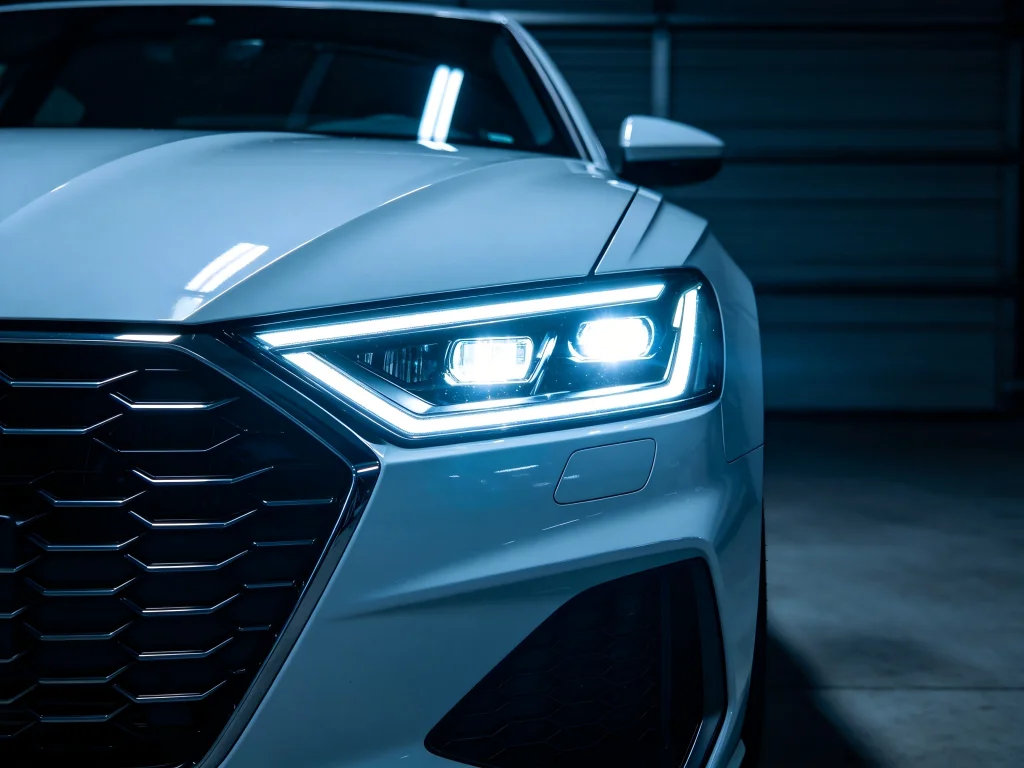
Why Your LED Headlight Auto Upgrade Is Failing — And How to Fix It for Good

You installed a set of led headlight auto bulbs expecting brighter roads and better night vision. Instead, you got flickering, dashboard warning lights, scattered beam patterns that blind oncoming drivers, or bulbs that dimmed to near-uselessness within six months. You are not alone — and the problem is almost never the LED chip itself.

直接回答: Most aftermarket LED headlight upgrades fail because of poor emitter placement, inadequate thermal management, or electrical incompatibility with your vehicle’s CANbus system. The solution is choosing a premium LED system engineered to match your housing geometry and electrical architecture.

Why Your LED Headlight Auto Upgrade Is Failing — And How to Fix It for Good

The Problem: What’s Actually Going Wrong With Your LED Headlights

You spent good money on what looked like a solid LED upgrade. The box promised “50,000 lumens” and “plug-and-play installation.” Yet something feels off.

Flickering That Makes You Look Like You’re Flashing Other Drivers

You turn on your headlights and they strobe, flicker, or pulse randomly. Sometimes they work fine; other times they cut out entirely. This isn’t just annoying — it’s dangerous. Oncoming drivers can’t tell if you’re signaling or just have faulty lights.

What’s happening: Modern vehicles use CANbus networks to monitor bulb status. LEDs draw significantly less power than halogens — typically 15-20 watts versus 55 watts per bulb. Your vehicle’s computer interprets this lower power draw as a failed bulb and responds by either cutting power or triggering a dashboard warning.

Dashboard Warning Lights That Won’t Go Away

You see “Bulb Out” or “Headlight Failure” on your dash. You’ve checked the connections. Everything seems secure. Yet the warning persists. Many drivers simply learn to ignore it — until their lights actually fail and they don’t know until it’s too late.

Glare That Angers Everyone — Including Police

Your new LEDs are bright, sure. But other drivers flash their high beams at you constantly. You’re scattering light everywhere except where it needs to go — the road ahead. In reflector housings designed for halogen bulbs, an improperly positioned LED emitter creates glare that blinds oncoming traffic and can attract unwanted attention from law enforcement.

Dimming That Happens Within Months

Remember how bright your new LEDs were on day one? Six months later, they’re noticeably dimmer. You’re not imagining it. LED chips lose 20-30% of their output for every 20°C rise above rated junction temperature. Without proper heat dissipation, thermal throttling kicks in — the bulb reduces its output to prevent damage, often within the first few months of use.

The Agitation: Why Cheap LED Kits Keep Failing You

The LED headlight market is flooded with products that look identical on the outside but perform radically differently on the road. The specs all look similar — high lumens, long lifespan, plug-and-play installation. Yet the driving experience between a $20 bulb and a $200 bulb could not be more different.

The Truth About “50,000 Lumens” Claims

That impressive number on the box? It’s raw lumens measured at the source — not usable light on the road. A bulb can produce high lumens, but if that light isn’t focused properly, much of it ends up in the trees, the sky, or the eyes of oncoming drivers. What actually matters is lux — the light intensity that reaches the road surface at a specific distance. Most budget kits don’t publish lux measurements because they’re embarrassingly low.

The Hidden Cost of Inadequate Cooling

LEDs convert electrical energy into light efficiently, but not perfectly. The unused energy becomes heat, concentrated at the diode base. If this heat is not removed quickly, the junction temperature rises beyond safe operating limits. Budget bulbs often rely on passive cooling alone — a small heatsink with no fan. This works for low-power LEDs but fails under the sustained heat of nighttime driving. Heat doesn’t destroy LEDs overnight — it slowly erodes performance until failure becomes inevitable.

One driver on a Ranger forum reported: “I ordered a full set of high and low-beam LEDs and installed them without incident. Great improvement in brightness and I have been happy with them”. But for every success story, there are dozens of drivers dealing with flickering, dimming, and early failure because they bought based on price rather than engineering.

Why Your Housing Matters More Than You Think

Your headlight housing — whether reflector or projector — was designed around a halogen filament positioned at a precise focal point. When you replace that filament with an LED emitter, the emitter must be positioned at the exact same location and oriented in the same way. Even a 1mm deviation disrupts the focal point and produces scattered light. Most budget kits don’t achieve this precision.

The Solution: What Premium LED Headlights Actually Deliver

The difference between a $20 LED kit that fails in six months and a premium kit that delivers 30,000+ hours of reliable performance comes down to four factors: emitter placement, thermal management, electrical compatibility, and build quality. Here is what to look for.

Emitter Placement Within ±0.1mm of Halogen Filament Position

直接回答: Premium LED headlights position the emitter within ±0.1mm of the original halogen filament location, producing sharp cutoff lines and minimal scatter. Budget LEDs often deviate by ±2mm or more, creating dark spots, glare, and uneven road illumination.

The gold standard for beam accuracy is the Philips ZES (Luxeon Z ES) chip, which measures 1.6mm by 2.0mm — closely matching halogen filament width. This chip produces razor-sharp beam patterns with minimal scatter. Brands like GTR Lighting use this chip architecture to deliver beam patterns that rival factory HID systems.

Active Thermal Management With Aviation-Grade Components

Premium bulbs use a combination of high-speed fans for active cooling, aviation-grade aluminum heat sinks for passive dissipation, and copper-core heat pipes for maximum thermal transfer. This ensures consistent brightness even after hours of nighttime driving. The GTR Ultra 3, for example, retains 87% of its initial brightness after a typical 27-minute drive.

CANbus Compatibility Built In, Not Added On

A premium LED headlight conversion kit includes a driver that communicates properly with your vehicle’s CANbus network. This means no flickering, no dashboard warnings, and no need for additional resistors or decoders. The driver maintains constant current output, absorbs transient spikes, and filters electrical noise.

Build Quality That Survives Real-World Conditions

Even the brightest headlight fails if it cannot withstand rain, dust, or vibration. Look for IP67 or higher waterproof ratings, corrosion-resistant coatings, and shock-tested components. Premium kits like the GTR Ultra 3 are 100% potted and waterproof, ready to withstand harsh conditions.

Real-World Testing: What Premium Performance Looks Like

In independent testing, the GTR Ultra 3 delivered 475% brighter low beams and 742% brighter high beams compared to stock halogen bulbs. In reflector housing tests, it produced the highest lux readings ever recorded — 742% brighter than stock. These aren’t marketing claims; they’re measured, verifiable results.

One forum user who upgraded to GTR Lighting Ultra 2.0 H11 LED Bulbs reported: “It was a total game changer. The cooling fans are compact enough that everything tucked behind the OEM dust caps without any modifications, which was a huge relief”.

Frequently Asked Questions About LED Headlight Auto Upgrades

为什么我的LED车头灯安装后会闪烁?

Flickering occurs because your vehicle’s CANbus system detects the lower power draw of LEDs and interprets it as a bulb failure. The solution is using CANbus-compatible LEDs with built-in drivers that communicate properly with your vehicle’s computer.

Are aftermarket LED headlights legal?

Factory-installed LED headlights are legal everywhere. Aftermarket LED replacement bulbs in halogen housings are not federally compliant under FMVSS 108. A legitimate product will have “DOT” or “SAE” markings. The only truly risk-free upgrades are factory LEDs or complete DOT-approved assemblies.

流明和勒克斯有什么区别?

Lumens measure total light emitted at the source. Lux measures light intensity that actually reaches the road surface at a specific distance. A bulb can produce high lumens, but if that light isn’t focused properly, much of it is wasted. Lux is the more accurate metric for real-world visibility.

How long should LED headlights last?

Premium LED headlights are rated for 30,000-50,000 hours. Budget LEDs typically last 5,000-15,000 hours. However, inadequate heat dissipation can dramatically shorten this lifespan regardless of the rating.

我可以自己安装LED大灯吗?

Most LED headlight kits install in 10-20 minutes. You remove the dust cover, twist out the old halogen bulb, and plug in the LED replacement. However, proper orientation is critical — ensure the LED chips face left and right (3 and 9 o’clock position) unless the manufacturer specifies otherwise.

What causes LED headlights to fail early?

Early failure is almost always caused by excessive heat, electrical instability, or installation mistakes. The LED chip itself is durable — the problem is the environment around it.

Stop Settling for Mediocre Lighting

You deserve headlights that work consistently, deliver usable light where you need it, and don’t annoy everyone else on the road. The difference between frustration and satisfaction comes down to one decision: choosing engineering quality over marketing hype.

GTR Lighting has spent years perfecting emitter placement, thermal management, and electrical compatibility. The Ultra 3 series delivers razor-sharp cutoff lines, consistent brightness, and CANbus compatibility out of the box — no resistors, no decoders, no headaches.

Stop wasting money on budget LEDs that fail within months. Upgrade to lighting that actually works — and keeps working. Explore GTR’s premium LED headlight solutions today and see the difference engineering makes.

WhatsApp 线路 电子邮件