Anda sedang berkendara menembus kabut tebal pukul 5 pagi. Tangan Anda mencengkeram kemudi pada posisi jam sepuluh dan dua. Lampu jauh Anda menyala—karena lebih banyak cahaya pasti berarti visibilitas lebih baik, kan? Salah. Cahaya itu memantul kembali ke arah Anda seperti dinding putih kosong. Anda melambat hingga merangkak, jantung berdebar kencang, berdoa agar mobil di depan tidak mengerem mendadak. Inilah yang terjadi ketika lampu LED di kabut tidak dirancang untuk tugas tersebut.
Inilah kebenaran yang sebagian besar pengemudi temukan terlambat: tidak semua lampu kabut LED memiliki performa yang sama dalam cuaca dengan visibilitas rendah. Perbedaan antara melihat jalan dan melihat dinding putih bermuara pada tiga faktor yang tidak pernah dipertimbangkan sebagian besar pembeli.
Paradoks Lampu Kabut: Mengapa Lebih Banyak Cahaya Sering Berarti Lebih Sedikit Visibilitas
Kabut terbentuk ketika uap air atmosfer mengembun menjadi tetesan di udara, biasanya saat kelembapan naik dan suhu turun pada pagi atau malam hari. Tetesan ini sangat baik dalam menghamburkan cahaya—terutama cahaya biru berpanjang gelombang pendek yang dihasilkan banyak lampu kabut LED.
Inilah masalah fisikanya: lampu kabut LED 6000K tidak menembus kabut. Sebaliknya, lampu itu memantulkan cahaya kembali ke mata Anda, membentuk tabir yang menyilaukan. Sebuah studi yang diterbitkan di Scientific Reports menemukan bahwa dalam kondisi berkabut, peserta paling cepat mendeteksi target dengan lampu depan halogen, kedua dengan xenon, dan paling lambat dengan lampu LED. Benar—teknologi yang dipasarkan sebagai “lebih unggul” justru berperforma paling buruk dalam kondisi yang seharusnya ditanganinya.
Jadi mengapa ini terjadi? Partikel uap air kira-kira berukuran sama dengan panjang gelombang cahaya biru (sekitar 400nm), menyebabkan apa yang disebut fisikawan sebagai hamburan Rayleigh. Cahaya biru menghambur ke segala arah alih-alih merambat ke depan. Sementara itu, cahaya kuning—dengan panjang gelombangnya yang lebih panjang sekitar 590–620 nm—menembus kabut tanpa menyebabkan silau.
Ini bukan spekulasi. Penelitian menegaskan bahwa LED kuning memiliki transmitansi maksimum dibandingkan sumber LED warna lain baik dalam kabut air maupun kabut laut. Dengan kata lain, suhu warna bukan sekadar kosmetik—itulah perbedaan antara bisa melihat dan tidak bisa melihat.
Biaya Tersembunyi dari Lampu Kabut LED Murah
Anda menghemat $40 untuk kit konversi LED murah itu. Tapi berapa sebenarnya biaya dari penghematan tersebut bagi Anda?
Masalah #1: Mimpi Buruk Lampu Peringatan Dasbor
Banyak pengemudi menemukan ini dengan cara yang sulit. Anda mengganti lampu kabut halogen dengan LED, dan tiba-tiba dasbor Anda menyala seperti pohon Natal. Masalah intinya? Sistem pemeriksa bohlam mobil Anda mendeteksi konsumsi daya LED yang lebih rendah sebagai kesalahan. Solusinya termasuk memprogram ulang konfigurasi pencahayaan kendaraan Anda atau menambahkan resistor beban—yang keduanya tidak disebutkan kit murah dalam kemasannya.
Masalah #2: Berkedip, Meredup, dan Mati Secara Acak
Utas forum di seluruh MBWorld dan ToyotaNation dipenuhi pengemudi yang frustrasi: “Saat saya menyalakan lampu kabut, lampu itu mati setelah 2 atau 3 detik”. “Lampu itu berkedip sejenak pada kecerahan yang tepat lalu mati”. Ini bukan cacat yang terisolasi—ini masalah sistemik dengan driver LED berkualitas buruk dan manajemen termal yang tidak memadai.
Masalah #3: Kegagalan Dini
Seorang pengulas Flipkart berkata terus terang: “Jangan buang uang Anda. Pengalaman terburuk! Tidak berfungsi setelah 2 minggu, produk kualitas murahan”. Ketika lampu kabut LED rusak, Anda bukan hanya kehilangan harga pembeliannya—Anda berkendara tanpa fitur keselamatan penting sampai Anda bisa menggantinya.
Masalah #4: Jebakan Kompatibilitas
Banyak bohlam LED aftermarket secara fisik tidak cocok dengan rumah lampu pabrik yang dirancang untuk halogen. Lainnya cocok tetapi menghasilkan pola sinar yang di luar spesifikasi—yang, di beberapa yurisdiksi, membuatnya ilegal untuk dipasang. Anda membayar uang untuk membuat kendaraan Anda kurang aman dan berpotensi tidak sesuai regulasi.
Apa yang Sebenarnya Berfungsi di Kabut: Sains Visibilitas
Mari kita perjelas kebingungan ini. Lampu terbaik untuk kabut menghasilkan sinar yang lebar, rendah, dan datar dengan batas horizontal yang tajam. Desain ini mengarahkan cahaya ke bawah ke permukaan jalan, menerangi area tepat di depan kendaraan Anda dan di sepanjang tepi jalan—di bawah garis pandang pengemudi dan di bawah lapisan utama kabut.
Berikut artinya dalam istilah praktis:
- Pola sinar lebih penting daripada kecerahan mentah. Lampu 3000 lumen dengan pola sinar yang buruk kurang berguna daripada lampu 1500 lumen dengan batas yang dioptimalkan.
- Suhu warna tidak bisa ditawar. Untuk kabut, Anda menginginkan cahaya sekitar 3000K (kuning selektif atau putih hangat), bukan putih dingin 6000K.
- Posisi yang tepat sangat penting. Lampu kabut dipasang rendah karena kabut kurang padat lebih dekat ke tanah. Lampu yang terlalu terang atau salah arah akan mengalahkan keuntungan ini.
Uji coba nyata seorang pengemudi menceritakan kisahnya: “Lampu kabut halogen pabrik saya tidak berguna—sinarnya menyebar seperti sorot senter di dalam susu. Beralih ke kuning selektif mengubah segalanya. Pohon pada jarak 30 meter menjadi terlihat di mana sebelumnya hanya ada kekaburan”.
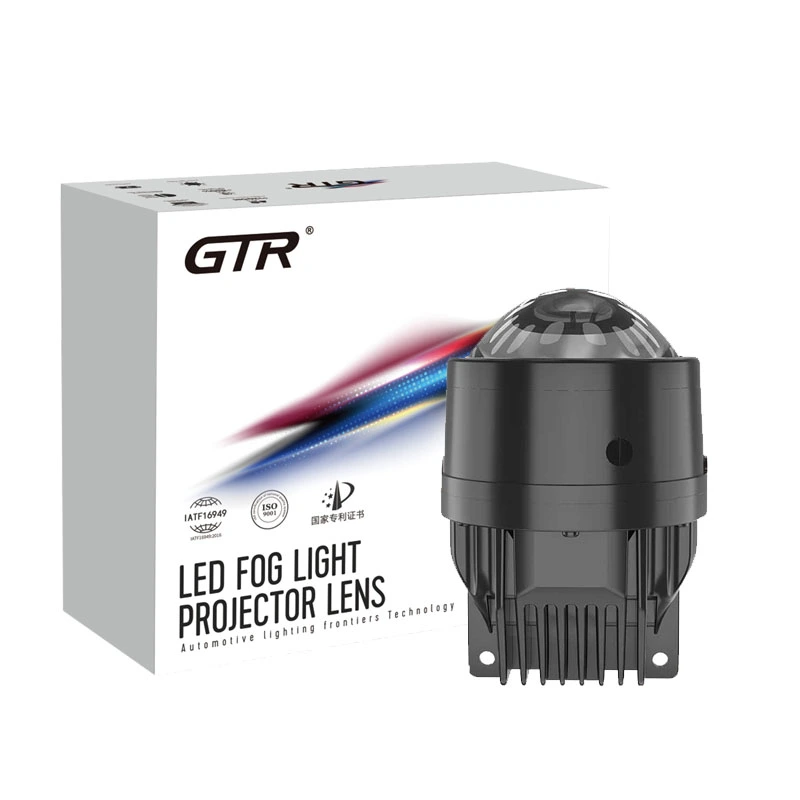
Masuk GTR: Lampu Kabut yang Dirancang untuk Apa yang Sebenarnya Berfungsi
Berdasarkan pengalaman manufaktur kami selama bertahun-tahun di bidang pencahayaan otomotif, kami telah membangun sesuatu yang berbeda di GTR. Kami tidak mengejar angka lumen yang terlihat bagus di kotak kemasan. Kami merancang untuk visibilitas dunia nyata—jenis yang penting saat Anda berada di jalur pegunungan pada tengah malam dalam kabut tebal.
Lampu kabut LED kami memberikan tepat apa yang menurut sains berhasil:
- Suhu warna yang dioptimalkan—spektrum kuning selektif sekitar 590nm yang menembus kabut tanpa menyebabkan silau
- Pola sinar yang direkayasa—lebar, rata, dengan batas horizontal tajam yang menempatkan cahaya tepat di tempat yang Anda butuhkan, bukan di mata Anda
- Manajemen termal unggul—desain kami menggunakan heatsink bersirip radial yang dapat menurunkan suhu junction sekitar 40°C dibandingkan desain sirip pelat dasar
- Kompatibilitas plug-and-play—tanpa peringatan dasbor, tanpa resistor beban, tanpa masalah coding
- Ketahanan cuaca IP67 atau lebih tinggi—dirancang untuk segala cuaca, bukan hanya untuk ruang pamer
Penelitian mengonfirmasi pendekatan rekayasa yang kami terapkan: beberapa LED berdaya rendah lebih menguntungkan dalam menurunkan suhu junction dibandingkan satu LED berdaya tinggi. Suhu junction yang lebih rendah berarti masa pakai lebih panjang dan performa lebih konsisten. Pada input 12W, lampu kabut LED kami memberikan intensitas pencahayaan 357% lebih besar daripada lampu halogen 27W pada umumnya. Itu bukan klaim pemasaran—itu verifikasi rekayasa.
Pengemudi Nyata, Hasil Nyata
Inilah yang sebenarnya dikatakan oleh orang-orang yang telah beralih ke lampu kabut LED yang dirancang dengan benar:
“Lampu kabut ini tajam, bersih, dan agak stealthy. Lampu ini menerangi seluruh ruang kosong di depan kendaraan dengan sapuan lebar yang bagus. Tidak bisa meminta lampu kabut yang lebih sempurna”.
“Saya sangat merekomendasikan lampu kabut ini sebagai pengganti lampu bawaan. Lampu ini sangat terang dan cocok dengan lampu depan baru yang saya pasang”.
“Jauh lebih baik daripada halogen. Saya tidak bisa lebih bahagia lagi. Sangat terang”.
Ini bukan testimoni berbayar. Ini adalah pengemudi nyata yang menemukan bahwa lampu kabut LED yang tepat tidak hanya terlihat lebih baik—tetapi juga berperforma lebih baik saat benar-benar dibutuhkan.
Pertanyaan yang Sering Diajukan Tentang Lampu LED di Kabut
Apakah lampu LED lebih baik di kabut daripada halogen?
Itu sepenuhnya bergantung pada suhu warna dan pola sorot LED. LED kuning selektif yang dirancang dengan benar dengan optik yang dioptimalkan mengalahkan halogen di kabut. LED putih dingin 6000K dengan pola sorot yang buruk berperforma lebih buruk. Teknologinya bukan masalahnya—implementasinya yang menjadi masalah.
Warna LED apa yang terbaik untuk kabut?
Kuning selektif (sekitar 3000K atau 1900-2500K untuk amber) terbukti secara ilmiah menembus kabut lebih efektif daripada cahaya putih atau biru dingin. Cahaya kuning memiliki panjang gelombang lebih panjang yang kurang tersebar di tetesan air.
Bisakah saya hanya memasang bohlam LED di rumah lampu kabut halogen pabrik saya?
Anda bisa—tetapi sebaiknya tidak tanpa memeriksa kompatibilitas. Banyak bohlam LED tidak menghasilkan pola sorot yang benar pada rumah lampu halogen, dan beberapa kendaraan akan memicu peringatan dasbor karena konsumsi daya yang lebih rendah.
Berapa lama lampu kabut LED bertahan?
Lampu kabut LED berkualitas dari produsen terkemuka bertahan 30.000-50.000 jam. Unit murah mungkin gagal dalam hitungan minggu atau bulan karena manajemen termal yang buruk dan komponen di bawah standar.
Mengapa lampu kabut LED baru saya berkedip?
Berkedip biasanya menunjukkan masalah kompatibilitas dengan sistem kelistrikan kendaraan Anda—seringkali sistem pemeriksa bohlam mendeteksi konsumsi daya yang lebih rendah sebagai kesalahan. Lampu kabut LED berkualitas menyertakan driver bawaan yang mencegah hal ini.
Apakah lampu kabut LED legal?
Lampu kabut LED legal bila memenuhi peraturan pola sorot dan suhu warna. Namun, ilegal di banyak yurisdiksi untuk memasang kit konversi LED yang menghasilkan pola sorot buruk atau keluaran cahaya yang tidak sesuai.
Apakah saya perlu lampu kabut depan dan belakang?
Lampu kabut depan menerangi jalan di depan. Lampu kabut belakang (diwajibkan di banyak negara) memancarkan cahaya merah terang agar kendaraan Anda terlihat oleh pengemudi di belakang Anda. Keduanya memiliki tujuan keselamatan yang berbeda.
Berhenti Berjudi dengan Keselamatan Anda
Anda tidak akan membeli ban murah dan berharap ban itu mencengkeram di jalan basah. Anda tidak boleh membeli lampu kabut murah dan berharap lampu itu berfungsi di kabut. Saat jarak pandang turun di bawah 100 meter, Anda tidak membutuhkan pencahayaan yang “cukup bagus”—Anda membutuhkan pencahayaan yang dirancang untuk tugas tersebut.
Di GTR, kami telah menghabiskan bertahun-tahun menyempurnakan pencahayaan otomotif yang bekerja saat paling dibutuhkan. Lampu kabut LED kami dibuat sesuai spesifikasi yang dituntut oleh sains dan pengujian dunia nyata: suhu warna yang tepat, pola sorot yang dioptimalkan, manajemen termal yang kuat, dan kompatibilitas kendaraan yang mulus.
Jangan sampai Anda baru mengetahui lampu kabut Anda gagal saat paling dibutuhkan.
Keselamatan Anda—dan semua orang lain di jalan—bergantung pada melihat dengan jelas saat jarak pandang berada pada kondisi terburuk.