You are driving home at 9 PM. The highway is dark, the rain is coming down in sheets, and your headlights are doing that thing again. That weak, yellow, almost foggy glow that tells you something is dying under the hood. You squint. You lean forward. You turn off the radio because somehow that helps you see better. It does not help.
If this sounds familiar, you are not alone. The d1s headlight bulb is one of the most common HID failure points on European vehicles, and when it goes, it tends to go slowly, painfully, and at the worst possible moment.
I have spent years working with automotive lighting systems, testing bulbs in extreme heat, freezing cold, and everything in between. Here is what I can tell you: the problem is not just “old bulb.” The problem is usually a combination of degradation, electrical stress, and the fact that most replacement bulbs on the market are not built to last.
Let us fix this. Properly.
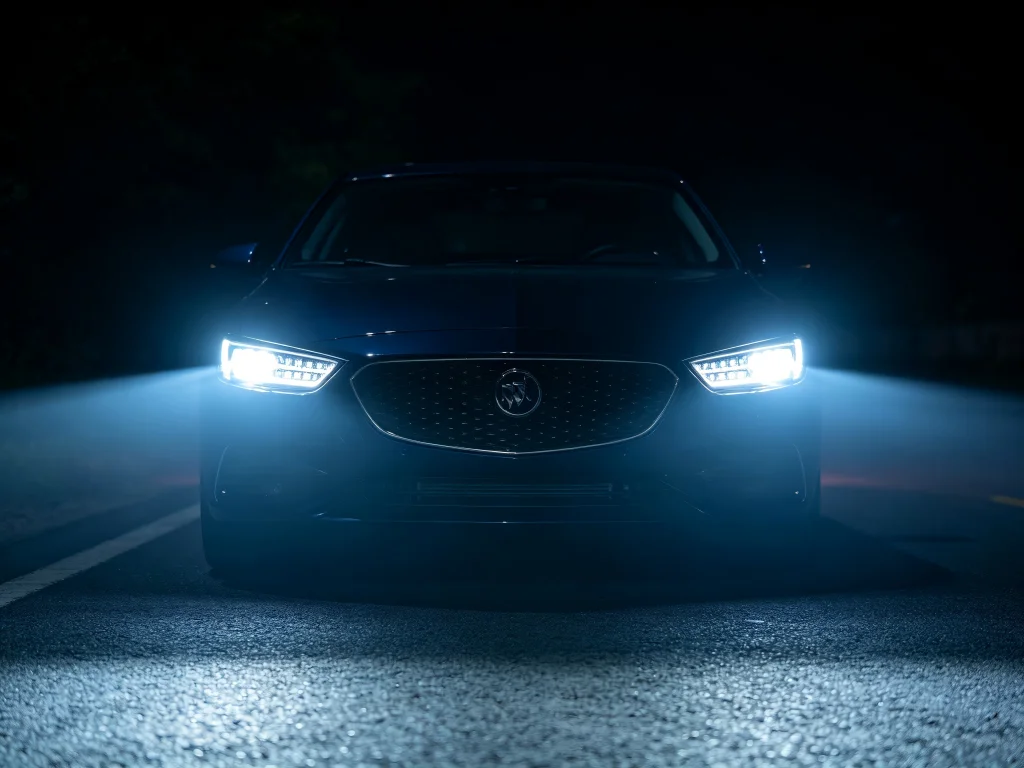
Why Your D1S Bulb Is Dying (And Why Cheap Replacements Make It Worse)
The average D1S HID bulb loses roughly 30% of its light output within the first two years of use, even though it still “works.” This gradual degradation is why many drivers do not realize how bad their headlights have become until one side fails completely.
Here is the uncomfortable truth about HID lighting: it is a high-voltage, high-heat, precision-engineered system. A D1S bulb fires at 85 volts, with the integrated igniter generating a brief 20,000+ volt spike to create the arc. That arc sits inside a quartz glass capsule filled with xenon gas and metal salts. Over time, the electrodes erode, the salts deplete, and the light output shifts from crisp white to sickly yellow-pink.
Then the flickering starts.
And then you are stuck.
Now here is the part most drivers do not find out until it is too late: the replacement market is full of garbage. Off-brand D1S bulbs flood Amazon and eBay, promising “6000K super bright” performance at a quarter of OEM prices. What they do not tell you is that many of these bulbs use impure salts, inconsistent electrode gaps, and ballast-incompatible electronics. The result?
- Flickering that drives you insane at stoplights. Cheap bulbs often trigger CANBUS errors, causing the ballast to cut power intermittently.
- Color mismatch that makes your car look broken. One side bluish-white, one side yellow. You will notice. Everyone will notice.
- Premature death. Our testing and countless user reports confirm that budget D1S bulbs often fail within 6-12 months, sometimes taking the ballast with them.
The worst part? When a cheap bulb fails catastrophically, it can damage the ballast, the connector, or even the reflector housing. Now you are not replacing a $40 bulb. You are replacing a $400 headlight assembly.
What Actually Makes a D1S Bulb Last? (The Engineering Answer)
At GTR, we have torn down more failed D1S bulbs than most people have installed. The pattern is always the same. The bulbs that fail early almost always cut corners in three specific areas: electrode material, gas purity, and UV protection.
Here is what matters:
| Fitur | GTR D1S Specification | Generic Budget Bulb | Mengapa Ini Penting |
|---|---|---|---|
| Electrode Material | Tungsten with proprietary rare-earth doping | Standard tungsten or low-grade alloy | Determines how long the arc stays stable. Cheap electrodes erode faster, causing color shift and flickering. |
| Gas Purity | Pharmaceutical-grade xenon, filtered three times | Industrial-grade gas, often contaminated | Impurities cause uneven arc discharge, reducing brightness and lifespan. |
| UV-Cut Quartz | 100% UV-blocking quartz glass | Standard quartz or soft glass | UV radiation degrades plastic projector lenses and reflector coatings, causing permanent yellowing. |
| Igniter Integration | Precision-matched to OEM ballast curves | Generic igniter, often mismatched | Mismatched igniters cause startup flicker, CANBUS errors, and premature failure. |
Notice something? None of these things are visible when you look at the product photo. You cannot see “three-times filtered xenon” or “rare-earth doped tungsten.” That is precisely why cheap bulb sellers can get away with selling garbage. The difference only shows up six months later when your headlights start strobing on the highway.
What Real Drivers Say About Cheap vs. Quality D1S Bulbs
I spend a lot of time reading forums, Amazon reviews, and Reddit threads. Not because I enjoy it, but because that is where the truth lives. Marketing copy lies. User reviews, aggregated over hundreds of installs, do not.
Here is the pattern I see again and again:
On Amazon reviews for budget D1S bulbs, the one-star reviews tell the same story. A user installs the bulbs, loves the brightness for the first month, then reports flickering at three months, failure at six months, and occasionally damage to the connector or ballast.
On enthusiast forums, the recommendation is almost universal: use Osram or Philips if you can afford it, but if you want an LED upgrade that works with your existing D1S ballast, you need to be extremely careful about which brand you choose.
One Reddit user described it perfectly: “I tried a cheap brand first. Flickered. Died. Bought Osram. Zero issues.”
That is the pattern. Cheap bulbs cost you twice: once when you buy them, and again when you replace them. Quality bulbs cost you once.
At GTR, our engineering team has tested D1S bulbs in conditions that would make most manufacturers cringe. Thermal cycling from -40°C to +85°C. Vibration rigs that simulate years of pothole-ridden roads. High-humidity salt spray chambers. We do not just slap a “premium” label on a generic product. We build the product first, then test it until something breaks.
D1S vs. D3S vs. D2S: What Nobody Tells You About Compatibility
Before you buy any replacement bulb, you need to confirm one thing: your actual bulb type. Not what the parts store told you. Not what the eBay listing says is “compatible.” What is physically in your headlight housing right now.
D1S and D3S bulbs look almost identical. They are not interchangeable.
- D1S operates at 85V and contains mercury. It has an integrated igniter.
- D3S operates at 42V, is mercury-free, and also has an integrated igniter.
- D2S operates at 85V but uses an external igniter. Different connector entirely.
If you plug a D1S into a D3S ballast, best case the bulb does not fire. Worst case, you damage the ballast and the bulb.
Check your owner’s manual. Check the old bulb. Check with a VIN decoder. Just do not guess.
Frequently Asked Questions About D1S Headlight Bulbs
How long should a D1S bulb last?
A quality D1S HID bulb typically lasts 2,500 to 3,500 hours. Cheap bulbs often fail in under 1,000 hours. If you drive an hour a day, that is roughly 3 years for a good bulb and under 3 years for a bad one.
Can I replace D1S HID with LED?
Yes, but only with an LED bulb specifically designed to work with your factory D1S ballast. These bulbs contain an internal high-voltage driver that accepts the 85V ballast output and simulates the electrical signature of an HID bulb. Standard LED bulbs will not work and may trigger dashboard errors.
Why does my D1S bulb flicker after replacement?
Flickering usually means one of three things: the bulb is not CANBUS-compatible, the ballast is failing, or the connector is loose. If the flickering started immediately after installing a new bulb, the bulb is the most likely culprit.
Do I need to replace both D1S bulbs at once?
Yes, and this is not just an upsell. HID bulbs degrade with use. If one bulb fails, the other is probably close behind. Replacing only one side often results in a visible color mismatch and means you will be back under the hood within months. Replace in pairs.
Where can I buy genuine D1S bulbs?
Genuine D1S bulbs are available from OEM suppliers, authorized dealers, and specialty retailers. Major auto parts chains like AutoZone and Walmart may carry D1S bulbs, but selection and authenticity vary. For guaranteed quality, purchase directly from a manufacturer or authorized distributor.
Stop Driving Blind. Fix It Once, Fix It Right.
Here is the reality: your headlights are not a luxury. They are a safety system. Every mile you drive with degraded, flickering, or failed D1S bulbs is a mile you are rolling the dice with your visibility and the visibility of everyone around you.
Cheap bulbs are a gamble. Sometimes you win. Often you do not. And when you lose, you lose twice: once at the cash register, and again at the repair shop.
GTR exists because we got tired of watching drivers get burned by products that looked fine on the product page and failed on the road. We build D1S bulbs that meet OEM specifications for arc position, voltage tolerance, and UV protection. We test them in conditions that mimic real-world driving, not ideal lab environments. And we stand behind them.
If your D1S bulbs are dim, flickering, or dead, do not settle for a temporary fix. Visit https://www.rhgtr.com and get a bulb that will still be working when you need it most.
Your night vision is not a place to save forty dollars.