You’re cruising down a dark highway, hauling a load that needs to arrive by dawn. The road ahead is a blur of shadows. Your halogen headlights feel like candles in a storm. You squint, strain, and pray nothing darts out from the shoulder. This isn’t just uncomfortable—it’s dangerous. If you drive a truck with LED lights that actually work, you already know the difference. If you don’t, you’re gambling with your safety every single night.
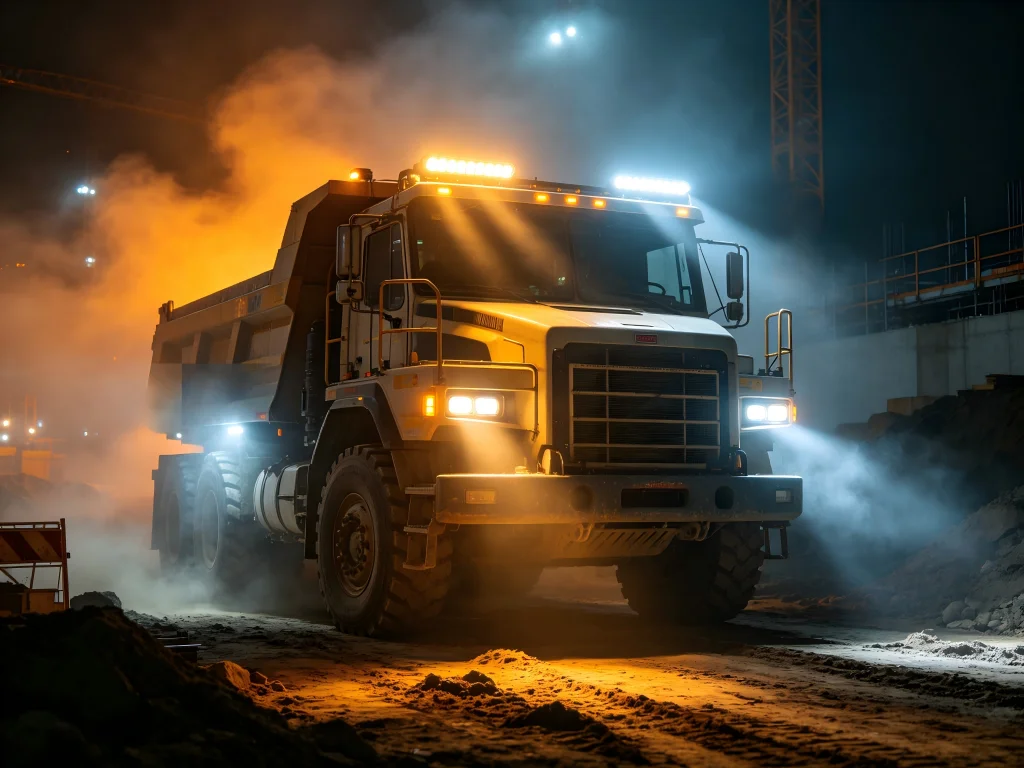
You’ve Noticed the Problem. You Just Didn’t Know How Bad It Really Is.
Most truck drivers underestimate how much their factory lighting is holding them back. Halogen bulbs degrade fast. After just 160 hours of use, halogen headlights lose about 25% of their light output. That means your “new” truck lights are already underperforming within weeks of rolling off the lot. By the time you’re six months into ownership, you’re driving with a fraction of the visibility you paid for.
Then there’s the heat issue. Halogen bulbs generate massive heat—wasted energy that does nothing for illumination but cooks your wiring and housings over time. LED technology, by contrast, produces light without that thermal waste, drawing roughly one-eighth the energy of incandescent lighting while delivering superior output.
But here’s what really keeps fleet managers up at night: downtime. When a halogen bulb fails—and it will, typically within 500 to 1,000 hours—you lose a truck. That’s a roadside stop, a replacement bulb, and hours of lost revenue. For a commercial operation, that adds up fast.
The Hidden Costs No One Talks About
We’ve seen fleets hemorrhage money on lighting maintenance without realizing the root cause. Flickering lights? That’s often poor grounding, voltage fluctuations, or incompatible CAN-bus systems. Moisture inside the housing? That’s subpar sealing and cheap construction. Dashboard error codes? Your truck’s computer doesn’t recognize the lower current draw of cheap LEDs.
These aren’t minor inconveniences. They’re safety hazards. A flickering light during a roadside inspection can trigger a violation. A dim headlight on a foggy night can mean the difference between seeing a stopped vehicle and not seeing it.
“I tried three different brands before switching to GTR. Even in -30°C, they fire up instantly with no dash errors. The cut-off line is so sharp I’ve never been flashed by other drivers.” — Verified Customer Review
That cut-off line matters more than most drivers realize. Poorly designed LEDs scatter light everywhere—into oncoming traffic, into the trees, anywhere except where you need it. That’s why you get flashed by other drivers. That’s also why cheap LEDs actually reduce your usable visibility.
What Good LED Lighting Actually Looks Like
Let’s get technical for a moment, because understanding the engineering helps you spot the difference between a $50 Amazon special and a professional-grade lighting solution.
The gold standard for truck LED lighting delivers 5,000K to 6,000K color temperature—daylight-matching white that enhances contrast without the blue-tinted glare that fatigues eyes. This isn’t about looking “cool.” It’s about reducing driver fatigue during long hauls by matching the color spectrum your eyes evolved to process.
Premium LED systems also incorporate advanced thermal management. Heat is the enemy of LED longevity. Without proper heat sinks and active cooling, even quality diodes will degrade prematurely. The best units use aircraft-grade aluminum housings with precision-engineered heat dissipation paths that keep junction temperatures stable even during extended use.
Then there’s the beam pattern. A proper LED headlight doesn’t just throw light forward—it shapes it. The cutoff line should be crisp and horizontal, illuminating the road without blinding oncoming traffic. This requires precision optics, not just bright diodes stuffed into a housing.
What the OEMs Are Doing (And Why You Should Care)
Major manufacturers have already made the switch. Freightliner now equips all M2 Plus models with advanced LED headlights as standard equipment, featuring a 6,000K daylight-matching beam and an optional automatic deicing feature. International offers LED headlights across its ProStar and MV Series lines. Volvo has made in-cab LED lighting standard across its North American lineup.
Why? Because the ROI is undeniable. LED headlights last up to 30,000 hours—that’s 30 times longer than halogen. For a fleet operator, that translates into fewer service interruptions, lower replacement costs, and more trucks on the road.
But OEM upgrades are expensive and limited to new truck purchases. For the vast majority of drivers and fleet owners, the smart play is upgrading existing trucks with aftermarket LED solutions that match—or exceed—OEM specifications.
Your Solution: Professional-Grade LED Lighting That Actually Delivers
This is where GTR Lighting enters the picture. We don’t sell “bright bulbs.” We engineer complete lighting solutions that solve every problem we just described.
GTR’s Ultra Series delivers the perfect balance of output, beam control, and vehicle compatibility. Our Carbide Series housings produce up to 580 maximum Lux—38% brighter than stock low beams—with DOT-compliant beam patterns that won’t get you flashed or ticketed.
Here’s what sets GTR apart from the commoditized LED products flooding the market:
- CAN-bus compatibility: No dashboard errors. No flickering. Our systems communicate properly with your truck’s computer.
- IP67 waterproof rating: Rain, snow, mud, and pressure washing won’t compromise performance.
- Precision optics: Sharp cutoff lines that keep light on the road, not in oncoming drivers’ eyes.
- إدارة حرارية نشطة: Integrated cooling fans and heat sinks that extend diode life.
- 2-year warranty: We stand behind every product we ship.
Real-World Performance That Speaks for Itself
We’ve seen our lights perform in conditions that would destroy lesser products. Alberta winters at -30°C. Dust-choked construction sites in the Southwest. Coastal humidity that corrodes cheap housings within months.
One fleet operator we work with runs 47 trucks through the Rocky Mountain corridor. Before switching to GTR, they were replacing bulbs every 4 to 6 months and dealing with constant electrical gremlins from incompatible LEDs. After the switch? Zero lighting-related downtime in 18 months. The ROI paid for the entire upgrade within the first year.
Another customer—an owner-operator pulling flatbeds through the Midwest—told us his GTR lights survived a hailstorm that cracked his windshield. The housings held. The beam pattern stayed true. He kept rolling while others pulled over.
الأسئلة المتداولة
Are LED truck lights legal for on-road use?
Yes, when properly designed and installed. DOT-compliant LED headlights with correct beam patterns and color temperatures are fully legal for highway use. GTR’s Carbide Series meets all DOT requirements.
Will LED lights trigger error codes on my truck?
They can—if you buy cheap, incompatible units. Premium LEDs with CAN-bus compatibility communicate properly with your truck’s electrical system, preventing flickering and dashboard warnings. GTR engineers every product for seamless integration.
How much brighter are LEDs than halogens?
Quality LEDs produce 2 to 5 times the usable light output of halogen bulbs. But raw brightness isn’t everything—beam pattern and color temperature matter just as much for actual visibility.
هل تعمل المصابيح الأمامية LED في الطقس البارد؟
Yes. Unlike halogens that rely on heat for performance, LEDs perform consistently across temperature extremes. However, they don’t generate enough heat to melt ice, which is why premium systems like Freightliner’s offer optional deicing features. For aftermarket solutions, regular cleaning during winter conditions is recommended.
How long do LED truck lights really last?
Premium LEDs are rated for 25,000 to 50,000+ hours of operation. Compare that to 500–1,500 hours for halogen. Over the life of a truck, that’s the difference between replacing lights once and replacing them dozens of times.
Can I install LED lights myself?
Many GTR products are designed for straightforward installation with basic hand tools. However, for commercial fleets, we recommend professional installation to ensure proper alignment, waterproofing, and electrical integration. Visit www.rhgtr.com for model-specific fitment guides.
Why do some LEDs flicker or fail quickly?
Flickering typically indicates compatibility issues—either with the vehicle’s CAN-bus system or with voltage regulation. Premature failure usually points to poor thermal management or substandard diodes. These are the exact problems GTR engineers solve through rigorous testing and quality components.
Stop Compromising on What Matters Most
You spend hours behind the wheel. You haul valuable cargo. You navigate unpredictable conditions. Your lighting shouldn’t be the weakest link in your safety chain.
The difference between squinting through a dark highway and driving with confidence is one upgrade away.
قم بزيارة www.rhgtr.com to find the GTR lighting solution for your truck. Browse our Ultra and Carbide Series, check fitment for your specific model, and see why fleets and owner-operators trust GTR to keep them safe on every mile of every haul. Don’t wait until a close call reminds you why visibility matters.