You know the feeling. It’s 9 p.m. on a two-lane road, rain is coming down in sheets, and the oncoming traffic has their high beams on. You squint through a windshield that’s already fighting the glare, and your stock fog lamp—that weak, yellow glow you barely noticed during the test drive—is doing absolutely nothing. You’re driving on faith, not sight.
That moment of uncertainty is exactly why we build lighting systems at GTR. A fog lamp isn’t a cosmetic accessory. It’s a safety tool that either works when your life depends on it, or it doesn’t. Based on our years of engineering testing and feedback from thousands of drivers in the harshest conditions, we’ve seen what separates a genuine upgrade from a dangerous downgrade.
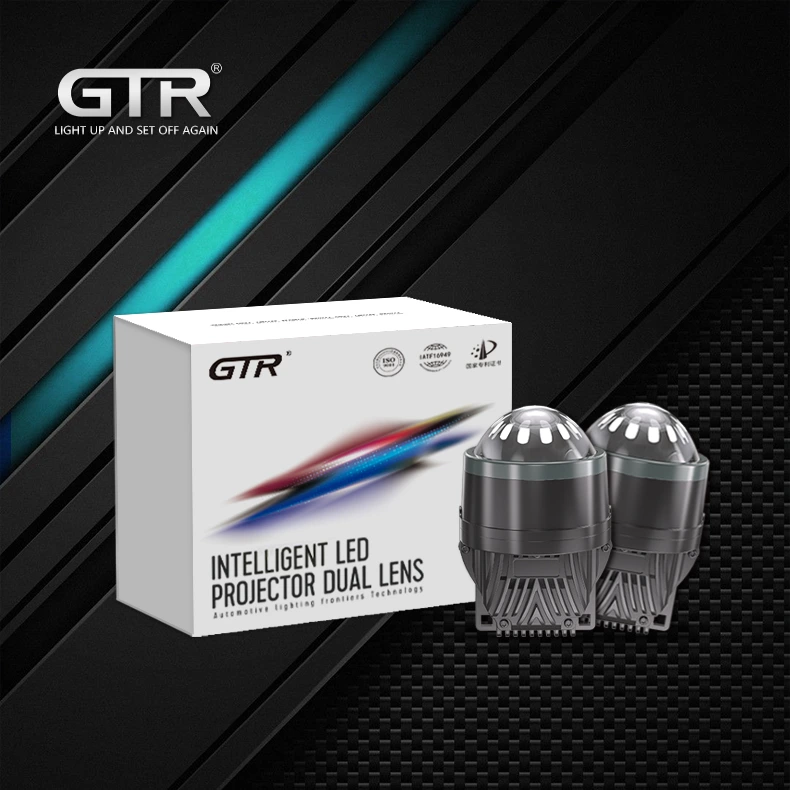
The Real Problem: Why Factory Fog Lamps Fail You
Most factory fog lamps are built to a price, not a standard. They use low-output halogen bulbs, thin reflectors that lose focus over time, and housings that seal poorly against moisture—leading to dim, scattered light exactly when you need clarity most.
Here’s what happens in the real world. The typical halogen fog lamp produces a warm, yellowish light that cuts through fog reasonably well at low speeds. But its output is limited—often just a few hundred lumens—and its lifespan is short. The filament degrades, the reflector clouds, and the light that once reached 10 meters ahead now barely illuminates the pavement five meters out .
Then there’s the moisture problem. A fog lamp sits low on the bumper, directly in the path of road spray, puddles, and pressure-washer blasts. Cheap seals fail. Water enters. The reflector oxidizes. You don’t notice the decline gradually—you notice it suddenly, on a dark highway, when the light that’s supposed to penetrate fog is now just a hazy smear on the bumper.
The Agitation: When “Adequate” Becomes Dangerous
Think about the specific moments when you actually use a fog lamp. It’s not clear summer nights. It’s the worst driving conditions you face all year: mountain passes swallowed by cloud, coastal roads with sudden downpours, industrial zones where dust and smoke hang in the air like a curtain.
In those moments, a failing fog lamp doesn’t just reduce visibility. It changes your behavior. You slow down unpredictably. You grip the wheel tighter. You lean forward, straining to see the lane markings. Other drivers—also struggling to see—can’t read your intentions clearly because your vehicle’s light signature is weak and inconsistent.
We’ve heard this story from fleet operators in Indonesia and Malaysia, where heavy rain and sudden fog are routine. They told us the same thing: the stock lamps on their Avanzas, Xpanders, and Innovas were fine for the city, but on intercity routes during monsoon season, they felt under-equipped. One logistics supervisor put it bluntly: “We weren’t replacing fog lamps because they broke. We were replacing them because they stopped being useful.”
That’s the hidden cost of a cheap lamp. It doesn’t fail dramatically. It fades quietly, until one night you realize you’ve been driving without a safety net.
The Solution: Engineering Light That Cuts, Not Scatters
A proper LED fog lamp solves the core problem through three engineering choices: a focused beam pattern that throws light low and wide, a color temperature that penetrates rather than reflects, and a sealed housing that maintains performance for years—not months.
In our testing labs, we evaluate fog lamps against the conditions that actually matter. We don’t just measure lumens on a clean bench. We simulate rain spray, temperature cycling, and vibration profiles that mimic rough pavement. The difference between a GTR lamp and a generic replacement isn’t a single spec—it’s how the system holds together when everything around it is falling apart.
Beam Control: The Invisible Engineering
A fog lamp’s job is not to flood the world with light. It’s to place a precise cut-off line low on the road, illuminating the surface ahead without throwing glare into the fog or into oncoming drivers’ eyes. Cheap lamps use simple reflectors that scatter light upward. Good lamps use projector optics or precision-formed reflectors that keep the beam where it belongs.
When you install a GTR fog lamp, the first thing you notice is the sharpness of the cut-off. The light stops at a defined line. Above that line: darkness. Below it: a broad, even wash of illumination that reveals lane edges, obstacles, and standing water. That sharpness isn’t aesthetic. It’s the difference between seeing and guessing.
Thermal Reality: Why Cheap LEDs Die Early
LEDs are efficient, but they generate heat at the emitter. In a fog lamp housing—small, enclosed, and exposed to external heat from the engine and road—that heat has nowhere to go unless the design accounts for it. Low-cost lamps use undersized heatsinks and thin thermal paste. The LED junction temperature rises. Output drops. Eventually, the emitter fails.
Our engineering team designs GTR housings with die-cast aluminum bodies and integrated thermal paths that move heat away from the emitter and into the housing mass. We test at elevated ambient temperatures because we know that a lamp rated for a lab bench at 25°C is not the same lamp bolted to a bumper in Jakarta traffic.
The Moisture Problem, Solved
Sealing a fog lamp is not just about a rubber gasket. It’s about pressure equalization. As the lamp heats and cools, internal air expands and contracts. Without a breathable membrane, that cycling pulls moisture past seals. With the right membrane, the lamp breathes without letting water in.
كل GTR fog lamp assembly undergoes immersion and spray testing before it leaves the line. We do this because we’ve seen what happens when a lamp fails at 60 km/h in a rainstorm. The cost of a replacement is trivial compared to the cost of a moment of lost visibility.
What to Look For (and What to Avoid)
If you’re replacing a fog lamp on a vehicle like the Innova Reborn, Avanza, Xpander, or Yaris Bakpao, the market is flooded with options at every price point. Here’s a practical filter:
- Check the beam pattern, not just the brightness. A lamp that “looks bright” from outside may throw glare everywhere. Ask for a beam shot against a wall or a road simulation. The cut-off should be sharp and low.
- Look for a metal housing, not plastic. Plastic housings deform under heat cycling. Die-cast aluminum maintains shape and helps manage LED temperature.
- Verify IP-rated sealing. An IP67 or IP68 rating is the minimum for a component exposed to spray and standing water. If the seller can’t state the rating, assume it’s not rated.
- Match the color temperature to the use case. For fog and heavy rain, a warmer white (around 3000K–4000K) tends to produce less back-glare than a cool blue-white. For clear-night auxiliary lighting, a neutral white (5000K–6000K) may be preferable. Don’t buy “the brightest” without considering the conditions you actually drive in.
One more thing: fitment matters. A universal lamp with a bracket that doesn’t match your bumper’s mounting points will rattle, shift, and eventually aim wrong. Vehicle-specific brackets—like the ones we produce for popular Asian market models—eliminate that failure mode before it starts.
The GTR Difference: Built for the Conditions You Actually Face
We don’t build fog lamps for showroom displays. We build them for the driver who leaves for work before dawn, the family hauling kids through mountain fog on a holiday weekend, and the fleet manager who can’t afford a vehicle sidelined by a lighting failure.
Our manufacturing lines hold IATF 16949 and ISO 9001 certifications. Every lamp design undergoes photometric validation, thermal shock testing, and vibration simulation before production. We offer vehicle-specific fitments for the models that dominate Southeast Asian roads—because a lamp that doesn’t fit properly is a lamp that won’t perform properly.
And when you need something specific—a particular connector, a custom beam pattern, a private-label program—we can do that. We’ve been the manufacturing partner behind dozens of aftermarket brands. We know what separates a product that lasts from one that generates returns.
الأسئلة المتداولة
Can I use an LED fog lamp in heavy rain without blinding oncoming traffic?
Yes, if the lamp has a properly designed low cut-off and you aim it correctly. The problem isn’t LED technology itself—it’s poorly designed reflectors that scatter light upward. A quality LED fog lamp with a sharp horizontal cut-off, aimed slightly downward, will illuminate the road without creating glare.
Why do my fog lamps fog up on the inside?
Internal fogging indicates a failed seal or a missing breathable membrane. Moisture enters the housing as the lamp cools, condenses on the lens, and degrades output. A properly sealed lamp with a pressure-equalization membrane should not fog internally under normal use.
Are yellow fog lamps actually better than white?
For fog and heavy rain, yellow or warm-white light tends to produce less glare back into the driver’s eyes because shorter wavelengths (blue light) scatter more easily in water droplets. However, a well-designed white LED with a controlled beam pattern can also perform well. The beam pattern matters more than the color alone.
How do I know if my fog lamp is aimed correctly?
Park on a level surface facing a wall about 5 meters away. The top of the fog lamp beam cut-off should be roughly at or slightly below the height of the lamp itself. If the beam is higher, it will glare into oncoming traffic. If it’s too low, you lose useful road illumination.
Can I install a GTR fog lamp myself?
For most vehicle-specific kits, yes. If the kit includes a plug-and-play wiring harness and vehicle-specific brackets, the installation is typically a bolt-on process with basic hand tools. We recommend disconnecting the battery and following the included instructions for safe routing and connection.
What’s the lifespan of a GTR LED fog lamp?
Our LED emitters are rated for 30,000+ hours of operation under proper thermal conditions. In real-world use—intermittent operation, varying temperatures, and exposure to the elements—we expect the lamp to outlast the vehicle’s typical ownership period without significant output degradation.
Stop Driving on Hope. Drive on Light.
The next time you’re caught in a downpour on a dark road, you shouldn’t have to wonder whether your fog lamps are doing their job. You should know. The road ahead should be visible. The lane should be clear. The driver behind you should see your position without strain.
That’s not a luxury. That’s the baseline of a safe vehicle.
If your current fog lamps are dim, moisture-clouded, or simply the same factory units that came with the car years ago, they’ve served their time. Replace them with a system engineered for the conditions you actually face—not the conditions on a spec sheet.
قم بزيارة https://www.rhgtr.com to find the vehicle-specific GTR fog lamp kit for your model, or contact our engineering team to discuss a custom solution for your fleet. The road doesn’t get safer. Your lighting can.