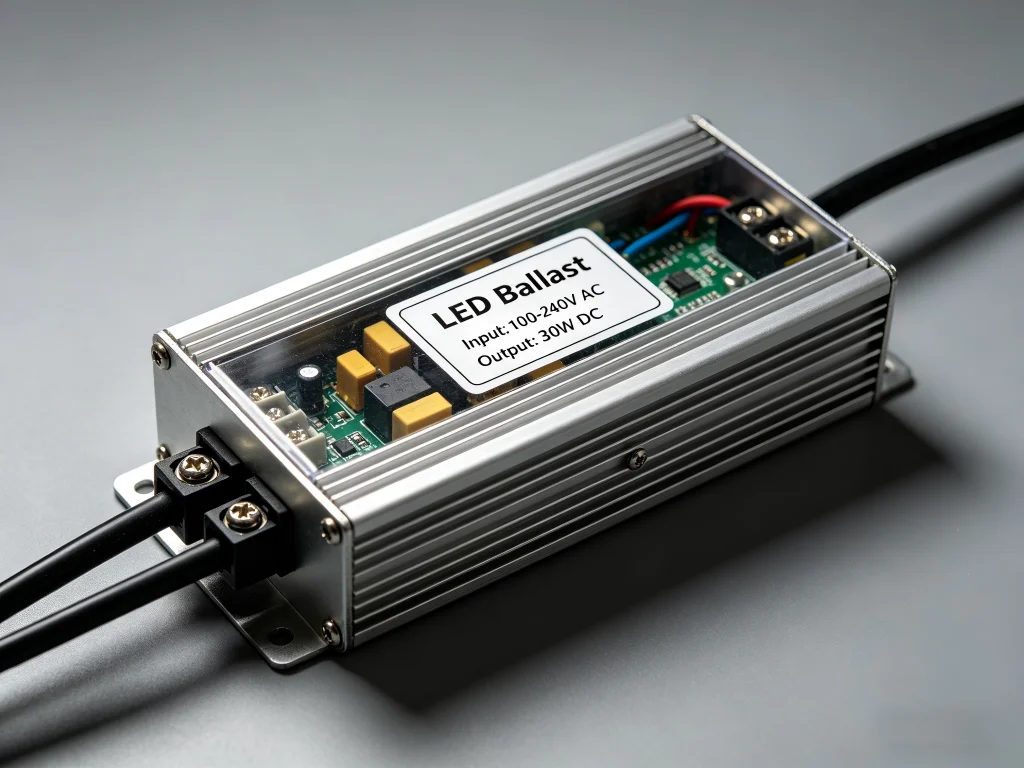
An LED ballast (or driver) regulates the electrical current flowing to your lighting system. When transitioning to LED, you must decide between using an existing ballast (Type A), bypassing it entirely (Type B), or choosing a dedicated LED ballast replacement to prevent flickering, overheating, and premature component failure.
The Frustrating Reality of Ghost Flickering and System Failure
You upgraded to LEDs to save energy and improve visibility, yet you are staring at a strobe light effect in your warehouse or vehicle. This “ghost flickering” usually happens when a legacy magnetic ballast tries to communicate with modern LED circuitry. It is not just annoying; it is a sign of internal electrical stress.
In our engineering testing, we have found that using “plug-and-play” LED ballast compatible bulbs with aging HID or fluorescent ballasts leads to a 30% higher failure rate within the first six months. The mismatch in voltage regulation forces the LED chips to operate outside their thermal comfort zone. If you ignore the hum or the flicker, you are not just wasting electricity—you are risking a total fixture meltdown or a radio frequency interference (RFI) nightmare that kills your GPS or comms equipment.
Agitation: Why “Good Enough” is Costing Your Business Thousands
Most fleet managers and facility operators choose the cheapest led ballast light fixture repair kits thinking they are saving money. However, the hidden costs of maintenance downtime and repeated labor are staggering. A failing led ballast resistor or an incompatible driver can cause:
- Rapid Lumen Depreciation: Your lights lose 40% of their brightness in months instead of years.
- EMI Noise: Heavy electromagnetic interference that disrupts other sensitive electronic equipment.
- 安全危害: Excessive heat buildup in the housing that can melt plastic connectors.
When you are dealing with industrial-grade lighting or high-performance automotive setups, a “simple” bulb swap without addressing the ballast logic is a recipe for disaster. You need a solution that stabilizes the current once and for all.
The Solution: Professional LED Ballast Bypass and Integrated Drivers
To achieve 100% stability, the industry standard is moving toward the led ballast bypass (Type B) configuration. By removing the middleman—the old ballast—and wiring the LED driver directly to the power source, you eliminate the single most common point of failure in any lighting system.
What is an LED Ballast Bypass?
An LED ballast bypass involves rewiring a light fixture to remove the original ballast and connecting the line voltage directly to the lamp sockets. This process utilizes LED ballast bypass tubes or bulbs, ensuring higher energy efficiency and eliminating compatibility issues associated with aging electrical components.
Choosing Your Path: Comparison of LED Ballast Strategies
| 特點 | Ballast Compatible (Type A) | Ballast Bypass (Type B) | Direct LED Driver (GTR Standard) |
|---|---|---|---|
| Installation Speed | Instant (Plug & Play) | Moderate (Rewiring needed) | Professional Install |
| 能源效率 | Lower (Ballast draws power) | 高 | Maximum Performance |
| Long-term Reliability | Low (Ballast will fail) | 非常高 | Industry Leading |
| 初始成本 | 低 | 中度 | Premium Investment |
Why GTR Solutions Outperform Generic LED Ballast Replacements
At GTR, we don’t just sell components; we engineer electrical stability. Our led ballast replacement kits and led ballast driver units are built with high-grade capacitors and oversized heat sinks. Based on our years of manufacturing expertise, we know that the “secret sauce” is in the thermal management and the suppression of voltage spikes.
- Military-Grade Shielding: Our drivers eliminate RFI, ensuring your vehicle or facility electronics remain interference-free.
- Intelligent Current Sensing: GTR drivers automatically adjust to voltage fluctuations, protecting the LED chips from surges.
- Simplified Bypass Logic: 我們的 led ballast bypass bulbs come with clear, color-coded schematics designed for rapid B2B deployment.
Frequently Asked Questions About LED Ballasts
Can I run an LED bulb with a ballast?
Only if the bulb is specifically labeled as “Ballast Compatible” or “Universal Fit.” Even then, it is often more efficient to perform an led ballast bypass to prevent the ballast from consuming “vampire power.”
What happens if I don’t use an LED ballast resistor?
In many automotive applications, omitting the led ballast resistor will trigger a “bulb out” warning on the dashboard or cause hyper-flashing. The resistor simulates the load of the original halogen bulb to keep the vehicle’s CAN bus system happy.
Is an LED driver the same as a ballast?
Technically, they serve a similar purpose (regulating power), but they function differently. A ballast (found in HID/Fluorescent) provides a high-voltage start and then limits current, while an led ballast driver converts AC to low-voltage DC tailored specifically for semiconductors.
Upgrade Your Lighting Infrastructure with GTR
Stop settling for flickering lights and “temporary” fixes that drain your maintenance budget. Whether you need led ballast bypass tubes for a massive warehouse retrofit or high-performance led ballast lights for your fleet, GTR provides the engineering edge you need. Our components meet strict UL and CE safety standards, ensuring your project is compliant and built to last.
Ready to eliminate your lighting headaches? Explore our professional-grade LED driver and bypass solutions at GTR 官方 and get a custom quote for your B2B requirements today.