You finally decided to upgrade. You ordered a set of LED bulbs, waited for delivery, watched a video, and spent twenty minutes wrestling with dust covers and retaining clips. Then you turn the key. The dashboard lights up like a Christmas tree. One headlight flickers. The beam pattern on your garage wall looks like a splattered paintball. And when you drive down a dark road, you realize you can see less than you could with the old yellow halogens. If this sounds familiar, you are not alone. In our engineering testing and years of manufacturing experience, we have seen this exact story play out across dozens of vehicle platforms. The problem is rarely the bulb itself. It is almost always a mismatch between what the aftermarket sells and what your car actually needs.
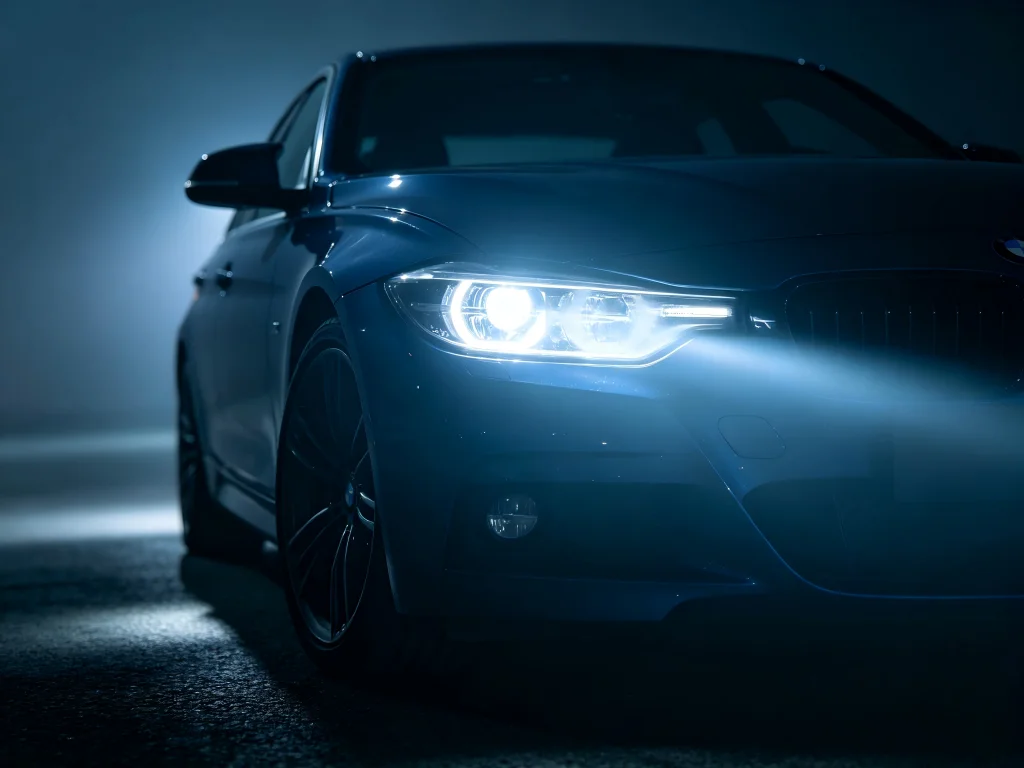
Why Your New LED Bulbs Are Failing You
Most LED headlight failures stem from three root causes: your vehicle’s computer rejects the lower power draw, the LED emitters sit in the wrong position inside the housing, or the bulb overheats and dims itself within minutes. These are engineering problems, not bad luck.
Modern cars use a Controller Area Network—CANbus—to monitor every electrical circuit. Your halogen bulb drew about 55 watts. A typical LED draws 20 to 40 watts. The computer sees that drop and assumes the bulb is dead. So it throws a warning code or pulses the power to “check.” That pulse hits the LED instantly, and you get flicker .
Then there is the optical problem. Your headlight reflector was designed around a tiny filament sitting at one precise point in space. Cheap LED bulbs place their emitters a millimeter or two off that spot. Light scatters. You get glare for oncoming drivers and dark spots on the road ahead . Some drivers describe it as a “blocky pattern” that feels worse than stock .
Heat is the third trap. LED chips generate intense heat at the junction. Without a proper thermal path, output drops as temperature climbs. A bulb rated for 30,000 hours might lose 20 percent of its brightness in six months because the heatsink could not keep up . In our lab, we have seen surface temperatures exceed 100°C within ten minutes on under-engineered designs.
What Actually Works: The Three Non-Negotiables
A quality LED headlight upgrade requires precise emitter geometry that mimics the original filament, active thermal management that sustains output, and CANbus compatibility that your vehicle’s computer accepts without error codes.
Precision is not marketing fluff. When the LED emitting surface matches the halogen filament’s size and location, your reflector can do its job. The light goes where it should—down the road, not into the eyes of the driver ahead of you. This is why we obsess over emitter placement at GTR. Our Ultra series uses digitally optimized positioning that mirrors factory tolerances, not a “close enough” guess .
Thermal design separates a bulb that works for a week from one that works for years. Fans help, but they also fail. Dust clogs them. Bearings wear. When the fan stops, the LED cooks. Our approach favors passive cooling with large aluminum heatsinks and copper substrates where possible, reducing moving parts while maintaining stable output .
CANbus compatibility should be treated as an electrical requirement, not a sticker on the box. Some vehicles accept LED bulbs directly. Others need a decoder or load resistor. A reputable seller will tell you which category your car falls into—or provide the adapter you need.
LED vs. Halogen vs. HID: The Honest Comparison
| 因子 | Halogen (Stock) | Cheap LED Bulb | GTR LED Upgrade |
|---|---|---|---|
| 光型 | Precise but dim | 散射、容易產生眩光 | Engineered to match filament geometry |
| 壽命 | 500–1,000 小時 | Often fails within 6–12 months | Rated for 30,000+ hours with stable output |
| 散熱管理 | Self-regulating (hot by design) | Undersized heatsinks, fan failures | Engineered thermal path, passive or hybrid |
| Computer compatibility | Native | Frequent flicker and error codes | CANbus-ready or decoder-included |
| Legal compliance | Always compliant | Often unapproved for road use | Designed for compliant applications where permitted |
One note on legality: rules vary by region. In the UK, only a small number of approved LED replacement bulbs are now permitted in specific halogen housings, and the approval process is strict . In Malaysia, JPJ enforcement actions target non-compliant HID and LED modifications that produce excessive glare . Before you buy, check your local regulations. A bulb that works beautifully but fails inspection is not a solution.
What Real Drivers Say After the Upgrade
We pay attention to forums and customer feedback because they tell us what lab tests miss. One pattern comes up repeatedly: drivers who tried three or four cheap bulbs before finding a design that actually works.
A Tacoma owner on a truck forum described running LED H4s and then reverting to halogens because the pattern was “blocky” and one side turned purple . Another reviewer on an e-commerce listing praised a GTR bulb for “perfect beam placement onto the road,” while a different buyer complained about a green tint on a competitor’s product . These are the real-world outcomes that separate a functioning upgrade from a frustrating experiment.
The common thread among satisfied drivers is not brand loyalty. It is that the bulb matched their housing, their computer, and their expectations. When those three align, the upgrade delivers what it promised: better visibility, less eye strain, and a car that feels safer at night.
常見問題
我可以把 LED 燈泡裝在我的鹵素頭燈裡嗎?
Physically, yes—if the bulb base matches your housing (H11, H7, 9005, etc.). Functionally, only if the LED emitter position replicates the halogen filament and the bulb either includes CANbus compatibility or your vehicle does not monitor the circuit strictly. Many cheap bulbs fail one or both conditions.
Are LED bulbs legal in headlights?
It depends on where you drive and what you install. Some regions have begun approving specific LED retrofit bulbs that meet strict standards, such as UNECE Regulation 37 . Others prohibit any non-factory LED in a halogen housing. Check your local vehicle inspection rules before purchasing.
Why do my LED bulbs flicker?
Your vehicle’s computer is likely pulsing the power or interpreting the lower wattage as a fault. This is common in European vehicles and certain domestic models. A CANbus-ready bulb or an inline decoder usually solves the issue .
Do LED bulbs work in projector headlights?
They can, but projector housings are even more sensitive to emitter placement than reflectors. A bulb that works in a reflector may not focus properly in a projector. Look for designs explicitly tested for projector compatibility.
How long do quality LED headlight bulbs last?
A well-engineered bulb with proper thermal management can outlast the vehicle. Poorly cooled bulbs may dim noticeably within a year or fail entirely. The difference is the heatsink and driver design, not the LED chip alone.
Will LED bulbs make my headlights brighter?
Raw brightness is not the goal. Usable light on the road is. A focused LED bulb with correct geometry will illuminate farther and wider than a dim halogen. A scattered bulb may look bright from outside but actually reduce your seeing distance while blinding others.
When the Road Disappears, You Need Light That Works
Think about the last time you drove at night in rain, or fog, or on an unlit highway. The road ahead was a gray blur. Signs appeared too late. Your shoulders tensed. That is not a driving problem. It is a lighting problem. And it is solvable.
At GTR, we build LED headlight bulbs for drivers who are tired of guessing. Our engineering process starts with the question: where does the light actually go? Not how many lumens can we print on a box. Not how cheap can we make the heatsink. We test emitter geometry against real housings, validate thermal performance under sustained load, and build drivers that communicate with modern vehicle computers rather than fighting them.
If you are ready to stop flickering, stop guessing, and start seeing the road the way it was meant to be seen, visit https://www.rhgtr.com. Your next night drive does not have to be a compromise.