You’re driving through heavy rain at night. Your high beams are on, but instead of helping, they’re making things worse—a wall of white glare bouncing back at you. You slow down, squint, and pray nothing’s hiding in the dark ahead. This is the moment most drivers realize their fog light setup isn’t just inadequate—it’s actively dangerous. Based on our years of manufacturing expertise in automotive lighting, we’ve seen this scenario play out thousands of times. And the fix isn’t complicated. But first, let’s talk about why your current setup is failing you.
The Problem: Why Your Factory Fog Lights Are Letting You Down
Standard halogen fog lights emit roughly 1,000 to 1,500 lumens of light. That’s barely enough to illuminate the road ahead in clear conditions, let alone cut through fog, rain, or snow. When visibility drops below 100 meters (about the length of a football pitch), your factory fog lights simply don’t have the output to keep you safe.
Here’s the physics problem: fog consists of millions of tiny water droplets suspended in the air. When your headlights hit these droplets, the light scatters in every direction—straight back into your eyes. This is called backscatter, and it’s the reason driving in fog with high beams is actually more dangerous than driving with no lights at all. Fog lights are designed to sit low and cast a wide, flat beam that cuts under the fog layer rather than bouncing off it. But if your fog lights are underpowered or misaligned, that beam pattern falls apart.
The Hidden Costs of Poor Fog Lighting
- Reaction time delay: At 60 mph, every second of reduced visibility adds 88 feet to your stopping distance. Poor fog lights cost you seconds.
- Driver fatigue: Straining to see through glare and darkness tires your eyes faster. Fatigued drivers are 30% more likely to be involved in an accident.
- 錯失危險: Potholes, debris, animals—they’re all out there. You just can’t see them until it’s too late.
- Insurance liability: In some regions, failing to use fog lights properly in reduced visibility could affect your insurance claim if an accident occurs.
The Agitation: Fog Light Failures Create Real-World Danger
Let’s paint a picture. It’s 6 AM on a December morning. Dense fog has settled over the highway, reducing visibility to under 100 feet. You’re driving to work, coffee in hand, relying on your car’s factory fog lights to get you there safely. But those factory units? They’re halogen bulbs that have been slowly dimming for the past three years. You haven’t noticed the gradual decline because it happens so slowly—until tonight, when you realize you can barely see the lane markings.
A semi-truck merges into your lane without signaling. You react—but too late. The truck’s taillights appear out of nowhere, and you’re swerving onto the shoulder, heart pounding, wondering how close you came to a collision.
This isn’t an isolated incident. Poor fog lighting contributes to thousands of weather-related accidents every year. In Malaysia, authorities have reported that improper fog light use and installation—including excessively bright or poorly aimed aftermarket units—poses a significant danger to road users. Offenders can face fines up to RM 2,000 or even jail time under Section 119 of the Road Transport Act 1987.
But here’s the irony: many drivers who do upgrade their fog lights end up buying cheap, uncertified products that cause more problems than they solve. Glare, poor beam patterns, premature failure—these are the hallmarks of a bad upgrade. And they’re everywhere.
The Solution: GTR’s Engineering Approach to Fog Light Excellence
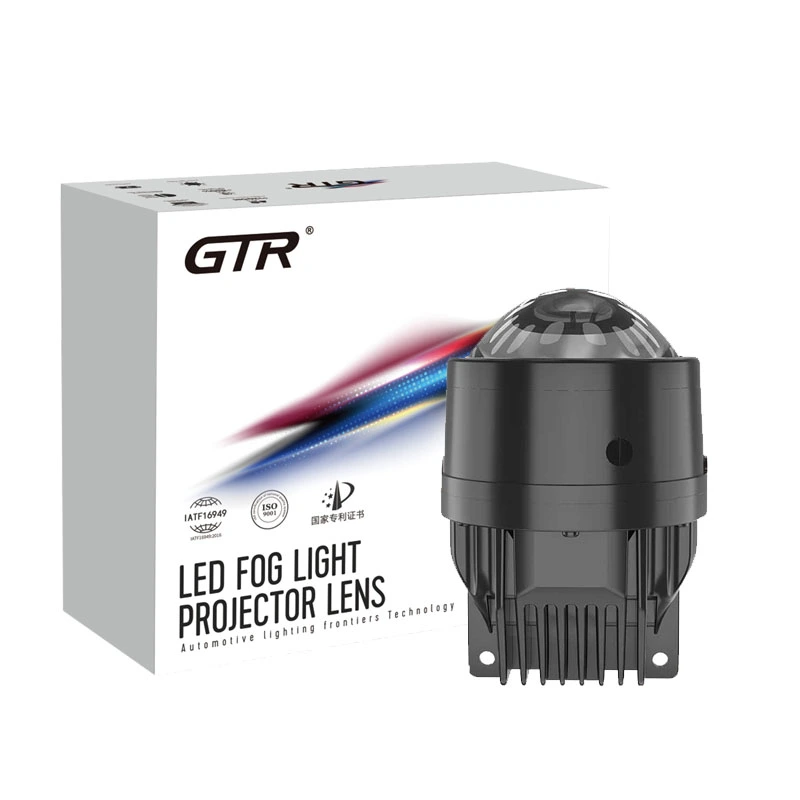
GTR Lighting has engineered fog light solutions that deliver up to 4,700 lumens per bulb—more than three times the output of standard halogen units—while maintaining a precise, focused beam pattern that won’t blind oncoming traffic.
What Makes GTR Fog Lights Different
Based on our in-house engineering testing, the difference between a GTR fog light and a generic aftermarket unit comes down to three critical factors: chip technology, thermal management, and beam accuracy.
1. Premium-Grade LED Chip Technology
GTR’s Ultra Series fog lights utilize automotive-grade multi-core LED chips that deliver ultra-bright light in an ultra-focused beam pattern. The Ultra 3.0 series harnesses cutting-edge TST 7045 chipset technology, producing 4,700 lumens of raw output per bulb. This isn’t just about raw brightness—it’s about getting light exactly where you need it: low, wide, and flat, cutting under the fog layer without scattering.
2. OEM-Filament Positioning for Accurate Beam Patterns
One of the most common problems with aftermarket LED fog lights is inaccurate beam patterns. Cheap bulbs place the LED chips in the wrong position relative to the reflector, causing scattered light that blinds other drivers. GTR’s CSP Mini LED fog light bulbs are designed to mimic the size and shape of your original halogen bulbs, ensuring optimal light distribution. The LED positioning mimics the OEM filament for precise, glare-free lighting.
3. Advanced Thermal Management
LEDs generate heat, and heat kills LEDs. GTR’s heat-sink design is engineered for extreme effectiveness, keeping the bulb body cool even during extended use. This isn’t a nice-to-have—it’s essential for longevity. While standard halogen bulbs last 500–2,000 hours, GTR’s LED fog lights are built to outlast your vehicle.
Real-World Results from Real Drivers
Here’s what actual customers are saying about GTR fog lights:
“I tried the top-rated HID, LED, and PIAA extreme plus halogen bulbs on Amazon. These perform better and are brighter than those. The GTR LEDs seem to be made well and easy to install.”
“The stock Sylvania 60W bulb is less bright where the GTR output has noticeable road view improvement. These are the best headlights I’ve ever had. Great color, sharp cutoff, TONS of light.”
“GTR CSP Mini LED bulbs offer twice as much light as a halogen bulb while using one-third the power.”
Fog Light Laws: What You Need to Know Before Upgrading
Before we dive into selection criteria, let’s address the legal landscape. There’s no federal regulation specifically for fog lamps in the United States—state regulations apply instead. Fortunately, most states have adopted the SAE J583 Fog Lamp Recommended Practice as the standard. Road-legal fog lights should have “SAE” and a code (e.g., “SAE F20”) etched into the lens.
In Malaysia, JPJ regulations prohibit unauthorized lighting modifications, including colored bulbs or improperly installed fog lights. Non-compliant modifications can result in fines, and improperly aimed fog lights that dazzle other drivers are an offence under Section 119 of the Road Transport Act 1987.
Always choose fog lights that are SAE/DOT compliant to ensure you’re road-legal and safe.
How to Choose the Right Fog Light Upgrade
When shopping for a fog light replacement, here’s what matters—and what doesn’t:
| 因子 | 注意事項 | 應避免什麼 |
|---|---|---|
| 亮度 (流明) | 3,000+ lumens for meaningful upgrade | Under 2,000 lumens (barely better than halogen) |
| 光束樣式 | OEM-filament positioning, focused low beam | Scattered, unfocused light that creates glare |
| 散熱管理 | Advanced heat-sink design, active cooling | Cheap aluminum or plastic housings with no cooling |
| 認證 | SAE/DOT compliant, SAE J583 standard | No markings or unverifiable claims |
| 保固 | 2+ years manufacturer warranty | No warranty or limited coverage |
| 色溫 | 3000K (amber) for fog penetration, or 6000K (white) for all-around use | Blue or extreme colors that may be illegal |
A standard halogen fog light emits approximately 1,000–1,500 lumens. GTR’s Ultra Series delivers 4,700 lumens per bulb—that’s a 3x improvement in usable light output without the glare issues that plague cheap upgrades.
Amber vs. White: Which Color Temperature Is Right for You?
Amber (3000K) light penetrates fog, snow, and rain more effectively because the longer wavelength scatters less in moisture-laden air. White (6000K) light provides better color recognition and a modern aesthetic. GTR offers both options, including the Ultra Series 2.0 in yellow, which delivers 118% more brightness than stock halogen. If you frequently drive in dense fog or heavy rain, amber is the strategic choice.
Frequently Asked Questions About Fog Lights
What is the fog light symbol on my dashboard?
The front fog light symbol shows a lamp with three wavy lines pointing down, typically green or white. The rear fog light symbol points in the opposite direction and glows amber or red. If you switch them on and nothing happens, check for a blown fuse, faulty relay, or sensor issue.
When should I use fog lights?
Only use fog lights when visibility drops below 100 meters (approximately 328 feet). Using them in clear conditions is illegal in many areas and can dazzle other drivers. They should never be used as a substitute for headlights.
What is the difference between front and rear fog lights?
Front fog lights help you see the road ahead by casting a wide, low beam under the fog layer. Rear fog lights are bright red lamps that help other drivers see you in heavy mist or rain. Rear fog lights are more common on European vehicles and may not be standard on all makes.
LED 霧燈合法嗎?
LED fog lights are legal if they meet SAE/DOT compliance standards. There’s no federal regulation specifically for fog lamps, but state regulations generally reference the SAE J583 standard. Always check that your fog lights carry appropriate SAE markings and are installed correctly to avoid fines or safety issues.
LED 霧燈能用多久?
Quality LED fog lights can last 50,000 hours or more. This is significantly longer than halogen bulbs, which typically last 500–2,000 hours. GTR’s Ultra Series bulbs are engineered to outlast your vehicle, making them a true “last bulb you’ll ever need” upgrade.
Can I install LED fog lights myself?
Most GTR fog lights are designed for plug-and-play installation. The CSP Mini series mimics the size and shape of original halogen bulbs for straightforward fitment. However, always verify bulb compatibility with your vehicle and consider professional installation if you’re unsure.
Why do my fog lights keep burning out?
Frequent burnout typically indicates poor thermal management, voltage issues, or substandard components. Quality LED fog lights from GTR include advanced heat-sink designs that prevent overheating and extend lifespan. If you’re experiencing recurrent failures, it may be time to upgrade to a higher-quality solution.
Don’t Wait Until the Fog Rolls In
Here’s the reality: you don’t think about your fog lights until you need them. And by then, it’s too late to shop, compare, and upgrade. The next time dense fog or heavy rain catches you on the road, you’ll either have the visibility you need—or you won’t. The difference is a matter of planning.
GTR’s fog light solutions are engineered for one purpose: getting you home safely, no matter what the weather throws at you. With 4,700 lumens of focused output, SAE-compliant beam patterns, and a lifespan that outlasts your vehicle, it’s the upgrade that pays for itself in peace of mind alone.
參觀 www.rhgtr.com to find the right fog light solution for your vehicle. Because when the fog rolls in, you want the best visibility money can buy—not the cheapest bulb on the shelf.