Introduction: Illuminating the Road with OEM Ram Headlights
Every journey begins with a clear view of the path ahead. For Ram truck owners, that clarity is defined by the quality and performance of their vehicle’s headlights. More than just bulbs and lenses, modern headlights are sophisticated safety systems, integral to the truck’s identity and functionality. While the aftermarket offers a sea of alternatives, there is a compelling case for the precision-engineered components that came with your truck from the factory. This article delves into the world of OEM Ram headlights, exploring their definition, technological evolution, undeniable benefits, and the critical details you need to make an informed decision. Whether you’re replacing a damaged unit or seeking to restore your Ram’s original commanding presence, understanding the value of factory-original lighting is the first step toward optimal performance, safety, and style.
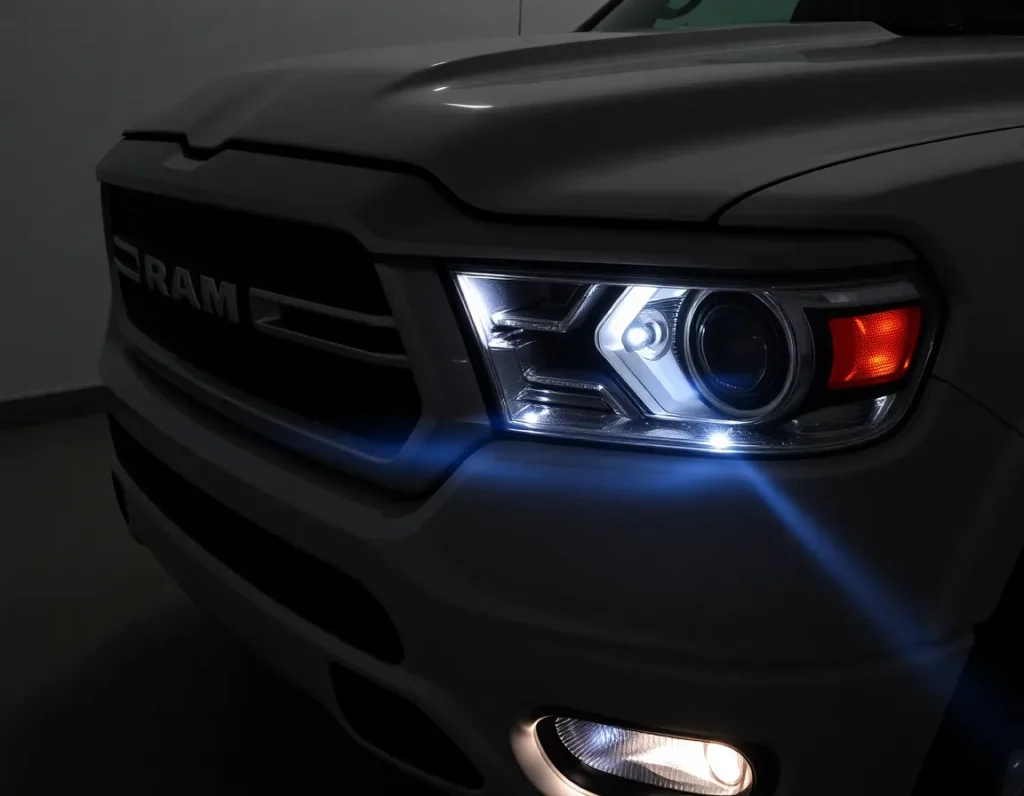
What Are OEM Ram Headlights? Defining Factory-Original Lighting
OEM stands for Original Equipment Manufacturer. In the context of Ram headlights, this means the headlight assembly was designed, engineered, and produced to the exact specifications of Stellantis (formerly Fiat Chrysler Automobiles) for a specific Ram truck model, year, and trim level. These are not merely “look-alike” parts; they are the very same components installed on the assembly line when your truck was built. An OEM Ram headlight is characterized by its perfect fit, seamless integration with the truck’s body lines and electrical systems, and compliance with all original safety and performance standards set by the manufacturer.
It is crucial to distinguish OEM parts from aftermarket or “OE-style” parts. Aftermarket components are made by third-party companies, often with varying degrees of quality and adherence to original specs. While some premium aftermarket options exist, they are not held to the same rigorous testing and validation processes as genuine OEM parts. Choosing OEM ensures that the complex optics project light precisely as intended, the housing materials withstand environmental extremes, and the connectors interface flawlessly with your truck’s computer for features like automatic high beams or adaptive lighting. In essence, OEM headlights preserve the designed integrity of your Ram, ensuring every component works in harmony as the engineers intended.
The Evolution of Ram Headlight Technology: From Halogen to LED and Beyond
The headlights on Ram trucks have undergone a dramatic transformation, mirroring the broader evolution of automotive lighting technology. This journey is one of increasing efficiency, output, and intelligence.
The Halogen Era: The Reliable Workhorse
For decades, halogen bulbs were the industry standard. Found on base model and older Ram trucks, they operate by passing electricity through a tungsten filament enclosed in a halogen gas-filled bulb. They produce a warm, yellowish light and are relatively inexpensive to produce and replace. However, they are less energy-efficient, generate significant heat, and have a shorter lifespan compared to newer technologies. For many years, the classic dual-round or rectangular halogen headlights defined the face of the Ram pickup.
The HID/Xenon Shift: A Brighter Dawn
High-Intensity Discharge (HID) or xenon headlights marked a major leap forward. Instead of a filament, HID lights create light by forming an electrical arc between two electrodes inside a quartz capsule filled with xenon gas. This results in a much brighter, whiter, and more focused beam that significantly improves nighttime visibility. Rams equipped with HID systems often featured projector-style lenses to better control the intense light output. While superior to halogen, HID systems have drawbacks, including a warm-up time to reach full brightness and higher replacement costs.
The LED Revolution: Efficiency and Design Freedom
Light Emitting Diode (LED) technology is now the hallmark of modern Ram trucks, particularly on higher trims like the Laramie, Longhorn, and Limited. LEDs use semiconductors to emit light when an electrical current passes through them. They are exceptionally energy-efficient, have an extremely long lifespan, illuminate instantly, and produce a bright, crisp white light. Their compact size has granted designers unprecedented freedom, leading to the signature thin, intricate light signatures and “Ram’s head” motifs that define current models. LED arrays allow for sophisticated functions like dynamic turn signals and precise beam patterning.
The Future: Adaptive and Digital Lighting
Ram is now pushing into the next frontier with advanced systems like Adaptive Front-lighting Systems (AFS) and digital matrix LED technology. These intelligent systems use sensors and cameras to automatically adjust the headlight beam in response to steering input, vehicle speed, and oncoming traffic. They can selectively dim portions of the high beam to avoid glaring other drivers while keeping the rest of the road fully illuminated. This represents the pinnacle of combining safety, performance, and technology in automotive lighting, making the OEM Ram headlights on newer models not just lights, but active safety systems.
Key Benefits of Choosing OEM Ram Headlights Over Aftermarket
When a headlight fails or is damaged, the temptation to choose a lower-priced aftermarket replacement can be strong. However, the long-term value and performance of OEM parts often make them the wiser investment. Here are the key advantages:
- Guaranteed Perfect Fit and Finish: OEM headlights are designed using the original CAD data and tooling for your specific Ram. They snap into place without modification, gaps, or alignment issues. The lens texture, chrome accents, and overall appearance match the opposite headlight and the truck’s fascia perfectly, preserving resale value and aesthetic integrity.
- Assured Performance and Safety Compliance: Genuine OEM headlights are certified to meet all Federal Motor Vehicle Safety Standards (FMVSS) and Society of Automotive Engineers (SAE) specifications for beam pattern, luminosity, and durability. This ensures optimal road illumination without blinding other drivers, a critical safety factor that some aftermarket units compromise.
- Seamless Compatibility with Advanced Electronics: Modern Ram headlights are not simple plug-and-play items. They integrate with the truck’s Body Control Module (BCM), CAN bus network, and sensors for features like daytime running lights (DRL), automatic high-beams, and leveling systems. OEM units guarantee this electronic handshake happens without error codes, flickering, or malfunctioning features.
- Superior Materials and Long-Term Durability: OEM housings are made from high-grade plastics (like polycarbonate) with UV inhibitors and hard coatings to resist yellowing, hazing, and cracking from sun exposure and road debris. The internal reflectors and seals are designed to withstand moisture and thermal cycling, preventing condensation and internal failure.
- Backed by Manufacturer Warranty: When purchased through an authorized Mopar parts dealer, OEM headlights typically come with a warranty that matches or complements your vehicle’s original coverage, providing peace of mind that an aftermarket part cannot offer.
Identifying Your OEM Headlight: Model Years, Trims, and Part Numbers
Ram headlights vary significantly across model generations and trim levels. Using the wrong part can lead to fitment issues, electrical problems, and a mismatched appearance. Correct identification is a three-step process.
1. Determine Your Truck’s Exact Specifications
Start with your Vehicle Identification Number (VIN). This 17-character code is the definitive key to your truck’s build sheet. You can find it on your dashboard (visible through the windshield), driver’s side door jamb, or insurance documents. Also, note your Ram’s exact model year (e.g., 2022, not “early 2020s”), model (1500, 2500, 3500), cab configuration, and trim level (Tradesman, Big Horn, Laramie, etc.).
2. Understand the Impact of Trim and Packages
Trim level is the primary driver of headlight type. A Ram Tradesman will almost certainly have halogen reflector headlights, while a Laramie will have LED projector headlights. Furthermore, optional packages can change the headlight even within a trim. For example, a “Night Edition” package might replace chrome bezels with blackout accents. The presence of features like fog lights, signature DRL strips, and adaptive lighting will also dictate the specific part number required.
3. Locate and Use the OEM Part Number
The most reliable method is to use your VIN with an authorized Mopar parts dealer or a reputable online OEM parts catalog. You can also find the part number stamped or on a label on the back of your existing headlight assembly (often requiring partial removal to see). A typical Mopar headlight part number looks like “68547972AA.” Using this number ensures you get the correct component for the driver or passenger side, with all the proper features. Never assume headlights are symmetrical; left and right parts usually have different numbers.
A Detailed Guide to OEM Ram Headlight Types and Features
Modern Ram trucks feature a hierarchy of headlight systems, each with distinct characteristics. Here’s a breakdown of the primary types you’ll encounter as OEM equipment.
Halogen Reflector Headlights
Typical Application: Base models (Tradesman, some Big Horn).
Description: The most basic OEM system. Uses a halogen bulb (e.g., H11 for low beam) placed in a reflective housing. The shape of the reflector bowl is designed to direct the light forward onto the road. The light output is functional but less focused and bright than other types. Lenses are typically clear or simple patterned plastic.
LED Projector Headlights (Standard)
Typical Application: Mid-to-high trims (Laramie, most Rebel models).
Description: This is the current mainstream premium offering. LEDs serve as the light source, and their output is focused through a clear projector lens, creating a sharp, defined cutoff line on the road. This allows for brighter, more controlled light without scatter. These assemblies always include intricate LED signature daytime running lights that form part of the truck’s front-end design identity, often with a distinct “C” or “Ram’s head” shape.
Adaptive LED Projector Headlights
Typical Application: High-end trims (Limited, Longhorn, with optional packages).
Description: Building on standard LED projectors, adaptive systems add dynamic functionality. They incorporate motors that swivel the projector beam in the direction you are steering, illuminating corners earlier. They also work in conjunction with automatic high-beam assist, which can switch between high and low beams based on traffic. The most advanced versions use matrix technology to selectively dim segments of the beam.
Key Feature Components
- Daytime Running Lights (DRL): LED strips or arrays that are always on when the truck is running, enhancing visibility to other drivers. A major styling element.
- Turn Signal Integration: Often integrated as a dynamic “sweeping” LED sequence within the main headlight housing or DRL strip.
- Beam Pattern & Cutoff: The sharp horizontal line created by projector headlights is essential for safety, preventing glare. OEM units are calibrated to provide the perfect balance of reach and width.
- Material Quality: OEM lenses use mar-resistant coatings to maintain clarity. Housings are designed with precise ventilation and sealing to prevent internal fogging.
Choosing between these types is usually dictated by your truck’s original equipment. When replacing, sticking with the type your truck was built with is essential for maintaining its designed performance and legal compliance. Upgrading from halogen to OEM LED, for instance, is possible but often involves significant cost and potential electronic integration challenges that go beyond a simple swap.
The Installation Process: DIY Steps and Professional Considerations
Replacing your OEM Ram headlights can restore your truck’s vision and style. Whether you choose a DIY approach or seek professional help depends on your confidence, tools, and the complexity of your specific Ram model. The process generally follows a logical sequence, but the details can vary significantly between a classic halogen assembly and a modern, fully-integrated LED unit.
DIY Installation: A Step-by-Step Overview
For mechanically inclined owners, replacing a halogen or basic projector headlight assembly is often a manageable project. The key is patience and the right tools. You’ll typically need a set of screwdrivers (both Phillips and flathead), a socket set (often including Torx bits for newer Rams), trim removal tools, and a clean workspace. Always disconnect the negative battery terminal before beginning any electrical work.
The general process involves accessing the headlight assembly from behind the front grille or wheel well liner, or sometimes by carefully removing the front bumper fascia for full access on newer models. Once accessible, you’ll disconnect the electrical harness (usually a simple plug), remove the mounting bolts or retaining clips, and gently pull the assembly out. Installation is the reverse: seat the new OEM unit, reconnect the harness, secure all fasteners, and reattach any body panels. A critical final step is aiming the headlights. Even with OEM precision, a slight bump during installation can misalign the beams. Use a level surface and follow the aiming procedure outlined in your owner’s manual to ensure you’re not blinding oncoming traffic.
When to Call a Professional: Complexity and Calibration
For trucks equipped with advanced lighting like factory LED or adaptive front lighting systems (AFLS), professional installation is strongly recommended. These systems are not just bulbs in a housing; they are complex electronic modules integrated with the truck’s body control module (BCM). A simple swap may require dealer-level diagnostic tools to “tell” the truck a new module is installed and to calibrate it. Adaptive headlights that turn with the steering wheel need precise sensor alignment after installation. Furthermore, the risk of damaging a multi-thousand-dollar LED assembly or its delicate connectors is high without specific experience. A certified technician ensures the installation is seamless, the system is fully functional, and your vehicle’s warranty remains intact.
Maintenance, Care, and Troubleshooting for OEM Ram Headlights
Protecting your investment in OEM lighting ensures long-term performance and safety. Proper maintenance is straightforward but essential, especially given the exposed position of headlights on any vehicle.
Routine Cleaning and Protection
The single most important maintenance task is keeping the lenses clean and clear. Wash them regularly with automotive soap and water, using a soft microfiber cloth. Avoid abrasive cleaners or rough sponges that can scratch protective coatings. For plastic lenses, applying a UV-protectant sealant every few months can significantly slow the oxidation process that leads to hazing. For newer models with complex LED assemblies, pay attention to the housing itself; ensure vents and drainage channels are free of debris like mud or leaves to prevent internal moisture buildup.
Common Issues and Diagnostic Steps
Even high-quality OEM parts can encounter issues. Here’s how to diagnose common problems:
- Condensation/Fogging Inside the Lens: A small amount of temporary fogging due to rapid temperature change can be normal. However, persistent pooling of water indicates a failed seal. For sealed halogen units, the entire assembly must be replaced. For LED units, this is a warranty concern.
- One Headlight Not Working (Halogen): This is often a simple burnt-out bulb. Replace the bulb following your manual’s instructions, being careful not to touch the glass of a new halogen bulb with bare fingers.
- One Headlight Not Working (LED): Since LED arrays are non-serviceable, a complete failure usually means the entire module needs replacement. First, check the electrical connector for corrosion or damage.
- Flickering or Intermittent Operation: This typically points to an electrical issue rather than the headlight itself. Check the fuse, the wiring harness for damage, and the ground connection. For modern trucks, a scan for diagnostic trouble codes (DTCs) is advisable.
- Error Messages on the Dashboard: Messages like “Service Headlamp System” are common with LED and adaptive systems. This requires a professional diagnostic scan to pinpoint the exact fault within the lighting control circuit.
Cost Analysis: Understanding the Investment in OEM Lighting
The price of OEM Ram headlights is a significant consideration, often leading owners to explore aftermarket alternatives. Understanding what drives this cost justifies the investment for many.
Price Range and Factors Influencing Cost
OEM headlight costs vary dramatically. A basic halogen replacement assembly for an older Ram 1500 might cost between $200 and $400 per side. In contrast, a complete OEM LED headlight assembly for a current-generation Ram 1500 Limited or TRX can easily exceed $1,500 per side, with some modules reaching over $2,000. Key cost drivers include:
- Technology: LED and adaptive systems incorporate expensive components like control boards, high-output LED chips, and dynamic steering motors.
- Model Year & Trim: Headlights for a top-trim Limited or Rebel are more costly than those for a Tradesman, reflecting their advanced features and styling.
- Brand Source: Genuine Mopar parts from a dealership carry a premium. OEM-equivalent parts from reputable suppliers (often the same manufacturer that supplies Ram) can offer slight savings.
OEM vs. Aftermarket: A Long-Term Value Perspective
While an aftermarket headlight might cost 50-70% less upfront, the long-term value proposition of OEM is compelling. OEM parts are a known quantity: they are guaranteed to fit perfectly, perform to factory specifications, and last as long as the original part. Aftermarket units can suffer from premature lens yellowing, poor beam patterns that fail safety inspections, water ingress, and compatibility issues with the truck’s computer. The potential need for re-purchasing, professional correction of fitment issues, or dealing with premature failure often erodes the initial savings. For a critical safety component you rely on every night, the OEM path offers predictable reliability and preserves the vehicle’s integrity and resale value.
Summary of Key Points
Choosing and maintaining the correct lighting for your Ram truck is a decision that impacts safety, aesthetics, and vehicle integrity. OEM Ram headlights are the benchmark, designed and engineered specifically for your model. They offer guaranteed perfect fitment, optimal performance with precise beam patterns and cutoffs, and full compatibility with your truck’s electrical systems, especially crucial for modern LED and adaptive setups. While the initial investment is higher than most aftermarket options, this cost reflects superior materials, advanced technology, and rigorous testing. Proper installation—whether a careful DIY for simpler systems or professional service for complex ones—ensures these benefits are fully realized. Regular cleaning and mindful troubleshooting will extend their life and performance. Ultimately, selecting OEM lighting is an investment in maintaining your Ram’s designed safety, functionality, and distinctive appearance on the road.
常见问题(FAQ)
Are OEM Ram headlights worth the extra money compared to aftermarket?
For most owners, yes. The premium pays for guaranteed fit, factory-matched performance, long-term durability, and hassle-free compatibility. Aftermarket lights can be a gamble, potentially leading to alignment issues, condensation problems, or electrical glitches that offset the lower upfront cost.
Can I upgrade my older Ram with halogen headlights to the newer OEM LED style?
It is technically possible but often complex and expensive. It’s rarely a simple plug-and-play swap. Upgrading usually requires new headlight assemblies, new wiring harnesses, and possibly a body control module (BCM) reprogramming by a dealer. The total cost can be prohibitive, leading many to consider high-quality aftermarket LED conversion kits designed for their specific halogen housing instead.
How long do OEM LED headlights typically last?
LED modules are designed to last for the vehicle’s lifetime, often rated for over 20,000 hours of operation. Unlike halogen bulbs, they don’t “burn out” suddenly but may gradually dim over an extremely long period. The most common point of failure is not the LEDs themselves but related electronic components or physical damage to the housing.
My new OEM headlight has a slight haze on the inside of the lens. Is this normal?
A small amount of temporary condensation or haze that clears within 15-20 minutes of the lights being turned on is generally normal, as the housing is vented to equalize pressure. However, large water droplets, pooling water, or persistent fog that does not clear indicates a broken seal, and the assembly should be inspected under warranty.
Do I need to have my headlights aimed after replacing an OEM assembly?
Absolutely. Even a perfect OEM replacement can be slightly misaligned after installation. Proper aiming is a critical safety step to ensure you have optimal visibility without blinding other drivers. It’s a simple process that can be done manually with guidance from your owner’s manual or professionally during installation.
Where is the best place to buy genuine OEM Ram headlights?
Authorized Ram (Mopar) dealership parts departments are the primary source for 100% genuine parts with a full factory warranty. Many reputable online automotive parts retailers also sell genuine Mopar parts, often at a competitive discount. Always verify the part number matches exactly what your truck requires.