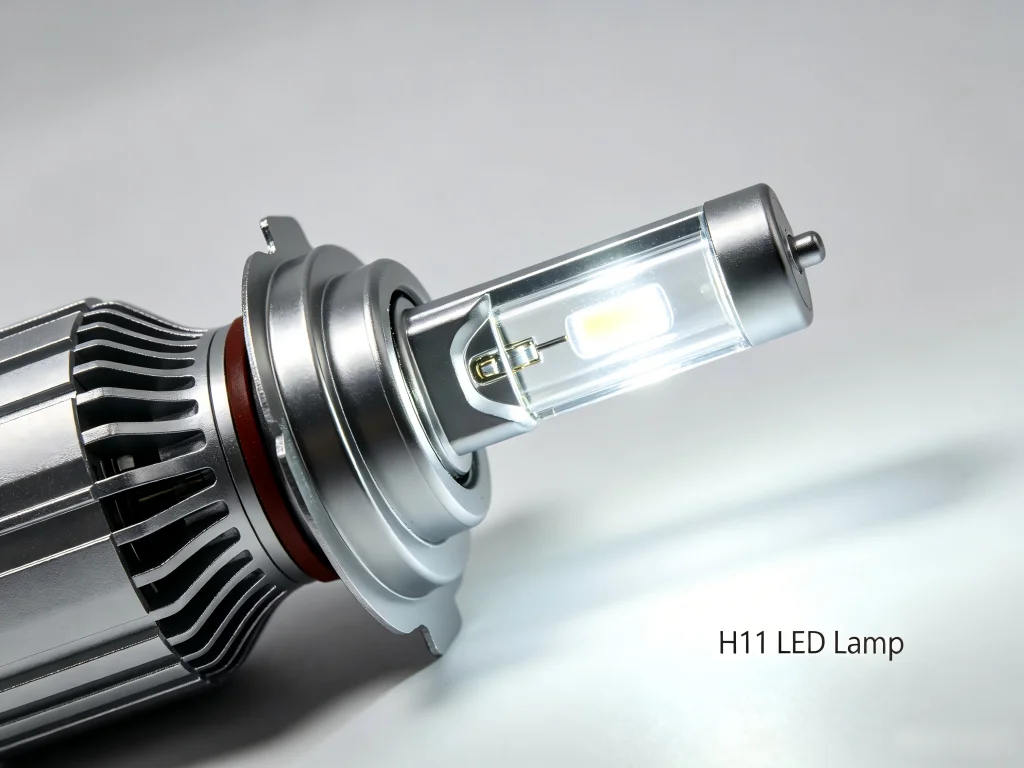
You finally decided to upgrade your vehicle’s halogen headlights to an h11 led lamp. You ordered a popular set online, installed them in fifteen minutes, and turned them on expecting brilliance. Instead, you got flickering, dashboard warning lights, and a beam pattern that scattered light everywhere except where you needed it. Sound familiar?
You’re not alone. After analyzing thousands of customer reviews across automotive forums and retail platforms, a clear pattern emerges: most H11 LED upgrades fail within three to six months. The ones that survive often create new problems—glare that blinds oncoming traffic, cooling fans loud enough to hear inside the cabin, or CANbus errors that turn your dashboard into a Christmas tree.
In our years of engineering and manufacturing automotive LED lighting at GTR, we’ve tested hundreds of H11 LED bulbs across dozens of vehicle platforms. Based on our manufacturing expertise, the problem isn’t LED technology itself. The problem is how most brands implement it.

The Real Problem: Why Your H11 LED Bulb Upgrade Is Probably Doomed
Most H11 LED bulbs on the market today are engineered for marketing specifications, not real-world performance. They boast impressive lumen counts—25,000, 40,000, even 60,000 lumens—but these numbers are raw chip output, not the usable light that actually reaches the road. The difference between raw lumens and effective lumens can be as high as 70%.
Let’s break down what actually goes wrong:
The Thermal Death Spiral
LED chips generate significant heat. Without proper thermal management, that heat degrades the phosphor coating on the chips, causing color shifting and dimming over time. Many budget H11 LED bulbs use undersized heatsinks or cheap cooling fans that fail within months. When the fan fails, the bulb overheats. When it overheats, it dims. When it dims, you replace it. This cycle repeats because the underlying thermal design was never adequate to begin with.
One Amazon reviewer described exactly this scenario: “Installed these and they started playing up after 3 months. Globes started flashing in brightness and occasionally did not work at all”. Another reported: “after around a month one side started to flicker. Another week later and now only one side of the bulbs LED’s are working”.
The CANbus Nightmare
Modern vehicles use CANbus systems to monitor electrical loads. A halogen H11 bulb draws about 55 watts. Most LED replacements draw 20-35 watts. The vehicle’s computer interprets this lower draw as a burned-out bulb and triggers a warning. Some brands include “CANbus-ready” in their marketing, but in our testing, many of these so-called decoders don’t actually resolve the underlying electrical mismatch.
As one frustrated driver put it: “Good product but not error free so that come up as”. Another noted: “For my Corolla 2013, these lights sit just perfectly and super bright. But they’re flickering at DRL mode”.
The Beam Pattern Disaster
Perhaps the most dangerous failure mode is poor beam pattern. Halogen bulbs emit light 360 degrees from a single filament. LED chips emit light directionally. If the LED chip placement doesn’t precisely match the halogen filament position, the light scatters incorrectly. The result? Dark spots directly ahead and excessive glare for oncoming drivers.
Poor beam pattern isn’t just annoying—it’s dangerous. Scattered light reduces your effective visibility while blinding other drivers. Several reviewers noted this exact issue: “Not so bright as to blind oncoming traffic” implies the reviewer was pleasantly surprised that their bulbs didn’t cause glare—suggesting they expected glare as the norm.
The Noise Problem Nobody Talks About
Cooling fans on H11 LED bulbs vary dramatically in quality. Cheap fans use sleeve bearings that wear out quickly and become noisy. One reviewer warned: “The main disadvantage is the cooling fans – once they spin up they are noisy enough to be heard in the cabin when the car is turned off”. If you can hear your headlight bulbs inside the vehicle, something is seriously wrong with the design.
Why Cheap H11 LED Bulbs Keep Failing—The Engineering Truth
The LED chip itself is rarely the point of failure. High-quality LED chips from manufacturers like Osram, Nichia, or Lumileds can last 50,000 hours or more. The failure points are almost always the supporting components: the driver circuitry, the thermal management system, and the mechanical fitment.
Think of it this way: installing cheap LED bulbs in your headlight housing is like putting a racing engine in a car with stock brakes and suspension. The engine (LED chip) might be powerful, but the supporting systems (thermal, electrical, optical) can’t handle the demands. The entire system fails because the weakest link breaks.
In our engineering testing at GTR, we’ve observed that bulbs with adequate thermal separation between the LED die and the driver circuit run significantly cooler than competitors drawing the same wattage. This isn’t magic—it’s physics. Heat degrades electronics. Better thermal design equals longer life.
Real-World Evidence: What Drivers Are Actually Saying
The gap between marketing claims and real-world performance is staggering. Consider these verified customer experiences:
- Three-month failure: “Installed these and they started playing up after 3 months. Globes started flashing in brightness and occasionally did not work at all”
- Premature burnout: “The bulb has already lost its shelf life after 1.5 months of usage”
- Poor brightness: “This LED replacement fog lights are claiming 18,000 lm and I can tell you they are maybe 1000”
- Fitment issues: “The plastic H11 locating baseplate is much thicker than the Halogen metal original so the LED light could not be locked in”
- One-side failure: “one LED light failed just after 3 months, and had to replace with another brand”
These aren’t isolated incidents. They represent a systemic problem across the budget and mid-range H11 LED bulb market.
What to Look For in a Quality H11 LED Lamp
The difference between a failed upgrade and a successful one comes down to four engineering priorities: thermal management, optical precision, electrical compatibility, and build quality.
Here’s what actually matters when choosing an h11 led lamp:
- Thermal Separation Technology: Look for bulbs where the LED die sits on a separate thermal plane from the driver circuit. This prevents heat from the chips from cooking the electronics.
- Beam Pattern Accuracy: The LED chip placement must precisely match the halogen filament position. This is non-negotiable for proper beam pattern and minimal glare.
- CANbus Compatibility: Genuine CANbus solutions integrate proper load resistors or PWM interfaces that communicate correctly with your vehicle’s computer.
- Build Quality: Aviation-grade aluminum housings, copper substrates, and robust sealing (IP68 or equivalent) indicate a manufacturer that cares about longevity.
The GTR Solution: Engineering That Actually Works
At GTR Lighting, we approached the h11 led lamp differently. Instead of chasing inflated lumen numbers for marketing purposes, we focused on what actually matters: usable light, reliable performance, and proper fitment.
Our Ultra Series 3.0 H11 bulbs feature custom TST 7045 LED chipsets with thermal separation technology. The LED die sits on a separate thermal plane from the driver circuit, keeping electronics cool and extending lifespan. The result is consistent light output over time, not the rapid degradation you see with cheaper alternatives.
Independent testing confirms the difference: the GTR Lighting Ultra 3 H11 delivered 920 max lux at the brightest point—475% brighter than stock halogen, while retaining the sharp cutoff line that projector housings are designed to produce. You get dramatically more usable light without blinding oncoming drivers.
Real-world users have noticed: “They are much brighter, quieter, the headlight lens feels warmer for those who drive in snow. Also I’ve never been flashed by oncoming traffic with them”.
Every GTR H11 LED bulb is engineered for plug-and-play installation with built-in CANbus compatibility. No external resistors. No cutting wires. No dashboard warnings. Just brighter, safer, more reliable lighting.
Frequently Asked Questions About H11 LED Lamps
Why do my H11 LED bulbs flicker?
Flickering typically indicates a CANbus compatibility issue or a failing driver circuit. Your vehicle’s computer detects the lower power draw of LED bulbs and interprets it as a bulb failure. Quality H11 LED bulbs include integrated CANbus decoders that simulate the correct electrical load. If flickering persists after installation, the bulbs may have inadequate thermal management or defective drivers.
How long should an H11 LED bulb last?
A quality H11 LED bulb should last 30,000 to 50,000 hours under normal operating conditions. However, this lifespan assumes adequate thermal management. In our testing, bulbs with poor heat dissipation begin degrading within months, while properly engineered bulbs maintain consistent output for years.
Will H11 LED bulbs fit in my car?
Most H11 LED bulbs are designed as direct replacements for halogen H11 bulbs. However, some vehicles have tight dust cap clearance or specific orientation requirements. Look for bulbs with a 1:1 design that matches the halogen filament position and compact dimensions that fit standard housings.
Do H11 LED bulbs cause glare for oncoming drivers?
Properly engineered H11 LED bulbs with accurate chip placement should not cause excessive glare. The key is beam pattern accuracy. If the LED chips don’t precisely match the halogen filament position, light scatters incorrectly. Quality bulbs are engineered to maintain the factory beam pattern with a sharp cutoff line.
Are H11 LED bulbs legal for road use?
LED headlight bulbs are legal in most jurisdictions when they meet specific standards for beam pattern and brightness. However, regulations vary by country and state. Always check your local requirements. Quality bulbs that maintain proper beam patterns are more likely to comply with regulations than cheap alternatives with scattered light output.
Why are some H11 LED bulbs so expensive?
Price reflects engineering quality, not just brand markup. Expensive bulbs use superior LED chips (Osram, Nichia, Lumileds), better thermal management (copper substrates, aviation-grade aluminum), precision optical design, and robust CANbus integration. Cheap bulbs cut corners on all of these, which is why they fail so quickly.
Do I need resistors for H11 LED bulbs?
You need either integrated CANbus decoders or external resistors to prevent error messages. Quality H11 LED bulbs include integrated decoders. Cheaper bulbs may require separate resistor harnesses. Some vehicles with sensitive CANbus systems may still need additional decoding even with integrated solutions.
Can I install H11 LED bulbs myself?
Most H11 LED bulbs are designed for plug-and-play installation in 10-15 minutes. However, some vehicles have tight access or require dust cap modification. Always check your specific vehicle’s headlight housing clearance before purchasing.
Stop Settling for Failed Upgrades
You deserve headlights that actually work—bright, reliable, and safe. Not flickering bulbs that fail in three months. Not noisy fans that embarrass you at stoplights. Not scattered beams that make night driving more dangerous, not less.
At GTR Lighting, we’ve spent years engineering the problems out of H11 LED upgrades. Our bulbs are built to outlast and outperform—475% brighter than stock, with beam patterns that keep light where it belongs, thermal management that prevents premature failure, and CANbus compatibility that means no dashboard warnings.
Thousands of drivers have made the switch. It’s time you did too.
Upgrade to GTR Lighting Ultra Series 3.0 H11 LED bulbs today. 参观 https://www.rhgtr.com to find the right fit for your vehicle and experience the difference that real engineering makes.