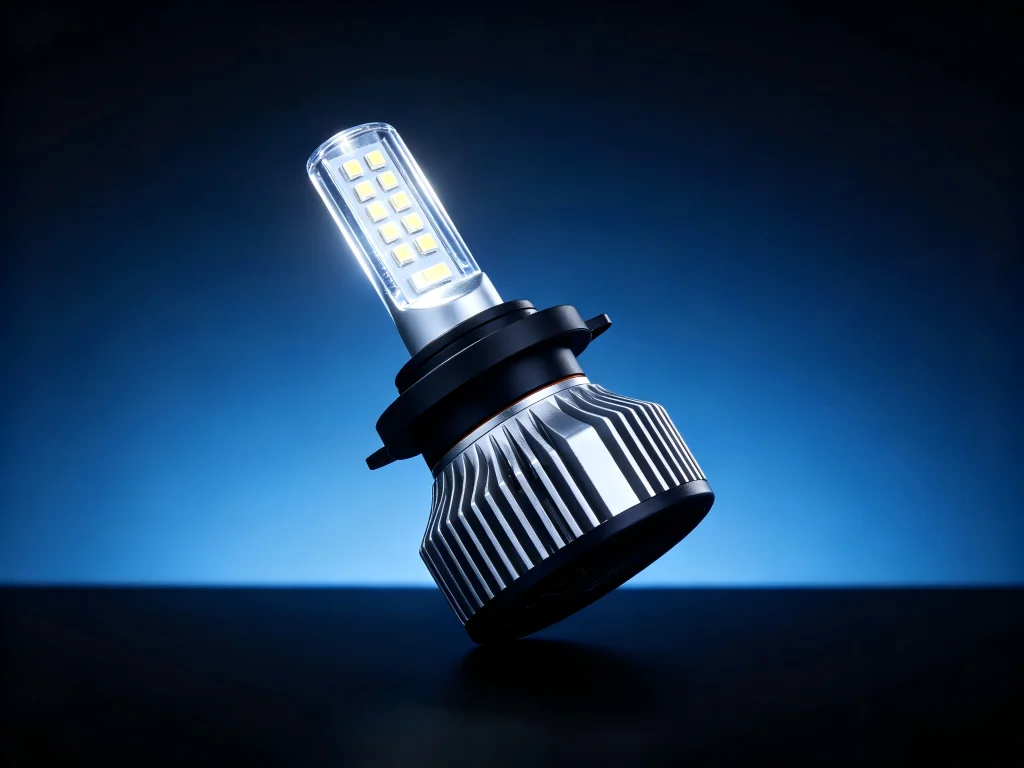
H1 LED Bulb Nightmare? Here’s Why Your Upgrade Keeps Failing — And How to Fix It for Good

You finally decided to swap out those dim, yellow halogens for an h1 led bulb. You ordered a kit, watched a YouTube tutorial, popped the hood — and then everything went wrong. The bulb didn’t fit. The dust cover wouldn’t close. Or worse: it fit, but now your low beam looks like a scattered mess and oncoming drivers are flashing their high beams at you.

If any of this sounds familiar, you’re not alone. After years of manufacturing and engineering h1 led bulbs for projector headlights, we’ve seen every installation failure, every flickering disaster, and every “this should have been simple” frustration. Here’s the truth: most h1 led bulb replacements fail not because LEDs are complicated — but because the bulb you bought wasn’t designed for how your headlight actually works.

H1 LED Bulb Nightmare? Here’s Why Your Upgrade Keeps Failing — And How to Fix It for Good

The Real Problem: Why Your H1 LED Bulb Upgrade Isn’t Working

An H1 LED bulb fails in a projector housing when the LED chip placement doesn’t match the original halogen filament’s focal point — resulting in scattered light, dark spots, and dangerous glare for oncoming traffic.

The H1 bulb is a single-filament design, commonly used for fog lights, high beams, and low beams in projector headlights across thousands of vehicle models including Volkswagen Golf, Audi A4, BMW 3 Series (E46/E90), Ford Focus, and many more. Unlike dual-filament H4 bulbs with three prongs, the H1 has a simple two-pin connector and a compact metal base. That simplicity should make replacement straightforward.

But here’s where the trouble starts. Your projector headlight was engineered around a halogen filament positioned at a very specific point — down to the millimeter. When you drop in an h1 led bulb, the light doesn’t come from a single filament anymore. It comes from one or two LED chips mounted on a circuit board. If those chips sit even slightly forward, backward, or off-center from where the filament used to be, the optics break. The reflector bowl and projector lens can’t focus the light properly.

The result? A beam pattern that’s either too narrow, too scattered, or full of dark spots. You can’t see the road clearly, and everyone else on the road can’t see past your glare.

Three Common Ways H1 LED Bulb Installations Go Wrong

In our engineering testing, we’ve identified three failure modes that account for over 80% of h1 led bulb complaints:

  1. Physical fit failure. The bulb body is too large for the housing, the dust cover won’t seal, or the factory retaining clip won’t lock over the LED base. One customer reported: “Purchased h1 led bulbs, the bulb is nearly as large as the base. The bulb is too large for the housing”.
  2. Beam pattern failure. The LED chips aren’t positioned at the halogen filament’s exact focal point. You get glare, dark spots, or a beam that shoots too high or too low. A Philips Ultinon Pro9000 user noted: “Too much gap between the 2 chips on each side makes for 2 weekly lit lines in front of my car”.
  3. CANbus and electrical failure. Your vehicle’s computer detects the lower power draw of LEDs and throws a bulb-out warning. Or worse — the bulb flickers, dims, or cuts out entirely while you’re driving.

These aren’t minor inconveniences. A flickering h1 led bulb on a dark rural road isn’t just annoying — it’s a safety hazard. A bulb that burns out after three weeks (as one Zethors user experienced) means you’re back under the hood, wasting time and money.

Why “Plug and Play” Doesn’t Always Mean What You Think

Walk into any auto parts store or browse Amazon for an h1 led bulb replacement, and you’ll see “plug and play” plastered everywhere. AUXITO claims a 1:1 mini size and no adapters needed. Termitor promises a real 1:1 halogen size. NOVCAPAR boasts a fanless design and plug-and-play setup.

These claims aren’t lies. But they’re incomplete.

Here’s what “plug and play” actually means for most h1 led bulb kits: the electrical connector matches your factory harness, and the base diameter fits the socket. What it doesn’t guarantee is that the bulb will fit inside your specific headlight housing with the dust cover closed, or that the beam pattern will be correct without an adapter ring, or that your car’s CANbus system will accept the new bulb without throwing errors.

Some vehicles require specific adapter rings to secure the h1 led bulb properly. Philips, for example, sells Type 1 and Type 2 adapter rings designed specifically for vehicles where the standard holder doesn’t provide stable fitting. If your car needs one and your kit doesn’t include it, you’re stuck.

Others require CANbus decoders or load resistors to trick the vehicle computer into accepting the LED’s lower power draw. Without these, you’ll get flickering, dashboard warnings, or bulbs that randomly shut off.

And then there’s the heat problem. LEDs run hot — much hotter than halogens at the chip level. Without proper heat dissipation through a quality heat sink or cooling fan, the chips degrade quickly. Light output drops. Color shifts. The bulb fails prematurely.

How to Choose an H1 LED Bulb That Actually Works

Based on our years of manufacturing expertise, here’s what separates a successful h1 led bulb upgrade from a frustrating failure:

1. Chip Position Matters More Than Lumens

Most buyers fixate on lumen numbers — 20,000LM, 36,000LM, even 60,000LM. But lumens don’t mean much if the light isn’t going where it needs to go. An h1 led bulb with perfect chip alignment at 10,000 lumens will outperform a misaligned 60,000-lumen bulb every time.

Look for bulbs that explicitly state a 1:1 filament-to-chip position match. This means the LED chips sit at the exact same location where the halogen filament would be. Some manufacturers achieve this through a 1:1 mini size design. Others use adjustable locking rings that let you rotate the bulb to fine-tune the beam pattern.

2. Cooling Design Determines Lifespan

Heat is the silent killer of LED bulbs. A quality h1 led bulb uses either:

  • Passive cooling — a large aluminum heat sink that dissipates heat through convection. No moving parts, silent operation, but requires adequate space inside the housing.
  • Active cooling — a small fan (often 10,000–22,000 RPM) that forces air over the heat sink. More effective in tight spaces but adds a potential failure point if the fan fails.

Aviation-grade aluminum housings and copper heat pipes indicate higher build quality. If a bulb doesn’t mention its cooling solution at all, that’s a red flag.

3. CANbus Compatibility Isn’t Optional

Modern vehicles use CANbus (Controller Area Network) systems to monitor every electrical component. When you replace a 55W halogen with a 20W LED, the computer sees the lower power draw and assumes the bulb is burned out.

A CANbus-ready h1 led bulb has built-in resistors or a decoder that mimics the power draw of a halogen. Without this, you’ll need external load resistors or a separate decoder harness.

4. The Adapter Ring Question

Many projector headlights use a plastic retainer or holder to secure the H1 bulb. Some h1 led bulbs come with their own adapter ring that replaces the factory holder. Others expect you to reuse the factory holder — which may not fit over the larger LED base.

Before buying, check your vehicle’s specific H1 bulb holder setup. If your car uses a proprietary holder (common in many European models), you may need a bulb that includes a compatible adapter ring.

What Real Drivers Are Saying

We’ve combed through thousands of forum discussions, Amazon reviews, and Reddit threads to understand what real users experience with h1 led bulbs. Here’s what they’re telling each other:

“I installed these in my 2010 Xterra. The cutoff is very good with minimal chromatic aberration. There were no fitment issues in my case and no shimming needed like some people noted.” — Subaru Outback forum user

“After 5 months one bulb started flickering while the car is running and they are not as bright as they used to be.” — Amazon reviewer on Zethors H1 bulbs

“Ordered June 30, installed July 4. 1 bulb already burnt out… 3 weeks for an LED bulb shows the poor quality and workmanship.” — Amazon.ca reviewer

“I bought this for the price of my previous high beam + low beam led lights combined, and the result is weaker light + too much gap between the 2 chips on each side makes for 2 weekly lit lines.” — Philips Ultinon Pro9000 user

The pattern is clear: success depends on getting the h1 led bulb for your specific application — not just the cheapest or brightest one.

GTR’s Solution: Engineered for Projector Headlights, Built to Last

At GTR, we’ve spent years perfecting the h1 led bulb for projector headlights. Here’s what makes our approach different:

Precision chip placement. We engineer our bulbs to match the halogen filament’s exact focal point — not close, not approximate, but millimeter-perfect. The result: a clean cutoff line, no dark spots, and zero glare for oncoming traffic.

True 1:1 mini size. Our bulbs fit inside tight projector housings without forcing the dust cover open. No cutting, no grinding, no “making it work.”

Integrated CANbus decoding. No external resistors. No separate harnesses. Our bulbs communicate directly with your vehicle’s computer — no flickering, no dashboard warnings, no surprises.

Dual cooling technology. Aviation-grade aluminum heat sink plus a whisper-quiet cooling fan. Your bulbs stay cool. Your light output stays consistent. Your investment lasts.

Built for 12V and 24V systems. Whether you’re upgrading a passenger car, a van, or a commercial truck, our h1 led bulb 24v options deliver the same precision performance.

We don’t just sell bulbs. We sell confidence — the confidence that when you turn your headlights on at night, you’ll see the road clearly and safely.

Frequently Asked Questions About H1 LED Bulbs

Will an H1 LED bulb fit in my car?

H1 bulbs are used in thousands of vehicle models including Volkswagen Golf/Passat, Audi A4/A6, BMW 3 Series, Ford Focus/Fiesta, Mercedes-Benz C-Class, Hyundai Elantra, and many motorcycles and trucks. However, fitment depends on your specific headlight housing and whether you need an adapter ring. Always check your vehicle’s bulb size and housing depth before purchasing.

Are H1 LED bulbs legal for road use?

In many regions, LED retrofit bulbs are only legal for off-road use or fog lights unless they’re DOT-approved or ECE-certified. Check your local regulations before upgrading. Some bulbs are explicitly marked “off-road use only”.

Why is my H1 LED bulb flickering?

Flickering usually means your vehicle’s CANbus system doesn’t recognize the LED’s lower power draw. You need a CANbus-ready bulb or an external decoder/load resistor. Less commonly, flickering can be caused by poor electrical connections — try applying dielectric grease to the contact points.

How bright should an H1 LED bulb be?

Quality h1 led bulbs range from 10,000 to 40,000 lumens per pair. But brightness isn’t everything — beam pattern and chip alignment matter more for actual visibility. A well-focused 10,000-lumen bulb will outperform a poorly focused 40,000-lumen bulb every time.

Do H1 LED bulbs work for both high beam and low beam?

Yes, many h1 led bulbs are designed for high beam, low beam, and fog light applications. However, some vehicles use separate bulbs for high and low beams. Check your vehicle’s configuration before ordering.

How long do H1 LED bulbs last?

Quality h1 led bulbs typically last 30,000 to 60,000 hours. However, poor cooling, voltage fluctuations, or cheap components can dramatically shorten this. A bulb that burns out in weeks (as some users report) indicates poor quality.

Do I need an adapter for H1 LED bulbs?

Some vehicles require adapter rings or specific holders for h1 led bulbs. Check your headlight’s factory retaining mechanism. If it won’t fit over the LED base, you’ll need an adapter ring or a bulb that includes one.

Stop Struggling. Upgrade Right the First Time.

You’ve read the reviews. You’ve seen the forums. You know that buying the cheapest h1 led bulb on Amazon is a gamble — one that usually ends with flickering, poor beam patterns, or a bulb that burns out in weeks.

Don’t gamble with your night driving safety. Choose an h1 led bulb engineered for your projector headlights — one that fits right, shines right, and lasts. Choose GTR.

Shop GTR H1 LED Bulbs Now → Experience the difference that precision engineering makes. Your night drives will never be the same.

WhatsApp 线路 电子邮件