You’re merging onto a dark highway. Your xenon headlights flicker once, then settle into that familiar dim, yellowish glow. You squint. The road ahead looks like a blur. That truck in the next lane? You barely saw it. This isn’t just annoying. It’s a safety hazard that thousands of drivers face every single night.
Câu trả lời trực tiếp: Failing xenon headlights don’t just dim over time—they lose up to 70% of their original light output before they actually burn out, creating a dangerous gap between what you think you see and what’s actually on the road. Most drivers don’t realize their lights are failing until it’s almost too late.
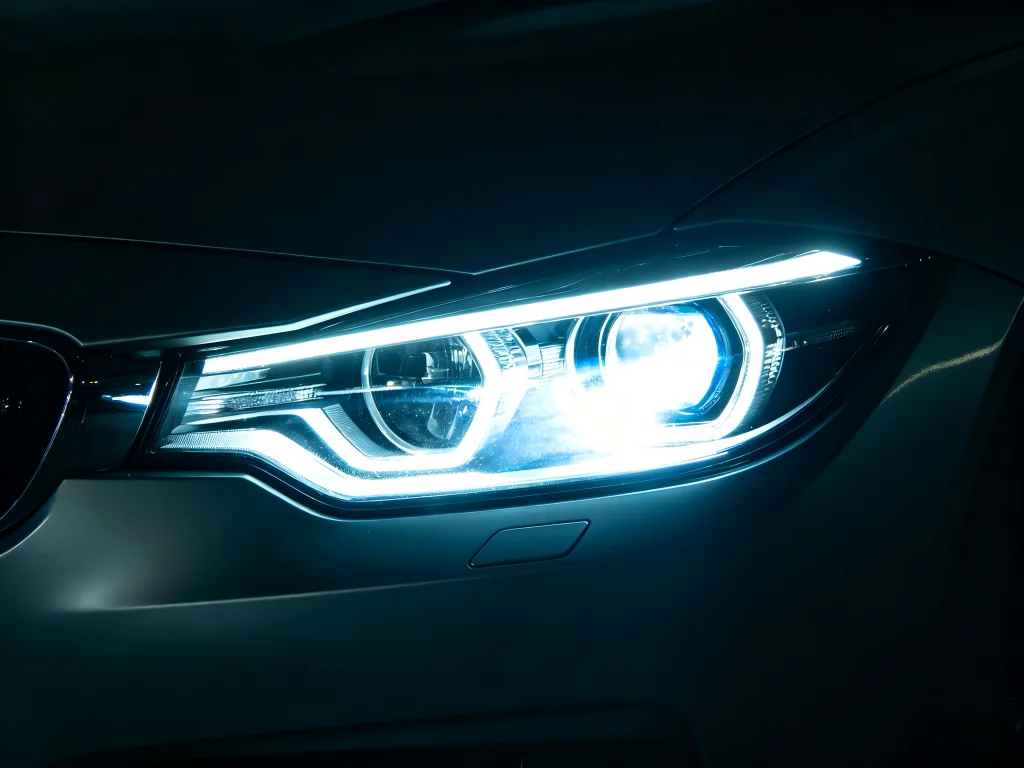
The Hidden Danger in Your Headlight Housing
Here’s what’s happening inside your headlight assembly. Xenon HID (High-Intensity Discharge) bulbs work by creating an electric arc between two electrodes inside a quartz capsule filled with xenon gas and mercury vapor. This arc generates intense light—roughly 3,000 to 3,500 lumens compared to just 1,000 to 1,500 lumens from halogen bulbs. But here’s the catch: that arc erodes the electrodes over time. Every time you start your car, your xenon headlights endure a 25,000-volt ignition pulse that slowly degrades the internal components.
The result? Your lights don’t fail suddenly like a halogen bulb with a snapped filament. They fade gradually. So gradually, in fact, that your brain compensates. You don’t notice the dimming because it happens over thousands of miles. But the data doesn’t lie. Xenon bulbs typically last between 2,000 and 2,500 hours, but their light output drops significantly long before that. Industry experts recommend replacing them around 1,000 hours of use—not when they finally die.
Real Stories from Real Drivers Who Learned the Hard Way
We’ve seen this pattern play out countless times in forums and customer feedback. One Porsche owner described it perfectly: “I feel like the front xenon lights are simply not as bright anymore. The headlight is a little cloudy but not much.” Another driver on a BMW forum shared their frustration: “When I replace the bulbs they switch off after a few seconds. Ballast is fine. Advise on what the problem could be.”
Then there’s the wiring issue that catches many off guard. A BMW X5 owner discovered that their “purple xenon light and all” was actually caused by a bad connection in the headlight wiring harness. Water ingress is another silent killer. One driver reported: “I had water ingress in my left headlight, which resulted in various error messages in the dashboard including Adaptive headlight failure and headlight vertical aim control failure.”
These aren’t isolated incidents. They’re symptoms of a larger problem: most drivers don’t understand how their xenon headlights work, what causes them to fail, or when to replace them. And by the time they notice the problem, they’ve already been driving dangerously for months.
The Domino Effect of Failing Xenon Headlights
Let’s trace the chain reaction. Dim xenon headlights mean reduced visibility. Reduced visibility means slower reaction times. Slower reaction times mean increased stopping distance. At 60 mph, every second of delayed reaction adds 88 feet to your stopping distance. Now multiply that by the months you’ve been driving with degraded lights. The math is terrifying.
But it gets worse. When one xenon bulb fails, many drivers replace just that single bulb. This creates a mismatch. One headlight produces crisp, white light while the other casts a dimmer, yellower beam. Your eyes struggle to adjust between the two, causing fatigue and reducing your depth perception. And if your ballast fails—which is common in older systems—you might find yourself with a headlight that randomly turns off while driving over uneven surfaces.
The cost of ignoring these warning signs goes beyond safety. A failed xenon headlight assembly can cost anywhere from hundreds to thousands of dollars to replace, especially on premium vehicles like BMWs, Audis, and Porsches. And if you’re caught driving with faulty headlights, you could face fines or even fail your vehicle inspection.
Why Cheap Replacement Bulbs Make Everything Worse
Here’s where many drivers make their biggest mistake. Faced with expensive OEM replacement costs, they turn to cheap aftermarket xenon bulbs. These bulbs promise “OEM quality” at a fraction of the price. But here’s what the fine print doesn’t tell you:
- Inferior electrode materials degrade faster, meaning you’ll be replacing them again in half the time
- Inconsistent color temperature creates that mismatched look between your two headlights
- Poor quality control means higher failure rates and more frequent ballast issues
- No warranty protection leaves you paying out of pocket when they fail prematurely
One Amazon reviewer put it bluntly after buying cheap xenon bulbs: “I have been disappointed and cannot stand pitch black darkness on the road while driving with these brights on.” That’s not a review. That’s a warning.
The Real Cost of “Saving Money” on Xenon Headlights
Let’s do the math. A cheap xenon bulb costs $30 to $50 and lasts maybe 500 hours. A quality xenon bulb costs $100 to $150 and lasts 2,500 hours. The cheap bulb costs $0.06 to $0.10 per hour of use. The quality bulb costs $0.04 to $0.06 per hour. You’re actually paying more—and getting worse performance—by choosing the cheaper option.
But the real cost isn’t measured in dollars per hour. It’s measured in the near-miss you had last week. The deer you barely avoided. The pedestrian you didn’t see until the last second. Those moments don’t show up on a spreadsheet. But they stay with you.
How GTR Solves the Xenon Headlight Problem
This is where GTR enters the picture. Unlike generic replacement bulbs that treat symptoms, GTR addresses the root causes of xenon headlight failure. Our engineering team has spent years studying why xenon systems fail—and designing solutions that don’t.
Câu trả lời trực tiếp: GTR’s xenon headlight solutions use precision-engineered electrodes with enhanced durability coatings, rigorous factory testing at 25,000V ignition pulses, and matched color temperature pairs that eliminate the mismatched look that plagues other replacements.
Precision Engineering You Can Trust
Every GTR xenon bulb undergoes multi-point quality control testing before it leaves our facility. We test for:
- Electrode gap consistency to ensure stable arc formation
- Color temperature matching within 50K across paired bulbs
- Ballast compatibility across major vehicle platforms
- Vibration resistance for off-road and high-performance applications
Our bulbs are designed to work with factory ballasts—no modifications, no coding, no headaches. Just plug-and-play performance that restores your xenon headlights to their original brilliance.
Real-World Performance That Drivers Notice
GTR customers consistently report the same thing: “It’s like getting new eyes.” The difference between degraded OEM bulbs and fresh GTR replacements isn’t subtle. It’s transformative. One customer described the change as “instantly better light quality… much brighter than the standard units with much clearer light quality.”
Another noted: “They made a huge difference vs my old dim stock HID bulbs.” That’s the GTR difference. We don’t just replace your bulbs. We restore your confidence on the road.
Beyond the Bulb: Complete System Solutions
Sometimes the bulb isn’t the only problem. That’s why GTR offers comprehensive solutions that address the entire xenon system—from ballasts to wiring harnesses. Our Bi-xenon relay harnesses are designed to work with both positive and ground-switched headlight circuits, making them universally compatible with all vehicles. It’s a seamless solution that keeps your low and high beams under control with the original stalk inside the car.
For drivers looking to upgrade from halogen to xenon, GTR provides complete conversion kits that include everything you need: bulbs, ballasts, wiring, and detailed installation instructions. No cutting. No drilling. No destroying your original lighting system.
Frequently Asked Questions About Xenon Headlight Problems
Why do my xenon headlights flicker?
Flickering xenon headlights typically indicate a failing ballast or a poor electrical connection. The ballast provides the high-voltage ignition pulse and steady power required to maintain the arc. When it fails, the arc becomes unstable, causing flickering. In some cases, the issue may be a voltage drop in the vehicle’s electrical system that prevents proper ignition.
How long should xenon headlights last?
Quality xenon HID bulbs typically last between 2,000 and 2,500 hours. However, their light output begins to degrade significantly after about 1,000 hours of use. Most experts recommend replacing xenon bulbs around the 1,000-hour mark—not when they finally burn out.
Why is one xenon headlight dimmer than the other?
Xenon bulbs dim at different rates depending on usage and manufacturing quality. Replacing just one bulb creates a mismatch. Always replace xenon bulbs in pairs to ensure consistent light output and color temperature.
Can I replace xenon headlights myself?
Yes, but with caution. Xenon systems operate at high voltages—up to 25,000V during ignition. Always disconnect the battery and allow the system to cool before handling bulbs. If you’re uncomfortable with the process, consult a professional.
What causes xenon headlights to turn purple?
A purple tint indicates the bulb is nearing the end of its life. As the electrodes degrade, the arc shifts color. This is often accompanied by dimming and reduced light output. Replace the bulbs immediately when you notice this color shift.
Are xenon headlights legal?
Factory-installed xenon headlights are legal in most countries. However, retrofitting xenon bulbs into halogen housings is often illegal because it creates excessive glare. Always use xenon bulbs in housings designed for HID technology, and ensure your vehicle has automatic headlight leveling systems if required by law.
How do I know if my xenon ballast is failing?
Common symptoms include flickering lights, bulbs that won’t turn on, buzzing noises from the headlight assembly, or intermittent failure that occurs when driving over bumps. Physical signs include burn marks, swollen casing, or melted components on the ballast itself.
Your Xenon Headlights Deserve Better. So Do You.
You didn’t buy a premium vehicle to drive around with dim, mismatched, or failing headlights. You bought it for the experience. For the confidence. For the safety of knowing you can see and be seen.
Don’t let degraded xenon headlights rob you of that experience. Don’t risk your safety—or your family’s safety—on cheap replacements that fail when you need them most.
GTR delivers the performance your vehicle deserves. Precision-engineered xenon solutions that restore your headlights to factory-new brilliance—or better. Backed by rigorous testing, matched color temperatures, and a commitment to quality that cheap alternatives can’t match.
Stop squinting at the road ahead. Stop worrying about whether your lights will fail on the next dark highway. Take control of your night driving experience today.
Ghé thăm GTR Lighting to find the perfect xenon headlight solution for your vehicle. Because when it comes to your safety, settling for less isn’t an option.