Lựa chọn đúng LED cho bóng đèn pha việc sử dụng nên giải quyết một vấn đề đơn giản: bạn cần nhìn thấy đường sớm hơn, rõ ràng hơn và ít mỏi mắt hơn vào ban đêm. Tuy nhiên, nhiều tài xế thay bóng halogen yếu bằng đèn LED chỉ để phát hiện ra một loạt vấn đề mới—ánh sáng tán xạ, chói mắt, nhấp nháy, mã cảnh báo, lắp đặt kém hoặc tầm nhìn thực tế gây thất vọng.
Vấn đề hiếm khi nằm ở bản thân công nghệ LED. Thông thường đó là cách nguồn sáng LED tương tác với chóa phản xạ, projector, hệ thống điện và giới hạn nhiệt của xe.
Sự khác biệt đó phân biệt một nâng cấp đèn pha hữu ích với một sai lầm tốn kém.
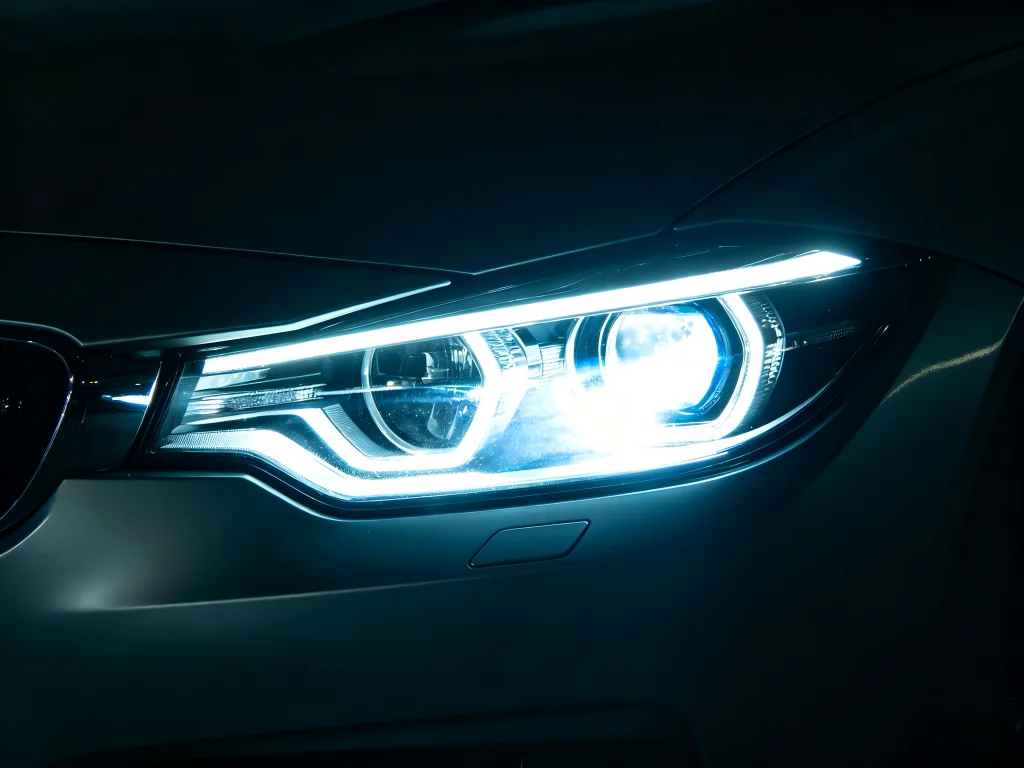
Tại sao đèn pha của bạn vẫn kém sau khi nâng cấp lên LED?
Bóng đèn pha LED có thể hoạt động kém khi chip LED của nó không tái tạo vị trí và hình học của dây tóc halogen nguyên bản. Kết quả có thể là lượng ánh sáng đo được dồi dào nhưng chiếu sáng đường yếu, độ sáng vùng gần quá mức, vùng tối hoặc chói ảnh hưởng đến tài xế ngược chiều.
Hãy hình dung một tình huống lái xe ban đêm phổ biến.
Bạn rời khỏi con đường thành phố được chiếu sáng tốt và bước vào một xa lộ hai làn tối tăm. Đèn pha halogen cũ của bạn có cảm giác vàng và yếu. Vạch kẻ đường mờ dần vào bóng tối. Người đi bộ trở nên khó nhận biết. Bạn giảm tốc độ vì khoảng cách nhìn hữu ích có cảm giác quá ngắn.
Vậy nên bạn mua một bộ được quảng cáo là “siêu sáng.”
Gara lắp chúng. Bạn bật chúng lên và bức tường trước xe đột nhiên trông sáng hơn nhiều.
Vấn đề đã được giải quyết?
Không nhất thiết.
Khi bạn bắt đầu lái xe, bạn có thể nhận thấy rằng 20 mét đầu tiên cực kỳ sáng trong khi con đường xa hơn phía trước vẫn được chiếu sáng kém. Các tài xế nháy đèn pha chiếu xa vào bạn. Bảng điều khiển báo lỗi bóng đèn. Một đèn bắt đầu nhấp nháy. Hoặc nắp chụp bụi không còn đóng được vì quạt tản nhiệt quá lớn.
Đây là lý do chúng tôi không đánh giá bóng đèn pha LED chỉ dựa trên những tuyên bố về độ sáng.
Vấn đề thực sự: Lumens không cho bạn biết ánh sáng đi đâu
Hiệu suất đèn pha hữu ích phụ thuộc vào sự phân bố ánh sáng được kiểm soát thay vì lumen lý thuyết tối đa. Một bóng đèn LED được thiết kế đúng cách đặt bề mặt phát sáng của nó gần vị trí dây tóc nguyên bản để chóa phản xạ hoặc projector có thể hướng ánh sáng về phía mặt đường thay vì tán xạ nó lên trên, xuống dưới hoặc ra ngoài chùm sáng dự định.
Đèn pha là một hệ thống quang học.
Bóng đèn tạo ra ánh sáng. Chóa phản xạ hoặc projector thu nhận nó. Các bề mặt quang học sau đó kiểm soát nơi ánh sáng đó chiếu tới.
Thay đổi vị trí, hình dạng hoặc hướng của nguồn sáng và bạn sẽ thay đổi đầu ra của toàn bộ hệ thống.
Tại sao vị trí chip lại quan trọng
Bóng đèn halogen tạo ra ánh sáng từ một dây tóc nhỏ được đặt tại một điểm được xác định cẩn thận. Hệ quang học của đèn pha được thiết kế xoay quanh điểm đó.
Bóng đèn LED thay thế sử dụng chip bán dẫn thay vì dây tóc. Nếu các chip đó quá lớn, quá dày, quá xa nhau hoặc được đặt không đúng vị trí, điểm hội tụ hiệu dụng sẽ thay đổi.
Điều đó có thể tạo ra:
- đường cắt mờ;
- điểm tối trong chùm sáng;
- chiếu sáng phía trước quá mức;
- giảm khả năng nhìn xa;
- chói không kiểm soát;
- phân bố không đều từ trái sang phải.
Dựa trên nhiều năm kinh nghiệm sản xuất đèn ô tô của chúng tôi, đây là một lý do khiến một bóng đèn có thông số thấp hơn nhưng hội tụ tốt có thể mang lại khả năng nhìn khi lái xe tốt hơn so với một sản phẩm được quảng cáo với con số lumen cực cao.
Nỗi khổ càng tệ hơn khi trời mưa, sương mù và lái xe ở vùng nông thôn
Những điểm yếu của đèn pha trở nên dễ nhận thấy hơn khi điều kiện đường sá xấu đi.
Nhựa đường ướt phản chiếu ánh sáng khác với mặt đường khô. Mưa lớn làm giảm độ tương phản. Sương mù đẩy ánh sáng không kiểm soát ngược về phía người lái. Đường nông thôn có thể gần như không có ánh sáng xung quanh.
Trong những môi trường này, độ sáng không kiểm soát thực sự có thể khiến trải nghiệm lái xe trở nên tồi tệ hơn.
Quá nhiều ánh sáng phía trước có thể đánh lừa mắt bạn
Còn một vấn đề khác hiếm khi xuất hiện trên bao bì.
Nếu bóng đèn LED tạo ra vùng cực sáng ngay trước xe, mắt bạn sẽ thích nghi với độ sáng đó. Các vật thể ở xa hơn trên đường sau đó có thể trông tương đối tối hơn.
Vì vậy, đèn pha có thể trông ấn tượng từ ghế lái nhưng lại mang lại tầm nhìn xa hữu ích ít hơn mong đợi.
Đây là lý do tại sao phân bố chùm sáng cần được chú trọng hơn các con số lumen được quảng cáo.
GTR tiếp cận vấn đề này khác biệt như thế nào
Tại GTR, chúng tôi tiếp cận bóng đèn pha LED như các linh kiện quang học và nhiệt chứ không phải nguồn sáng công suất cao đơn thuần.
Mục tiêu không chỉ là tạo ra ánh sáng. Mục tiêu là đưa ánh sáng hữu ích đến nơi người lái cần trong khi kiểm soát nhiệt, đặc tính điện và sự tương thích vật lý.
Trong thử nghiệm kỹ thuật của chúng tôi, chúng tôi đặc biệt chú ý đến vị trí chip, kích thước bề mặt phát sáng, hướng bóng đèn, truyền nhiệt, độ ổn định của driver và khả năng tương thích với các cấu trúc đèn pha phổ biến.
| Yếu tố kỹ thuật | Cách tiếp cận LED giá rẻ | Mục tiêu kỹ thuật tốt hơn | Tại sao điều đó quan trọng |
|---|---|---|---|
| Vị trí chip LED | Diện tích phát sáng lớn | Hình học nhỏ gọn, giống dây tóc | Giúp duy trì tiêu điểm chùm sáng |
| Độ sáng | Số lumen quảng cáo tối đa | Độ chiếu sáng đường có thể sử dụng | Giảm ánh sáng tán xạ lãng phí |
| Làm mát | Tản nhiệt cơ bản | Hệ thống nhiệt phù hợp | Hỗ trợ đầu ra ổn định |
| Trình điều khiển | Linh kiện điện tử chi phí thấp nhất | Kiểm soát dòng điện ổn định | Giúp giảm nhấp nháy và bất ổn |
| Lắp đặt | Giả định một vỏ đèn | Xác minh đui đèn và vỏ đèn | Giảm vấn đề lắp đặt |
| Hình dạng chùm tia | Mối quan tâm thứ yếu | Yếu tố đánh giá chính | Improves usable visibility |
H11, H7 và H4: Tại sao loại bóng đèn thay đổi mọi thứ
Các tìm kiếm cho LED headlight bulbs H11, LED headlight bulbs H7, và LED headlight bulbs H4 often look like variations of the same product search.
They are not.
Bóng đèn pha LED H11
H11 applications are commonly associated with low-beam and fog-light positions, although exact use depends on the vehicle.
The challenge is often packaging. Some housings have limited rear clearance, which means a large fan or external driver may interfere with the dust cover.
Before ordering LED headlight bulbs H11, verify both socket compatibility and physical dimensions.
Bóng đèn pha LED H7
H7 installations can be deceptively difficult.
Depending on the vehicle, the bulb may use a spring clip, adapter, retaining ring, or manufacturer-specific holder. A technically correct H7 LED may therefore still require an appropriate mounting adapter.
For distributors selling LED headlight bulbs H7, vehicle fitment data can reduce returns more effectively than simply expanding SKU count.
Bóng đèn pha LED H4
H4 is a dual-beam format. One bulb must support both low and high beam functions.
That places more pressure on LED chip positioning because both beam functions need appropriate optical relationships with the headlamp.
When evaluating LED headlight bulbs H4, test both low and high beam patterns. A good low beam does not automatically guarantee a useful high beam.
Đừng chỉ tìm kiếm “Bóng đèn pha LED gần tôi”
Searching for LED headlight bulbs near me is useful when you need a replacement quickly, but location should not be the main buying criterion. Verify bulb size, headlamp type, rear clearance, electrical compatibility, beam quality, cooling design, and local road-use rules before choosing a nearby product.
Search terms such as LED headlight bulbs near me, LED headlight bulbs nearby, và LED headlight bulbs AutoZone show strong local purchase intent.
Convenience matters when a bulb has failed and the vehicle needs to return to the road quickly.
But the closest product is not automatically the correct product.
- Confirm the original bulb code.
- Check whether the lamp uses a reflector or projector.
- Measure available space behind the bulb.
- Check the retaining mechanism.
- Determine whether the vehicle uses CANbus or PWM monitoring.
- Compare beam-pattern evidence rather than lumen claims alone.
- Check local regulations before using retrofit LEDs on public roads.
Tại sao bóng đèn pha LED nhấp nháy hoặc kích hoạt lỗi bảng điều khiển
LEDs generally behave differently from traditional halogen loads.
Modern vehicles may monitor bulb resistance or current draw. When the system sees an unexpected electrical load, it may interpret the LED as a failed bulb.
The result may include:
- dashboard bulb warnings;
- startup flashing;
- continuous flickering;
- LEDs remaining faintly illuminated after shutdown;
- unstable operation with PWM-controlled circuits.
A CANbus decoder or appropriate driver may solve some applications, but “CANbus compatible” should never be treated as a universal guarantee.
Vehicle electronics differ considerably between platforms.
Làm mát: Lý do ẩn khiến đèn LED sáng có thể trở nên mờ
LED chips produce less waste heat than halogen filaments relative to their efficiency, but the heat generated at the semiconductor junction still needs to move away from the chip.
If heat remains trapped, junction temperature rises.
That may reduce light output and accelerate component aging.
Bóng đèn LED làm mát bằng quạt
Active cooling can move heat away from a compact high-output bulb quickly. This makes fan-cooled designs useful when high power density must fit into a relatively small package.
The trade-offs include moving components, potential fan noise, and the need for adequate airflow.
Bóng đèn LED không quạt tản nhiệt
Passive systems remove the fan and rely on thermal conduction and heat-sink surface area.
They can offer simple and quiet operation, but thermal performance depends heavily on available space and the efficiency of the heat-transfer path.
Neither system automatically wins. The correct choice depends on power level, packaging, operating temperature, and headlamp design.
Nhiệt độ màu nào thực sự hiệu quả?
Many aftermarket LEDs are marketed around 6000K because clean white light creates a modern appearance.
Yet higher Kelvin does not mean higher brightness.
Kelvin describes color appearance rather than total luminous output.
For general driving, a neutral-to-cool white output may provide good visual contrast. In heavy rain or fog, extremely blue-white light may be less comfortable because shorter wavelengths tend to scatter more strongly.
The practical lesson is simple: do not buy headlights based on Kelvin alone.
Bóng đèn pha LED có hợp pháp ở Anh không?
Factory-designed LED headlamps can be legal in the UK, but installing an LED replacement into a halogen headlamp does not automatically create a road-legal conversion. Vehicle age, headlamp approval, lamp and light-source compatibility, beam performance, and current UK regulations must be checked before road use.
This distinction matters for anyone searching LED headlight bulbs legal UK.
A bulb may physically fit an H7, H11, or H4 socket while the complete conversion still fails to meet local road-use requirements.
For current requirements, buyers should verify the applicable UK regulations and MOT requirements rather than relying on a seller’s generic “road legal” claim. See the UK Government MOT guidance and applicable vehicle-lighting regulations before fitting retrofit lighting for public-road use.
For distributors, this is also a commercial issue. Packaging and product pages should clearly distinguish physical compatibility from regulatory approval.
Những gì chúng tôi sẽ kiểm tra trước khi mua 1.000 bộ
If we were evaluating an LED bulb for wholesale distribution, we would not begin with the carton design or the advertised lumen number.
We would test:
- Beam geometry: Compare the LED against the original bulb in representative headlamps.
- Hot output: Measure performance after thermal stabilization rather than only at startup.
- Electrical behavior: Test voltage variation, PWM systems, and sensitive vehicle electronics.
- Thermal stability: Monitor critical temperatures during extended operation.
- Mechanical fit: Check holders, dust covers, connectors, and rear clearance.
- High/low beam function: Especially important for H4 designs.
- Production consistency: Compare multiple samples rather than one hand-picked unit.
This process matters because one impressive sample does not prove that thousands of production units will perform consistently.
Phản hồi thực tế: Điều tài xế thường nhận thấy đầu tiên
Across automotive communities, installers tend to focus on a few practical outcomes: whether the beam stays controlled, whether other drivers flash them, whether warning lights appear, whether the bulb fits behind the dust cap, and whether brightness remains stable after extended driving.
A typical installer-style observation might sound like this:
“The first LED I tried looked incredibly bright against the garage door, but the road beam was messy. The better-designed bulb didn’t look dramatically brighter at five meters, yet the cutoff and distance visibility were much better.”
This is an illustrative example rather than a quoted customer review, but it reflects the difference between visual brightness and optical performance.
Câu hỏi thường gặp về LED để nâng cấp bóng đèn pha
Bóng đèn pha LED có tốt hơn halogen không?
They can provide whiter light, higher efficiency, and strong illumination, but performance depends on optical compatibility. A poorly matched LED could produce worse beam control than the original halogen bulb.
Tôi có thể thay bóng halogen H11 bằng LED H11 không?
Physical socket compatibility is only the first check. Verify housing clearance, beam pattern, electrical compatibility, retaining hardware, and local regulations.
Tại sao đèn pha LED mới của tôi sáng nhưng khó nhìn?
The light may be concentrated too close to the vehicle or scattered outside the useful road zone. Beam distribution matters more than apparent brightness.
Bóng đèn pha LED có cần CANbus không?
Some vehicles may require additional electronics to prevent warnings or flicker. Others do not. Compatibility depends on the vehicle’s lighting control system.
Nhiệt độ màu nào tốt nhất cho đèn pha LED?
There is no universal best value. Neutral-to-cool white is popular for general night driving, while very high color temperatures should not be confused with higher light output.
Đèn LED không quạt tản nhiệt có tốt hơn không?
Not automatically. Fanless bulbs remove moving parts, while active cooling may manage high thermal loads more effectively in compact designs. Engineering quality matters more than the cooling category alone.
Làm sao tôi biết một bóng đèn LED có chùm sáng tốt hay không?
Compare its beam against the original bulb in the same headlamp. Look for controlled distribution, appropriate cutoff where applicable, useful distance illumination, and limited stray light.
Tôi có thể mua bóng đèn pha LED ở đâu?
Retail searches such as LED headlight bulbs near me hoặc LED headlight bulbs nearby can locate local options. Professional distributors should go further and evaluate optical performance, reliability, vehicle coverage, documentation, warranty, and supplier consistency.
Khách hàng của bạn không cần thêm lumen. Họ cần ánh sáng tốt hơn.
For an individual driver, a poor LED bulb creates frustration.
For a distributor, importer, or automotive lighting chain, the cost becomes much larger.
Poor beam patterns create complaints. Fitment problems create returns. Electrical incompatibility consumes technical-support time. Unstable quality damages the distributor’s reputation.
That is why GTR focuses on the complete lighting problem rather than one marketing number.
If you are building an LED headlight product line for H4, H7, H11, or other popular applications, bring us your vehicle list, target market, required price position, and performance goals. We can discuss product selection, testing, fitment strategy, packaging, and OEM/ODM requirements around the actual conditions your customers face.
Do not wait until the first container reaches your warehouse to discover a beam-pattern or compatibility problem. Evaluate the lighting system before committing to volume. Explore GTR automotive lighting solutions at www.rhgtr.com and start with the application—not the lumen claim.