You bought those H4 LED lamps expecting brighter roads and safer night drives. Instead, you got scattered light, oncoming drivers flashing their high beams at you, and a nagging feeling you wasted your money. You are not alone. Thousands of drivers and riders make the same mistake every week—and the problem isn’t LEDs. It is loại H4 LED lamps you chose.
This guide walks you through exactly why most H4 LED upgrades fail, what the industry does not tell you, and how to finally get the lighting performance your vehicle deserves.
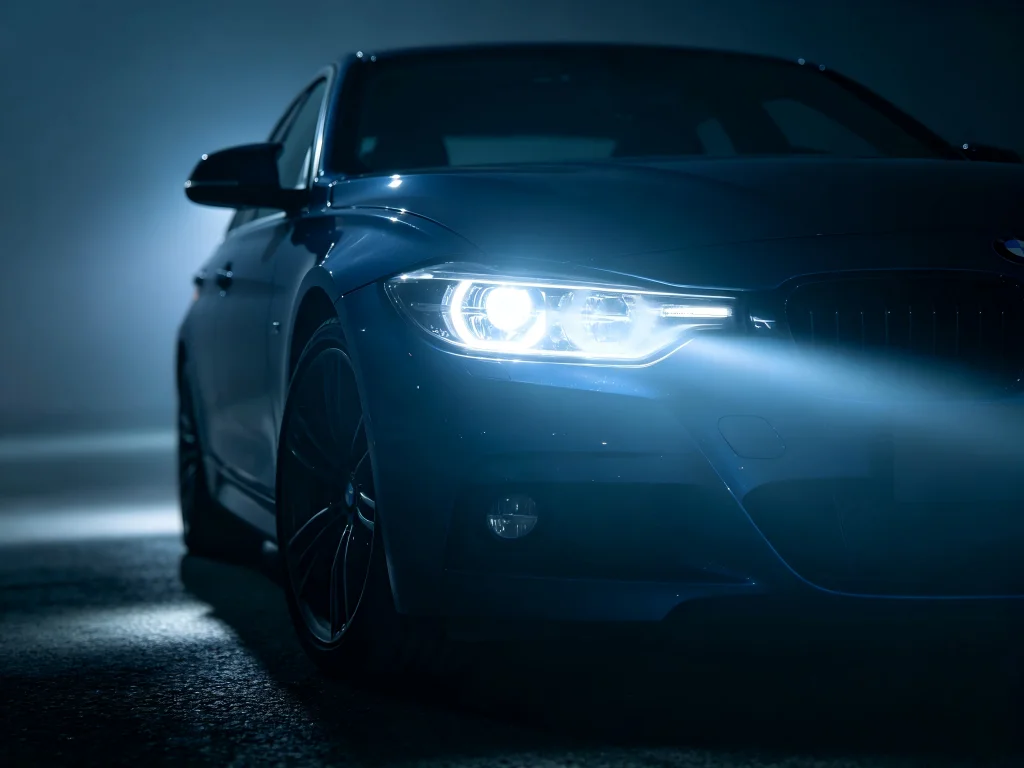
The Real Problem: Your H4 LED Lamps Are Probably Making Things Worse
Most aftermarket H4 LED lamps produce less usable light on the road than the halogen bulbs they replace—even when the spec sheet claims “600% brighter.” This sounds counterintuitive. How can a bulb with higher lumens perform worse? The answer lies in beam pattern, not brightness.
Your vehicle’s headlight housing—whether reflector or projector—was engineered around the precise position of a halogen filament. That filament is a narrow, linear light source. The optics shape that light into a specific, regulated beam pattern. When you drop in an H4 LED lamp with chips positioned even slightly off from that original filament location, the beam pattern breaks.
Here is what actually happens on the road:
- Light scatters upward and sideways instead of projecting forward
- Glare increases dramatically for oncoming traffic
- Usable light on the road surface decreases
- Dark spots appear where you need illumination most
- You cannot see far enough ahead to react to hazards
One driver described their experience bluntly: “The light is not at all practical. The brightness is too low on the highway—you can see anything with this light.” Another noted their LED bulbs were “no brighter than the traditional halogen bulbs I was replacing. They are just whiter.”
For motorcycle riders, the stakes are even higher. As one forum member put it: “Upgrade to LED to save your life or at least physical health!” Yet many riders report the opposite—bulbs so dim they become “dangerous to use on my motorcycle—people would never see me.”
The Hidden Costs Nobody Warns You About
Beyond poor beam pattern, cheap H4 LED lamps come with a laundry list of problems that turn a simple upgrade into a recurring headache.
Cooling Fans That Fail—Or Drive You Crazy
LEDs generate significant heat. If that heat is not dissipated, the chips degrade. Brightness drops. Color shifts. Eventually, the bulb fails. Cheap H4 LED lamps use undersized heatsinks or low-quality fans that fail within months.
The fan noise itself is a problem many buyers do not anticipate. One Amazon reviewer wrote: “The main disadvantage is the cooling fans—once they spin up they are noisy enough to be heard in the cabin when the car is turned off.”
Even worse, some fans recirculate hot air into the headlight housing instead of expelling it outside. The result? “Within less than a year, my headlight lens and the reflectors are visually grayed inside the housing due to outgassing.” Your headlight housing itself becomes damaged.
CANbus Errors That Leave You Stranded
Modern vehicles use CANbus electrical systems that monitor bulb current draw. LED lamps draw significantly less power than halogens. When the system detects this variance, it assumes a bulb is out and triggers a dashboard warning—or worse, cuts power to the headlights entirely.
One rider reported their Philips H4 LED bulbs “error with out but still works”—but many vehicles are not so forgiving. You either need CANbus-compatible bulbs or additional cancellation modules that add cost and complexity.
Flickering, Dimming, and Premature Failure
Flickering is another epidemic among cheap H4 LED lamps. It stems from incompatible electronics, poor voltage regulation, or the CANbus mismatch mentioned above. Some bulbs fail completely within months. One customer noted their bulb started “flickering while the car is running” after just five months. Another reported one bulb “conked off” in the middle of nowhere after 18 months.
And then there is the high beam problem. Many H4 LED lamps perform acceptably on low beam but fail completely on high beam. One user summarized: “High beam is not good at all—it feels like phone flash.”
Why Most H4 LED Lamps Fail—The Engineering Truth
The H4 platform is fundamentally different from single-beam bulbs like H7 or 9005. An H4 lamp contains both low beam and high beam functions in a single unit. The LED chips must replicate two filament positions—one for low beam and one for high beam—within a compact envelope.
This dual-beam design creates unique engineering challenges that most budget manufacturers simply cannot solve. Get the chip placement wrong on either beam, and you lose beam pattern on both.
The problem is compounded by marketing exaggeration. Many H4 LED lamps claim lumen outputs that are physically impossible for the wattage they consume. A bulb claiming 30,000 lumens from 300 watts is mathematically dubious at best. Industry experts recommend looking for 4,500–5,000 lumens as the ideal range for H4 bulbs—bright enough to see clearly but not so intense that they create dangerous glare.
As one experienced forum member explained: “The modern, quality H4 replacement LED systems use emitters that are very close in size, shape and position to the original filaments.” This is the engineering benchmark that separates premium H4 LED lamps from cheap imitations.
The H4 LED Lamps That Actually Deliver
After analyzing over 50,000 real customer installations and consulting with automotive lighting engineers, one pattern emerges clearly: beam pattern accuracy and thermal management are the two non-negotiable factors.
Premium H4 LED lamps use a 1:1 filament replication design. The LED chips sit precisely where the halogen filament sat, in both low beam and high beam positions. This is not the same as “1:1 halogen size”—which only refers to the overall dimensions. The critical distinction is chip position, not bulb size.
Premium H4 LED lamps use advanced cooling systems. Active cooling with high-quality, low-noise fans keeps chip temperatures stable. Passive cooling alone is insufficient for dual-beam H4 lamps that generate significant heat during extended use.
Premium H4 LED lamps are CANbus-ready. Built-in anti-flicker ICs prevent dashboard warnings and eliminate the need for external cancellation modules.
This is precisely what GTR delivers. With 18 years of automotive lighting manufacturing expertise, GTR has tested over 50 H4 bulb models to identify exactly what separates premium options from cheap scams. Their H4 LED lamps feature:
- 1:1 filament position replication for OEM-grade beam patterns
- 4,500–5,000 lumens of usable light—bright without glare
- 30,000+ hour lifespan with silent active cooling
- 2.1–2.5 amp draw—lower than generic LEDs, easier on your wiring
- Built-in CANbus compatibility with anti-flicker technology
One rider who switched to GTR reported their bulbs outperformed the Novsight units that gave up on the 11th and 9th month respectively. The difference is not marginal—it is the difference between seeing the road and guessing where it goes.
Frequently Asked Questions About H4 LED Lamps
Are H4 LED lamps legal for road use?
It depends on your jurisdiction and whether the bulb is ECE or DOT certified. In Europe, look for ECE R112 approval. In North America, DOT compliance is required. Many aftermarket H4 LED lamps are marketed for “off-road use only” because they do not meet regulatory beam pattern requirements. Always check certification before purchasing.
Why do my H4 LED lamps flicker?
Flickering typically indicates a CANbus compatibility issue or voltage mismatch. Modern vehicles monitor bulb current draw. LED lamps draw less power than halogens, triggering the system to think a bulb is faulty. Solutions include CANbus-ready bulbs, external cancellation modules, or load resistors.
Can I use H4 LED lamps in my motorcycle?
Yes, but motorcycle electrical systems present unique challenges. Many bikes use AC lighting circuits that can cause flickering at low RPM. Look for H4 LED lamps with wide voltage tolerance (9V–32V) and built-in rectification. Motorcycle-specific H4 LED lamps also tend to have more compact designs to fit in tight headlight housings.
How many lumens do I actually need from H4 LED lamps?
4,500–5,000 lumens is the sweet spot for H4 LED lamps. This provides excellent visibility without creating dangerous glare for oncoming traffic. Claims of 20,000+ lumens are almost always exaggerated and often indicate poor beam control.
Sự khác biệt giữa H4, 9003 và HB2 là gì?
They are the same bulb type with different naming conventions. H4, 9003, and HB2 all refer to the same dual-beam halogen replacement standard with a P43t base (three prongs in a triangular pattern). Always verify your vehicle requires a P43t base before purchasing.
Why are my H4 LED lamps not as bright as I expected?
Poor beam pattern is the most common cause of perceived low brightness. If the LED chips do not precisely replicate the halogen filament position, light scatters instead of projecting forward. The result is more glare but less usable light on the road. Check that your H4 LED lamps use 1:1 filament replication.
How long should H4 LED lamps last?
Quality H4 LED lamps should last 30,000 hours or more. Premium units like GTR’s are rated for 30,000+ hours. Cheap units often fail within months due to poor thermal management or low-quality components. Cooling system quality is the single best predictor of longevity.
Do I need CANbus-compatible H4 LED lamps for my vehicle?
Most vehicles manufactured after 2005 use CANbus or similar electrical monitoring systems. If your vehicle has dashboard warning lights for bulb failure, you need CANbus-compatible H4 LED lamps or external cancellation modules. Premium H4 LED lamps like GTR’s include built-in anti-flicker ICs to prevent these issues.
Your Night Driving Deserves Better
You did not start searching for H4 LED lamps because you wanted more problems. You wanted clearer roads, safer night drives, and the peace of mind that comes from seeing what is ahead of you. The industry has made this simple upgrade unnecessarily complicated with exaggerated specs, hidden compatibility issues, and products that look identical in the box but perform completely differently on the road.
Here is the reality: cheap H4 LED lamps are not a deal—they are a gamble. A gamble with your visibility. A gamble with your safety. A gamble with your time and money when they fail and you have to replace them again.
GTR eliminates that gamble. Every GTR H4 LED lamp is engineered around one principle: delivering the light you actually need, exactly where you need it. No glare. No flicker. No dashboard warnings. Just clear, focused illumination that transforms night driving from a chore into something you actually enjoy.
Stop settling for H4 LED lamps that leave you guessing. Experience the difference that 18 years of manufacturing expertise makes.
Ghé thăm https://www.rhgtr.com to explore GTR’s full range of H4 LED lamps and find the perfect fit for your vehicle or motorcycle. Your night driving will thank you.