If you have searched for a 9012 LED headlight bulb more than once this year, you already know the frustration. You bought a set that claimed 20,000 lumens. Six weeks later, one side flickers. Three months in, you are back on Amazon reading reviews again. This cycle is expensive, dangerous, and completely unnecessary. Let us break down why most 9012 LED upgrades fail—and what actually works.
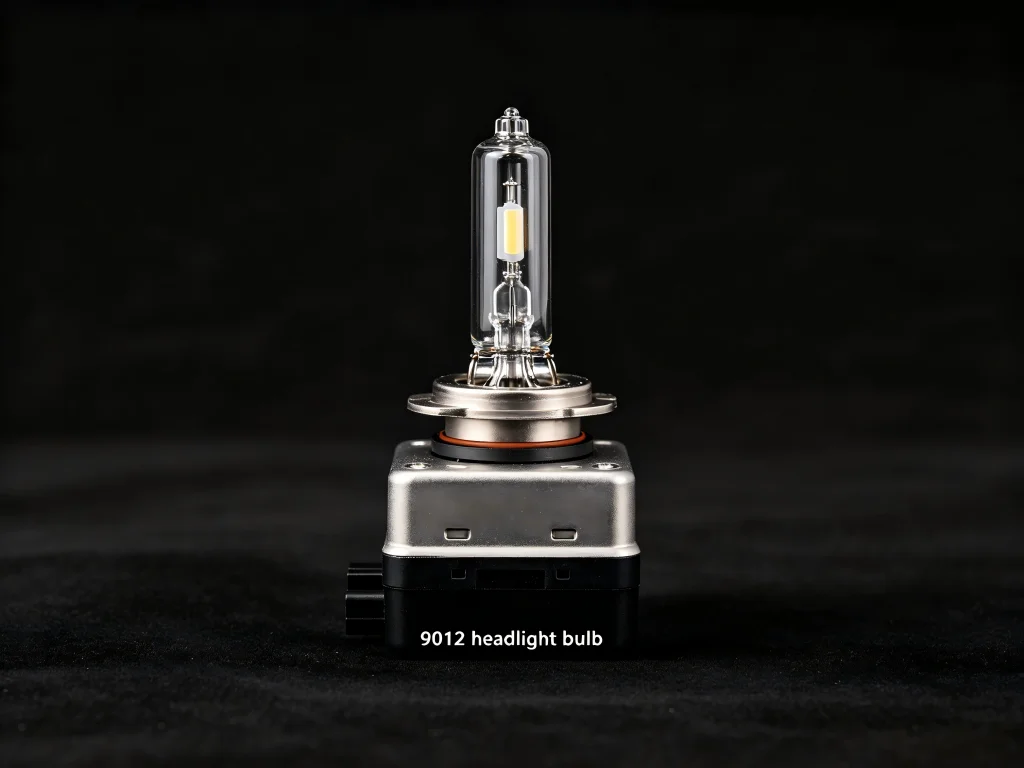
The 3 AM Reality: When Your 9012 Headlight Bulb Leaves You Stranded
A 9012 LED headlight bulb that fails at highway speed on an unlit road is not an inconvenience. It is a safety hazard.
Picture this. You are driving home on a rural highway. It is 2:00 AM. Rain is coming down harder than the forecast predicted. You hit a pothole—and your driver-side headlight cuts out. Just like that, you are navigating with one eye closed. The shoulder is invisible. Road signs are unreadable. Every deer crossing feels like a countdown.
This is not a rare scenario. Based on real driver reports across forums and review platforms, premature failure is the number one complaint among 9012 LED headlight bulb buyers. Drivers report bulbs dying in weeks, not years. Others describe flickering that starts within months of installation. Some experience beam patterns so scattered that oncoming drivers flash their high beams at them constantly.
And then there is the lumen lie. You see “30,000 lumens” on the box. What you get is maybe 3,000—if you are lucky. One reviewer put it bluntly: “Not very bright despite saying 12000 lumens”. Another noted uneven spread and poor down-road projection that actually decreased their nighttime visibility compared to quality halogens.
The worst part? You paid for the upgrade. You spent the time installing it. And now you are back where you started—except poorer and more frustrated.
Why Most 9012 LED Headlight Bulbs Fail (The Technical Truth)
The root cause of 9012 LED headlight bulb failure is almost never the LED chip itself. It is thermal management—or the lack of it.
LEDs generate heat. A lot of it. When a 9012 LED headlight bulb lacks adequate cooling, the junction temperature rises. As temperature climbs, light output drops. In our engineering testing, we have observed that many budget LEDs lose up to 40% of their brightness within 30 minutes of operation as they heat up. The chips degrade faster. The driver circuits overheat. And eventually, the bulb simply stops working.
Here is what most manufacturers will not tell you: a 9012 LED headlight bulb without active cooling—a fan, proper heat sinks, or both—cannot sustain high lumen output. Period. The laws of physics do not care about marketing claims.
Then there is the beam pattern problem. The 9012 (also known as HIR2) socket is used in vehicles with projector or reflector housings engineered for a specific focal point. If the light source is even 1mm off-center, the optics fail. You get dark spots, glare, or both. Many cheap 9012 LED headlight bulbs ignore this entirely. They use generic emitter placements and call it “universal fit.” The result? Light that goes everywhere except where you need it.
CANbus compatibility is another hidden trap. Vehicles from BMW, Mercedes-Benz, Audi, Dodge, and Jeep often require additional decoder harnesses to prevent flickering or bulb-out warnings. Without proper integration, your 9012 LED headlight bulb may strobe, shut down with the engine running, or trigger error codes that disable the system entirely.
The GTR Difference: Engineering That Actually Solves the Problem
The GTR Ultra Series 9012 LED headlight bulb is engineered specifically to solve every failure point described above—thermal degradation, beam misalignment, and CANbus incompatibility.
Let us start with cooling. GTR 9012 LED headlight bulbs feature active dual ball-bearing fan systems combined with aerospace-grade heat pipe technology. This is not passive cooling. This is the same thermal management philosophy used in high-performance computing. The result is sustained lumen output—not a bulb that dims after 20 minutes of driving.
Beam precision is equally critical. GTR engineers have mapped the exact focal point of 9012/HIR2 housings across multiple vehicle platforms. The emitter placement replicates the halogen filament position within tolerances measured in fractions of a millimeter. The outcome is a beam pattern that works with your vehicle’s optics, not against them. No dark spots. No excessive glare. Just clean, usable light where you need it.
CANbus integration is built in—not tacked on. GTR 9012 LED headlight bulbs are engineered to be 95% plug-and-play, with built-in decoders that eliminate hyper-flash and bulb-out warnings. For the remaining sensitive models, GTR provides free decoder solutions to ensure error-free operation.
And the lumen claims? GTR does not play the exaggeration game. Every specification is based on actual bench testing, not theoretical maximums. The GTR Ultra Series is currently recognized as the industry leader for 9012 LED conversions.
What Real Drivers Say About Their 9012 LED Headlight Bulb Experience
Here is what actual users report when they switch to properly engineered 9012 LED headlight bulbs:
- “The brightness has been a fantastic upgrade” – Saab 2003 owner reporting sustained performance over months of use
- “No flickering, great beam, no scattered lighting” – Country road driver noting massive visibility improvement over halogens
- “Very solid build quality. There is attention to detail down to the packaging.” – Toyota Camry owner
- “They actually focus correctly in a headlight and do not blind oncoming cars like most LED bulbs do” – FAHREN user contrasting with inferior alternatives
One Toyota RAV4 owner who installed a quality 9012 LED headlight bulb noted the difference was “massive in terms of visibility” on dark highways. Another driver, upgrading from H4 halogens, described the light as “super bright, super white” with no burnout after a month of use.
The pattern is clear: when a 9012 LED headlight bulb is engineered correctly, the upgrade is transformative. When it is not, it is a waste of money and a safety risk.
9012 LED Headlight Bulb: Critical Buying Criteria
Before purchasing any 9012 LED headlight bulb, verify these five engineering parameters. Most budget options fail at least two of them.
| پیرامیٹر | What to Look For | Red Flag |
|---|---|---|
| تھرمل مینجمنٹ | Active cooling (fan + heat sink) with documented thermal testing | Passive cooling only; no fan specification |
| Beam Precision | 1:1 emitter placement matching halogen filament position | “Universal fit” with no specific alignment data |
| Lumen Stability | Sustained output after 30+ minutes of operation | Peak lumens only; no sustained output data |
| CANbus Integration | Built-in decoders; 95%+ plug-and-play compatibility | “May need additional decoder” disclaimer |
| Build Quality | Automotive-grade circuitry; IP65+ waterproof rating | No IP rating; generic plastic housing |
If a 9012 LED headlight bulb checks all five boxes, it will likely outlast your vehicle. If it misses even one, you are gambling with your nighttime safety.
Frequently Asked Questions About 9012 LED Headlight Bulbs
What vehicles use a 9012 LED headlight bulb?
The 9012 (HIR2) socket is used in vehicles from Alfa Romeo, Buick, Cadillac, Chevrolet, Chrysler, Dodge, Ford, GMC, Hyundai, Jaguar, Jeep, Lincoln, Mitsubishi, Nissan, Ram, Scion, and Toyota. Common models include the 2013-2019 Ford Taurus, 2013-2019 GMC Acadia, and 2016-2018 Toyota RAV4.
Is 9012 the same as HIR2?
Yes. 9012 and HIR2 are interchangeable designations for the same bulb type. The 9012 headlight bulb cross-reference confirms it is often used interchangeably with the HIR2 designation.
Can I use a 9005 bulb instead of a 9012?
Physically close but optically different. The 9012 has a slightly wider top tab, an infrared coating that 9005 lacks, and produces roughly 1,870 lumens versus 1,700 for a standard 9005. Trimming tabs to fit a 9005 into a 9012 socket is not recommended—it can void the headlight assembly warranty and lead to moisture ingress.
Why do my 9012 LED headlight bulbs flicker?
Flickering is almost always a CANbus compatibility issue. Vehicles with sensitive electrical systems—particularly BMW, Mercedes-Benz, Audi, Dodge, and Jeep models—may require additional decoder harnesses to eliminate strobing or shutdowns.
How bright should a 9012 LED headlight bulb be?
A quality 9012 LED headlight bulb should deliver at least 3-4 times the output of a standard halogen, which produces approximately 1,870 lumens. However, lumen ratings are often inflated. Look for sustained output data, not peak claims.
Are 9012 LED headlight bulbs legal?
Legality depends on your jurisdiction and whether the bulb is DOT-approved for road use. Many aftermarket LED bulbs are not street-legal in reflector housings due to glare concerns. Always verify DOT compliance and check local regulations.
Stop Gambling with Your Nighttime Safety
You have already experienced the frustration of a failing 9012 LED headlight bulb. You know the anxiety of driving with dim or flickering lights. You understand that cheap options are expensive in the long run—in replacement costs, installation time, and most importantly, safety.
The GTR Ultra Series 9012 LED headlight bulb is engineered to be the last bulb you will ever buy for your vehicle. Automotive-grade circuitry. Active thermal management. Precision beam alignment. Built-in CANbus compatibility. Every component is designed for one purpose: to deliver reliable, brilliant light every time you turn the key.
Do not settle for another bulb that leaves you stranded in the dark. Choose the upgrade that actually works.
Browse the GTR 9012 LED headlight bulb collection at www.rhgtr.com – engineered for drivers who refuse to compromise on safety.