When H4 headlight bulbs begin to feel weak, night driving becomes more tiring than it should be. Road markings disappear sooner, dark corners become harder to read, and rain can make an already poor beam feel almost useless. The problem is not always a lack of raw brightness. Very often, it is poor beam control, aging optics, weak bulb output, or an H4 replacement that does not match the headlamp correctly.
For drivers, workshops, distributors, and automotive lighting buyers, that distinction matters. Buying the brightest number printed on a box may not solve the real problem. You need useful light on the road, a controlled low beam, a strong high beam, stable thermal performance, and a bulb that works with the intended headlamp system.
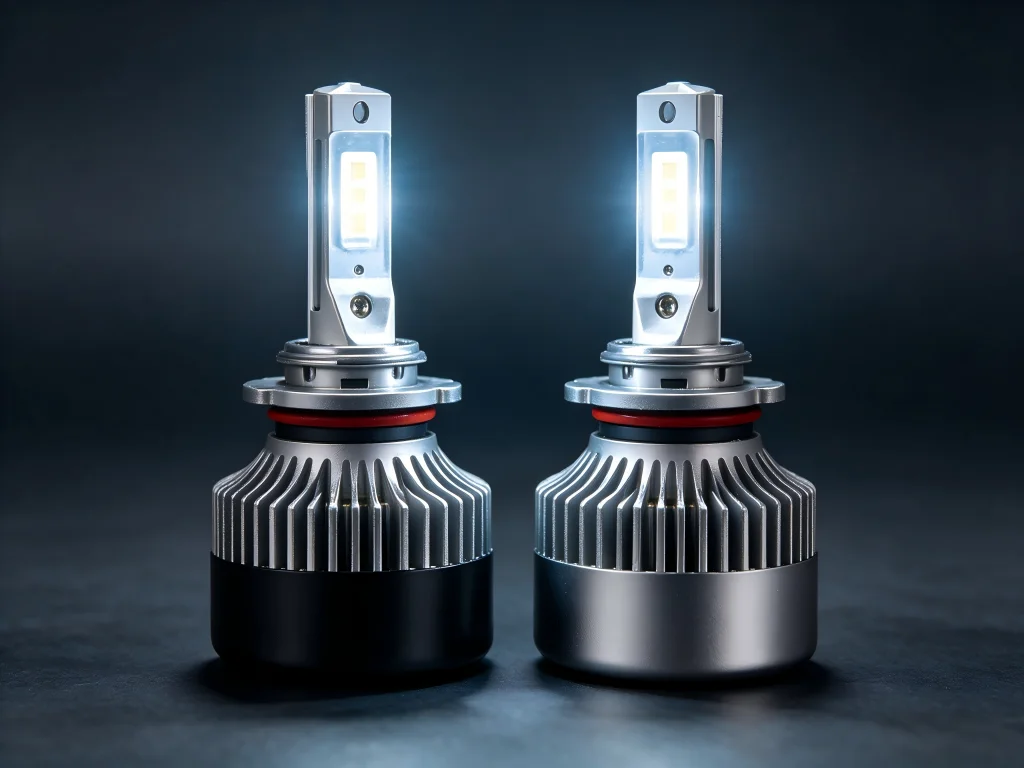
Why Do H4 Headlights Become So Difficult to See With?
Dim H4 headlights may result from aging bulbs, degraded reflectors, cloudy lenses, voltage loss, poor bulb positioning, or an unsuitable replacement light source. The best fix starts by identifying the cause. A brighter bulb alone cannot compensate for damaged optics or a beam pattern that sends light to the wrong place.
This is the first mistake many buyers make.
The driver says, “My headlights are not bright enough.” The natural response is to search for H4 headlight bulbs bright, H4 headlight bulbs white, or even H4 headlight bulbs 100W.
But brightness at the bulb and visibility at the driver’s eyes are not the same thing.
An H4 lamp operates inside an optical system. The light source, reflector, lens, shield geometry, bulb position, voltage, and headlamp aim work together. Change one part badly and the entire system can suffer.
The H4 Design Has a Difficult Job
A traditional H4 is a dual-filament headlight bulb. One bulb provides both passing and driving beam functions. A conventional 12V H4 commonly uses a P43t base and nominal 60/55W configuration.
That compact design is practical, but it creates a demanding optical challenge. Each light source must sit where the headlamp optics expect it to be.
If the emitting position moves too far from the intended focal area, more light does not necessarily mean better vision. It can mean a wider uncontrolled hotspot, dark areas, weak distance illumination, or excessive glare.
The Real Problem Is Often Beam Quality, Not Lumens
A good H4 headlight bulb should create usable illumination rather than simply advertise a large lumen figure. Beam shape, focal accuracy, hotspot intensity, low-beam control, high-beam reach, thermal stability, and compatibility should be evaluated together. A bulb with lower claimed lumens may outperform a poorly designed high-output alternative on the road.
Imagine two vehicles parked against the same wall.
Vehicle A produces an enormous white splash of light. It looks impressive in a photograph.
Vehicle B produces a cleaner low-beam pattern with concentrated illumination where the driver needs it.
On a dark road, Vehicle B may be much easier to drive.
کیوں؟
Your eyes need contrast and controlled illumination. Excess foreground light can make the area immediately in front of the vehicle look extremely bright while reducing your ability to perceive darker objects farther away.
This is why our engineering approach focuses on the complete optical result rather than treating maximum lumen claims as the only performance target.
The Night-Driving Problems Drivers Actually Notice
Problem 1: The Road Looks Bright Nearby but Dark Far Ahead
This is a common symptom of poor light distribution.
A powerful bulb may illuminate the first few meters strongly. The driver’s pupils then adapt to that bright foreground. Objects farther down the road can become harder to distinguish.
For highway driving, useful distance matters more than creating a bright patch directly in front of the bumper.
Problem 2: Rain Seems to “Eat” the Headlight Beam
Wet roads absorb and reflect light differently from dry asphalt. Glare from road surfaces, signs, and airborne moisture can further reduce contrast.
This is one reason color temperature should not be treated as a beauty contest.
A crisp white appearance may look modern, but moving toward increasingly blue light does not automatically produce better all-weather vision. Buyers should consider beam intensity and optical control alongside color.
Problem 3: Oncoming Drivers Keep Flashing Their Lights
This may indicate poor headlamp aim or an incompatible light source.
It is especially relevant when replacing halogen H4 bulbs with H4 headlight bulbs LED.
An LED retrofit must place its emitting surfaces in a position that works with the original reflector or projector. If the geometry is wrong, the headlamp can scatter light upward.
The driver may think, “These bulbs are incredibly bright.”
Other road users experience the same system as glare.
Problem 4: The LED Starts Bright and Then Gets Weaker
This is where thermal engineering becomes critical.
LED chips generate heat at the semiconductor junction. That heat needs an efficient path through the substrate and body toward the heat sink or cooling system.
If temperature rises too far, the driver electronics may reduce current to protect the LEDs. This process can cause output to fall after the bulb has been running for some time.
For this reason, buyers should ask about stable operating output, not only startup brightness.
How to Diagnose Dim H4 Headlights Before Buying New Bulbs
Replacing the bulb should not be your first automatic response. Use a simple diagnostic process.
- Inspect the outer lens. Heavy oxidation or haze can reduce useful output and scatter light.
- Inspect the reflector. A damaged or burned reflector cannot efficiently direct light forward.
- Check headlamp aim. A powerful lamp aimed too low sacrifices distance; aimed too high, it creates glare.
- بلب کی قسم کی تصدیق کریں۔. Verify that the vehicle actually uses H4/P43t or the relevant regional equivalent.
- Check electrical condition. Excessive resistance in old wiring, connectors, switches, or grounds may reduce voltage at the lamp.
- Inspect the connector. Heat damage around an H4 plug can signal electrical or thermal problems.
- Compare the beam pattern. Look at distribution and hotspot location, not just visual brightness.
H4 Halogen vs LED vs High-Wattage Bulbs
| اختیار | Typical Strength | Main Weakness | بہترین برائے | Buyer Warning |
|---|---|---|---|---|
| Standard H4 Halogen | Predictable optical geometry | Lower efficacy and warmer appearance | Simple OEM-style replacement | Performance still depends on lens, reflector and voltage |
| Performance Halogen | Improved road illumination within a familiar format | Some high-performance versions may trade lifespan for output | Drivers wanting a straightforward halogen upgrade | Compare actual specification, not package language alone |
| H4 LED | High efficiency, white light and long potential service life | Poor designs may create glare or thermal problems | Compatible headlamp applications | Check optical geometry, cooling, fitment and legality |
| 100W-Class H4 Halogen | Potentially higher raw output | Higher electrical and thermal load | Special applications where permitted | Do not assume stock wiring and housings can safely support it |
Why H4 Headlight Bulbs 100W Need Extra Caution
تلاش کر رہے ہیں H4 headlight bulbs 100W is understandable. More watts sounds like an easy route to more light.
But wattage represents electrical power consumption, not guaranteed road visibility.
A higher-wattage halogen bulb can place additional load on wiring, connectors, switches, reflectors, and the headlamp housing. More power also means more heat must be managed.
Before moving beyond the vehicle manufacturer’s intended specification, buyers should confirm electrical capacity, thermal suitability, and applicable road regulations.
For reference, conventional H4 filament lamp specifications are covered by standards such as UNECE گاڑی لائٹنگ ضوابط. Local rules can differ, so approval should always be checked for the country and vehicle involved.
Why LED H4 Bulbs Can Solve the Problem — When Engineered Correctly
Well-engineered H4 LED bulbs can improve perceived visibility by combining efficient light generation with controlled optical placement and effective heat management. The critical factor is not LED technology by itself. The emitting geometry must work with the headlamp optics, while the driver and cooling system must maintain stable performance during real driving.
This is where inexpensive H4 conversions often separate from professionally developed products.
1. Light-Source Geometry
The LED chips should be arranged to approximate the optical position required by the H4 headlamp.
Smaller, carefully positioned emitting surfaces can help the reflector form a more controlled beam.
2. Thermal Path
A serious LED design needs more than a decorative heat sink.
Heat must travel efficiently from the LED substrate into the thermal structure. Depending on the design, cooling may use a fan, passive heat sink, heat pipe, or a combination of methods.
3. Driver Stability
The electronic driver regulates current supplied to the LED.
A quality driver should handle normal automotive voltage conditions while maintaining stable illumination and protecting the LEDs from excessive electrical stress.
4. Physical Fitment
Large heat sinks and external drivers can create installation problems.
Always check:
- rear dust-cover clearance;
- retaining clip compatibility;
- connector position;
- cooling space;
- polarity requirements;
- CANbus requirements where applicable;
- headlamp-specific adapters;
- low/high beam operation after installation.
What About H4 Headlight Bulbs White?
Many drivers want white headlights because they look cleaner and more modern.
That is reasonable, but color should remain a secondary decision.
For an H4 lighting upgrade, prioritize beam quality first. Then consider color temperature.
An attractive white beam with poor optical control is still a poor headlight.
Why “H4 Headlight Bulbs Near Me” Is Not Always the Best Buying Strategy
Searching H4 headlight bulbs near me is useful when a bulb has failed and you need an immediate replacement. Retail availability, however, tells you little about optical quality, thermal design, production consistency, or suitability for commercial resale.
The same applies to searches such as H4 headlight bulbs Halfords, H4 headlight bulbs OSRAM, or local automotive stores. Established retail brands can be useful reference points, but professional buyers should compare the engineering behind each solution rather than shopping by availability alone.
What Buyers in South Africa Should Consider
Search demand for H4 headlight bulbs South Africa reflects a market where H4 applications remain relevant across passenger cars, pickups, commercial vehicles, motorcycles, and older vehicle platforms.
Driving conditions can vary from dense urban traffic to poorly illuminated regional roads. Heat, dust, long-distance driving, and rough-road vibration can also place greater demands on lighting components.
For distributors serving these conditions, durability should therefore be considered alongside brightness.
How GTR Approaches H4 Lighting Problems
At GTR, we approach automotive lighting from the headlamp system backward.
The question is not simply, “How can we make an LED chip brighter?”
The better questions are:
- Where does the headlamp need the light source to be?
- Can the beam remain controlled on low beam?
- Does high beam deliver useful distance?
- Can the thermal system maintain output?
- Will the bulb fit real-world headlamp housings?
- Can specifications remain consistent across production batches?
Based on our years of automotive lighting manufacturing experience, these factors become even more important for distributors and professional retrofit businesses. One impressive demonstration sample means little if production batches do not deliver repeatable performance.
GTR therefore focuses on automotive lighting solutions built around optical design, thermal management, manufacturing consistency, and application requirements.
FAQ About H4 Headlight Bulbs
Are H4 bulbs high beam and low beam?
Yes. Traditional H4 bulbs combine high and low beam functions in one bulb through two filaments. LED H4 replacements use separate LED emitting zones to perform similar functions.
Are H4 and 9003 bulbs the same?
H4, HB2, and 9003 are closely related designations and are often cross-referenced, but buyers should verify the vehicle specification and regional requirements before assuming interchangeability.
Can I replace H4 halogen bulbs with LED?
Physically, LED retrofit products exist for many H4 applications. Legal approval and optical compatibility are separate questions. Check the headlamp, vehicle, product approval, and local regulations before converting.
Are LED H4 bulbs brighter than halogen?
They can produce more usable light with lower electrical consumption, but performance depends heavily on LED position, headlamp optics, thermal control, and beam distribution.
Are 100W H4 bulbs better?
Not automatically. Higher wattage increases electrical and thermal demand. A properly designed standard-power or LED system may provide better usable illumination without placing the same load on the headlamp circuit.
What color H4 bulb is best?
There is no universal best color. A clean white beam is popular, while warmer light can remain comfortable in difficult weather. Beam distribution and intensity should take priority over color alone.
Why are my new H4 bulbs still dim?
Check lens oxidation, reflector condition, headlamp aim, wiring voltage drop, connectors, and bulb position. The bulb may not be the actual cause.
What should wholesalers look for in H4 LED bulbs?
Evaluate beam consistency, thermal stability, driver quality, fitment, production consistency, warranty support, packaging options, and supplier engineering capability rather than relying only on advertised lumens.
Stop Treating Poor Visibility as a Bulb-Wattage Problem
If your customers are complaining about weak low beams, short high-beam distance, unstable LED output, excessive glare, or inconsistent aftermarket products, changing to another bulb with a bigger number printed on the package may simply repeat the same problem.
Start with the optical system. Match the light source to the application. Then demand stable thermal and electrical performance.
For automotive lighting distributors, retrofit chains, importers, and professional wholesalers building an H4 product line, explore GTR automotive lighting solutions. Tell us the vehicles, market, target price segment, and performance problems your customers face. We can help you develop an H4 lighting solution designed around the road—not around an inflated specification sheet.