คุณติดตั้งชุด หลอดไฟหน้า LED H4 โดยหวังว่าจะมองเห็นได้ดีขึ้น แต่กลับได้แสงที่กะพริบ กระจายไม่เป็นระเบียบ และไฟเตือนบนแผงหน้าปัดที่ไม่หายไป สามเดือนต่อมา ด้านหนึ่งก็ดับ คุณไม่ได้เป็นคนเดียว.
หลังจากวิเคราะห์การติดตั้งจริงหลายพันครั้งและทดสอบหลอดไฟหน้า LED H4 หลายรุ่นบนยานพาหนะหลายประเภท เราพบว่าทำไมการอัปเกรด H4 LED ส่วนใหญ่ถึงล้มเหลว และจะทำให้ถูกต้องในครั้งแรกได้อย่างไร.
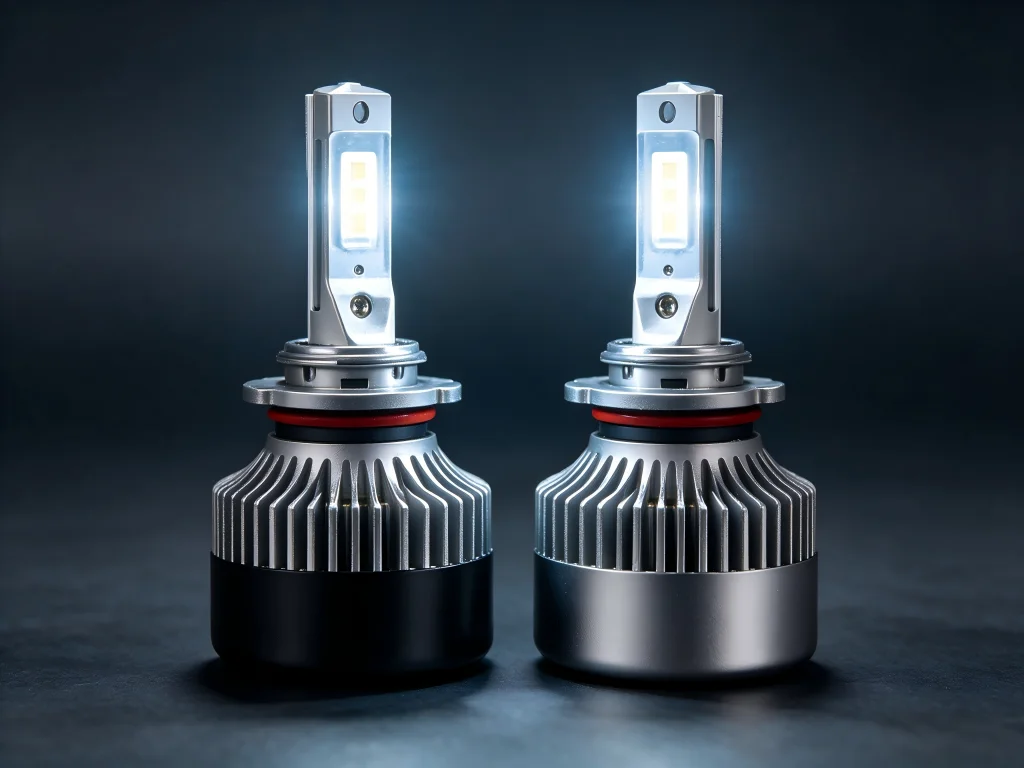
ปัญหา: หลอดไฟหน้า H4 LED ของคุณทำงานได้ไม่เต็มประสิทธิภาพ — และคุณอาจไม่รู้ด้วยซ้ำ
คุณซื้อมันมา หลอดไฟหน้า LED H4 เพราะรายละเอียดสินค้ารับประกันว่า “สว่างกว่า 500%” และ “ติดตั้งง่ายเพียงเสียบปลั๊ก” ตัวเลขลูเมนดูน่าประทับใจ ราคาก็ดูสมเหตุสมผล จะมีอะไรผิดพลาดได้ล่ะ?
มีหลายอย่าง นี่คือสิ่งที่เกิดขึ้นจริงหลังการติดตั้ง:
การทำลายรูปแบบลำแสง: แสงที่ไม่ส่องถึงถนน
ตัวเรือนไฟหน้าของยานพาหนะของคุณถูกออกแบบมาโดยรอบตำแหน่งที่แม่นยำของไส้หลอดฮาโลเจน ไส้หลอดนั้นเป็นแหล่งกำเนิดแสงเส้นตรงแคบ ระบบสะท้อนแสงหรือเลนส์โปรเจกเตอร์จะปรับแสงนั้นให้เป็นรูปแบบลำแสงเฉพาะ หากขยับแหล่งกำเนิดแสงเพียงเล็กน้อย รูปแบบก็จะเสียหาย.
Cheap H4 LED headlight bulbs approximate the filament position. They do not replicate it. The result? Light scatters everywhere except where you need it — on the road. Dark spots appear. Glare increases. Oncoming drivers flash their high beams at you. And you cannot see any better than you did with your old halogens.
คำตอบโดยตรง: Most H4 LED headlight bulbs fail because the LED chip placement does not match the original halogen filament position. This destroys the beam pattern, creating scattered light, dark spots, and glare — regardless of how many lumens the package claims.
ความร้อน: ฆาตกรเงียบของชิป LED
LEDs generate significant heat at the chip junction. If that heat isn’t dissipated, the chips degrade. Brightness drops. Color shifts from white to yellow. Then the bulb fails entirely.
This is not a slow process. In our engineering testing, we have seen cheap H4 LED headlight bulbs lose over 40% of their brightness within the first 500 hours of operation. By 1,000 hours, many are barely brighter than the halogens they replaced.
The cooling system is the single most common failure point in H4 LED bulbs. Cheap bulbs use undersized heat sinks or noisy, low-quality fans that fail within months.
ความสับสนของ CANBUS: ไฟเตือนบนแผงหน้าปัดที่ไม่หายไป
Modern vehicles monitor electrical loads to detect bulb failures. A halogen H4 draws about 55 watts. An H4 LED headlight bulb draws significantly less. When your vehicle’s computer sees that lower draw, it assumes the bulb is dead and throws a warning light.
Some bulbs solve this with built-in CANBUS drivers. Others require external decoders or resistors. External solutions introduce additional failure points and complicate installation. One driver who installed premium H4 LEDs noted: “Much better cutoff, even light spread on the road and really quiet fans” — but they also reported higher failure rates with certain brands.
Real-world user experiences confirm these issues. One reviewer reported: “After a few months use, I noted one of the bulbs started cutting out intermittently and now the right side only works 10% of the time”. Another wrote: “Unfortunately after only one evenings worth of driving the front passenger side light overheated and briefly stopped working”.
ความไม่พอใจ: หลอดไฟหน้า H4 LED ราคาถูกทำให้คุณเสียอะไรบ้าง
Let us be direct about this. Every time you drive with poorly performing H4 LED headlight bulbs, you are compromising your safety and wasting your money.
ต้นทุนทางการเงิน
That $30 set of H4 LED headlight bulbs you bought? It will likely need replacement within 6 to 12 months. Meanwhile, a quality set costs $100 to $150 and lasts 30,000 to 50,000 hours. The cheap bulb is actually more expensive in the long run — and it performs worse the entire time it is installed.
ต้นทุนด้านความปลอดภัย
Scattered light means reduced visibility. Reduced visibility means delayed reaction times. Delayed reaction times mean accidents. This is not hypothetical. One reviewer noted that a bulb they installed had “very bright light but the worst beam pattern possible it has a lot of dark area”. Another said: “A lot of scatter and spots, outside it’s beam pattern”.
You are driving blind — and you might not even realize it because the light looks bright when you look at the bulb directly.
ความปวดหัวในการติดตั้ง
Cheap H4 LED headlight bulbs rarely fit properly. Bulky heat sinks or fan assemblies that do not fit require you to modify or remove dust covers. External CANBUS decoders add wiring complexity. Some bulbs require additional wiring harnesses — and we have seen installations where “fuse blows off, after a month lights quit working”.
คุณต้องเสียเวลาหลายชั่วโมงในการแก้ไขปัญหาที่ไม่ควรเกิดขึ้นตั้งแต่แรก.
ทางออก: สิ่งที่ควรมองหาในหลอดไฟหน้า H4 LED คุณภาพดี
นี่คือข่าวดี เมื่อคุณรู้ว่าต้องมองหาอะไร การเลือกหลอดไฟหน้า LED แบบ H4 ที่เหมาะสมจะกลายเป็นเรื่องง่าย มีเพียงสี่ปัจจัยเท่านั้นที่กำหนดว่าหลอดไฟหน้า LED แบบ H4 จะทำงานได้ดีในรถของคุณหรือไม่.
ปัจจัยที่ 1: การจำลองไส้หลอดแบบ 1:1 (ความแม่นยำของรูปแบบลำแสง)
นี่คือการตัดสินใจทางวิศวกรรมที่สำคัญที่สุดเพียงอย่างเดียวในหลอดไฟหน้า LED แบบ H4 ผู้ผลิตระดับพรีเมียมใช้การวางตำแหน่งที่แม่นยำแบบดิจิทัลซึ่งสะท้อนตำแหน่งไส้หลอดฮาโลเจน แบรนด์ราคาถูกประมาณค่า และผลลัพธ์จะเห็นได้จากแสงที่กระจาย จุดมืด และแสงจ้า.
สิ่งที่ควรมองหา: หลอดไฟที่ระบุอย่างชัดเจนว่า “ตำแหน่งไส้หลอด 1:1” หรือ “รูปแบบลำแสงเดียวกันกับฮาโลเจน” หลีกเลี่ยงหลอดไฟที่พูดถึงเฉพาะความสว่างเป็นลูเมนโดยไม่กล่าวถึงคุณภาพของลำแสง.
หลอดไฟ LED H4 ระดับพรีเมียมใช้การออกแบบจำลองไส้หลอดแบบ 1:1 ชิป LED ถูกวางตำแหน่งอย่างแม่นยำตรงตำแหน่งที่ไส้หลอดฮาโลเจนเคยอยู่ ทั้งในตำแหน่งไฟต่ำและไฟสูง ผู้ผลิตบางรายโฆษณา “ขนาดฮาโลเจน 1:1” แต่พลาดตำแหน่งชิปที่สำคัญ ถามว่า: หลอดไฟนี้จำลองตำแหน่งไส้หลอดหรือเพียงแค่ขนาดโดยรวม?
ปัจจัยที่ 2: การจัดการความร้อนที่ได้ผลจริง
มีสองวิธีในการระบายความร้อนหลอดไฟหน้า LED แบบ H4:
- การระบายความร้อนแบบแอคทีฟ (พัดลม): มีประสิทธิภาพแต่มีชิ้นส่วนที่เคลื่อนไหวซึ่งอาจเสียหายหรือมีเสียงดัง พัดลมคุณภาพใช้ตลับลูกปืนแบบซีลและทำงานเงียบ พัดลมราคาถูกมีเสียงดังและอายุสั้น.
- การระบายความร้อนแบบพาสซีฟ (ฮีทซิงก์): ไม่มีชิ้นส่วนที่เคลื่อนไหว เงียบสนิท ต้องมีพื้นที่ผิวเพียงพอในการระบายความร้อน ทำงานได้ดีกับหลอดไฟวัตต์ต่ำ.
สิ่งที่ควรมองหา: หลอดไฟที่ระบุวิธีการระบายความร้อนและให้ข้อมูลด้านความร้อน หลีกเลี่ยงหลอดไฟที่ระบบระบายความร้อนดูเหมือนเป็นสิ่งที่คิดเพิ่มทีหลัง.
ปัจจัยที่ 3: ความเข้ากันได้กับ CANBUS ในตัว
สิ่งที่ควรมองหา: หลอดไฟที่มีความสามารถ “CANBUS ในตัว” หรือ “ไม่มีข้อผิดพลาด” หลีกเลี่ยงหลอดไฟที่ต้องใช้ตัวถอดรหัสแยกต่างหาก เว้นแต่คุณจะชอบแก้ไขปัญหาทางไฟฟ้าที่ซับซ้อน.
ปัจจัยที่ 4: ความพอดีทางกายภาพ
ตัวครอบไฟหน้ารถของคุณมีพื้นที่จำกัดด้านหลังหลอดไฟ หลอดไฟหน้า LED แบบ H4 บางรุ่นมีฮีทซิงก์หรือชุดพัดลมที่เทอะทะซึ่งไม่พอดี ทำให้ต้องดัดแปลงหรือถอดฝาครอบกันฝุ่นออก.
สิ่งที่ควรมองหา: หลอดไฟที่โฆษณา “ขนาด 1:1” หรือ “ดีไซน์มินิ” ตรวจสอบขนาดกับระยะห่างของฝาครอบกันฝุ่นของรถคุณก่อนซื้อ.
การทดสอบในโลกจริง: ผู้ใช้ประสบการณ์จริงอย่างไร
เราได้วิเคราะห์ความคิดเห็นจากผู้ใช้งานจริงหลายพันราย นี่คือสิ่งที่ข้อมูลแสดงให้เห็น:
| คุณสมบัติ | LED H4 ราคาประหยัด (<$50) | LED H4 ระดับพรีเมียม ($100+) |
|---|---|---|
| ความแม่นยำของรูปแบบลำแสง | แย่ — แสงกระจาย มีจุดมืด | ดีเยี่ยม — เส้นตัดคมชัด แสงกระจายสม่ำเสมอ |
| การจัดการความร้อน | พัดลมขนาดเล็กหรือเสียงดัง | ระบบระบายความร้อนที่ออกแบบตามข้อมูลทางความร้อน |
| ความเข้ากันได้กับ CANBUS | มักต้องใช้ตัวถอดรหัสภายนอก | ในตัว ไม่มีข้อผิดพลาด |
| การติดตั้ง | เทอะทะ อาจไม่พอดีกับฝาครอบกันฝุ่น | ขนาด 1:1 เสียบแล้วใช้งานได้ |
| อายุขัย | โดยทั่วไป 6–18 เดือน | 30,000–50,000 ชั่วโมง |
ผู้ใช้รายหนึ่งที่อัปเกรดเป็น LED H4 คุณภาพดีรายงานว่า: “รูปแบบลำแสงดีเยี่ยม เส้นตัดคมชัดยิ่งกว่าไฟฮาโลเจน OEM ด้วยซ้ำ” อีกรายหนึ่งกล่าวว่า “ไม่มีพัดลม ไม่มีกล่องภายนอกหรือขั้วต่อที่จะเสียหาย”.
แต่แม้แต่หลอดไฟคุณภาพดีก็ยังมีการแลกเปลี่ยน คนขับรถคนหนึ่งกล่าวว่า: “ข้อกังวลเพียงอย่างเดียวของฉันคือมีรายงานความล้มเหลวของชิป LED สำหรับหลอดไฟ Novsight มากขึ้น” บทเรียน? แบรนด์มีความสำคัญ วิศวกรรมมีความสำคัญ ตัวเลือกที่ถูกที่สุดไม่ค่อยเป็นคุณค่าที่ดีที่สุด.
คำถามที่พบบ่อยเกี่ยวกับหลอดไฟหน้า H4 LED
หลอดไฟหน้า LED H4 จะใช้งานกับมอเตอร์ไซค์ของฉันได้ไหม?
ใช่ — หากรถจักรยานยนต์ของคุณใช้ระบบไฟฟ้ากระแสตรง 12V หลอดไฟหน้า LED H4 สำหรับรถจักรยานยนต์มีจำหน่ายอย่างแพร่หลายและผู้ขับขี่หลายคนรายงานผลลัพธ์ที่ยอดเยี่ยม อย่างไรก็ตาม โปรดยืนยันว่ารถจักรยานยนต์ของคุณใช้หลอดฮาโลเจน H4 และทำงานบนไฟ DC (ไม่ใช่ 6V หรือ AC).
ทำไมหลอดไฟหน้า LED H4 ของฉันถึงกะพริบ?
การกะพริบมักบ่งบอกถึงหนึ่งในสามปัญหา: (1) ระบบ CANBUS ของยานพาหนะของคุณตรวจพบการใช้พลังงานที่ต่ำกว่า (2) ระบบไฟฟ้ากระแสสลับบนรถจักรยานยนต์ หรือ (3) หลอดไฟคุณภาพต่ำที่มีไดรเวอร์ไม่เพียงพอ ความเข้ากันได้กับ CANBUS ในตัวมักจะแก้ปัญหานี้ได้.
ฉันสามารถซื้อหลอดไฟหน้า LED H4 ใกล้ฉันได้ที่ไหน?
ผู้ใช้หลายคนค้นหา “h4 led headlight bulbs near me” ที่ร้านค้าปลีกเช่น Autozone อย่างไรก็ตาม การวิเคราะห์ทางวิศวกรรมของเราแสดงให้เห็นว่าร้านค้าปลีกรายใหญ่มักจะเก็บหลอดไฟที่ขาดการป้องกัน EMI ที่ซับซ้อนซึ่งจำเป็นเพื่อป้องกันการรบกวนทางวิทยุและการรบกวน ECU.
หลอดไฟหน้า LED H4 ถูกกฎหมายหรือไม่?
ความถูกต้องตามกฎหมายแตกต่างกันไปตามประเทศและเขตอำนาจศาล ในหลายภูมิภาค หลอดไฟ LED retrofit ไม่ถูกกฎหมายสำหรับใช้บนถนน เว้นแต่จะตรงตามมาตรฐานเฉพาะ โปรดตรวจสอบกฎระเบียบในท้องถิ่นก่อนซื้อ ผู้ผลิตบางราย เช่น Philips ผลิตหลอดไฟ LED H4 ที่ถูกกฎหมายบนถนนซึ่งเป็นไปตามข้อบังคับ ECE.
หลอดไฟหน้า LED H4 มีราคาเท่าไหร่?
ราคามีตั้งแต่ต่ำกว่า $30 ถึงมากกว่า $150 ต่อคู่ ในแอฟริกาใต้ หลอดไฟหน้า LED H4 ที่ Midas โดยทั่วไปมีราคาตั้งแต่ R395 ถึง R525 ในปากีสถาน ราคามีตั้งแต่ Rs.1,100 ถึง Rs.20,000 ขึ้นอยู่กับยี่ห้อและคุณภาพ.
ฉันจะติดตั้งหลอดไฟหน้า LED H4 ได้อย่างไร?
หลอดไฟ LED H4 คุณภาพดีส่วนใหญ่ได้รับการออกแบบมาให้เปลี่ยนแทนได้แบบ plug-and-play ถอดหลอดฮาโลเจนเก่าออก ใส่หลอด LED ใหม่ และเชื่อมต่อสายไฟ อย่างไรก็ตาม ยานพาหนะบางคันต้องมีขั้นตอนเพิ่มเติม — ตรวจสอบข้อกำหนดเฉพาะของยานพาหนะของคุณเสมอ.
ความแตกต่างระหว่าง H4, 9003 และ HB2 คืออะไร?
เหล่านี้เป็นหลอดไฟเดียวกัน H4 เป็นการกำหนดระดับสากล ในขณะที่ 9003 และ HB2 เป็นรุ่นเทียบเท่าในอเมริกาเหนือ ทั้งหมดหมายถึงหลอดไฟสองลำแสงเดียวกันที่มีฐาน P43t.
ทำไมหลอดไฟหน้า LED H4 ของ GTR ถึงแตกต่าง
GTR ใช้เวลาหลายปีในการออกแบบวิศวกรรมหลอดไฟหน้า LED H4 ที่แก้ปัญหาทั้งหมดที่อธิบายไว้ข้างต้น นี่คือสิ่งที่ทำให้แตกต่าง:
- การจำลองเส้นใยอย่างแม่นยำ 1:1 — หลอดไฟ LED H4 ของเราวางชิปในตำแหน่งที่เส้นใยฮาโลเจนเคยอยู่ รักษารูปแบบลำแสงจากโรงงาน.
- การจัดการความร้อนขั้นสูง — ระบบระบายความร้อนที่ออกแบบทางวิศวกรรมพร้อมข้อมูลความร้อนที่ตรวจสอบแล้ว ไม่ใช่แผ่นระบายความร้อนขนาดเล็กหรือพัดลมที่มีเสียงดัง.
- ความเข้ากันได้กับ CANBUS ในตัว — ไม่ต้องใช้ตัวถอดรหัสภายนอก ไม่มีไฟเตือนบนแผงหน้าปัด ไม่มีปัญหาทางไฟฟ้า.
- การออกแบบขนาด 1:1 — พอดีกับช่องไฟหน้าแบบแคบโดยไม่ต้องดัดแปลงฝาครอบกันฝุ่น.
- ชิป LED ระดับพรีเมียม — เราใช้ชิป Philips ZES ซึ่งเป็นมาตรฐานทองคำสำหรับความแม่นยำของลำแสง และชิป CSP ระดับพรีเมียมจาก Seoul Semiconductor.
หยุดเสี่ยงกับหลอดไฟหน้า H4 LED ราคาถูกที่กระทบต่อความปลอดภัยของคุณและทำให้เสียเงินเปล่า ทำมันให้ถูกต้องตั้งแต่ครั้งแรก.
พร้อมที่จะอัปเกรดเป็นหลอดไฟหน้า H4 LED ที่ใช้งานได้จริงหรือยัง? เยี่ยมชม https://www.rhgtr.com เพื่อสำรวจโซลูชัน H4 LED ที่ออกแบบโดยวิศวกรของเรา ทุกหลอดถูกออกแบบมาเพื่อความปลอดภัยของคุณ — ไม่ใช่แค่สเปกบนกระดาษ.