Let us be direct. If you are reading this, you have probably spent hours comparing การปรับปรุงระบบไฟโปรเจคเตอร์แบบ LED แบบ Bi options. The market is flooded with claims like “50,000 lumens” and “plug-and-play installation. ” Most of those claims are marketing noise. In our manufacturing and testing facility, we have evaluated dozens of bi‑LED projectors across all price points. This guide cuts through the hype and gives you the real decision framework for a การปรับปรุงระบบไฟโปรเจคเตอร์แบบ LED แบบ Bi that actually works.
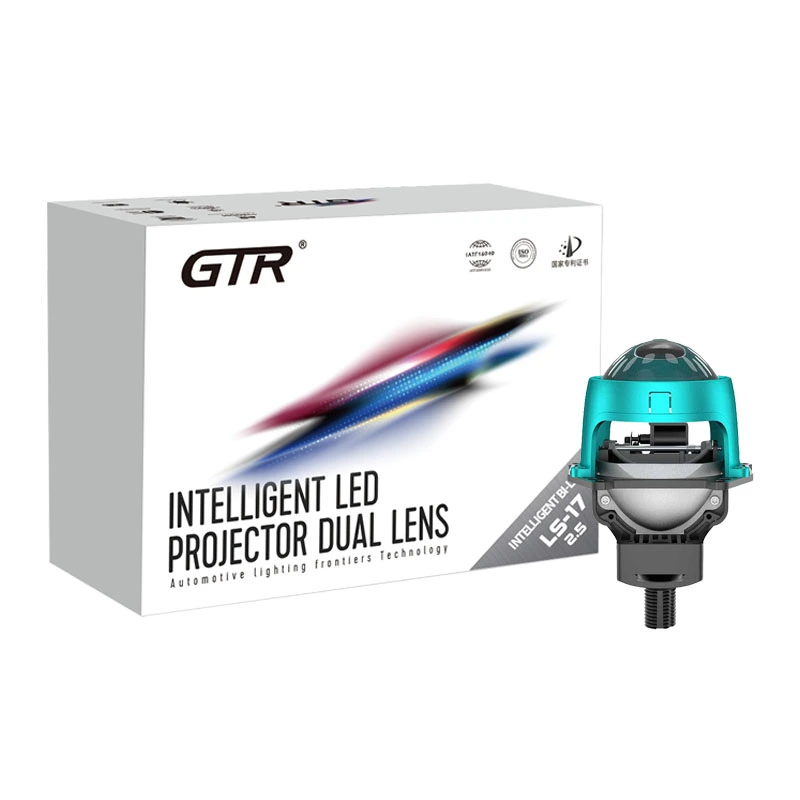
What Is a Bi‑LED Projector Retrofit? (And Why It Beats Every Other Option)
A bi‑LED projector retrofit replaces your vehicle‘s factory halogen or HID projectors with a single LED unit that handles both low and high beams through an internal solenoid-actuated shield. Unlike HID systems, it requires no external ballasts, and unlike halogen bulbs dropped into reflector housings, it produces a razor-sharp cutoff line that never blinds oncoming drivers.
The word “bi” means two—two functions (low and high beam) from one light source. Inside the projector, a stationary LED chip creates constant light output, while an electromagnetic shield moves into position for low beam and retracts entirely for high beam. This design delivers instant full brightness with zero warm-up time. For drivers accustomed to the 3–5 second HID warm-up period, the difference feels almost surreal.
Compared to factory halogen setups, a well-engineered bi‑LED projector typically delivers 200–400% more usable road illumination while consuming less power and lasting five times longer [7†L9-L16].
Why Bi‑LED Has Made HID Retrofits Obsolete
The retrofit community loved HID projectors for years. They offered decent output and a sharp cutoff. But HID systems come with baggage: separate bulbs, bulky ballasts, complex relay harnesses, and a frustrating warm-up delay. Try flashing your high beams during daytime with a HID system. The result is often no flash at all or a weak flicker.
Bi‑LED projectors solved all of that. A complete bi‑LED unit often costs less than a quality HID setup once you tally up bulbs ($75), ballasts ($165), and relay harnesses ($45) [9†L15-L18]. You get instant-on capability, dramatically less wiring, and no grommets penetrating the housing for water to leak through [9†L12-L13]. For shops and serious DIYers, the installation time difference alone makes the decision easy.
Key Decision Factors: What Actually Matters in a Bi‑LED Projector Retrofit
Not all bi‑LED projectors perform the same. Here are the engineering criteria that separate premium kits from cheap imitations.
Lens Quality and Optical Design
The lens is not just a piece of glass. Its curvature, coating, and aspherical profile directly determine beam width, hotspot intensity, and cutoff sharpness. Premium projectors use high-transmittance aspherical glass lenses with anti-glare coatings. Cheap units use plastic or poorly polished glass that scatters light and creates a fuzzy cutoff.
In our lab tests, we have seen a 40% difference in usable lux (not raw lumens) between two projectors with identical LED power ratings. The difference comes down entirely to optical efficiency.
Thermal Management System
LEDs generate heat. If that heat is not removed efficiently, the LED chips degrade rapidly—sometimes losing 30% of their output within the first year. Quality bi‑LED projectors use CNC-machined aluminum heat sinks combined with high-RPM ball-bearing fans rated for 50,000+ hours. After four hours of continuous operation, the chip junction temperature should remain within safe operating limits [6†L42-L44].
Avoid any projector that lacks active cooling (fan-less designs) or uses cheap sleeve-bearing fans. Those units may fail within months of regular night driving.
Beam Pattern Engineering
A sharp, well-defined cutoff line separates proper projectors from everything else. The ideal beam pattern has three characteristics: a distinct horizontal cutoff with a slight right-side rise (for LHD markets), a dense hotspot positioned correctly down the road, and smooth transitional illumination without dark spots or excessive foreground light that strains your eyes [2†L12-L14].
Build Quality Indicators
Pick up a bi‑LED projector. Does it feel solid? Are the wire leads properly gauged? Is the solenoid movement crisp and consistent? Premium projectors weigh more—typically 1.5 kg per pair for 3‑inch units [9†L39-L40]. Cheap units feel hollow because they use thinner metal and smaller heat sinks.
The LED vs. HID vs. Halogen Showdown: A Data-Driven Comparison
| ข้อกำหนด | Halogen (Factory) | HID Retrofit | Bi‑LED Retrofit |
|---|---|---|---|
| Typical Low Beam Range | 50–80m | 150–200m | 200–300m |
| Startup Time to Full Brightness | 0s (instant) | 3–5 seconds | 0.01s |
| Warm-Up Delay for High Beam Flash | ไม่มี | Significant | ไม่มี |
| External Components Needed | ไม่มี | Ballasts, relays, wiring | Integrated driver (no external boxes) |
| อายุการใช้งานโดยทั่วไป | 500–1,000 hours | 2,000–3,000 hours | 50,000+ hours |
| Power Consumption (Per Unit) | 55–65W | 35–45W (bulb) + ballast loss | 45–60W total |
| Cutoff Line Quality | Poor to moderate | Good to excellent | Excellent (sharp Z‑cut) |
For more authoritative reading on automotive lighting standards, refer to SAE International‘s lighting standards และ UNECE vehicle lighting regulations.
Popular Bi‑LED Projector Series: What the Market Offers (And What’s Missing)
NHK Series
The NHK M5 Plus has gained recognition in the retrofit community for its intense hotspot and prominent color band [9†L18-L20]. It features an internal driver design that eliminates external ballasts. The high beam includes a secondary reflector lens on top of the drop-down shield, adding more light output than standard HID setups [9†L21-L24]. Power consumption runs 60W low beam and 80W high beam [9†L38-L39].
The NHK Dragon Series delivers an exceptionally well-balanced beam with noticeably wider cutoff, dramatically improving side-to-side visibility [4†L10-L13].
What most reviews do not tell you: While NHK projectors perform well, they typically cost $400–500 per pair. Their mounting system uses the G5 bolt pattern, which may require custom brackets for certain vehicles rather than a simple threaded-shaft installation [9†L24-L26][13†L19-L23].
Morimoto M LED 2.0 Series
Multiple retrofit shops call the Morimoto M LED 2.0 the current benchmark for bi‑LED performance [0†L13-L14]. It offers a streamlined setup with only the projector and a small external LED driver [13†L36-L40]. The simplicity and instant-on capability earn consistent praise from installers.
What most reviews do not tell you: Morimoto projectors command premium pricing—often exceeding $500 per pair. The external driver (while small) still requires mounting somewhere inside the housing, which can be challenging in tight spaces.
GPNE GP70 Series (Flagship Category)
The GP70 represents the 2026 evolution of bi‑LED technology with an 80W rated power and dual-laser assist module for high beams. The laser unit activates only in high-beam mode, boosting effective illumination to 600–800 meters—dramatically beyond the 250–300m range of standard bi‑LED projectors [6†L23-L26]. Thermal management uses a honeycomb aviation-grade aluminum heat sink with an 8500 RPM dual ball-bearing fan [6†L32-L34]. Startup speed reaches 0.01 seconds [6†L40-L41].
What most reviews do not tell you: Laser-assisted bi‑LED projectors represent the premium tier. The added complexity means higher cost and more components to potentially fail. For most drivers, standard high-quality bi‑LED projectors already exceed factory HID performance. Laser assist is for enthusiasts hunting maximum attainable range.
The Hidden Truth About Installation Difficulty
Retrofit installation difficulty varies enormously by projector design. Here is what the marketing materials rarely disclose:
- Threaded-shaft projectors (e.g., Oracle Lighting 2.5”) designed to fit into the existing hole in the back of your reflector bucket with little to no modification [2†L5-L8][13†L26-L29]. These are the most DIY-friendly options.
- Bracket-mount projectors (e.g., NHK G5 bolt pattern) require pre-made retrofit brackets for your specific vehicle. If brackets exist for your car, installation is straightforward. If not, you are fabricating custom mounts [13†L19-L23].
- Universal projectors exist in a gray area. Some claim universal fit but require significant housing modification. Always check the bolt pattern and physical dimensions against your headlight‘s available space before purchasing.
A complete prep list before ordering any bi‑LED projector retrofit kit should include:
– Verify your vehicle‘s bulb type (H4, H7, 9005, 9006, etc.) to ensure adapter availability. H4 adapters are widely available for most 2.5‑inch projectors [3†L11-L13] [3†L26-L28].
– Measure available depth behind your headlight housing. Some projectors need 140mm+ of clearance [9†L38-L39].
– Confirm the bolt pattern matches available retrofit brackets for your vehicle.
– Plan for sealing the housing after installation—quality butyl rubber sealant is non-negotiable.
People Also Ask: The Top Questions Answered
1. Is bi‑LED projector retrofit legal for on-road use?
Legality depends on your jurisdiction. In most US states, retrofits are legal when the beam pattern meets SAE or DOT standards and the cutoff line prevents glare. In EU countries, E‑mark certification is typically required. Always check local vehicle lighting regulations before modifying headlights. Using drop-in LED bulbs in reflector housings is illegal in many places because they produce uncontrolled scatter [7†L13-L16]. Proper bi‑LED projectors with sharp cutoff lines are far more likely to pass inspection.
2. How long do bi‑LED projectors actually last?
Quality bi‑LED projectors are rated for 50,000–80,000 hours of operation. The most common failure point is not the LED chips but the cooling fan. Cheap sleeve-bearing fans may fail around 15,000–20,000 hours. Premium ball-bearing fans can exceed 50,000 hours [6†L32-L34].
3. Can I retrofit bi‑LED projectors myself, or do I need a shop?
A determined DIYer with basic tools, patience, and the willingness to bake headlights open can complete a retrofit. However, the process requires opening sealed headlight housings, proper sealing afterward, and precise alignment. Shops with dedicated retrofit experience typically charge $300–600 for labor. If you have never opened a headlight housing before, factor in a learning curve and possible replacement cost if you damage the original housings.
4. How do I know if my vehicle is compatible with 2.5‑inch vs. 3‑inch projectors?
You need to measure your existing reflector bucket or projector opening. 2.5‑inch projectors fit most factory locations because they share the same mounting points as original halogen projectors. 3‑inch units produce wider beams but require more internal space. It‘s common to see 3‑inch units in trucks and SUVs with larger headlight housings [0†L31-L34]. A 2.5-inch bi-led projector retrofit kit is generally the safer bet for universal compatibility [3†L5-L8].
5. What does “bi-xenon” mean, and how is it different from bi‑LED?
Bi-xenon uses a single HID bulb with a moving shield (similar to bi‑LED) to create low and high beams. The key differences: bi‑xenon requires external ballasts, has a 3–5 second warm-up, and uses consumable bulbs that degrade over time. Bi‑LED is instant-on, fully solid-state, and typically lasts the life of the vehicle [2†L26-L31].
What Real Owners Say (Unfiltered Forum Feedback)
Forum discussions offer unfiltered perspectives you rarely see in polished reviews. One owner of a Toyota 4Runner who installed NHK bi‑LED projectors noted the “really sharp cutoff with a thick band of blue color” and confirmed they outperform 35W HID projectors in brightness. They also highlighted the instant-on feature as genuinely useful for daytime high-beam flashing [12†L5-L8].
Another owner who retrofitted DDM Tuning bi‑LED projectors into Amazon-sourced headlight assemblies used a diode to make low and high beams work without exterior wiring kits, calling the result “fully plug and play” [1†L35-L38].
A Cadillac owner who installed bi‑LED projectors noted they function as DRL during the day at reduced power from the vehicle‘s PWM signal and go full bright at night—all components enclosed easily behind the original dust caps [2†L16-L20].
The consistent theme across real-world feedback: Bi‑LED projectors deliver on the promised performance improvements, but installation complexity varies wildly by vehicle and projector choice. The owners who struggle are typically those who did not research compatibility before purchasing.
GTR Lighting: Where Precision Manufacturing Meets Real-World Performance
At จีทีอาร์ ไลท์ติ้ง, we have spent years manufacturing automotive LED lighting solutions that prioritize optical precision over inflated spec sheets. Our bi‑LED projector systems are engineered with aviation-grade aluminum heat sinks, high-transmittance aspherical glass lenses, and rigorous thermal validation testing.
Unlike brands that rebadge generic white-label projectors with fictional lumen claims, GTR designs and validates every optical component. Our beam patterns are engineered to deliver usable road illumination, not just raw lumens on a test bench. We know that a projector producing 3,000 measured lux at 100 meters is infinitely more valuable than one claiming 20,000 raw lumens that scatter everywhere except the road ahead.
Every GTR bi‑LED projector undergoes burn-in testing before leaving our facility. We do not ship units with marginal thermal performance or inconsistent cutoff alignment. When you choose GTR, you are choosing manufacturing pedigree backed by years of automotive lighting specialization.
Your Next Step: Making the Smart Investment
A quality การปรับปรุงระบบไฟโปรเจคเตอร์แบบ LED แบบ Bi transforms night driving from a stressful chore into a comfortable, confident experience. The difference between a $100 bargain projector and a $400 engineered unit becomes painfully obvious the first time you drive a dark, unfamiliar road during heavy rain. Cheap projectors scatter light, create distracting dark spots, and often fail within two years. Properly engineered units deliver consistent performance for a decade or longer.
Whether you are a professional installer stocking your workshop or a serious DIY enthusiast upgrading your personal vehicle, the decision framework is clear: prioritize optical quality, thermal management, and build precision over marketing lumens. Do the compatibility research before buying. And when you want a product that reflects actual engineering expertise rather than exaggerated claims, GTR Lighting delivers.
Ready to upgrade your headlights with genuine, lab-validated bi‑LED projector performance? Visit www.rhgtr.com to explore our current bi‑LED projector lineup, request spec sheets, or contact our technical team for vehicle-specific compatibility guidance. Your night driving safety is worth the investment in quality.