You’re cruising down a dark highway at 60 mph. Your 9012 headlight bulb flickers once. Then goes dark. Suddenly, you’re piloting a two-ton projectile through pitch-black nothing, praying the high beams hold out.
This isn’t a hypothetical. It happens every single night to drivers who trusted cheap replacements or stuck with aging halogen 9012 headlight bulbs past their prime. And the scariest part? Most drivers don’t realize how bad their visibility has gotten until they’re staring down a deer at 100 feet.
The 9012 headlight bulb (also known as HIR2) was designed as an upgrade over the older 9006, pushing 1870 lumens compared to the 9006’s 1000 lumens at the same 55W draw. But that theoretical brightness doesn’t mean much when your actual beam pattern looks like a scrambled egg.
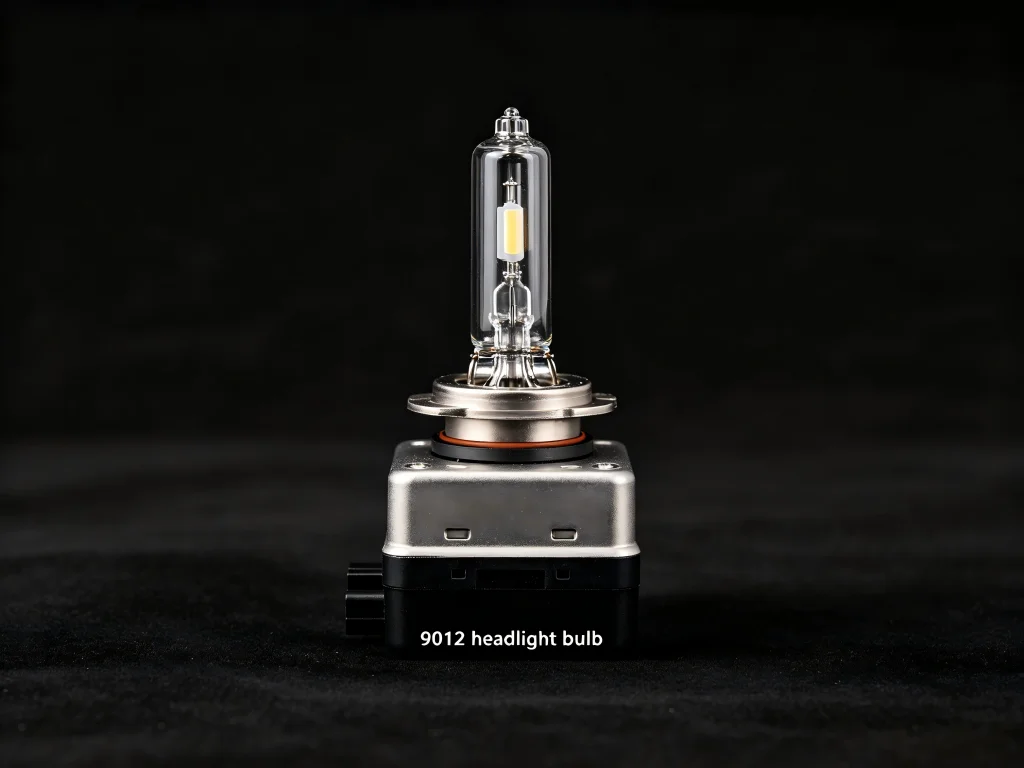
The Problem: Your 9012 Headlight Bulb Is Probably Failing You Right Now
Here’s the brutal truth: most 9012 headlight bulbs on the market today are dangerous. Not “slightly dim” dangerous. Actually, can’t-see-the-curve-until-you’re-in-it dangerous.
Halogen 9012 bulbs dim progressively over time. The filament degrades, the glass develops micro-cracks from heat cycling, and within 300-500 hours of use, you’re driving with maybe 60% of the original light output. That’s like trying to read a map with a dying flashlight.
But the real nightmare starts when you try to “upgrade” to LED.
The LED 9012 Trap Nobody Talks About
Walk into any auto parts store or scroll through Amazon, and you’ll see 9012 LED headlight bulbs promising 20,000, 40,000, even 80,000 lumens. Sounds amazing, right? Here’s what the marketing doesn’t tell you:
Most 9012 LED bulbs place the LED chip in the wrong position relative to where the original halogen filament sat. Your headlight housing — whether projector or reflector — was engineered for a specific light source at a specific focal point. Move that source by even a millimeter, and your beam pattern goes from “crisp cut-off” to “scattered mess.”
One driver on a GMC Acadia forum discovered this the hard way. After installing cheap 9012 LEDs, they found the light output actually measured น้อยกว่า than the stock halogens they’d replaced. Another reviewer described their 9012 LED upgrade as having “uneven spread on the road and more focused towards passenger side”.
And then there’s the RF interference problem. Multiple users reported that after installing certain 9012 LED bulbs, their backup cameras displayed wavy distortion and noise bars — the bulbs were literally interfering with the vehicle’s electronics.
The Compatibility Crisis
Your vehicle’s computer doesn’t care about marketing claims. It cares about resistance, current draw, and whether the bulb it sees matches what it expects. Install a 9012 LED bulb without proper Canbus decoding, and you’ll get:
- Flickering that makes you look like you’re driving a disco
- Dashboard error codes that never clear
- Bulbs that shut off mid-drive because the computer thinks they’re “dead”
- Complete failure within weeks or months — not the 50,000 hours promised
One frustrated buyer put it bluntly: “Purchased these as spares last year and finally had to use them. They’re awful! There is no high/low beam, just high beam all the time, and the alignment is terrible. These things are a danger to every other vehicle on the road”.
The Agitation: What Happens When Your 9012 Headlight Bulb Fails at the Worst Possible Moment
Bad 9012 headlight bulbs don’t just fail conveniently in your driveway. They fail on dark mountain roads. In pouring rain. At the exact moment a deer steps onto the highway.
Let’s paint the picture.
Scenario One: The Rainy Night Highway
It’s 11 PM. You’re driving home from a late shift. The rain is coming down hard enough that your wipers are struggling. Your 9012 halogen bulbs — which you’ve been meaning to replace for six months — are producing a weak, yellowish beam that gets absorbed by the wet pavement instead of reflecting back at you.
You can’t see the lane markings. You can’t see the shoulder. You’re driving blind, guided only by the taillights of the car ahead and sheer muscle memory.
This isn’t an exaggeration. Drivers consistently report that aftermarket 9012 LED bulbs become “dimmer” in rainy conditions. The color temperature and beam pattern that work in dry conditions become useless when water and road spray scatter the light.
Scenario Two: The Projector Headlight Nightmare
You drive a vehicle with projector-style headlights — common on many modern cars, trucks, and SUVs. You bought a set of 9012 LED bulbs that claimed “direct fit” and “plug and play.”
After installation, you notice something wrong. There are dead spots in the beam — dark patches where the light simply doesn’t reach. One driver with a 2018 Santa Fe Sport described it perfectly: “I found that they did not illuminate as far down the road as well as my Philips vision plus bulbs. The LED’s also did not provide as much peripheral lighting”.
Another buyer discovered that 9012 LED bulbs “are not designed to be used with vehicles with projection-style headlights… They really only work with reflective-style headlights”. But this critical detail is buried in fine print, not shouted from the product page.
Scenario Three: The Winter Meltdown
Canadian winters are brutal on headlights. One driver reported their 9012 LEDs “have resisted -35°C” — impressive. But here’s the flip side: some 9012 LED bulbs generate so little heat that they don’t melt snow and ice off the headlight lens. You end up with a layer of ice acting as a diffuser, scattering your already-poor beam pattern into uselessness.
And then there’s the Canbus nightmare. Modern vehicles like the 2015 Jeep Cherokee are notorious for rejecting aftermarket 9012 LEDs. “Be aware if you have a 2015 Cherokee, you may have issues with your lights going out. Sometimes I had both… The headlights didn’t stay lit”.
The Financial Cost of “Saving Money”
That $30 pair of 9012 LED bulbs from an unknown brand? They’ll last maybe 1.5 months before failing. Then you buy another pair. Then another. By the time you’ve bought your fourth set, you could have purchased a premium solution that actually works.
One reviewer captured the frustration perfectly: “The LED lights were good for five months and then one of the bulb stopped working. I moved to LED anticipating longer life, but it did not work”.
Another found that despite claiming a 2-year warranty, “Mine broke and there is no way to claim warranty. I’ve raised a warranty request through Amazon but nobody answered yet”.
Cheap 9012 headlight bulbs don’t save you money. They cost you time, frustration, and — worst of all — safety.
The Solution: GTR Lighting 9012 Headlight Bulbs — Engineered for Drivers Who Refuse to Compromise
GTR Lighting doesn’t build 9012 headlight bulbs that “sort of work.” We build 9012 headlight bulbs that outperform OEM specifications in every metric that matters — brightness, beam pattern, longevity, and vehicle compatibility.
Here’s what separates GTR from the cheap alternatives flooding the market.
Optically Correct Beam Pattern — No Glare, No Dead Spots
Most 9012 LED bulb manufacturers treat beam pattern as an afterthought. They slap an LED chip on a board, stuff it into a housing that looks like a 9012 bulb, and call it a day.
GTR takes a different approach. Each GTR 9012 bulb features laser-aligned LED chips positioned to precisely match the original halogen filament location. This isn’t marketing fluff — it’s engineering precision that ensures your beam pattern stays exactly where it belongs: on the road, not in oncoming drivers’ eyes.
The result? A crisp cut-off line, consistent peripheral illumination, and zero dead spots. Whether you have projector or reflector headlights, GTR 9012 bulbs deliver the beam pattern your vehicle was designed for.
Extreme Brightness Without the Blinding
The GTR Lighting Ultra 3.0 9012 bulbs produce 4,700 lumens per bulb — more than double the output of standard halogen 9012 bulbs, which typically max out around 1,870 lumens. But brightness alone doesn’t make a great headlight bulb. What matters is ใช้งานได้จริง brightness — light that actually reaches the road where you need it.
GTR’s CSP Mini series achieves this with remarkable efficiency: 2,500 lumens at only 16W of power consumption. Less power draw means less heat, less strain on your vehicle’s electrical system, and longer bulb life.
Built to Last — Real-World Durability, Not Lab Hypotheticals
Those “50,000 hour” claims from cheap brands? They’re measured in ideal lab conditions with perfect cooling and zero vibration. Real-world driving is different. Potholes, temperature swings, moisture, and constant vibration kill cheap 9012 LEDs within months.
GTR 9012 bulbs are built with automotive-grade components, featuring robust cooling systems and IP-rated weather sealing. They’re tested in real vehicles, on real roads, in real weather conditions — from -40°C Canadian winters to 50°C desert summers.
Canbus Compatibility — No Errors, No Flickering
Modern vehicles have sensitive computer systems that monitor every electrical component. Install a 9012 LED bulb without proper Canbus integration, and your dashboard lights up like a Christmas tree.
GTR 9012 bulbs feature built-in Canbus decoders that communicate properly with your vehicle’s computer. No error codes. No flickering. No bulbs that randomly shut off because the computer thinks they’ve failed.
If your vehicle does require additional decoding hardware, GTR provides clear guidance and support to ensure a seamless installation — not the runaround that cheap brands give you.
Plug-and-Play Installation — No Tab Trimming, No Modifications
Some drivers modify 9012 bulbs to fit 9006 sockets by trimming tabs. This is a workaround, not a solution. Improperly trimmed tabs can cause the bulb to sit crooked in the housing, creating a terrible beam pattern.
GTR 9012 bulbs are designed for proper fitment in 9012/HIR2 sockets. No modification required. No guesswork. Just remove your old bulb, insert the GTR bulb, and secure it in place. Most installations take 15-20 minutes.
Trusted by Professionals — Not Just Internet Hype
GTR Lighting isn’t a fly-by-night brand with flashy Amazon listings and zero track record. We’re an established manufacturer with years of experience in automotive lighting. Our products are used by enthusiasts, off-roaders, and daily drivers who demand performance they can count on.
When you buy GTR 9012 headlight bulbs, you’re not gambling on a cheap import. You’re investing in engineering that has been proven in the real world, by real drivers, in real conditions.
9012 Headlight Bulb FAQ: Answers to the Questions That Actually Matter
What is a 9012 headlight bulb?
The 9012 headlight bulb (also called HIR2) is a single-filament halogen bulb rated at 55W and approximately 1,870 lumens. It features a PX22d base and is commonly used for both low beam and high beam applications in many modern vehicles.
Can I replace my 9012 halogen bulb with an LED?
Yes, but only if the LED bulb is designed with optically correct placement that matches the original halogen filament position. Cheap LEDs that don’t match the focal point will produce poor beam patterns, glare, and dead spots.
What’s the difference between 9012 and 9006?
Both draw 55W, but the 9012 produces significantly more light — 1,870 lumens versus the 9006’s 1,000 lumens. They share similar base configurations, but the 9012 is the superior bulb in terms of light output.
Why do my 9012 LED headlights flicker?
Flickering typically indicates a Canbus compatibility issue. Your vehicle’s computer expects a certain resistance from the bulb; LEDs draw less current than halogens, triggering error detection. Proper Canbus-ready bulbs or external decoders resolve this.
Will 9012 bulbs work in my projector headlights?
They can, but only if the LED chip is positioned to match the halogen filament’s focal point. Many cheap 9012 LEDs create dead spots and shadows in projector housings because the light source isn’t where the projector lens expects it to be.
How long do 9012 headlight bulbs last?
Quality 9012 LEDs from reputable manufacturers can last 30,000+ hours. Cheap alternatives often fail within months. Halogen 9012 bulbs typically last 300-500 hours.
Can I use 9012 bulbs in a 9006 socket?
With modification — trimming one of the tabs — yes. However, this isn’t recommended unless you’re certain about the modification. Improper installation can result in a crooked bulb and terrible beam pattern.
What color temperature should I choose for 9012 LED bulbs?
6000K-6500K produces a cool white light that many drivers prefer for its modern appearance and improved contrast. Some drivers find 6000K less blue than 6500K. Warmer temperatures (around 5000K) may offer better performance in rain and fog.
Stop Gambling With Your Safety. Upgrade to GTR 9012 Headlight Bulbs Today.
Every night you drive with failing or substandard 9012 headlight bulbs, you’re taking a risk. Not a “might get a ticket” risk. An “might not see the deer until it’s too late” risk.
You’ve read the horror stories. You’ve seen the reviews. You know that cheap 9012 LEDs are a false economy — they cost less upfront but fail faster, perform worse, and put you and your family at risk.
GTR Lighting 9012 headlight bulbs are engineered for drivers who understand that visibility isn’t a luxury — it’s a necessity. Whether you’re commuting through city traffic, navigating back roads, or tackling extreme weather conditions, GTR delivers the light you need to see and be seen.
Don’t wait until your current 9012 headlight bulb fails at the worst possible moment. Visit https://www.rhgtr.com to explore the GTR 9012 headlight bulb lineup and find the perfect fit for your vehicle.
Your night driving should be confident, not terrifying. Make the switch to GTR — and never worry about your headlights again.