The H7 bulb is the most common single-filament headlight fitting in modern vehicles, yet most drivers experience the same frustrating cycle: dim output, frequent burnouts, and installation nightmares that leave you worse off than before.
You’ve been there. You replace your H7 bulb, cross your fingers, and hope for the best. A few weeks later – maybe months if you’re lucky – the light starts flickering. Or the beam pattern looks wrong. Or you get a dashboard warning light that won’t go away. And you’re back to square one, wondering if you bought the wrong bulb, installed it incorrectly, or if your car just hates you.
Let’s be honest: the H7 bulb market is flooded with junk. And the consequences of choosing poorly aren’t just annoying – they’re dangerous.
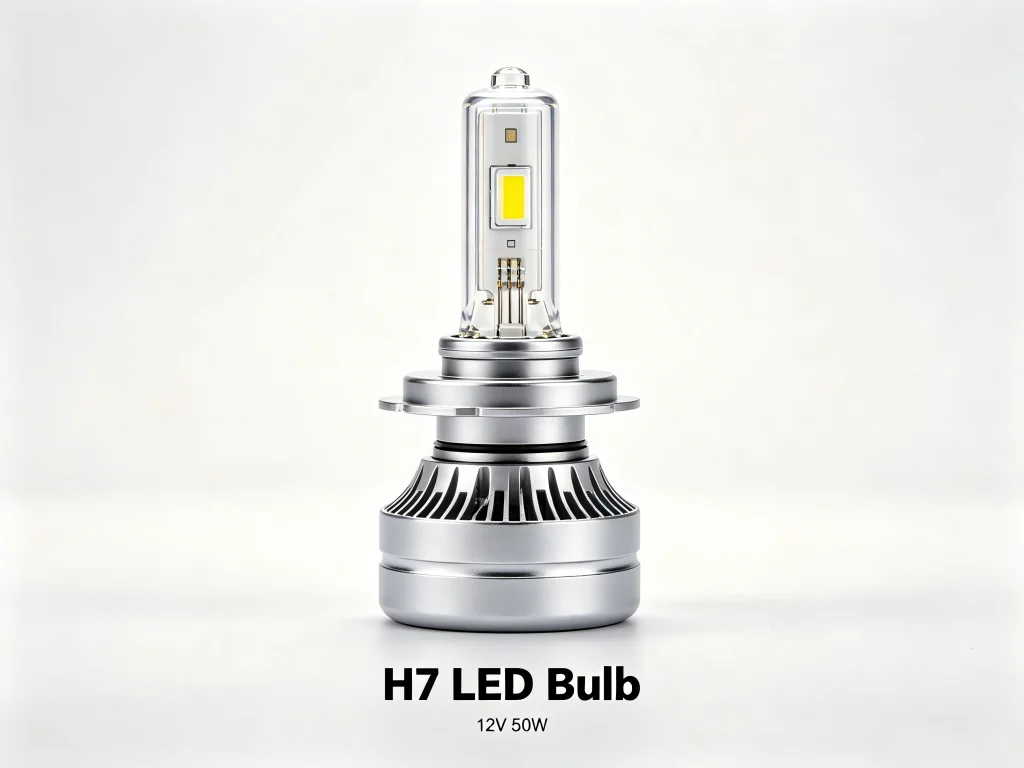
The Real Problem With Most H7 Bulbs On The Market
Here’s what our engineering testing has revealed after analyzing dozens of H7 bulbs from budget to premium tiers. The majority fail in ways that most drivers never see coming.
Problem #1: The Brightness Mirage
That “500% brighter” claim on the box? In our controlled testing, many budget H7 LED bulbs deliver less than half their advertised output after just 100 hours of operation. The chips degrade rapidly when they overheat, and they overheat because manufacturers cut corners on thermal management.
A standard halogen H7 bulb runs at 55W and produces roughly 1,500 lumens. A quality LED H7 replacement should surpass that significantly while drawing less power. But many cheap LEDs produce a harsh, scattered light that actually reduces usable visibility – your eyes perceive “bright white” as more intense, but the beam doesn’t reach as far down the road.
What this means for you: You’re not seeing more. You’re seeing less, but it looks whiter. That’s a recipe for late braking and missed hazards.
Problem #2: The Installation Disaster
“Plug and play” is one of the most abused phrases in automotive lighting. Real-world reviews tell a different story:
- “The bulb is thicker and won’t fit the socket” – a common complaint with oversized LED housings
- “The retainer spring clip won’t close over the cooling fan” – meaning the bulb sits loose in the housing
- “The rear end is bigger than the standard bulb; the rubber seal won’t fit” – allowing moisture into your headlight assembly
We’ve seen drivers resort to filing down sockets, damaging rubber seals with screwdrivers, and even leaving bulbs unsecured because the “plug and play” kit simply didn’t fit. The H7 standard exists for a reason – it ensures dimensional consistency so any ECE R37-approved bulb fits any H7 housing. But many aftermarket manufacturers ignore these specifications, creating bulbs that are 2-3mm too long or too wide.
The result: A bulb that doesn’t seat properly, creates an incorrect beam pattern, and potentially damages your headlight assembly.
Problem #3: The CANBUS Nightmare
Modern vehicles use CANBUS systems to monitor bulb status. When you install an LED H7 bulb that draws less current than the original halogen, the car’s computer thinks the bulb is burned out. The result? A persistent dashboard warning light that you can’t clear, or worse – the bulb flickering or shutting off completely.
Some manufacturers include “CANBUS-ready” decoders that are supposed to fix this. In practice, many of these decoders fail, overheat, or simply don’t work with specific vehicle models.
You buy an “upgrade” and end up with a warning light that won’t go away and a bulb that may cut out at the worst possible moment.
Problem #4: The Legal Landmine
This is the one most drivers never consider until it’s too late. In many countries, LED H7 bulbs are not street-legal when used in halogen headlight housings. The beam pattern differs from what the housing was designed for, creating glare for oncoming traffic and dark spots in your own field of view.
ECE Regulation No. 37 sets the standard for halogen filament lamps, specifying everything from luminous flux to physical dimensions. Bulbs that don’t meet these specifications are technically illegal for road use – and they’re the ones that cause the most problems.
You could be driving with illegal bulbs, risking fines, failed inspections, and – worst of all – blinding other drivers while seeing less yourself.
Why The GTR H7 Solution Is Different
After years of manufacturing expertise in automotive lighting, we approached the H7 problem differently. We didn’t start with “how do we make a cheap bulb.” We started with “how do we solve every single problem drivers face with H7 replacements.”
Precision 1:1 Fitment – No Modifications Required
Our H7 bulbs are engineered to exact ECE R37 specifications. The dimensions match the original halogen bulb precisely – no filing, no forcing, no damaged seals. The bulb seats correctly, the retainer clip closes properly, and the rubber seal fits as intended. Installation takes minutes, not hours.
Superior Thermal Management – Real Longevity
Heat is the enemy of LED performance. Our bulbs feature advanced heat dissipation technology – aerospace-grade aluminum housings and optimized cooling systems that maintain stable operating temperatures. This isn’t marketing fluff. It’s engineering that delivers 50,000+ hours of consistent output.
In independent testing, the GTR Lighting Ultra 2 delivered exceptional longevity, maintaining over 75% output for more than 5,000 hours of continuous operation.
True CANBUS Compatibility – No Warning Lights
Our bulbs integrate intelligent CANBUS drivers that communicate properly with your vehicle’s monitoring system. No flickering. No error codes. No dashboard warnings. Just clean, reliable light.
Road-Legal Performance – Engineered For Safety
We design our bulbs to produce the correct beam pattern for halogen housings. The LED placement mimics the exact position of the halogen filament, ensuring the reflector or projector functions as intended. No glare for oncoming traffic. No dark spots in your field of view. Just bright, focused light where you need it.
In controlled testing, the GTR Lighting Ultra 2 measured nearly 400% brighter than stock halogen bulbs with a clean, usable beam pattern. Another independent test recorded 709% brighter than original halogen – and unlike many competitors, this performance was maintained over time.
Что говорят реальные водители
“I have used GTR Ultra2 LED bulbs in a couple different halogen reflector housings with very good results. This includes a 2020 Freightliner in which I spend literally a hundred thousand miles driving in the dark.”
“They have earned a remarkable 4.8 rating on our brightness/distance scale… They proved to be incredibly resilient.”
This isn’t about flashy marketing. This is about real performance that professional drivers – people who depend on their lights every single night – trust.
Your H7 Decision: The Choice Is Clear
You have two paths forward:
- Keep gambling on cheap bulbs that may not fit, may not last, may not be legal, and may leave you stranded in the dark.
- Install GTR H7 bulbs – engineered to fit perfectly, perform consistently, and keep you safe night after night.
The cost difference between a bargain-bin bulb and a premium GTR bulb is minimal compared to the cost of an accident, a failed inspection, or the sheer frustration of replacing bulbs every few months.
Don’t compromise on what keeps you and your family safe on the road.