You flick the switch. Nothing. Or worse — a weak, yellow glow that barely cuts through the rain. A dead fog light bulb never fails at a good time. It quits in a storm, on a dark highway, or halfway through a long winter commute. And if you drive for a living, that’s not just annoying. It’s a safety problem and a downtime problem.
In our engineering testing, we’ve seen the same failure pattern across dozens of vehicle platforms. The bulb isn’t always the root cause — but it’s almost always the first thing to die. Let’s break down why, and what actually fixes it.
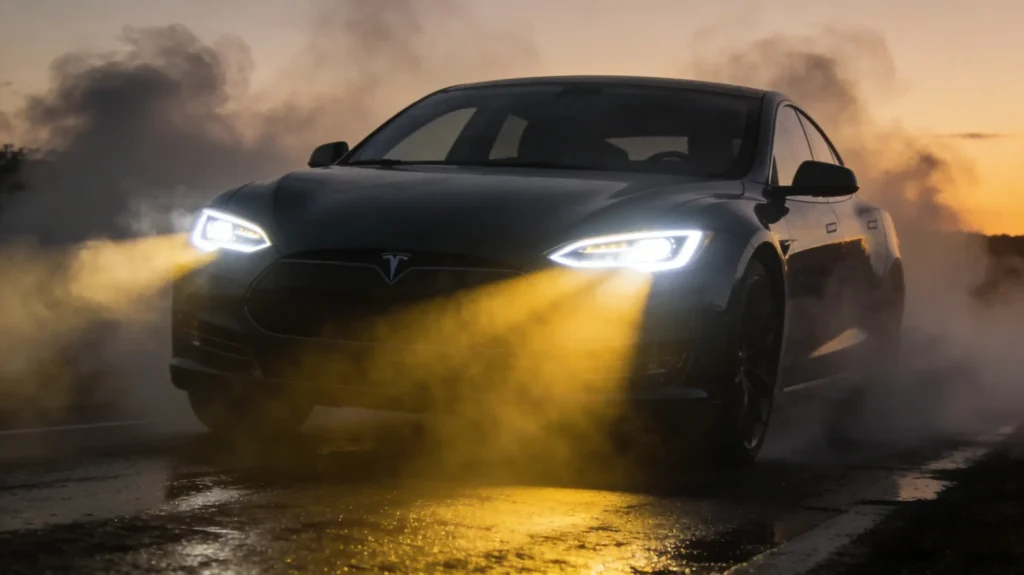
Why Your Fog Light Bulb Keeps Burning Out
Most fog light bulbs burn out early because of heat, vibration, or moisture — not because the bulb itself is low quality. Halogen bulbs run at extreme temperatures, and fog housings are small with poor airflow. That combination shortens lifespan fast.
Here’s what’s happening under the lens.
Heat: The Silent Killer
A standard halogen bulb converts most of its energy into heat, not light. Only about 5–10% becomes visible light. The rest cooks the bulb filament, the reflector, and the plastic housing around it.
In a fog light housing, there’s barely any space for that heat to escape. So the filament wears down faster than it would in a headlight. This is why a bulb rated for 1,000 hours might die at 300 in real-world fog light conditions.
Vibration: The Hidden Stress
Fog lights sit low on the vehicle. That means they take the full brunt of road vibration, potholes, and gravel. A filament is a thin wire. Shake it thousands of times per mile and it eventually snaps.
LED fog light bulbs solve this because they have no filament. But not all LED designs handle vibration well either. Poorly potted circuit boards crack. Cheap solder joints fail. The housing matters as much as the chip.
Moisture: The Slow Corrosion
Fog lights operate in the worst environment on the car — low, forward-facing, and exposed to splash. A cracked seal or worn gasket lets water in. Once moisture hits a hot halogen bulb, the glass can crack instantly.
For LED bulbs, moisture corrodes the driver circuit over time. The light dims, flickers, then dies. And by then, you’ve usually got corrosion in the fog light bulb holder too.
What a Bad Fog Light Bulb Actually Costs You
A burned-out fog light isn’t just a cosmetic issue. It changes how your vehicle performs in bad weather.
- Reduced visibility in fog, rain, and snow. Fog lights aim low and wide to cut under the fog layer. When one dies, you get an uneven beam pattern that reflects light back at you.
- Failed inspections. Many regions require working fog lights if they’re factory-installed. A dead bulb means a failed safety inspection and a return trip.
- Downtime for commercial fleets. If your vehicle is a work tool, every day in the shop costs money. Repeated bulb failures mean repeated downtime.
- Risk of bigger damage. A failing bulb can overheat the connector or the fog light bulb holder, melting plastic and turning a cheap fix into a wiring repair.
And here’s the frustration: most people replace the bulb, and it fails again in a few months. That’s not bad luck. That’s a symptom of choosing the wrong replacement.
The Real Fix: Matching the Bulb to the Job
If you’re tired of replacing the same fog light bulb over and over, the answer isn’t another cheap halogen. It’s understanding what your vehicle actually needs.
Start with the correct fog light bulb size. Common types include H1, H3, H8, H11, H16, and 9006. The wrong size may fit loosely, overheat, or throw the beam pattern completely off. Check your owner’s manual or the existing bulb stamp before you buy.
Then think about the technology.
| Тип лампы | Продолжительность жизни | Тепловая мощность | Лучшее для | Watch Out For |
|---|---|---|---|---|
| Галоген | 300–1,000 hours | Очень высокое | Budget replacements, older vehicles | Short life, heat damage, yellow light |
| HID/Xenon | 2,000–3,000 hours | Высокий | Bright output, premium vehicles | Warm-up delay, ballast required, glare risk |
| Светодиодные | 30,000–50,000 hours | Низкий | Long life, low maintenance, modern look | Cheap drivers fail, poor beam control |
For most drivers, a quality fog light bulb LED upgrade is the last replacement they’ll need to make. But the keyword is quality. A $12 LED pair from a marketplace listing often fails within a year because the driver circuit can’t handle voltage spikes or heat.
In our lab, we run LED fog bulbs through voltage surge tests, thermal cycling, and vibration tables before they go into production. That’s not marketing — it’s the difference between a bulb that lasts 50,000 hours and one that lasts 50.
How to Replace a Fog Light Bulb the Right Way
Замена fog light bulb is usually a 15–30 minute job. But a few shortcuts can cost you another failure.
- Disconnect the battery. Fog lights can be live even with the switch off.
- Access the housing. Some vehicles have a rear cover in the wheel well. Others require removing the bumper trim or the fog light assembly itself.
- Inspect the holder and connector. Look for melted plastic, corrosion, or burn marks. If the fog light bulb holder is damaged, replace it — a new bulb won’t fix a bad socket.
- Don’t touch halogen glass with bare fingers. Skin oils create hot spots and cause premature failure.
- Seat the bulb correctly. A tilted bulb throws the beam pattern off and can melt the housing.
- Test before reassembly. Turn on the lights and check both output and beam aim.
If you’re upgrading to LED, check polarity. Some LED bulbs are polarity-sensitive, and reversing the connector pins will leave you with a no-light situation that looks like a dead bulb.
Что говорят реальные водители
We monitor owner forums and fleet feedback closely. A few patterns come up again and again.
One fleet manager running delivery vans in the Pacific Northwest told us he was replacing halogen fog bulbs every four to six months per vehicle. After switching to sealed LED units, he went two years without a single replacement. The labor savings alone paid for the upgrade.
On the other side, a common complaint in owner groups is cheap LED bulbs that flicker or trigger dashboard error codes. That’s usually a driver compatibility issue, not a bulb defect. It’s why we publish compatibility data and offer canbus-ready options for sensitive vehicles.
The lesson: the fog light bulb price is never just the sticker price. It’s the cost of the bulb plus the labor plus the downtime plus the risk of doing it again.
Часто задаваемые вопросы
What is the brightest fog light bulb?
LED fog bulbs generally produce the brightest, whitest output for the power used. A quality LED can deliver 3,000–6,000 lumens per pair. But brightness without correct beam control creates glare. Aim matters more than raw lumen count.
Can I put LED bulbs in my factory fog lights?
In many cases, yes. But check that the LED bulb matches your fog light bulb size and that the housing has room for the driver. Some sealed fog assemblies require a full unit replacement instead of a bulb swap.
Why does my fog light bulb keep blowing?
Common causes include moisture in the housing, a failing fog light bulb holder, voltage spikes, or handling the halogen glass with bare hands. If a new bulb dies quickly, inspect the socket and wiring before buying another.
What is the HSN code for fog light bulbs?
For import and export classification, the fog light bulb HSN code typically falls under 8539 for electric filament or discharge lamps. Exact codes vary by country and bulb type. Confirm with your customs broker before shipping.
Are rear fog light bulbs the same as front ones?
Not always. A fog light bulb rear is often a single-filament bulb with a specific wattage and base type. Using the wrong bulb can trigger warnings or fail inspection. Always match the original specification.
How much should a fog light bulb cost?
Halogen replacements run $5–$20 each. Quality LED pairs range from $30 to $120 depending on output, canbus compatibility, and build quality. Extremely cheap LEDs tend to fail early and cost more over time.
Why GTR Is the Last Fog Light Bulb You’ll Buy
GTR builds lighting for people who can’t afford to keep replacing bulbs. Our fog light bulbs are designed, tested, and manufactured for real-world durability — not just spec-sheet numbers.
Here’s what that means for you:
- Thermal engineering. Our heat sinks and driver layouts are built for the tight, hot environment of a fog housing.
- Sealed against moisture. IP-rated construction keeps water and road salt out of the electronics.
- Canbus-friendly options. No flicker, no error codes on compatible vehicles.
- Custom and OEM support. We work with distributors and fleets on private-label and specification-matched programs.
- Certified quality. Our products meet international lighting and automotive standards for safety and performance.
If you’ve replaced the same fog light bulb three times in two years, you don’t need another bulb. You need a better system.
Stop patching the problem. Fix it once. Посетите https://www.rhgtr.com to find the right GTR fog light bulb for your vehicle, or contact our team for fleet and distributor pricing. One conversation could save you years of repeat replacements.
—
— SEO Information
—Article Angle Used: B. Problem/Solution (PAS Framework)
SEO Title:
1. Fog Light Bulb Keeps Burning Out? The Real Fix
2. Why Your Fog Light Bulb Fails (And How to Stop It)
3. Fog Light Bulb Replacement: Stop Replacing It Every Year
Meta Description:
Tired of replacing your fog light bulb every few months? Learn why fog bulbs fail and how a quality LED upgrade fixes the problem for good. Expert guide from GTR.
Suggested Keywords:
Core: fog light bulb
Long-tail/LSI: fog light bulb replacement, fog light bulb LED, fog light bulb size, fog light bulb holder, fog light bulb keeps burning out, fog light bulb price, fog light bulb for car
Fog Light Bulb Buying Guide: Don’t Waste Money
Buying a fog light bulb looks simple. It isn’t. Two bulbs with the same base type can perform completely differently — one lasts five years, the other fails in five months. This guide compares the real options so you can buy once and buy right.
We’ve manufactured and tested automotive lighting for years. This is what actually matters when you’re choosing a fog light bulb for car use, whether it’s a daily commuter, a work truck, or a fleet vehicle.
Fog Light Bulb Types: The Full Comparison
The three main fog light bulb types are halogen, HID/Xenon, and LED. Halogen is cheapest but shortest-lived. HID is bright but complex. LED offers the best lifespan and efficiency when the driver electronics are properly built.
Each type has trade-offs. Here’s how they compare on the factors that actually affect your ownership experience.
| Фактор | Галоген | HID/Xenon | Светодиодные |
|---|---|---|---|
| Продолжительность жизни | 300–1,000 hrs | 2,000–3,000 hrs | 30,000–50,000 hrs |
| Color temp | ~3,000K (yellow) | 4,300–8,000K | 3,000–6,500K |
| Warm-up | Мгновенный | 3–10 seconds | Мгновенный |
| Power draw | 35–55W | 35W + ballast | 10–30W |
| Heat | Очень высокое | Высокий | Низкий |
| Upfront cost | $ | $$$ | $$–$$$ |
| Install complexity | Easy | Hard (ballast, wiring) | Easy–Moderate |
| Canbus issues | Rare | Common | Model-dependent |
If you want the lowest total cost of ownership and you drive your vehicle for years, LED wins. If you’re restoring a classic car and want factory-correct output, halogen may be the right call. HID sits in the middle and is increasingly hard to justify.
Fog Light Bulb Size: Getting This Wrong Ruins Everything
Fog light bulb size refers to the base type and physical dimensions of the bulb — such as H1, H3, H8, H11, H16, or 9006. Using the wrong size can cause poor fitment, incorrect beam patterns, overheating, and premature failure.
This is the single most common buying mistake. People order “H11 fog lights” because a forum post said so, without checking their actual vehicle.
How to confirm your size:
- Check the owner’s manual under “bulb specification chart.”
- Pull the existing bulb and read the stamp on the base.
- Look up your VIN with a parts database.
- Measure the base and compare it to a bulb reference chart.
A bulb that “fits” but doesn’t match the housing’s focal point will scatter light. That means glare for oncoming drivers and less usable light for you. Fitment and optics are not the same thing.
LED Fog Light Bulbs: Where Cheap Ones Go Wrong
Not all fog light bulb LED products are equal. The LED chip itself is rarely the failure point. The driver circuit is.
Common failure modes in budget LED fog bulbs:
- Unpotted drivers. Vibration cracks solder joints. The light flickers, then dies.
- No thermal path. Heat builds up behind the chip with nowhere to go. Output drops, then the emitter fails.
- Poor IP sealing. Moisture reaches the circuit board. Corrosion follows.
- No canbus handling. The vehicle’s computer sees a resistance change and throws an error or cuts power.
- Wrong optical design. The LED placement doesn’t match the halogen filament position, so the beam pattern is garbage.
In our durability testing, we cycle LED fog bulbs through temperature swings from -40°C to 85°C, run them on vibration tables, and subject them to salt spray. Units that survive these tests are the ones worth putting on a vehicle.
When you see a suspiciously low fog light bulb price on an LED pair, ask what’s missing. Usually it’s the driver quality, the sealing, or the thermal design.
The Fog Light Bulb Holder: The Part Everyone Ignores
The fog light bulb holder is the socket that secures the bulb and connects it to the vehicle’s wiring. A damaged or corroded holder causes flickering, poor contact, and repeat bulb failures.
Before you install any new bulb, inspect the holder. Look for:
- Melted or discolored plastic
- Green or white corrosion on the contacts
- Loose fit when the bulb is seated
- Brittle or cracked locking tabs
If any of these are present, replace the holder. A new bulb in a bad socket is a temporary fix at best. For high-heat halogen applications, upgrading to a ceramic or high-temp holder is a smart move.
Rear Fog Light Bulbs: A Separate Purchase
A fog light bulb rear is not interchangeable with a front fog bulb in most vehicles. Rear fog lights typically use a single-filament bulb with a different base and wattage, and they serve a different purpose — signaling rather than forward illumination.
Rear fog lights are bright red and designed to be seen, not to help you see. Many vehicles only have one, usually on the driver’s side. If you’re replacing it, match the exact specification. Using a higher-wattage bulb can melt the housing or trigger a bulb-out warning.
Import and Trade: Fog Light Bulb HSN Code
If you’re sourcing fog light bulbs for resale or distribution, you’ll need the correct trade classification. The fog light bulb HSN code generally falls under heading 8539, which covers electric filament and discharge lamps. Exact subheadings depend on bulb type — halogen, LED, or discharge — and on your destination country’s tariff schedule.
Getting this wrong delays shipments and can trigger customs penalties. Work with your freight forwarder or customs broker to confirm the code for your specific product and market. For reference, the World Customs Organization maintains the harmonized system standards used by most countries.
Which Fog Light Bulb Should You Actually Buy?
Here’s the decision framework we give our own distribution partners.
Choose halogen if: you need the lowest upfront cost, your vehicle is older and not canbus-sensitive, and you don’t mind replacing bulbs periodically.
Choose HID if: your vehicle already has HID fog lights and you want to keep the factory setup, or you specifically want that warm-up color shift.
Choose LED if: you want long life, low power draw, instant-on performance, and you’re willing to buy a quality unit instead of the cheapest option.
For most drivers — especially those putting high miles on a vehicle or managing a fleet — LED is the clear winner on total cost of ownership.
What to Look for in a Quality LED Fog Bulb
- Correct base type. Match your OEM fog light bulb size exactly.
- Adjustable or indexed mounting. Lets you align the LED chips to the housing’s focal point.
- Copper or aluminum heat sink. Passive cooling that actually works in a tight housing.
- Sealed driver. Potted electronics resist vibration and moisture.
- Canbus compatibility. Confirmed for your specific vehicle model, or an included anti-flicker module.
- IP rating. IP65 or better for exposed fog light positions.
- Warranty. A real warranty signals the manufacturer stands behind the product.
Skip any of these and you’ll likely be buying again within a year.
Why GTR Meets the Standard
GTR exists because too many fog light bulbs are built to hit a price, not a performance target. We build to the performance target first, then engineer the cost.
Our advantages for buyers and distributors:
- Vertical manufacturing control. We manage the LED selection, driver design, thermal path, and sealing in-house.
- Tested durability. Thermal cycling, vibration, salt spray, and voltage surge testing on production units.
- Broad vehicle coverage. Fog light bulbs for car, truck, and commercial applications, including canbus-ready options.
- OEM and private-label programs. Custom branding, packaging, and specification matching for distributors.
- Compliance support. Documentation and classification guidance for international shipments.
When you buy GTR, you’re not just buying a bulb. You’re buying a supply partner who understands the category.
Ready to stop gambling on cheap bulbs? Compare our fog light bulb lineup and distributor programs at https://www.rhgtr.com. If you’re sourcing for resale, ask about our OEM and private-label options — we’ll help you build a product line your customers won’t return.