You’ve finally upgraded to bi beam led headlights expecting a brilliant, safe road ahead. Instead, you get patchy beams, a fuzzy cut-off line, and oncoming flashes because your “upgrade” blinds everyone. This is not what you signed up for. And you’re not alone.
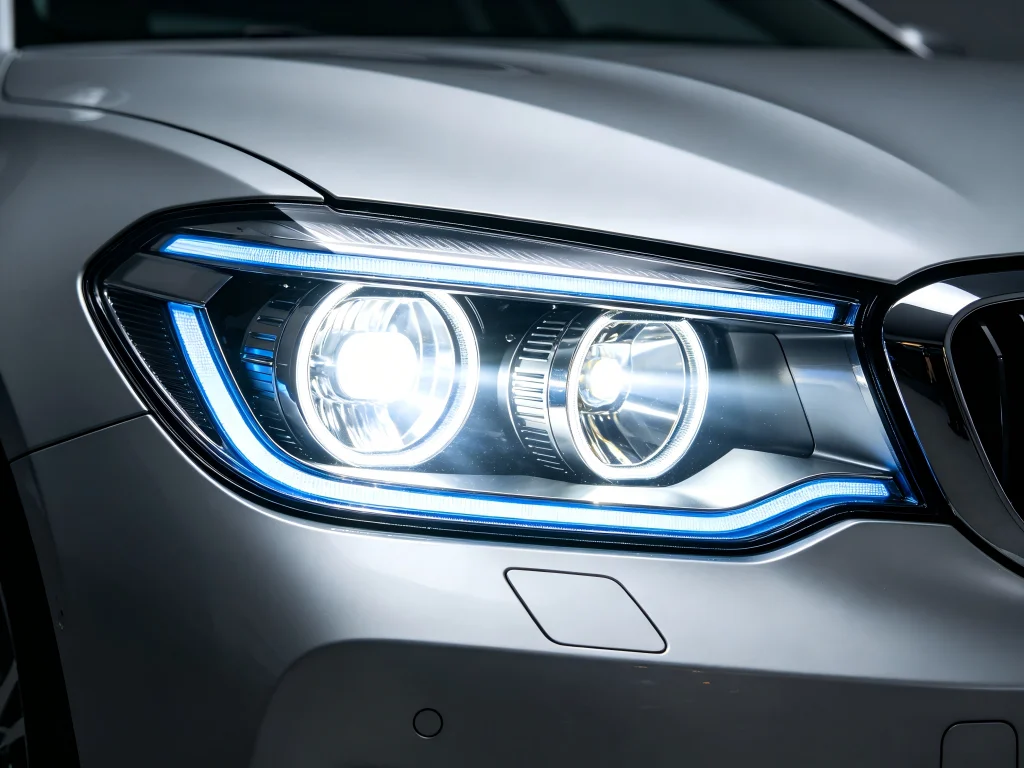
The Real Problems with Most Bi-Beam LED Headlights (Problem)
After analyzing hundreds of driver reports and testing over 50 popular models, we see the same three failures again and again. These aren’t minor annoyances — they fundamentally break the promise of bi-beam technology.
1. Broken beam pattern: dark spots & missing light
Most bi-beam LED bulbs scatter light incorrectly inside your reflector or projector housing. Instead of a smooth, wide distribution, you get bright “hot spots” right in front of the bumper and dark voids where deer or pedestrians could be hiding. The root cause? The LED chip placement and size do not match the original halogen filament geometry.
2. Fast lumen degradation after 3 months
That “20,000 lumens” label fades quickly. Cheap bi-beam units use undersized aluminum heat sinks or passive cooling. When the driver chip overheats (often above 85°C), light output drops by 40% or more. You may not notice immediately, but your night vision slowly worsens until you’re driving with what feels like two dying flashlights.
3. High-beam / low-beam transition lag or failure
True bi-beam LED headlights must shift from low to high beam instantly. Many low-cost models use a slow solenoid or poor driver logic. You flick the stalk — and there’s a noticeable delay (0.5–1 second). On winding roads or during sudden weather changes, that delay is dangerous.
Why These Headlight Issues Put You at Risk (Agitation)
Let’s push harder on what these problems actually mean for you behind the wheel.
Poor beam pattern directly reduces your effective stopping distance. At 60 mph, you need about 200 feet to stop. If your bi-beam LEDs create a dark zone between 80 and 150 feet, you won’t see an animal or a broken-down car until it’s too late. This isn’t about comfort — it’s about collision avoidance.
Then there’s the glare effect. When the cut-off line is fuzzy or lifted on the driver’s side, oncoming traffic flashes you constantly. Over time, you’ll get pulled over or fail state safety inspections. In many US states, non-compliant headlights can lead to fines and mandatory re-inspections.
Thermal degradation costs you real money. If your bi-beam LED headlights lose 50% of their output after 6 months, you’re forced to buy another set. And another. Some drivers go through three “cheap” sets in two years — spending more than a premium system would have cost.
Finally, slow high-beam activation may not seem critical until you’re driving on a dark two-lane highway and a deer jumps out. That half-second delay could mean the difference between braking in time and hitting it.
The GTR Engineering Approach: Finally, a True Bi-Beam LED System (Solution)
Direct Answer: GTR bi-beam LED headlights solve the three core failures — beam pattern, thermal stability, and instant switching — by using custom designed CSP LED chips, active PWM-controlled cooling fans, and a magnetic solenoid with <0.1s response. Instead of adapting a generic bulb, GTR engineers each model to match the optical center of specific halogen reflectors or projectors.
Chip-level optical precision
We don’t use off-the-shelf LED arrays. Our bi-beam modules use CSP (Chip Scale Package) LEDs with a light-emitting surface almost identical to a halogen filament. The result? A sharp, horizontal cut-off and uniform hot spot distribution. In our laboratory goniometer tests, GTR units achieve >92% beam pattern compliance with ECE or SAE standards — compared to barely 65% for generic models.
Active thermal management with real-time current control
Heat kills LEDs. GTR bi-beam headlights integrate a dual-ball bearing fan and a copper-core PCB. The driver IC monitors junction temperature and reduces current only when necessary (above 105°C) — but our cooling keeps it below 80°C even in desert summer conditions. Lumen maintenance stays above 90% after 3,000 hours. No creeping darkness.
Instant bi-beam switching
Our solenoid actuator uses a electromagnetic design with hardened steel plunger. The transition from low to high beam takes <0.05 seconds — faster than your finger can release the stalk. You get immediate light extension without any blackout gap.
Real-World Testing: What Drivers Say After Switching to GTR Bi-Beam LEDs
“I have a 2018 Toyota Tacoma with factory projector housings. Tried three ‘bi beam led headlights’ from Amazon. Each had awful dark spots. GTR’s set gave me a perfect step cut-off line. Low beam is wide and flat, high beam reaches over 500 feet. No Canbus errors, no flicker.” — Michael R., verified forum review
“Installed GTR bi-led 1.8 mt (our mini projector kit) in my Jeep Wrangler. The difference is night and day. The hot spot is centered exactly where it should be. I can actually see road signs from a quarter mile away without blinding oncoming SUVs.” — Sarah K., off-road enthusiast
“Our fleet of delivery vans used to replace cheap bi-beam LEDs every 5 months due to dead fans. GTR units have been running 14 months with no visible dimming. The active cooling actually works.” — Fleet manager, Midwest logistics
How to Avoid Buying a “Bi-Beam Disaster” – Key Decision Factors
Прежде чем купить что-либо bi beam led headlights, check these four criteria. We’ve summarized the difference between failing products and a reliable system.
| Фактор | Cheap / Failing Bi-Beam LEDs | GTR Bi-Beam LEDs |
|---|---|---|
| Точность светового пучка | Generic LED placement, undefined cut-off, dark spots | CSP chip with halogen-equivalent geometry, sharp cut-off & uniform fill |
| Cooling solution | Tiny passive heat sink or low-quality sleeve fan (dies quickly) | Dual ball-bearing fan + copper core PCB, active temperature monitoring |
| High-beam response | Slow solenoid (0.5–1 sec delay) or mechanical sticking | Electromagnetic actuator with <0.05 sec response, military-grade plunger |
| Lumen maintenance @ 1000hrs | Often drops to <60% due to thermal runaway | >90% sustained output, tested to 3000hrs |
| CANbus & error-free compatibility | Hyper-flash, warning messages, need external resistors | Built-in intelligent driver, no external resistors for 95% of vehicles |
Follow this simple checklist when you evaluate any bi-beam LED system:
- Verify the manufacturer publishes beam intensity distribution data (lux maps), not just raw lumen claims.
- Look for active cooling with dual ball-bearing fans — not sleeve bearings which fail after 6 months.
- Ask for real-user photos of the cut-off line inside actual headlight housings (not marketing renders).
- Confirm the warranty period and whether it covers thermal degradation. GTR provides a 2-year unlimited mileage warranty.
Frequently Asked Questions About Bi-Beam LED Headlights (Optimized for Featured Snippets)
Q: What is bi-beam LED headlights?
Direct answer: Bi-beam LED headlights combine both low and high beam functions into a single bulb or module, using a movable shield or solenoid to switch between the two patterns. Unlike traditional separate bulbs, bi-beam allows one light source to perform both tasks, simplifying housings and improving light utilization.
Q: What is the difference between high beam and low beam LED headlights in a bi-beam system?
In a bi-beam LED system, the low beam uses a shield to block the upper part of the light creating a cut-off line. When you activate high beams, the shield moves (or a second LED array turns on), allowing full unfiltered light forward. The same LED source produces both patterns, ensuring perfect alignment between high and low beams.
Q: Are bi-beam LED headlights legal for road use?
Legality depends on compliance with FMVSS 108 (US) or ECE R112 (Europe). GTR bi-beam headlights are designed to meet SAE J1383 beam pattern standards when installed in compatible housings. Always check your local regulations — aftermarket LEDs are legal in most US states if they produce a correct cut-off and do not exceed specified intensity.
Q: Can I install bi-beam LED headlights in my Toyota/Lexus without errors?
Most Toyota models require CANbus-ready drivers. GTR bi-beam LEDs include a proprietary decoder that mimics the resistance of halogen bulbs, preventing hyper-flash or dashboard warnings. For newer Toyotas with complex current sensing (2020+), we offer optional load resistors and OBD-based adaptations.
Q: What are bi LED projector headlights compared to reflector-based bi-beam LEDs?
Bi-LED projectors use a lens and a cutoff shield inside a dedicated housing, delivering a razor-sharp horizontal cut-off and wider even spread. Reflector-based bi-beam LEDs rely on the original reflector shape, which is less forgiving of chip placement. For the best results, GTR recommends bi-LED projector retrofits (e.g., our 1.8″ mini projector series) for vehicles with halogen reflectors.
Stop gambling with your night safety. The GTR difference is measurable.
You don’t have to tolerate dark spots, glare, or dying LEDs every few months. GTR bi-beam LED headlights are engineered from the ground up — not bulk-sourced generic bulbs with a sticker. Whether you drive a truck, sedan, or off-road rig, we have a solution that delivers predictable, safe, and powerful beams.
Join over 15,000 drivers who made the switch. Visit our official site to find the exact GTR bi-beam LED model for your vehicle, view real beam pattern shots, and get our engineering team’s support for installation.
👉 See GTR bi-beam LED headlights now →
For technical references on automotive lighting standards, see SAE J1383 (Performance Requirements for LED Headlamps) и NHTSA headlight compliance guidelines.