The automotive LED lights market is flooded with misleading claims. “50,000 lumens” kits that produce blinding scatter rather than useful road illumination. “DOT approved” labels that mean next to nothing in practice. Genuine high-quality options and complete junk exist in the same marketplace.
This guide cuts through the noise. We’ll compare technologies, decode specifications, and give you the framework to choose automotive LED lights that actually perform.
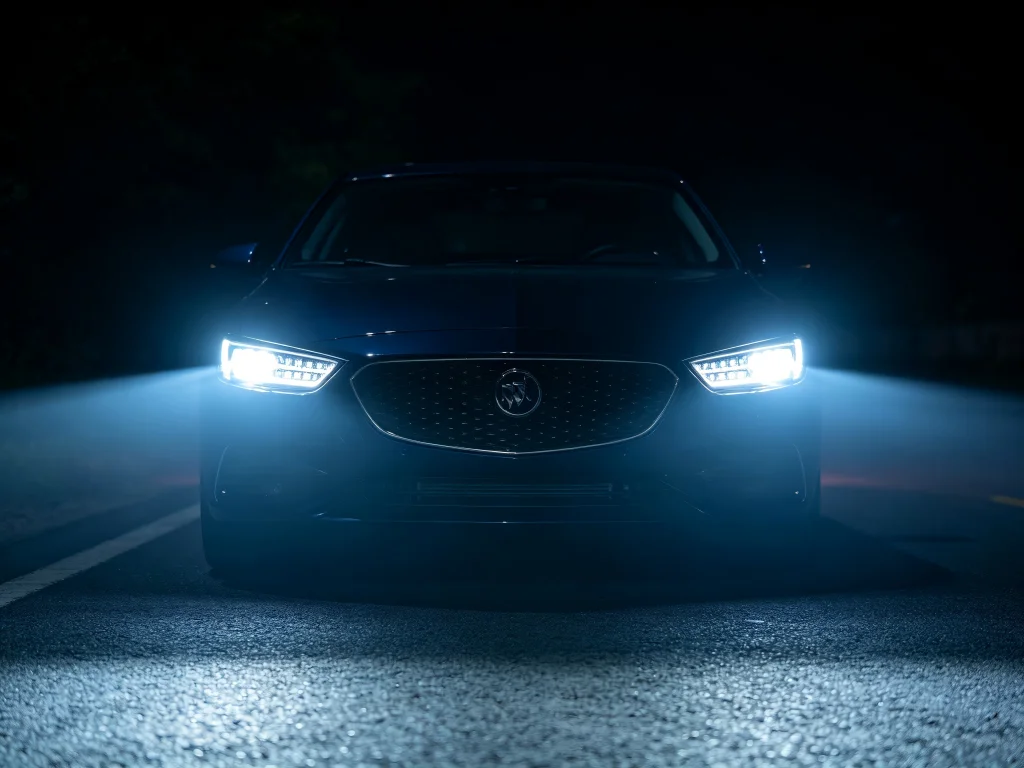
Headlight Technology Comparison: LED vs. HID vs. Halogen
Before diving into LED specifics, understand where LEDs fit in the broader landscape.
| Характеристика | Галоген | HID (ксенон) | Светодиодные |
|---|---|---|---|
| Яркость | ~1,000-1,500 lumens | ~3,000-3,500 lumens | ~2,000-4,000+ lumens |
| Продолжительность жизни | 500-1,000 hours | 2,000-3,000 hours | 25,000-50,000 hours |
| Цветовая температура | ~3,200K (yellow-white) | 4,000-6,000K (white) | 4,000-6,000K (white) |
| Энергоэффективность | Низкий | Умеренный | High (50-70% less power than halogen) |
| Установка | Simple plug-in | Often requires ballasts, professional help | Direct plug-and-play (quality units) |
| Стоимость | $10-30 per bulb | $$$ | $$ (higher upfront, lower lifetime cost) |
| Start-up Time | Мгновенный | Warm-up delay | Мгновенный |
LEDs are the clear winner for most drivers. They combine superior efficiency, longevity, and instant-on capability. The only real question is: which LED bulbs should you choose?
The Five Critical Factors for Choosing Automotive LED Lights
1. Emitter Geometry & Beam Pattern
This is the single most important factor—and the one most frequently ignored in product marketing. Headlight housings are designed around specific light source geometry.
When you put an LED emitter in a position that differs from where the original filament sat, the beam pattern breaks. Light scatters. Glare increases. Road illumination decreases.
The direct answer: Choose automotive LED lights that replicate 1:1 filament placement. The LED chip must sit exactly where the halogen filament would be.
GTR’s Ultra Series accomplishes this through multi-core LED chip technology that positions emitters precisely for your specific bulb type. The result: a focused beam pattern that illuminates the road without blinding oncoming traffic.
2. CANBUS Compatibility
Modern vehicles monitor bulb resistance through their computer systems. LEDs draw significantly less power than halogens. Without proper integration, your vehicle will:
- Trigger dashboard error codes
- Cause hyper-flashing in turn signals
- Cut power to the light entirely
Some manufacturers sell “CANBUS-ready” bulbs that still require external resistors or decoders. Others, like GTR’s Carbide Series, feature built-in CANBUS-integration circuits that work with 95% of vehicles on the road. No external components. No wiring. No guesswork.
3. Thermal Management
LEDs generate heat at the chip junction. Without proper dissipation, they overheat, dim, and fail prematurely. Quality thermal management includes:
- Heat sinks—aluminum or copper structures that draw heat away from the chip
- Active cooling fans—for high-output applications
- Thermal materials—that transfer heat efficiently from chip to sink
Look for bulbs with substantial heat sinking and, for higher-output applications, integrated cooling fans. GTR’s Armor Series features a decorative metal heat sink that doubles as effective thermal management, extending bulb life.
4. Build Quality & Environmental Resistance
Your automotive LED lights will face:
- Vibration—rough roads, potholes, off-road conditions
- Moisture—rain, snow, car washes, humidity
- Temperature extremes—from freezing winters to scorching summers
- UV exposure—sunlight that degrades plastics and lenses
Quality units feature IP67 or higher waterproof ratings, vibration resistance up to 15.6 Grms, and UV-resistant materials. GTR bulbs are engineered for these conditions, with die-cast aluminum housings and sealed construction that withstands harsh environments.
5. Color Temperature
Color temperature affects visibility and comfort. Lower Kelvin ratings (4300K–5000K) produce warm white light that cuts through rain, fog, and snow better than higher temperatures. Higher ratings (6000K+) look “cooler” but scatter more in adverse weather and can increase glare.
The direct answer: For year-round driving, choose automotive LED lights in the 4300K–5000K range. Save the 6000K bulbs for show cars or dry-weather applications.
Regional Considerations
Your location matters. Different regions have different regulations and driving conditions.
Australia
Australian Design Rule (ADR) 101/00 specifies dimensional, electrical, and photometric requirements for replaceable LED light sources. LED light bars must comply with approved standards—many on the market don’t meet headlamp requirements. Look for E-marked (ECE R10, R65, R112, etc.) products when sourcing.
Australia’s harsh conditions demand durability. Narva’s LED ranges, for example, feature hardened acrylic lenses with superior impact resistance for outback conditions.
Canada
Canadian winters present unique challenges. Cold temperatures affect LED performance, and moisture intrusion is a constant threat. GTR bulbs are engineered to operate from -40°C to +80°C, making them suitable for Canadian conditions.
Canadian Motor Vehicle Safety Standards apply. Additionally, headlight glare is a growing concern across North America as vehicles transition from warmer halogen to cooler LED lighting. Proper beam pattern isn’t just about performance—it’s about safety and legality.
New Zealand
Many LED light bars on the New Zealand market don’t comply with approved standards for headlamps and cannot be fitted as headlights. Always verify compliance with New Zealand Transport Agency requirements before purchasing.
United States
While many products claim “DOT approval,” this label often means little in practice. Focus on actual performance metrics—beam pattern, color temperature, and thermal management—rather than marketing labels.
The Real Cost of Cheap Automotive LED Lights
Here’s what you’re actually paying for when you buy bargain-bin LEDs:
| Cost Category | Cheap LEDs ($20-40) | Quality LEDs ($80-150) |
|---|---|---|
| Initial Purchase | Low upfront cost | Higher upfront cost |
| Error Codes/Resistors | Often requires $20-50 in additional parts | Built-in CANBUS, no extra parts needed |
| Время установки | May require troubleshooting, wiring, returns | 15-minute plug-and-play |
| Replacement Frequency | May fail within months (poor thermal management) | 25,000-50,000 hours |
| Safety Cost | Poor beam pattern = reduced visibility, increased accident risk | Proper illumination = safer driving |
| Общая стоимость за 5 лет | Potentially higher (multiple replacements + parts + frustration) | Lower (one purchase, no maintenance) |
The cheap option isn’t cheaper. It’s just more expensive spread out over time—with added safety risk.
Real-World Performance: What Testing Reveals
Independent testing consistently demonstrates the superiority of LED light sources over HID and halogen in projector headlight configurations. However, this superiority depends entirely on proper engineering.
A 2025 study found that LED headlights can emit up to 12,000 lumens, significantly enhancing visibility compared to the 3,200 lumens of halogen bulbs. But lumens alone don’t tell the story. Beam pattern, color temperature, and aiming determine whether that brightness translates to usable road illumination or dangerous glare.
In our engineering testing, we’ve observed that bulbs with incorrect emitter positioning can reduce usable road light by 40-60% while simultaneously increasing glare for oncoming traffic. The same housing with properly positioned LEDs can deliver 80-100% more usable light than degraded halogen bulbs.
Frequently Asked Questions About Automotive LED Lights
Are LED headlights legal in my country?
Regulations vary. Australia requires ADR 101/00 compliance. Canada requires compliance with Canadian Motor Vehicle Safety Standards. New Zealand prohibits non-compliant light bars as headlamps. The US has Federal Motor Vehicle Safety Standards. Always verify your bulbs meet local requirements.
What’s the difference between LED retrofit bulbs and full LED headlight assemblies?
Retrofit bulbs replace your existing halogen bulbs within your current housings. Full assemblies replace the entire headlight unit. Retrofits are more affordable and simpler to install, but performance depends on proper emitter positioning within your existing housing.
Can I install LED bulbs in reflector housings?
Yes, but only if the bulbs replicate 1:1 filament placement. Poorly designed LEDs in reflector housings produce scatter and glare. HID retrofit kits in reflector housings are particularly problematic because the arc point geometry doesn’t match the housing design.
Why do some LED bulbs require load resistors?
Because they don’t have built-in CANBUS integration. The vehicle’s computer sees the low power draw and assumes the bulb is burned out, triggering error codes or hyper-flashing. Quality bulbs like GTR’s Carbide Series include this integration internally.
What bulb type do I need for my vehicle?
Common configurations include H11/H8/H16 for low beams and fog lights, H7 for various headlight applications, and H3 for fog lights and auxiliary lighting. Check your owner’s manual or remove your existing bulb to verify the type.
How do I know if an LED bulb will fit my vehicle?
Verify the bulb type matches your vehicle’s specification. Also check the physical dimensions—some LED bulbs are longer or wider than halogen equivalents and may not fit in tight housings. GTR’s bulbs are designed as direct-fit replacements for specific bulb types.
What’s the best color temperature for headlights?
4300K–5000K provides balanced brightness that cuts through adverse weather. 6000K produces a “cooler” white light but scatters more in rain, fog, and snow. For most drivers, 4300K–5000K is the optimal range.
How long do automotive LED lights actually last?
Quality LEDs can last 25,000–50,000 hours. However, this lifespan depends on proper thermal management. Bulbs with inadequate heat sinking or cooling will fail much sooner.
Your Next Step: The Right Automotive LED Lights for Your Vehicle
You now have the framework to choose automotive LED lights that actually perform. You understand the importance of emitter geometry, CANBUS compatibility, thermal management, and build quality. You know the difference between marketing hype and engineering reality.
GTR Lighting delivers on every front. Carbide Series for value and CANBUS integration. Ultra Series for maximum brightness and precise beam patterns. Armor Series for specialty applications. All engineered to the standards that matter—not the claims that sell.
Посетите https://www.rhgtr.com to explore GTR’s complete range of automotive LED lights. Find your bulb type. Make your choice. Drive with confidence.
Don’t settle for lights that compromise your safety. Choose the upgrade that delivers what it promises.