Você já passou por isso. Você instala um novo conjunto de luzes LED de caminhão, animado com a atualização. Três semanas depois, uma pisca. Dois meses depois, metade da barra está escura. No quarto mês, você está procurando substituições novamente.
Isso não é azar. É engenharia ruim. E se você é um gerente de frota, um operador off-road, ou um proprietário de caminhão que realmente usa seu veículo, esse ciclo de falhas custa tempo, dinheiro e segurança.
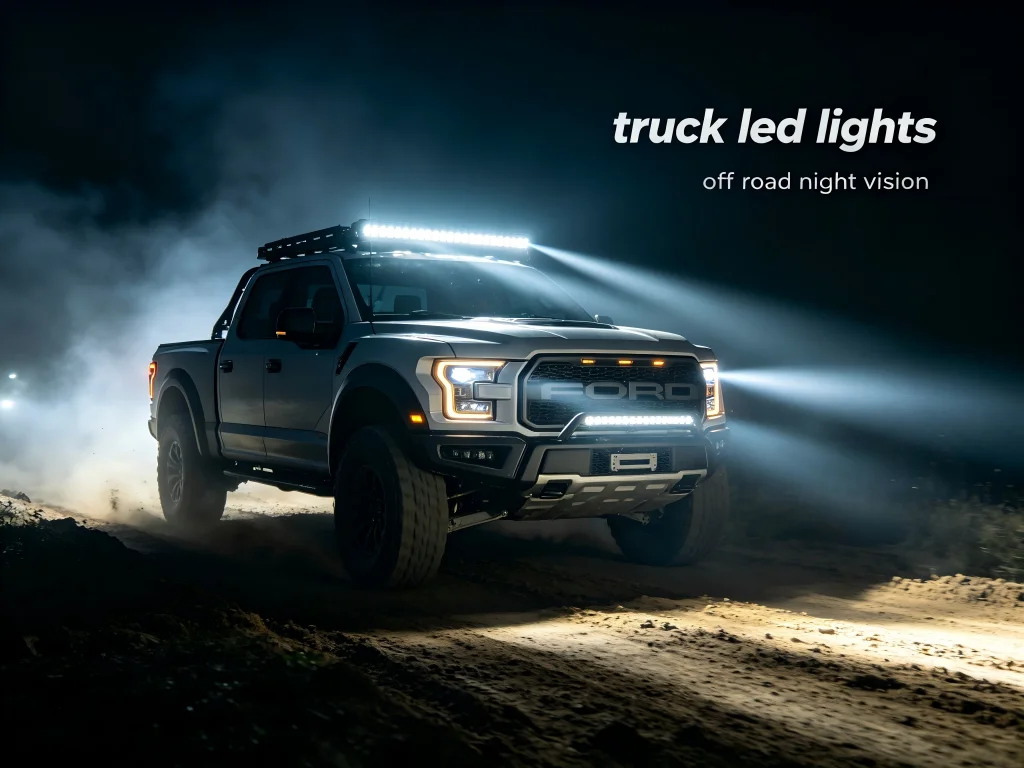
O Problema: Luzes LED para Caminhões que Não Aguentam o Trabalho Real
A maioria das luzes LED de caminhão no mercado hoje são projetadas para guerreiros de fim de semana, não para caminhões de trabalho. Elas parecem ótimas nas fotos do produto. Os lúmens impressionam no papel. Mas coloque-as em um caminhão que transporta, reboca ou faz off-road diariamente, e as fraquezas aparecem rapidamente.
Aqui está o que normalmente acontece:
- Entrada de umidade: A classificação IP67 na caixa não sobrevive à primeira lavagem de pressão. A água encontra seu caminho através da vedação, e a corrosão assume o controle.
- Danos por vibração: Trilhas off-road, estradas de cascalho, ou até mesmo juntas de expansão de rodovias soltam conexões internas. Juntas de solda racham. Componentes se deslocam.
- Falha por calor: A má gestão térmica faz com que os LEDs se cozinhem. O brilho cai. As cores mudam. Os chips morrem um a um.
- Cintilação e hiper-flash: O sistema CAN-bus do caminhão rejeita o baixo consumo de energia do LED, acionando mensagens de erro ou comportamento errático.
Em nossos testes de engenharia na GTR, desmontamos dezenas de unidades com defeito de marcas concorrentes. O padrão é consistente: componentes baratos, vedação inadequada e designs de dissipação que parecem adequados no CAD, mas falham no campo.
A Agitação: O Que Luzes com Falhas Realmente Custam para Você
Sejamos honestos sobre o que acontece quando suas luzes LED de caminhão falham no momento errado.
Você Perde Sua Janela de Trabalho
Você está em um canteiro de obras antes do nascer do sol. A carga precisa ser carregada. A papelada está vencida. E suas luzes de caçamba estão mortas. Agora você está trabalhando com a lanterna do celular ou esperando o nascer do sol. Isso não é produtividade. Isso é perda de receita.
Você Compromete a Segurança
Cantos escuros. Pontos cegos. Visibilidade reduzida na rodovia. Luzes piscando que confundem outros motoristas. Cada luz com defeito aumenta seu risco. Para operadores de frotas, esse risco se traduz diretamente em responsabilidade.
Você Gasta Dinheiro com Substituições
Baratas luzes LED de caminhão não são baratas. Elas são caras em prestações. Compre uma barra de luz de $50, substitua-a a cada seis meses. Em três anos, você gastou $300 em produtos inferiores. Uma única unidade de qualidade a $150 teria durado mais do que todas elas.
Você Danifica Sua Reputação
Se você é proprietário de frota ou prestador de serviços, seu caminhão é seu cartão de visita. LEDs queimados ou temperaturas de cor incompatíveis sinalizam falta de profissionalismo. Os clientes notam. Os concorrentes capitalizam.
Um caminhoneiro em um fórum popular foi direto: “Já passei por três conjuntos de LEDs baratos em dois anos. Neste ponto, paguei duas vezes por um conjunto premium e ainda não tenho luzes confiáveis.”
A Solução: Luzes LED para Caminhões GTR – Projetadas para Longa Distância
É aqui que a história muda. GTR não constrói luzes de LED para caminhões para showrooms. Nós as construímos para o mundo real – o mundo de canteiros de obras, estradas de terra, viagens noturnas e clima extremo.
O que distingue a GTR
Vedação Superior: Nossos invólucros com classificação IP69K suportam lavagem de alta pressão e submersão completa. Não testamos apenas a entrada de água. Testamos abuso de lavadora de pressão, spray de sal e ciclos de congelamento e descongelamento.
Resistência à Vibração: Cada luz GTR passa por testes de vibração que simulam anos de uso off-road. Nossos componentes internos são encapsulados – ou seja, são revestidos com composto térmico que absorve choques e dissipa calor simultaneamente.
Gestão térmica avançada: O calor é o assassino número 1 dos chips de LED. Nossos invólucros de alumínio fundido com dissipadores de calor integrados mantêm as temperaturas de junção dentro da especificação, mesmo na saída máxima. Isso não é marketing. É engenharia mensurável que estende a vida útil para mais de 50.000 horas.
Compatibilidade CAN-bus: Sem cintilação. Sem hiper-flash. Sem códigos de erro. Nossos decodificadores integrados comunicam-se com o sistema de computador do seu caminhão, eliminando os problemas de compatibilidade que afetam os LEDs de reposição.
Desempenho Real, Resultados Reais
Testes independentes confirmam o que nossos clientes já sabem: as luzes GTR luzes LED de caminhão fornecem saída consistente durante toda a sua vida útil. Sem escurecimento gradual. Sem mudança de cor. Apenas iluminação confiável e potente, da instalação à substituição.
Não perseguimos números de lúmens para marketing. Projetamos para luz utilizável – o tipo que realmente ajuda você a ver e ser visto.
Problemas Comuns com Luzes LED para Caminhões – Resolvidos
| Problema | Causa Típica | Solução GTR |
|---|---|---|
| Cintilação / Estroboscópica | Conexão ruim ou incompatibilidade CAN-bus | Decodificador CAN-bus integrado; conectores premium à prova d'água |
| Entrada de umidade | Selagem inadequada / baixo índice de proteção IP | Invólucros com classificação IP69K; vedações testadas sob pressão |
| Diminuição do brilho ao longo do tempo | Gerenciamento térmico deficiente | Design avançado de dissipador de calor; internos encapsulados |
| Falha individual de LED | Chips baratos / soldagem deficiente | Chips de LED de grau automotivo; soldagem testada contra vibração |
| Hiper-flash / códigos de erro | Baixo consumo de energia dispara erros de CAN-bus | Resistores de carga e decodificadores integrados |
O Que os Proprietários de Caminhões Estão Dizendo
“Eu gerencio uma frota de 12 caminhões de serviço nos campos de petróleo. Já experimentamos todas as marcas que você pode citar. A GTR é a primeira que dura uma temporada inteira sem uma única falha. Isso não é exagero – é o nosso registro de manutenção.” – Operador de Frota, Texas
“Instalei luzes GTR na minha caminhonete pessoal depois de queimar dois modelos genéricos da Amazon. A diferença é como noite e dia – literalmente. O padrão do feixe é mais limpo, a qualidade de construção é óbvia e, seis meses depois, nem um único piscar.” – Entusiasta de Off-road, Colorado
Perguntas Frequentes Sobre Luzes LED para Caminhões
Por que minhas luzes LED do caminhão piscam após a instalação?
A causa mais comum é incompatibilidade com o barramento CAN. Caminhonetes modernas monitoram cargas elétricas. LEDs consomem menos energia que halógenas, o que pode acionar mensagens de erro ou piscar. Um decodificador CAN-bus ou resistor de carga normalmente resolve isso.
Qual classificação IP eu preciso para luzes LED de caminhão?
IP67 ou superior para a maioria das aplicações; IP69K para uso pesado. IP67 protege contra poeira e imersão temporária. IP69K adiciona proteção contra jatos de água de alta pressão – essencial para caminhonetes que passam por lavagem com pressão.
Quanto tempo as luzes LED de caminhão devem durar?
LEDs de qualidade são classificados para 30.000 a 50.000 horas. Mas a vida útil depende do gerenciamento térmico e da qualidade de construção. Unidades baratas podem falhar em meses. Unidades bem projetadas podem durar mais que o próprio veículo.
Luzes LED de caminhão mais brilhantes são sempre melhores?
Não necessariamente. Lúmens medem a saída total, mas a luz utilizável depende do padrão do feixe e do design óptico. Uma luz bem projetada de 10.000 lúmens muitas vezes supera uma unidade mal projetada de 20.000 lúmens.
Posso instalar luzes LED de caminhão eu mesmo?
Sim – com o kit certo. Muitos kits de LED modernos são plug-and-play com ferramentas manuais básicas. No entanto, instalações complexas ou veículos com sistemas CAN-bus podem se beneficiar de instalação profissional.
Por que alguns LEDs falham enquanto outros permanecem brilhantes?
Calor e vibração são os principais assassinos. LEDs geram calor na junção. Sem dissipação adequada, eles degradam rapidamente. Vibração pode rachar juntas de solda. Construção de qualidade previne ambos.
Pare de Substituir. Comece a Confiar.
Você leu as avaliações. Você viu os preços. Você sabe a diferença entre uma luz $50 e uma bem projetada. A questão não é se você pode pagar pela qualidade GTR. A questão é se você pode pagar por mais um ano substituindo luzes que falharam.
Seu caminhão trabalha duro. Suas luzes também deveriam.
Explore a linha completa de luzes LED para caminhões da GTR em www.rhgtr.com – projetadas para profissionais que não podem se dar ao luxo de ter o segundo melhor.