Introdução
In the world of automotive lighting, OEM retrofit headlights play a crucial role. They are not just a simple upgrade but a game – changer for drivers who seek better visibility, enhanced safety, and an improved driving experience. Whether you’re a car enthusiast looking to customize your vehicle or a daily commuter concerned about night – time driving safety, understanding OEM retrofit headlights is essential. In this comprehensive guide, we’ll explore every aspect of these headlights, from their definition and working principles to application scenarios, purchase considerations, installation, maintenance, and frequently asked questions. By the end, you’ll be well – equipped to make an informed decision when it comes to choosing the right OEM retrofit headlights for your vehicle.
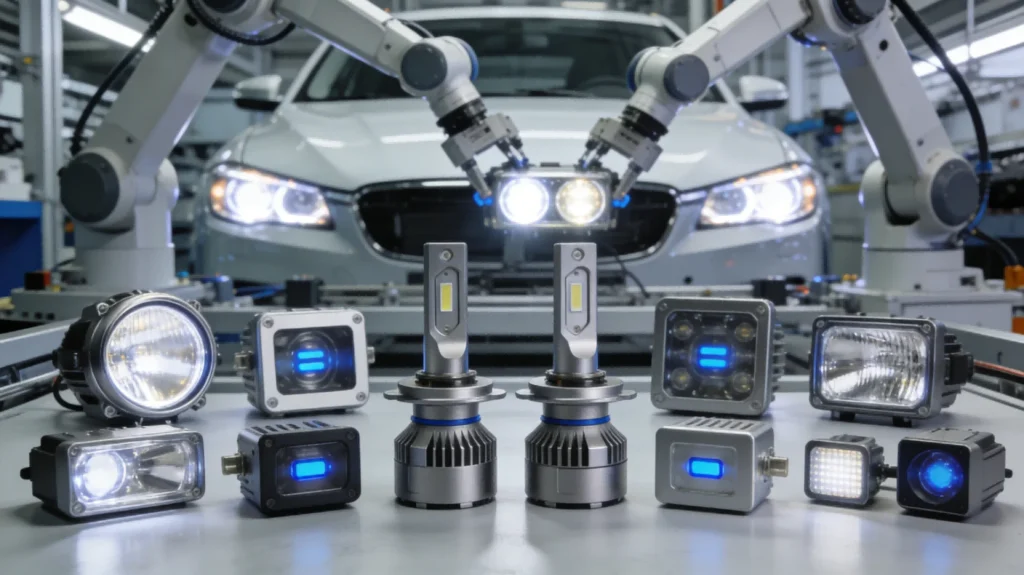
What are OEM Retrofit Headlights?
OEM, which stands for Original Equipment Manufacturer, refers to a company that produces components or products that are used in the production of another company’s final product. In the context of headlights, an OEM manufactures headlights that meet the original vehicle manufacturer’s specifications. Retrofit, on the other hand, means to add or modify a component in an existing system. So, OEM retrofit headlights are headlights that are manufactured according to the original vehicle manufacturer’s standards and are designed to be installed as a replacement or upgrade in an existing vehicle.
These headlights are often made with high – quality materials and advanced manufacturing processes to ensure they fit perfectly and function optimally in the target vehicle. They are not the same as aftermarket headlights, which may vary in quality and may not always meet the exact specifications of the original vehicle.
Working Principles
-
Light – Emitting Principle: Most OEM retrofit headlights use LED (Light – Emitting Diode) technology. LEDs are semiconductor devices that emit light when an electric current passes through them. When electrons recombine with electron holes within the semiconductor material, energy is released in the form of photons, creating light. This process is highly efficient compared to traditional incandescent bulbs, which produce light by heating a filament.
-
Optical Principle: To direct and focus the light produced by the LED chips, OEM retrofit headlights often use lenses. The lens is designed to gather the light from the LED and project it in a specific pattern onto the road. For example, a projector lens can create a sharp cutoff line, which helps to prevent glare for oncoming drivers while providing excellent illumination on the road ahead. Some headlights may also use reflectors in combination with lenses to further optimize the light distribution.
Core Application Scenarios
Automotive Brands
-
BMW: Many BMW owners choose OEM retrofit headlights to enhance the appearance and performance of their vehicles. For example, the BMW 3 Series, 5 Series, and X5 models can benefit from OEM retrofit headlights. These headlights can provide a more modern and aggressive look, as well as improved lighting performance. The retrofit headlights are designed to fit seamlessly into the existing headlight housing, maintaining the vehicle’s original aesthetics.
-
Tesla: Tesla vehicles, known for their advanced technology, can also be upgraded with OEM retrofit headlights. The Model 3, Model Y, and Model S owners often look for options to improve the headlights’ brightness and beam pattern. OEM retrofit headlights for Tesla can offer better visibility in various driving conditions, especially in low – light situations.
-
Toyota: With a wide range of models like the Camry, Corolla, and RAV4, Toyota is a popular choice for OEM retrofit headlights. These headlights can improve the lighting performance of older Toyota models or enhance the look of newer ones. For example, an older Camry might have dim factory headlights, and an OEM retrofit can provide a significant upgrade in brightness and clarity.
-
Nissan: Models such as the Altima, Maxima, and Rogue can be fitted with OEM retrofit headlights. Nissan owners may choose these headlights to replace worn – out or underperforming factory headlights. The retrofit headlights can offer better color temperature and a wider beam pattern, making driving at night more comfortable and safe.
Vehicle Types
-
Cars: In sedans and coupes, OEM retrofit headlights are popular for their ability to improve both the look and functionality of the vehicle. They can provide a more focused beam, which is beneficial for city driving, where there are many intersections and pedestrians. For example, a luxury sedan might benefit from the added brightness and style of OEM retrofit headlights, enhancing its overall appeal.
-
SUVs: SUVs often have larger headlight housings, which can accommodate more advanced OEM retrofit headlights. These headlights are crucial for SUV owners who may drive in off – road or rural areas, as they need better illumination to see potential obstacles. The wider beam pattern of some retrofit headlights can provide better visibility on unpaved roads.
-
Trucks: For trucks, whether they are used for work or recreation, OEM retrofit headlights can be a valuable upgrade. They can offer increased brightness and a longer – range beam, which is essential for long – distance driving on highways or for off – road adventures. For instance, a pickup truck used for construction work may need brighter headlights to see at job sites in the early morning or late evening.
Key Purchase Considerations
Safety
-
Color Temperature and Color Rendering Index (CRI): Color temperature is measured in Kelvin (K). A lower color temperature, around 3000K – 4000K, produces a warm, yellow – white light, which is similar to traditional halogen bulbs and is easy on the eyes. A higher color temperature, such as 6000K – 8000K, produces a cool, blue – white light, which may seem brighter but can be more tiring for the eyes over long periods. The CRI measures how accurately a light source renders colors compared to a natural light source. A high CRI, close to 100, ensures that colors appear natural, which is important for accurately perceiving road signs, markings, and the environment.
-
Glare Avoidance: Glare can be a major safety hazard, especially for oncoming drivers. OEM retrofit headlights should be designed to minimize glare. This can be achieved through proper lens and reflector design, as well as the use of anti – glare coatings. A well – designed headlight will have a sharp cutoff line, which prevents the light from shining directly into the eyes of oncoming motorists.
Brilho
-
Lumen Measurement: Brightness is measured in lumens. A higher lumen value indicates a brighter light. For example, a standard halogen headlight may produce around 1000 – 1500 lumens, while a high – quality OEM retrofit LED headlight can produce 3000 – 5000 lumens or more. In areas with poor street lighting or during inclement weather, a higher – lumen headlight can provide better visibility. However, it’s important not to choose a headlight that is too bright, as it can also cause glare and discomfort for other drivers.
Road Illumination Width
-
Importance for Driving Vision: A wider road illumination width means that the headlights can illuminate a larger area on either side of the vehicle. This is crucial for city driving, where there are many pedestrians, cyclists, and parked cars. A headlight with a wide beam pattern can help the driver see potential hazards earlier, such as a pedestrian stepping out from between parked cars. Some OEM retrofit headlights are specifically designed to provide a wider beam pattern, using advanced lens and reflector technologies.
Illumination Distance
-
Relationship with Driving Safety: The illumination distance of a headlight is the distance at which it can effectively light up the road ahead. On highways, where vehicles are traveling at higher speeds, a longer – range headlight is essential. A headlight with a long illumination distance allows the driver to see potential obstacles, such as a stalled vehicle or debris on the road, from a greater distance, giving them more time to react. However, for city driving, a very long – range headlight may not be necessary, as the shorter distances between intersections and slower speeds do not require as much long – distance visibility.
Energy Efficiency
-
Reducing Vehicle Power System Burden: OEM retrofit headlights with high energy efficiency can save power and reduce the load on the vehicle’s electrical system. LED headlights are generally more energy – efficient than traditional halogen or xenon headlights. For example, an LED headlight may consume only 20 – 30 watts of power, while a halogen headlight may consume 50 – 100 watts. This energy savings can also contribute to better fuel efficiency, especially in hybrid or electric vehicles, where every bit of power conservation matters.
-
Energy – Saving Technologies and Materials: Some OEM retrofit headlights use advanced driver circuits to optimize power consumption. These circuits can adjust the power supply to the LED chips based on the vehicle’s electrical system and the driving conditions. Additionally, high – quality LED chips are used, which are more efficient in converting electrical energy into light.
Heat Dissipation
-
Impact on Headlight Life and Performance: Heat is the enemy of LED headlights. If the LED chips overheat, their performance will degrade, and their lifespan will be significantly reduced. Therefore, effective heat dissipation is crucial.
-
Common Heat Dissipation Methods: Many OEM retrofit headlights use heat sinks, which are made of materials with high thermal conductivity, such as aluminum. The heat sink absorbs the heat generated by the LED chips and dissipates it into the surrounding air. Some headlights also use fans to enhance the heat dissipation process. The fans can blow air over the heat sink, increasing the rate of heat transfer. When choosing an OEM retrofit headlight, it’s important to consider the quality of the heat dissipation system. A well – designed heat dissipation system will ensure that the headlights can maintain their performance over a long period.
Installation and Maintenance Introduction
Conselhos de instalação
-
Pre – installation Preparation: Before starting the installation, you’ll need to gather the necessary tools, such as screwdrivers, pliers, and a socket set. It’s also important to disconnect the vehicle’s battery to prevent any electrical accidents during the installation process. Additionally, you should read the installation instructions carefully and make sure you understand the steps involved.
-
Installation Steps: First, remove the original headlights. This usually involves removing some screws, bolts, or clips that hold the headlight in place. Then, carefully disconnect the electrical connectors. Next, install the OEM retrofit headlights. Make sure they are properly aligned and secured in the headlight housing. Connect the electrical connectors, ensuring a tight fit. Finally, test the headlights to make sure they are working properly.
-
Precautions during Installation: Be careful not to damage any parts of the vehicle, especially the headlight housing or the surrounding bodywork. When handling the electrical connectors, make sure they are clean and free of debris to ensure a good electrical connection. If you’re not confident in your installation skills, it may be advisable to seek the help of a professional mechanic.
Conselhos de manutenção
-
Importance of Regular Maintenance: Regular maintenance of your OEM retrofit headlights is essential to ensure their optimal performance and longevity. Dirt, dust, and moisture can accumulate on the headlights over time, reducing their brightness and clarity.
-
Maintenance Cycle and Content: It’s recommended to clean the headlights at least once a month. Use a soft, damp cloth to wipe the surface of the headlights. Avoid using harsh chemicals, as they can damage the headlight lenses. Check the electrical connections regularly to make sure they are secure. If you notice any signs of corrosion or looseness, clean or tighten the connections as necessary.
-
Troubleshooting Common Problems: If the headlights don’t turn on, first check the fuses and the electrical connections. A blown fuse or a loose connection could be the cause. If the headlights are dim or flickering, it could be due to a problem with the LED driver or a loose connection. In some cases, the LED chips may be failing, and the headlights may need to be replaced.
Frequently Asked Questions (FAQ)
Question 1: What are the differences between OEM Retrofit Headlights and ordinary headlights?
-
Desempenho: OEM retrofit headlights often offer better performance in terms of brightness, color temperature, and beam pattern. They are designed to meet or exceed the original vehicle manufacturer’s standards, while ordinary headlights may vary in quality. For example, OEM retrofit LED headlights can be much brighter and have a more focused beam pattern compared to standard halogen headlights.
-
Preço: Generally, OEM retrofit headlights are more expensive than ordinary aftermarket headlights. This is because they are made with higher – quality materials and are engineered to fit specific vehicle models precisely.
-
Installation Method: OEM retrofit headlights are designed to be a direct replacement for the original headlights, making the installation process relatively straightforward. However, some aftermarket headlights may require modifications to the vehicle’s wiring or headlight housing, which can be more complicated.
Question 2: How do I choose the right OEM Retrofit Headlights for my vehicle?
-
Vehicle Brand and Model: First, make sure the headlights are compatible with your vehicle’s brand and model. Different vehicles have different headlight sizes, shapes, and electrical requirements.
-
Personal Needs: Consider your driving habits and needs. If you often drive in rural areas or on highways at night, you may want headlights with a long illumination distance and high brightness. If you mainly drive in the city, a wider beam pattern and lower color temperature may be more suitable.
-
Budget: Set a budget for your headlight upgrade. OEM retrofit headlights come in a range of prices, so you can find one that fits your budget while still meeting your performance requirements.
Question 3: Will installing OEM Retrofit Headlights affect my vehicle’s warranty?
-
It depends on the vehicle manufacturer and the terms of your warranty. Some manufacturers may void the warranty if non – approved aftermarket parts are installed. However, OEM retrofit headlights, which are made to the original manufacturer’s specifications, are more likely to be covered. It’s best to consult your vehicle’s dealer or the manufacturer directly to get accurate information. They can provide details on whether the installation of OEM retrofit headlights will impact your warranty and under what conditions.
Question 4: How long do OEM Retrofit Headlights last?
-
The lifespan of OEM retrofit headlights can vary depending on several factors. High – quality LED – based headlights can last up to 50,000 hours or more under normal operating conditions. However, factors such as frequent use, extreme temperatures, and poor heat dissipation can reduce their lifespan. If the headlights are used in a hot climate or for long periods every day, the LED chips may degrade faster. Additionally, if the heat dissipation system is not working properly, the headlights may overheat, shortening their lifespan.
Question 5: Are these headlights waterproof?
-
Most OEM retrofit headlights are designed to be waterproof. They are usually rated according to an Ingress Protection (IP) code. For example, an IP67 – rated headlight is dust – tight and can be submerged in water up to 1 meter for 30 minutes without damage. However, it’s important to note that over time, the seals around the headlight may wear out, reducing the waterproofing ability. In rainy or urface,make sure the headlights are properly sealed and check for any signs of water ingress, such as fogging inside the headlight.
Question 6: Can I install OEM Retrofit Headlights myself?
-
If you have some basic mechanical and electrical skills and are comfortable working on your vehicle, you may be able to install OEM retrofit headlights yourself. However, if you’re not confident in your abilities, it’s best to have a professional install them. Professional installers have the experience and tools to ensure the headlights are installed correctly, which can prevent any issues such as improper alignment or electrical problems. There are also many online resources, such as installation videos and forums, that can provide guidance if you decide to do the installation yourself.
Question 7: Do I need to recalibrate the headlights after replacement?
-
In some cases, you may need to recalibrate the headlights after installing OEM retrofit headlights. This is especially important if the new headlights have a different beam pattern or height adjustment mechanism. Incorrectly calibrated headlights can cause glare for other drivers and may not provide optimal illumination on the road. The calibration process usually involves adjusting the vertical and horizontal alignment of the headlights. Some vehicles may have an automatic headlight leveling system, and in such cases, the system may need to be reset or calibrated after the headlight replacement.
Why Choose GTR
Technical Advantages
-
GTR invests heavily in LED headlight technology research and development. Their advanced optical design ensures a precise and efficient light distribution. For example, their lenses are engineered to create a sharp cutoff line, minimizing glare for oncoming drivers while maximizing illumination on the road ahead. Their efficient heat – dissipation technology uses high – quality heat sinks and advanced fan – cooling systems to keep the LED chips at an optimal temperature, extending the lifespan and performance of the headlights. Quality Advantages
-
GTR has a strict quality – control system in place. From the selection of raw materials, such as high – purity LED chips and durable housing materials, to the production process, every step is carefully monitored. Their manufacturing facilities adhere to high – quality standards, and the finished products undergo rigorous testing, including brightness, color temperature, and waterproofing tests, to ensure reliable product quality. Qualification Advantages
-
GTR has obtained a series of relevant industry qualifications and certifications, such as international standard certifications like ISO 9001, which ensures their quality management system meets international requirements. They also have safety certifications, which prove that their products meet safety standards and are suitable for use in vehicles. These certifications not only demonstrate the legality and compliance of their products but also give consumers confidence in their quality and safety. Choice Diversity
-
GTR offers a wide variety of OEM retrofit headlights in different models and specifications. Whether you drive a luxury sedan, a practical SUV, or a tough truck, GTR has options to meet your needs. They also offer different levels of brightness, color temperatures, and beam patterns, allowing you to choose the headlights that best suit your driving habits and preferences, as well as your budget.
Conclusion
OEM retrofit headlights are a great way to upgrade your vehicle’s lighting system, offering improved safety, visibility, and style. By understanding their definition, working principles, application scenarios, key purchase considerations, installation and maintenance requirements, and frequently asked questions, you can make an informed decision when choosing the right headlights for your vehicle. And when it comes to choosing a reliable brand, GTR stands out with its technical advantages, quality products, industry qualifications, and diverse choices.
If you’re interested in learning more about GTR’s OEM retrofit headlights, visit https://www.rhgtr.com/. Our friendly customer service team is always ready to answer any questions you may have. Upgrade your driving experience today with GTR OEM retrofit headlights!