If you’re shopping for d3s hid headlights, you’ve probably noticed something confusing. Half the listings say “HID replacement.” The other half say “LED conversion.” Both claim to be brighter, better, and the obvious choice. They can’t both be right. And the wrong one can leave you with worse visibility than you started with.
This guide breaks down the real differences—not the marketing versions—so you can make a decision based on how you actually drive.
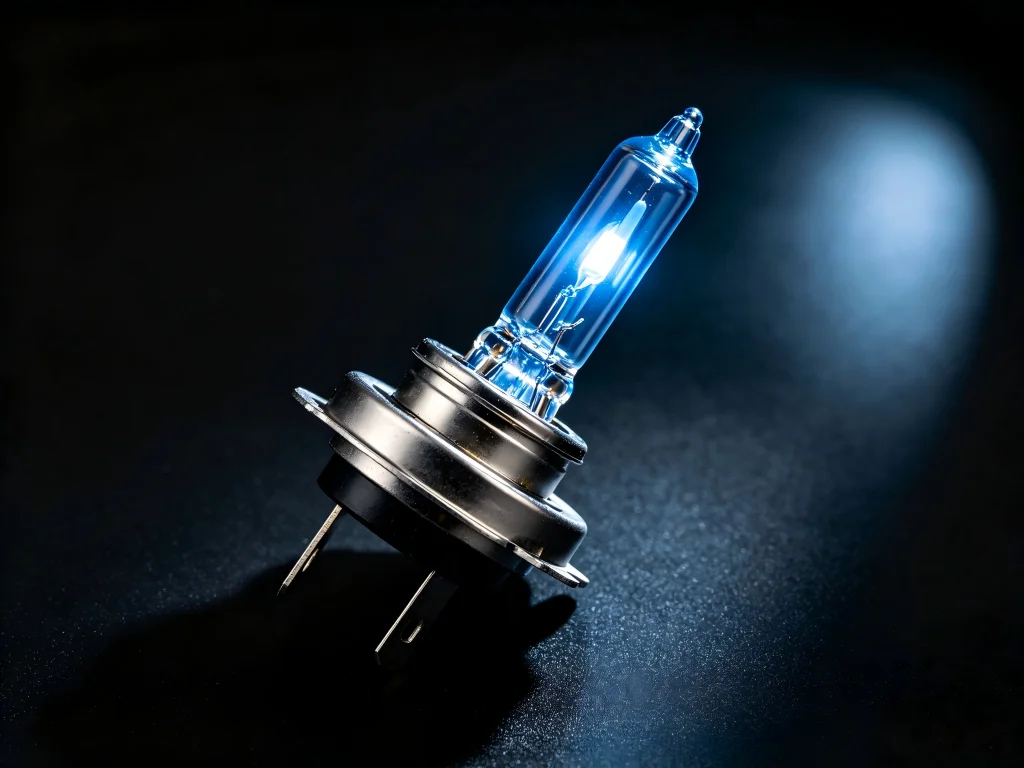
What Makes D3S Different From Every Other HID Bulb
A D3S bulb is a mercury-free, 42V DC discharge lamp with an integrated igniter and a PK32d-5 base. It’s designed exclusively for projector-style housings with a cutoff shield. D3S bulbs are not interchangeable with D1S, D2S, or D4S—even if the connectors look similar.
The “3” in D3S means 42V DC. The “S” means shielded, built for projector optics. Your ballast was engineered around this exact specification. Put a bulb in that doesn’t match, and you’re asking the system to do something it wasn’t designed for.
D3R bulbs look similar but are for reflector housings. D1S runs on 85V AC and contains mercury. The bases may resemble each other, but connecting the wrong one can damage your ballast—a repair that often exceeds $300.
D3S HID vs LED Conversion: The Honest Comparison
Here’s what the specifications look like side by side. The numbers matter more than the marketing claims.
| Fator | D3S HID (OEM Replacement) | D3S LED Conversion |
|---|---|---|
| Brilho | 2,800–3,800 lumens per bulb | 4,000–10,000+ lumens claimed (varies wildly by brand) |
| Warm-up time | 3–5 seconds to full brightness | Instant on |
| Tempo de vida | 2,500–5,000 hours | 30,000–60,000 hours |
| Padrão do feixe | 360° emission designed for projector optics | Can be inconsistent; some LEDs don’t match housing geometry |
| Consistência de cor | Shifts toward pink/purple near failure | Stable throughout lifespan |
| Cold weather | Can struggle and take longer to warm up | Consistent performance in all conditions |
| Instalação | Direct 1:1 replacement | Plug-and-play into existing ballast |
Here’s the part LED sellers don’t put in their ads. LED conversion bulbs may not perform as well in your specific housing. One Jeep owner reported that while LEDs were better for short-to-medium range, they lost “a bit of throw on high.” Another forum member put it bluntly: even if you can physically fit an LED, “it’s unlikely an LED would be any brighter, particularly inside the same housing.”
LEDs last longer and turn on instantly. That’s real. But if the beam pattern doesn’t match your projector’s optics, you’re trading visibility for convenience. And visibility is the whole point.
Our take at GTR: stick with HID if you want predictable, housing-optimized performance. Consider LED only if you’re willing to accept potential trade-offs in beam pattern and throw distance.
Color Temperature: What 4300K, 5000K, and 6000K Actually Do to Your Vision
Color temperature is measured in Kelvin. Higher numbers look cooler and bluer. But cooler doesn’t mean better—especially when the weather turns bad.
| Kelvin | Aparência | Ideal Para | Trade-offs |
|---|---|---|---|
| 4300K | Warm white, OEM standard | All-around visibility, wet roads, fog | Less “modern” looking |
| 5000K | Pure white | Brightness + style balance | Slightly less penetration in rain than 4300K |
| 6000K | Ice white (cool) | Modern appearance, matches LEDs | Reduced visibility in fog and rain |
According to Diode Dynamics, who measure color temperatures in their photometric testing lab, 6000K is the most popular aftermarket choice because it matches best with most LEDs . But popularity doesn’t equal performance. 4300K delivers the best all-round visibility, especially in adverse weather. 6000K looks great but may reduce your ability to see in rain or fog.
If you drive in areas with frequent rain, fog, or snow, 4300K is the functional choice. If you live somewhere dry and want a modern look, 6000K is fine. Just know what you’re trading.
What to Check Before You Buy Any D3S Bulb
Whether you go HID or LED, these factors determine whether you get a good result or another failed experiment.
- Verify the voltage and base: D3S is 42V DC with an integrated igniter. If the listing doesn’t specify this, move on.
- Check for a real warranty: A manufacturer confident in their product will stand behind it for at least a year. Cheap bulbs often have no real recourse.
- Look for color accuracy claims: “6000K” on a cheap listing might mean anything from 5000K to 8000K in reality. Reputable sellers measure their output.
- Read reviews for longevity, not just brightness: Anyone can make a bulb that’s bright for a week. Look for reviewers who’ve had the product for 6+ months.
Perguntas mais frequentes
Are D3S LED conversion bulbs worth it?
They can be, but only if the LED chip placement matches your projector’s focal point. Many budget LEDs don’t, resulting in scattered light and poor throw. Quality LED conversions exist, but they cost more and still may not match a good HID bulb’s beam pattern.
Can I put LED bulbs in my D3S HID housing?
Physically, sometimes. Optically, it depends. Your projector was designed for a 360° light source at a specific focal distance. An LED with a different emission pattern can create dark spots, glare for oncoming drivers, or reduced distance vision.
What’s the brightest D3S HID bulb?
Brightness in HID bulbs is measured in lumens and is largely determined by the ballast output (typically 35W). A quality 4300K bulb at 35W produces around 3,200 lumens. “Brighter” claims on cheap bulbs usually mean higher color temperature, not more usable light.
Do I need to replace my ballast when changing bulbs?
Not if you’re installing a compatible D3S replacement. But if you’re switching to LED, some kits require additional components or resistors to prevent error codes. Check compatibility with your vehicle’s CANBUS system.
Why do my D3S headlights look pink?
Pink or purple color shift is a sign the bulb is nearing the end of its life. The electrodes are degrading and the gas mixture is changing. Replace the bulb before it fails completely.
Make the Right Call Once—Not Three Times
The cheapest bulb is rarely the one that saves you money. Not when it fails in three months. Not when it damages your ballast. Not when you’re back under the hood, doing the job again, wondering why you didn’t just buy the right one the first time.
GTR builds D3S HID bulbs for drivers who want their factory housing to perform the way it was designed. We test for arc stability, color accuracy, and heat resistance. We don’t ship a batch until it passes.
If you’re ready to stop experimenting and start seeing the road, visit https://www.rhgtr.com. Find the D3S bulb that matches your vehicle and your priorities. Your night vision will thank you.