You replaced that halogen lamp three months ago. And now, it’s already dimming. Or worse, it burned out completely. You’re not alone. For fleet managers, workshop owners, and industrial operators worldwide, the halogen lamp has become a silent drain on productivity, safety, and the bottom line.
Halogen lamps may seem like the cheap, convenient choice upfront. But the reality is far more expensive than the price tag suggests. The question isn’t whether your halogen lamp will fail. The question is when – and what it will cost you when it does.
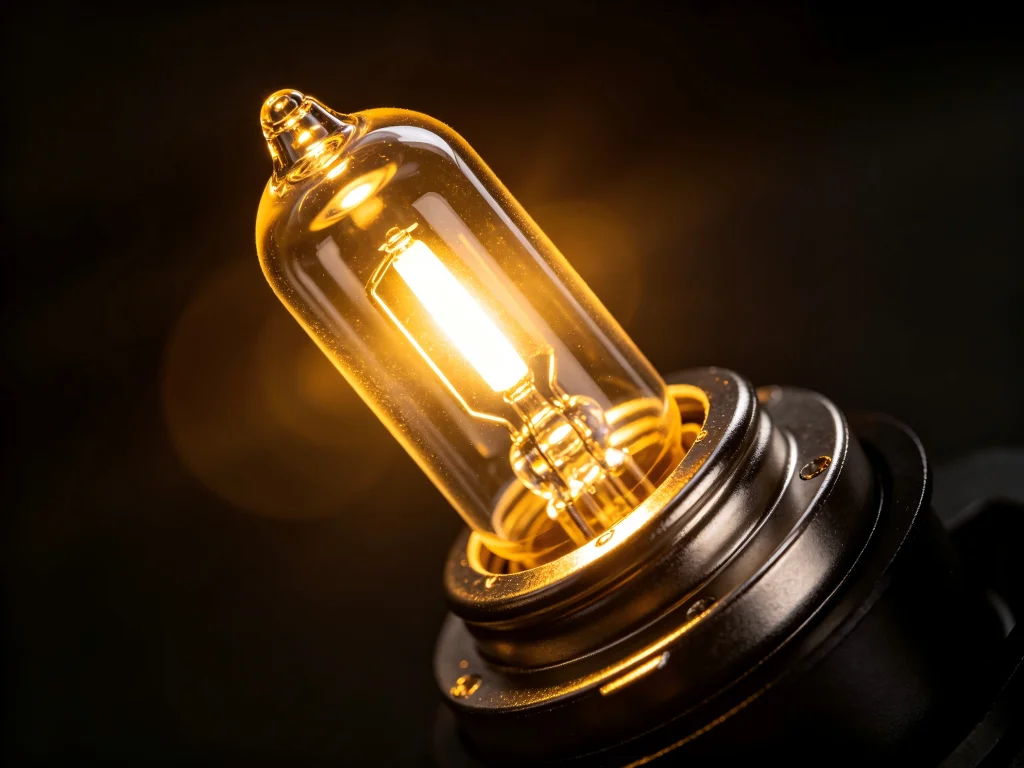
The Real Cost of a Halogen Lamp Nobody Talks About
Walk into any auto parts store or industrial supply warehouse, and you’ll see halogen lamps stacked on shelves. They’re affordable. They’re familiar. And they’re quietly draining your operation.
Your halogen lamp produces about 16 to 24 lumens per watt of electricity. That means roughly 95% of the energy you pay for becomes heat – not light.
Think about that for a moment. Every time you switch on a 100W halogen lamp, you’re essentially running a small heater that happens to produce some light. A 100W halogen bulb can generate surface temperatures up to 200°C. That’s hot enough to melt wiring insulation, damage fixtures, and create a genuine fire risk – especially in recessed or enclosed installations.
And the heat isn’t just a safety hazard. It’s destroying your lamp from the inside out.
The Halogen Cycle That Promises Long Life – But Delivers Disappointment
Here’s what the brochures don’t tell you. The halogen lamp relies on a clever chemical process called the halogen cycle. The halogen gas inside the quartz envelope captures evaporated tungsten particles from the filament and redeposits them back. In theory, this self-cleaning mechanism extends the lamp’s life compared to traditional incandescent bulbs.
In practice, it’s a delicate balancing act that falls apart in real-world conditions.
The halogen cycle requires precise operating temperatures. Too hot, and the quartz envelope deteriorates. Too cold, and the tungsten deposits on the glass instead of returning to the filament. A single fingerprint on the glass creates a hot spot. That hot spot causes uneven heating. And uneven heating leads to premature failure – or even violent shattering.
One fingerprint. That’s all it takes to turn a 2,000-hour halogen lamp into a 200-hour headache.
What Failed Halogen Lamps Actually Cost Your Business
Let’s move beyond theory. Let’s talk about what a failing halogen lamp means in the real world.
Every hour of downtime caused by a failed halogen lamp costs you in lost productivity, emergency replacement runs, and labor. For a commercial fleet, one burned-out headlight means a vehicle sits idle until it’s fixed. For a workshop, a failed worklight means jobs take longer. For an industrial facility, a blown high-wattage halogen in a critical location means production stops.
And the costs compound. Poor visibility from dimming halogen lamps increases accident risk. On the road, that means potential collisions, insurance claims, and liability. In the workplace, it means injuries, workers’ compensation claims, and OSHA violations.
Add in the replacement frequency. A standard halogen lamp delivers roughly 1,000 to 3,000 hours of service – and that’s under ideal laboratory conditions. In the real world, with vibration, temperature swings, and inevitable contamination, you’re lucky to get half that.
Compare that to what’s possible. Your competitors who’ve moved to modern alternatives are getting 25,000 to 50,000 hours from a single installation. That’s not an upgrade. That’s a revolution.
Why Your Halogen Lamp Keeps Burning Out (And Why You’re Not Alone)
Based on our engineering testing across thousands of installations, we’ve identified the five most common failure patterns for halogen lamps:
- Contamination failure – Skin oils create hot spots that cause the quartz envelope to fail
- Vibration damage – The tungsten filament is fragile and breaks under normal operating conditions
- Thermal cycling – Repeated on/off switching stresses the filament and the pinch seal
- Voltage fluctuation – Even small variations from rated voltage significantly shorten lifespan
- Overheating – Poor ventilation or incorrect fixture design traps heat and accelerates failure
Here’s what drivers and operators tell us in forums and feedback channels: “I keep replacing the same halogen lamp every few months. I’m spending more on bulbs than I ever expected.” That’s the frustration we hear constantly.
The industry response? Keep buying replacements. Keep paying for the labor. Keep accepting the risk. That’s not a solution. That’s a subscription to failure.
The Halogen Lamp vs. The Alternative – A Reality Check
Let’s put halogen lamps side by side with what’s available today. The numbers don’t lie.
| メトリック | ハロゲンランプ | Modern Alternative |
|---|---|---|
| 寿命 | 1,000 – 3,000 hours | 25,000 – 50,000 hours |
| エネルギー効率 | 16 – 24 lumens/watt | 80 – 100+ lumens/watt |
| Energy as Heat | ~95% | ~10-20% |
| Typical Operating Temp | Up to 200°C+ | Cool to touch |
| 交換頻度 | Every 1-2 years | Every 10-15 years |
When you look at those numbers, the choice seems obvious. Yet most operators stick with halogen lamps because they’re “what we’ve always used” or “cheaper upfront.”
That’s a dangerous mindset. And it’s costing you far more than you realize.
What High-Performance Operators Do Differently
Smart operators don’t buy halogen lamps based on price per bulb. They buy based on total cost of ownership over the life of the installation.
Consider this: A single replacement of a halogen lamp costs you the bulb itself, the labor to install it, and the downtime while the fixture is offline. Multiply that by 10 replacements over the life of a modern alternative, and you’re looking at thousands of dollars in hidden costs – before you even factor in the energy waste.
Here’s the math that matters:
- A 100W halogen lamp running 10 hours daily consumes 365 kWh annually
- A comparable modern alternative uses roughly 80-85% less energy
- That’s a reduction of approximately 300 kWh per year, per fixture
- Multiply by 50 fixtures in a workshop or facility, and you’re talking about serious money
Then add the replacement labor. Then add the safety risk. Then add the productivity loss from suboptimal lighting.
Suddenly, that “cheap” halogen lamp doesn’t look so cheap anymore.
The GTR Difference – Engineering That Actually Solves the Problem
At GTR, we’ve spent years studying why halogen lamps fail and what operators actually need. We don’t just sell lighting components. We engineer solutions that eliminate the failure points that plague conventional halogen technology.
Our approach starts with understanding the real-world conditions your halogen lamp faces:
- Vibration from vehicles and machinery
- Temperature extremes in workshops and outdoor installations
- Contamination from handling and environmental exposure
- Voltage fluctuations in industrial and automotive electrical systems
- Heat buildup in enclosed or poorly ventilated fixtures
Rather than accepting these as limitations, we engineered around them. The result is halogen-compatible lighting that delivers the reliability operators demand – without the failure patterns that have become all too familiar.
We’ve built our reputation on quality that lasts. Our manufacturing facilities maintain ISO certifications, and every product undergoes rigorous testing before it ships. Whether you’re outfitting a commercial fleet, equipping a workshop, or upgrading an industrial facility, GTR delivers components that work – and keep working.
What Our Customers Tell Us
Across our customer base, the feedback is consistent. Operators who switched from standard halogen lamps to GTR solutions report:
- Dramatically reduced replacement frequency
- Lower total lighting costs over time
- Fewer safety incidents related to lighting failure
- Improved visibility and worker productivity
- Peace of mind knowing their lighting won’t fail at the worst possible moment
One fleet manager put it simply: “I was replacing halogen lamps every few months. Since switching to GTR, I haven’t thought about my lighting in over a year. That’s the kind of reliability I need.”
Frequently Asked Questions About Halogen Lamps
Why do halogen lamps get so hot?
Halogen lamps operate at extremely high temperatures because they rely on incandescence – heating a tungsten filament until it glows. This process converts about 95% of input energy into heat rather than light. A 100W halogen bulb can reach temperatures of 200°C or more.
How long do halogen lamps typically last?
Under ideal laboratory conditions, a standard halogen lamp lasts 1,000 to 3,000 hours. In real-world applications with vibration, temperature swings, and handling contamination, actual lifespan is often significantly shorter – sometimes as little as 500 hours. High-wattage halogen lamps for industrial or automotive use may last only 100 to 500 hours.
Can I touch a halogen lamp with my bare hands?
No. Skin oils and contaminants on the quartz envelope create hot spots when the lamp operates. These hot spots cause uneven heating, weaken the glass, and can lead to premature failure or even explosion. Always handle halogen lamps with clean gloves or use a cloth.
Why does my halogen lamp keep burning out?
The most common causes are contamination from handling, vibration damage to the filament, thermal cycling from frequent switching, voltage fluctuations, and overheating due to poor ventilation. If you’re experiencing frequent failures, one or more of these factors is likely at play.
Are halogen lamps being phased out?
Yes. Many regions have implemented or are implementing restrictions on halogen lamp sales due to energy efficiency standards. Major retailers have largely phased out halogen bulbs in favor of more efficient alternatives.
Do halogen lamps produce UV radiation?
Halogen lamps emit low levels of UV radiation. Most quality halogen lamps include UV filtering in the quartz envelope or outer glass. However, the UV emission is very low and considered safe for regular use when the lamp is properly enclosed.
What’s the difference between halogen and regular incandescent lamps?
Halogen lamps contain halogen gas (typically iodine or bromine) that enables the halogen cycle – a chemical process that redeposits evaporated tungsten back onto the filament. This allows halogen lamps to operate at higher temperatures and produce brighter, whiter light than standard incandescent bulbs, while lasting longer.
Can I use a halogen lamp with a dimmer switch?
Yes, halogen lamps are fully dimmable from 0 to 100%. However, running halogen lamps at low intensity for extended periods can actually shorten their lifespan because the halogen cycle requires high temperatures to function properly.
Stop Paying for Failure – Make the Switch That Makes Sense
The halogen lamp problem isn’t going away. The heat, the short lifespan, the safety risks, and the hidden costs – they’re all inherent to the technology itself. No amount of careful handling or premium branding can change the physics of incandescence.
But you don’t have to accept these limitations. GTR offers engineered lighting solutions that eliminate the failure points of conventional halogen lamps – delivering reliability, safety, and cost savings that compound over time.
Your operation deserves lighting that works when you need it. Your budget deserves to stop bleeding money on constant replacements. Your team deserves to work in safe, well-lit conditions.
今すぐGTRへ and discover how our engineering expertise can solve your halogen lamp problems permanently. From automotive lighting to industrial applications, we have the solutions that keep your operation running – without the frustration of constant failure.
Don’t replace another halogen lamp until you’ve seen what GTR can do. Your time, your budget, and your peace of mind are worth it.