You finally swapped out those dim, yellowish H4 halogen bulbs for something brighter. You expected crisp white light, better visibility, and a safer night drive. Instead, you got flickering, scattered beams that blind oncoming traffic, or worse—bulbs that failed within months. If this sounds familiar, you are not alone. The reality is that most H4 LED headlight bulb upgrades fail because they treat a precision optical system like a simple lightbulb replacement. And that mistake can cost you far more than the price of the bulbs.
Why Your H4 LED Bulbs Aren’t Delivering What Was Promised
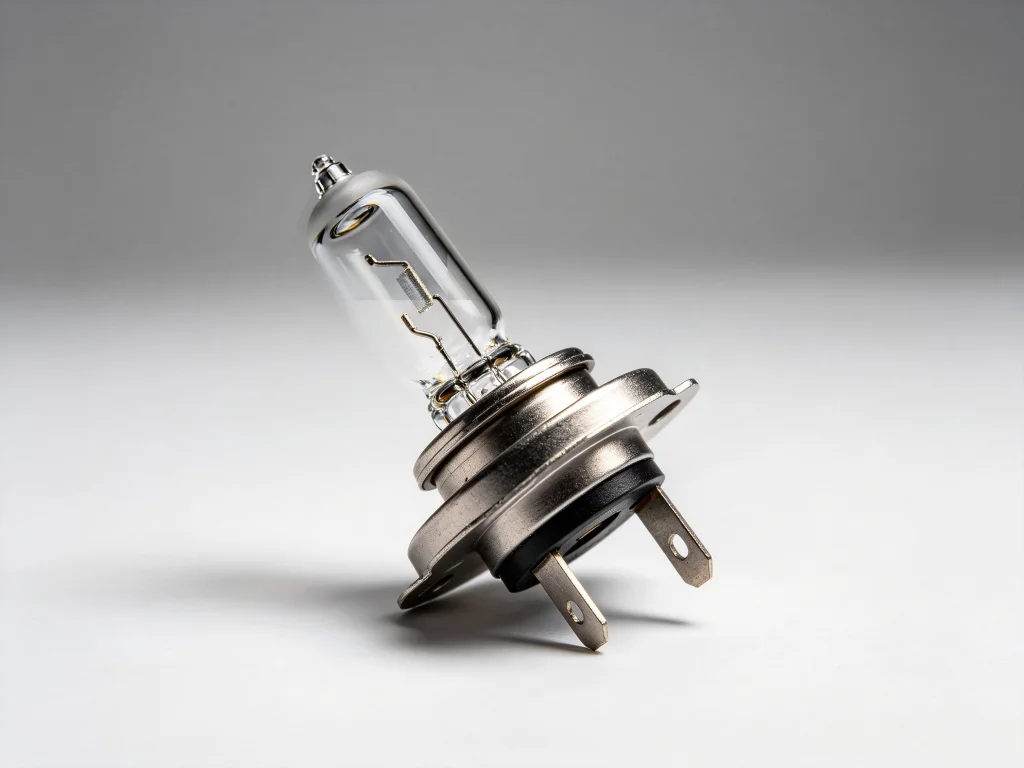
The short answer: most H4 LED bulbs on the market are designed to look bright on a shelf, not to project light correctly inside your specific headlight housing. The H4 bulb is a dual-filament design—one filament for low beam, one for high beam—housed in a P43t base with three prongs. Your headlight reflector is precision-engineered to the exact position of those halogen filaments. When you drop in an LED bulb that places its emitters even a millimeter off that position, the beam pattern breaks. Light scatters everywhere except where it needs to go.
Here is what that looks like in real driving conditions: you get a “bright” hot spot directly in front of the bumper, but the road 50 meters ahead stays dark. Oncoming drivers flash their high beams at you because your “low beam” is sending glare into their eyes. And when you switch to high beam, the light barely reaches further than your low beam did. That is not an upgrade. That is a downgrade that makes driving more dangerous.
The Hidden Costs of Cheap H4 LED Headlight Bulbs
The problems run deeper than beam pattern. Based on our engineering testing and analysis of hundreds of customer experiences, we have identified three failure modes that plague cheap H4 LED bulbs:
1. The Flickering Nightmare
LED bulbs draw significantly less power than halogen bulbs—an H4 halogen consumes about 55 watts, while an LED equivalent uses roughly 20 watts. Many vehicle electrical systems interpret this lower draw as a bulb failure and pulse the power to “check” if the bulb is working. The result? Flickering, strobing, or bulbs that randomly turn off. Some drivers report bulbs “playing up after 3 months” with flashing brightness and intermittent failure.
2. The Outgassing Disaster
This is the problem almost no one talks about. Many H4 LED bulbs use plastic components that release gases when heated—a process called outgassing. One forum member documented what happened after less than a year with a popular fan-cooled LED: “Within less than a year, my headlight lens and the reflectors are visually grayed inside the housing due to outgassing”. The haze inside the housing cannot be cleaned without damaging the delicate reflector coating. Your headlight housing is effectively ruined.
3. The Fan That Fails
LEDs generate heat. Without proper thermal management, they overheat and fail. Many cheap bulbs use tiny fans that are noisy enough to hear inside the cabin. These fans collect dust, fail over time, and when they stop spinning, the LEDs cook themselves. One reviewer noted their high beam failed after about six months of use. Another reported bulbs that “started flickering while the car is running and they are not as bright as they used to be” after just five months.
What Actually Makes a Quality H4 LED Headlight Bulb?
After years of manufacturing expertise in automotive lighting, we have identified the non-negotiable criteria that separate a proper H4 LED upgrade from a box of frustration. Here is what to look for:
Filament-to-Emitter Precision
The LED emitters must replicate the exact size, shape, and position of the original halogen filaments. Not “close enough.” Not “similar.” Exact. The GTR Lighting Ultra 3.0 H4 bulbs feature digitally precise LED placement that mirrors factory halogen filament locations, ensuring a sharp beam pattern with minimal scatter.
Passive vs. Active Cooling
Fans are a failure point. Quality H4 LED bulbs use passive cooling—aluminum heatsinks and copper substrates that dissipate heat without moving parts. The GTR CSP Mini Series runs fanless, eliminating the noise, dust collection, and outgassing issues that plague fan-cooled competitors.
CANbus互換性
Flickering is not inevitable. Quality bulbs either integrate CANbus decoders or work with plug-and-play adapters that solve power fluctuation issues. If a bulb does not mention CANbus compatibility, assume it will flicker in your vehicle.
Lumen Rating vs. Real-World Output
Ignore the inflated lumen claims. A standard H4 halogen produces 1,000–1,500 lumens. A quality H4 LED should deliver 2,500–4,700 lumens of usable, properly aimed light. If a $20 bulb claims 20,000 lumens, it is lying. Period.
Real-World Testing: What Experienced Drivers Say
In the MGB and GT Forum, one long-time enthusiast who tested multiple H4 LED options shared his findings: “The GTR Mini’s I was previously using worked just fine, cost less, and the high beam flash worked all the time, lights on, lights off”. He later added: “I can’t say that the 4.0 light output or beam pattern is noticeably better than the GTR Lighting units. If I were sourcing a replacement, I would likely go back to the GTR Mini as they fit better without futzing inside the headlight mount and they don’t have a fan”.
Another forum member who experienced outgassing damage from a fan-cooled competitor noted: “The Morimoto 4.0 is indistinguishable in light output and focus compared to the GTR Lighting CSP Mini, which is quite a bit cheaper, does not use an external driver, and does not even have a fan”.
These are not paid endorsements. These are experienced drivers who learned the hard way what works and what does not.
H4ヘッドライトバルブに関するよくある質問
What is an H4 headlight bulb?
An H4 bulb is a dual-filament halogen bulb that provides both low and high beams from a single unit. It uses a P43t base with three prongs and is commonly found in older vehicles, motorcycles, and off-road applications.
Can I replace H4 halogen with LED?
Yes, but only if the LED bulb is designed to replicate the exact filament position of the halogen. Most cheap LEDs fail because their emitters are placed incorrectly, destroying the beam pattern. Quality LEDs like the GTR Ultra 3.0 are engineered to match factory specifications.
H4 LEDバルブがちらつくのはなぜですか?
Flickering occurs because LEDs draw less power than halogens, and your vehicle’s electrical system interprets this as a bulb failure. A CANbus decoder or anti-flicker harness solves this by stabilizing the power supply.
What is the difference between H4 and H7 bulbs?
H4 bulbs are dual-filament (one bulb does both high and low beams), while H7 bulbs are single-filament (you need two per headlight). H7 systems typically produce higher light output but require four bulbs per vehicle and cost more over time.
How do I install an H4 LED bulb?
Installation involves removing the old halogen, inserting the new LED with the alignment tabs correctly positioned (H4 tabs at 12/3/9 positions), and securing the retaining clip. Always wear gloves and never touch the glass or emitters.
Do H4 LED bulbs need a fan?
No. Quality H4 LED bulbs use passive cooling through aluminum heatsinks and copper substrates. Fans add noise, collect dust, and can cause outgassing that damages your headlight housing.
Why is my H4 headlight not working after replacing the bulb?
The most common causes are reversed polarity (LEDs are polarity-sensitive while halogens are not) or a burnt-out filament in a dual-filament bulb. Try flipping the connector 180 degrees.
Stop Wasting Money on Failed H4 Upgrades
You have already experienced the frustration of an H4 LED upgrade that did not deliver. You have dealt with flickering, scattered beams, or bulbs that failed too soon. You may have even damaged your headlight housing from outgassing. The good news is that a proper solution exists—one that does not require compromise.
GTR Lighting engineers have spent years perfecting H4 LED technology. The CSP Mini Series delivers fanless, flicker-free performance with precision beam patterns that work with your factory housings. The Ultra 3.0 Series pushes output to 4,700 lumens with digital emitter placement that mirrors halogen filament positions exactly. Both are backed by a lifetime warranty because GTR builds products that outlast the vehicles they go into.
Do not settle for another $30 bulb that fails in six months and blinds every driver you pass. Choose the H4 LED headlight bulb that experienced drivers trust. GTR Lightingを今すぐ訪れて and see the difference proper engineering makes.
Disclaimer: Always verify your vehicle’s bulb size in your owner’s manual before purchasing. Some vehicles use different bulb types for low and high beams. Installation should be performed by a qualified technician if you are unsure about the process.