Here’s what nobody tells you about factory halogen headlights: they produce roughly 1,000 lumens when new, degrade by 20-30% within two years, and scatter that dwindling light across the road with no real beam control. A quality projector bi LED lens channels over 6,000 lumens through a precision optical system, putting usable light exactly where you need it — without blinding everyone else.
The Night Drive Nightmare: What Bad Headlights Actually Cost You
You know that moment. It’s 11 PM on a two-lane highway. Rain is coming down hard. Your halogen headlights throw a weak, yellowish puddle about 80 feet ahead. Beyond that, there’s nothing. You squint. Your shoulders tighten. You slow to 45 in a 55 zone because you genuinely cannot see whether that shadow ahead is a deer, a stalled vehicle, or just a patch of wet pavement.
This is not just uncomfortable. It is dangerous. NHTSA data consistently shows that fatal nighttime crashes occur at roughly three times the daytime rate, with inadequate forward lighting contributing to a substantial portion of these incidents. The average driver may not realize their headlights have dimmed gradually over months and years — the degradation happens so slowly that your eyes adapt. But your reaction time does not adapt. At 60 miles per hour, you cover 88 feet every second. If your low beams only give you 150 feet of usable vision, you have about 1.7 seconds to identify a hazard and respond. Most driver reaction times exceed 1.5 seconds before the brake pedal is even touched.
Now factor in rain or fog. Halogen light scatters off water droplets in all directions. The beam that should be reaching down the road reflects back into your eyes instead, creating a wall of glare. The road markings disappear. The shoulder vanishes. You are essentially driving blind, relying on muscle memory and hope.
You Bought “Bright” LED Bulbs and Made Things Worse
Maybe you already tried to fix this. You searched online, found a set of “ultra-bright” LED bulbs, watched a YouTube tutorial, and swapped them into your factory reflector housings. The installation took 20 minutes. You felt proud. Then you drove at night.
The low beam throw was scattered and uneven, with dark patches scattered across the beam pattern where the LED chips did not align with the reflector’s focal point. Oncoming drivers started flashing their high beams at you — not because your lights were bright, but because the unfocused glare was shooting upward into their eyes. You were now quel driver. The one everybody complains about on Reddit and automotive forums.
The problem is fundamental optics. A halogen reflector housing is mathematically designed around a specific filament shape, size, and light emission angle. Drop a two-sided or three-sided LED replacement into that housing, and the light source sits in the wrong position. The reflector cannot focus it properly. NASA-grade brightness from the chip means nothing when the optics scatter 40% of that light into the sky and leave dark holes in the critical 50-200 foot zone.
Even if the beam pattern looks “okay” on a garage wall, real-world conditions expose the truth immediately. In rain, the scattered light creates a blinding wall of glare. In fog, you see a white sheet two feet in front of your bumper and nothing beyond. On winding roads, the edges of the beam are so weak that you miss the gravel shoulder until you feel the rumble strips under your tires.
You spent money. You spent time. And now your nighttime driving is arguably more dangerous than before.
Why This Keeps Happening: The Brutal Truth About Cheap Optics
Walk through any online marketplace and you will find projector bi led lens kits priced from $30 to $300. They all use similar marketing language: “70W,” “20,000 lumens,” “DOT approved,” “sharp cutoff.” The product photos show crisp beam patterns on white walls. The reviews average 4.3 stars. How do you know which ones to trust?
Here is what those listings do not show you.
The cutoff line that fades after 15 minutes. A sharp cutoff requires a precision-ground shutter mechanism positioned at the exact focal point of the lens. Cheap projectors use stamped metal shutters with rough edges and inconsistent positioning. The cutoff looks acceptable when the projector is cold. But as the LED chip heats up, thermal expansion shifts the shutter position microscopically — and the razor-sharp line turns fuzzy. Light creeps above the cutoff. Glare increases. The projector you installed to reduce glare is now creating it.
The fan that fails at the worst possible moment. Heat is the number one killer of LEDs. A low-quality cooling fan is the fastest way to destroy an otherwise decent Bi-LED projector[reference:0]. Budget fans use sleeve bearings that wear out in months, not years. When the fan fails, the LED chip temperature spikes from 85°C to over 150°C in minutes. Brightness drops by 30-50% almost immediately — a phenomenon called thermal droop. Permanent damage to the phosphor coating follows, shifting the color temperature and reducing output permanently. You might not notice the fan stop. But within weeks, your “20,000 lumen” projector is performing worse than the halogens you replaced.
The housing that fills with condensation. Quality Bi-LED projectors carry an IP65 or higher waterproof rating. Cheap units may claim the same rating but use low-grade seals that crack after one winter of freeze-thaw cycling. Moisture creeps in. Condensation fogs the internal lens surface. Light output drops. Worse, the moisture corrodes the LED contacts and driver board connections, leading to flickering or complete failure[reference:1].
The color mismatch that makes your car look broken. Even within the same advertised “6000K” specification, the actual color temperature can vary by 500K or more between left and right units from budget factories. One headlight looks pure white. The other has a faint blue or yellow cast. It is the automotive equivalent of wearing two different-colored shoes — and every oncoming driver can tell.
The Projector Bi LED Lens: What It Is, How It Works, and Why the Science Matters
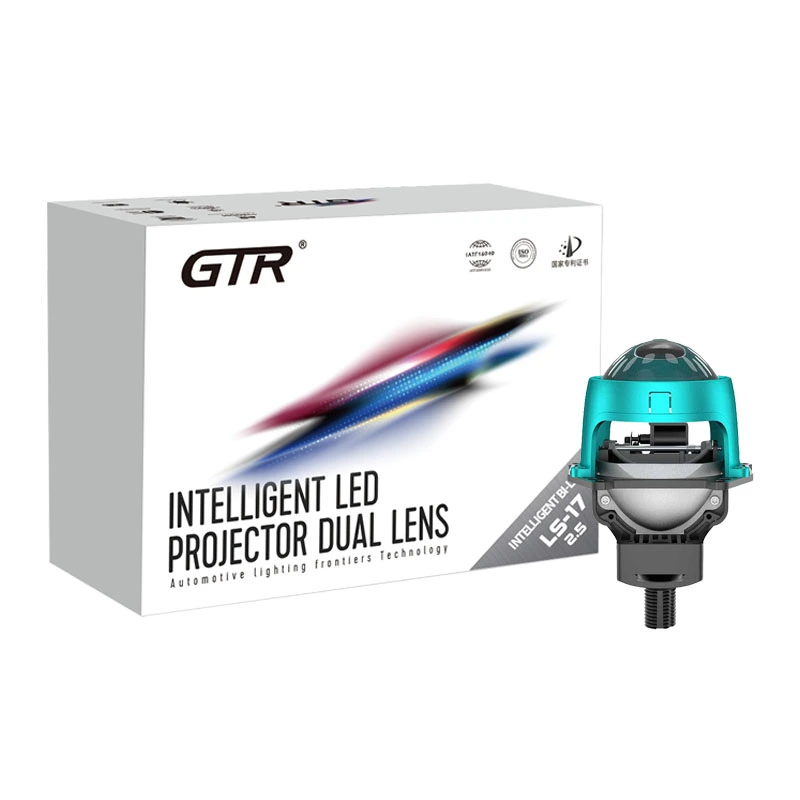
A projector bi LED lens is a self-contained optical unit combining high-output LED chips, a precision reflector bowl, a plano-convex lens, and an electromechanical shutter — all engineered to produce a controlled, switchable low and high beam from a single light source.
Understanding the core mechanism helps you see why some units cost $200 and others cost $40. The difference is not just brand markup. It is physics.
LED chips mounted on a thermally-conductive substrate fire into a precisely shaped reflector bowl. That bowl captures and redirects the light through a focal point, where a movable cutoff shield sits. In low-beam mode, the shield blocks the upper portion of the light, creating the sharp horizontal cutoff that prevents glare for oncoming traffic. When you activate high beams, an electromagnet pulls the shield down, exposing the full reflector output and throwing light hundreds of feet downrange. The bi-LED projector achieves Hi/Lo beam switching with a single set of LEDs and a moving shield, unlike older bi-xenon designs that required a second bulb or mechanical reflector movement[reference:2].
Every piece of this system must be engineered to micron-level tolerances. The distance between the LED chip and the reflector bowl determines beam width and hotspot intensity. The position of the shutter relative to the focal point determines cutoff sharpness. The curvature and material of the lens determine chromatic aberration at the cutoff edge. A deviation of 0.5mm in shutter placement can turn a sharp cutoff into a blurry mess.
Cheap manufacturers cut corners on all of these. Quality manufacturers — the ones supplying OEM and Tier-1 aftermarket brands — invest in precision tooling, optical bench testing, and thermal simulation. This is where GTR enters the picture.
What Real Retrofit Builders Say: The Forums Tell the Story
For over a decade, automotive lighting forums and communities like The Retrofit Source, HID Planet, and various vehicle-specific boards have been the go-to source for honest, unfiltered feedback on Bi-LED projectors. These communities test and dissect projectors with a level of scrutiny that no Amazon review section can match.
One common theme across these communities: the frustration with lens quality. An experienced NSX owner who documented a full Bi-LED retrofit noted issues with “questionable quality of the lenses” from certain suppliers, while praising the optical clarity of properly manufactured units[reference:3]. The same builder emphasized the importance of precise bracket engineering, noting that poorly cut mounting brackets made projector alignment nearly impossible[reference:4].
On the Toyota RAV4 forum, a detailed retrofit thread highlighted both the promise and the pitfalls of Bi-LED technology. The builder praised the “really sharp cutoff with a thick band of blue color” on a quality NHK unit, noting it outperformed 35W HID projectors in brightness. The instantaneous on/off response was another major advantage over HID — no warm-up time, no ballast issues. But the same builder acknowledged a critical concern: if a Bi-LED unit fails, the entire projector must be replaced, unlike HID where you simply swap a bulb. Internal driver failures without serviceable components mean the long-term reliability of the components matters enormously[reference:5].
This is precisely why builders who have been retrofitting for years increasingly gravitate toward proven brands with consistent quality control. The sentiment across forums is consistent: buy from manufacturers with a track record, not from marketplace sellers who will disappear in six months.
GTR Bi-LED Projector Lens: Engineered Where Others Cut Corners
Based on years of manufacturing expertise in the automotive lighting aftermarket, GTR has built its Bi-LED projector lens lineup around the problems real drivers and professional retrofitters face — not around marketing checklists.
The GTR projector bi LED lens series uses high-efficiency LED chips paired with a precision-engineered dual-reflector optical system. Instead of chasing inflated lumen numbers, GTR focuses on photometric performance: lux readings at distance, beam width at 25 feet, and cutoff sharpness measured by the gradient at the light/dark boundary. These are the metrics that actually translate to seeing further and driving safer, not the fantasy numbers printed on a box.
Thermal management is built into the core design. The aluminum heatsink body draws heat away from the LED substrate using direct thermal path engineering, and the active cooling fan uses dual ball bearings rated for continuous operation well beyond the lifespan of cheaper sleeve-bearing alternatives. An intelligent temperature control system monitors chip temperature in real time and adjusts driver output to prevent thermal runaway[reference:6]. The result: consistent brightness without thermal droop, even during extended night driving in hot climates.
The cutoff shield is precision-stamped and positioned using CNC-calibrated tooling. On an optical test wall at 25 feet, the low-beam cutoff is razor-sharp with a clean step on the right side (for LHD vehicles), illuminating road signs without throwing glare into oncoming traffic. Beam distribution is smooth and even, without the dark spots and hot blotches that plague budget projectors.
Every GTR projector lens undergoes multi-point quality inspection before shipping: cutoff alignment verification, color temperature matching between pairs, waterproof seal integrity testing, and burn-in testing to catch early component failures. GTR offers an 18-month warranty backed by a responsive support team — not just a warranty card in a box, but actual people who understand retrofit projects and can troubleshoot installation issues[reference:7].
For professionals and brand owners, GTR provides comprehensive support that goes beyond the product: detailed installation guides, high-quality marketing assets for resellers, custom packaging options, and consistent supply chain reliability[reference:8]. This full-spectrum approach — product quality plus business support — is what separates a genuine manufacturing partner from a transaction-focused factory.
Frequently Asked Questions About Projector Bi LED Lens Upgrades
What’s the difference between a projector bi LED lens and putting LED bulbs in my stock housing?
A projector bi LED lens replaces your entire optical system — reflector, bulb, and lens — with a self-contained unit purpose-built for LED light sources. LED bulbs in a halogen reflector create mismatched optics because the reflector was designed around a tungsten filament, not an LED array. The result is scattered light, dark spots, and glare. A proper Bi-LED projector controls every aspect of beam formation, from initial light collection in the reflector bowl to final focusing through the optical lens and cutoff at the shutter. The difference in real-world performance is not incremental — it is transformative.
Will installing a Bi-LED projector lens make my car fail inspection?
This depends heavily on your jurisdiction. In markets where vehicle lighting modifications are regulated by DOT, SAE, or ECE standards, using a quality projector that produces a proper cutoff pattern and stays within regulated brightness and color temperature ranges generally avoids issues. GTR Carbide Series headlights are DOT-compliant and meet FMVSS108 standards for beam pattern and photometric performance[reference:9]. The key is proper installation: a misaligned projector can create glare that attracts law enforcement attention regardless of the hardware quality. Always verify your local regulations before modifying headlights, and ensure the beam is professionally aimed after installation.
Can I install a 3-inch Bi-LED projector into any headlight housing?
Not necessarily. 3-inch projectors are the most popular size and offer the best balance of output and compatibility, but they require adequate depth in the headlight housing[reference:10]. Many compact vehicles, motorcycles, and fog light applications need smaller 2.5-inch or even 1.8-inch projectors. Before ordering, measure the internal depth available in your housing and check the projector’s dimensional specifications including the total length to the back of the cooling fan. The mounting method also matters: threaded-shaft designs work with most H4/H7/9005/9006 reflector openings, while bracket-mount designs may need custom brackets for specific vehicle applications. When in doubt, consult with the manufacturer or an experienced retrofit shop before purchasing.
How do I know if a Bi-LED projector has good heat dissipation?
Look for four indicators. First, the heatsink material and design — finned aluminum with high surface area indicates serious thermal engineering, not a cosmetic cover. Second, fan quality — dual ball-bearing fans with a rated lifespan over 50,000 hours are standard for quality units. Third, driver integration — an intelligent driver with thermal feedback protection prevents overheating scenarios by modulating output if temperatures exceed safe thresholds. Fourth, manufacturer transparency — companies that publish thermal test data and operating temperature ranges (typically -40°C to +85°C for quality units) demonstrate confidence in their thermal design[reference:11]. If a listing makes no mention of thermal management beyond “cooling fan included,” treat it as a warning sign.
Why do some Bi-LED projectors have a blue band at the cutoff?
The blue or purple band visible at the cutoff line is a natural optical phenomenon called chromatic aberration. As white light passes through the projector lens, the shorter blue wavelengths refract slightly more than longer red wavelengths. At the cutoff boundary, this dispersion creates a thin colored fringe. A controlled, consistent blue band is actually a sign of a precisely focused optical system — it indicates that the lens is properly positioned at the focal point and the cutoff shield is exactly where it should be. Quality European projectors (Hella, Bosch) and premium aftermarket units are known for this characteristic. A blurry, scattered, or inconsistent blue band, however, suggests poor optical alignment and should be avoided[reference:12].
What’s the real lifespan of a projector bi LED lens?
Quality units with proper thermal management typically achieve 30,000 to 50,000 hours before the LED output degrades to 70% of its original brightness (L70 standard). In practical driving terms, that translates to 15-25 years of normal use — far exceeding how long most people own their vehicles. However, the LED chip itself is only one failure point. The cooling fan and internal driver electronics typically have shorter service lives and are the more common causes of early failure. This is why fan quality and driver component selection matter far more than the theoretical LED lifespan number printed on a spec sheet.
The GTR Advantage: What You Get When You Stop Settling for “Good Enough”
After reading this far, the conclusion should be clear: the difference between a $50 marketplace projector bi led lens and a GTR unit is not marketing. It is materials, tolerances, testing, and support.
GTR’s engineering team spends more time on optical bench validation than most budget manufacturers spend on their entire production cycle. The brand’s commitment to DOT compliance and consistent performance is reflected in reviews across automotive forums, where builders consistently rank GTR among the top aftermarket options for brightness, beam quality, and long-term reliability[reference:13].
For drivers who have experienced the frustration of dim halogens, the disappointment of poorly-designed LED bulb swaps, and the anxiety of nighttime driving with inadequate lighting — a properly engineered Bi-LED projector retrofitted into quality housings is not an expense. It is the single most impactful safety upgrade you can make to an older vehicle. The ability to see a deer at 300 feet instead of 120 feet, to spot black ice before you hit it, to navigate a storm with confidence rather than white-knuckle tension — that is what GTR delivers.
Ready to see what properly engineered lighting can do? Visit https://www.rhgtr.com to explore the full range of GTR Bi-LED projector lenses and find the right solution for your vehicle and driving needs. Not sure which model fits your application? Reach out directly — our technical team has deep experience across hundreds of vehicle platforms and can guide you to the right choice the first time.