If you are searching for the best rated LED headlight bulbs, you probably want one simple result: better visibility at night. Yet many drivers install an LED kit that looks incredibly bright against a garage wall, only to discover scattered light, dark zones, glare, dashboard errors, or disappointing visibility once they reach a real road.
The problem is rarely LED technology itself. The problem is choosing a bulb by the wrong numbers.
A huge lumen claim cannot tell you where the light lands. A 6500K color rating cannot tell you whether the beam is focused. Thousands of online reviews cannot guarantee that the same bulb will work correctly inside your headlight housing.
That is why choosing the best LED headlight bulbs requires a different approach: evaluate usable light, optical geometry, thermal stability, electrical compatibility, and vehicle fitment before worrying about the number printed on the package.
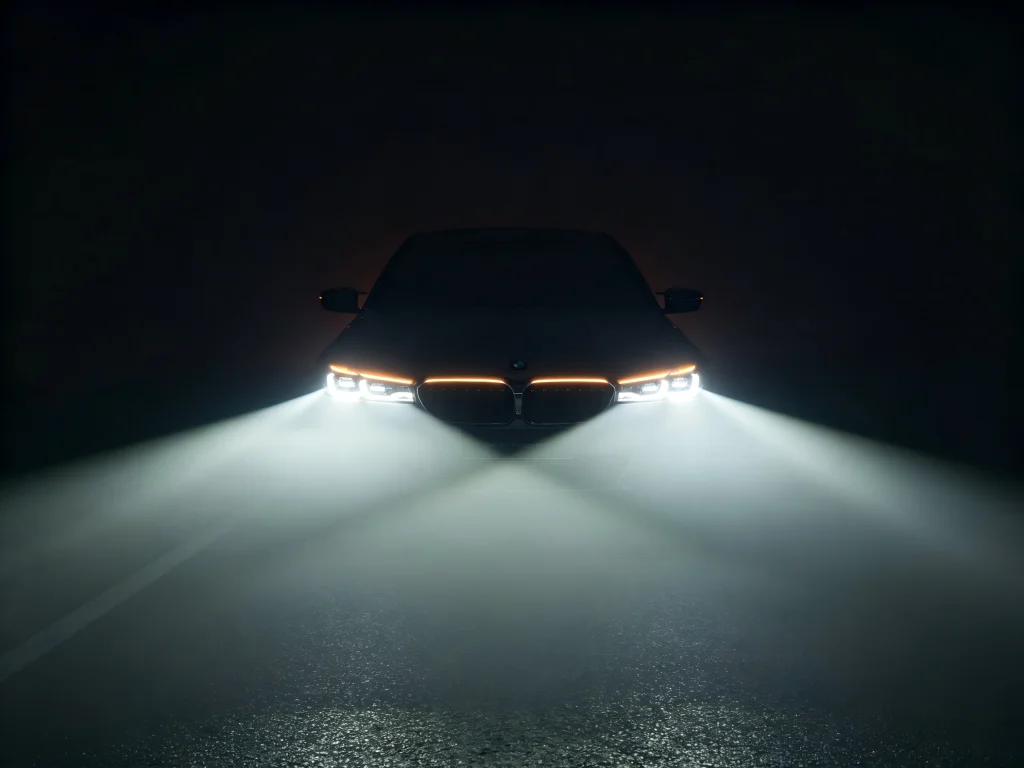
Why Can a Brighter LED Headlight Still Perform Worse?
A brighter LED bulb may perform worse when its light source does not match the optical position of the original bulb. Poor chip placement can spread light outside the intended beam, producing glare and bright foreground illumination while reducing useful visibility farther down the road.
This is one of the most common mistakes we see when drivers compare LED upgrades.
Imagine driving down a dark rural road.
You have just replaced an aging halogen bulb with an LED kit advertised with an enormous lumen figure. The pavement directly in front of the bumper suddenly looks brilliant white.
Your first reaction is simple: This is much brighter.
Then you reach 60 mph.
The road farther ahead does not look nearly as impressive. Road signs may reflect aggressively. The cutoff may appear messy. Oncoming drivers may flash their high beams.
What happened?
Your eyes saw more foreground brightness, but your headlight did not necessarily deliver more useful distance illumination.
The Real Problem Is Optical Geometry
A headlight housing is an optical system. Its reflector or projector was engineered around the location and geometry of a light source.
A halogen filament occupies a small, defined position.
When an LED replacement places its emitting surface too far forward, backward, or sideways, the reflector receives light from the wrong location. The housing then sends that light somewhere it was never designed to go.
This is why experienced buyers increasingly examine LED chip positioning and beam pattern rather than treating maximum lumens as the deciding specification.
For background information about automotive headlamps and their optical functions, see this overview of automotive headlamp technology.
The Lumen Trap Is Costing Drivers Useful Visibility
The best rated LED headlight bulbs should be judged by usable illumination rather than advertised lumens alone. Beam concentration, hotspot position, cutoff control, thermal stability, housing design, and LED placement determine how much useful light actually reaches the road and how comfortably the driver can see.
Online marketplaces make this problem worse.
When buyers compare two boxes, a larger number appears more powerful:
- 20,000 lumens
- 40,000 lumens
- 60,000 lumens
- 100,000 lumens
The natural assumption is that the largest number wins.
But road lighting does not work that way.
The question is not simply, How much light can the LEDs produce?
The better question is:
How much controlled light reaches the areas of the road where the driver needs it?
Lux Can Tell You More About the Road
Lumens describe total luminous flux. Lux describes illuminance reaching a surface.
That distinction matters.
Two LED bulbs could produce similar total output while creating very different road illumination because one distributes the light more effectively through the headlight optics.
For that reason, in our engineering evaluation process we pay close attention to beam distribution, hotspot intensity, cutoff behavior, and sustained output rather than relying on a headline lumen specification.
Five Problems That Separate Good LEDs From Bad Ones
| Masalah | Weak LED Design | Better LED Design | Mengapa Ini Penting |
|---|---|---|---|
| Pola berkas | Wide, uncontrolled scatter | Controlled optical distribution | More usable road illumination and less unwanted glare |
| Chip position | Large or poorly positioned emitter | Compact emitter positioned close to the intended focal point | Helps the housing reproduce its intended beam |
| Pendinginan | Small heat sink with weak thermal control | Engineered heat path with active or effective passive cooling | Helps reduce thermal output drop |
| Driver electronics | Low-cost unstable driver | Stable current regulation and vehicle-specific compatibility | May reduce flicker and premature failure |
| Pemasangan | Large rear assembly | Compact, installation-focused architecture | Improves dust-cover and housing clearance |
Problem #1: Your Headlights Look Bright but You Still Cannot See Far
This is perhaps the most frustrating outcome after an LED conversion.
Drivers expect brighter LEDs to extend their vision. Instead, some installations create an intense pool of white light immediately in front of the vehicle.
That foreground brightness can make the upgrade feel powerful.
But your pupils react to that bright foreground. The darker area beyond it can then become harder to perceive.
A well-designed beam should balance foreground illumination with useful intensity farther down the road.
That is why beam shape deserves more attention than spectacular marketing numbers.
Problem #2: Oncoming Drivers Keep Flashing Their High Beams
This is a warning sign.
Installing LEDs does not automatically create glare. However, an LED source that does not work correctly with the original reflector or projector may put excessive light above the intended cutoff.
The problem becomes especially sensitive with reflector housings.
Before installing any LED replacement, check:
- Whether the bulb type matches the original socket.
- Whether the LED emitters are correctly oriented.
- Whether the bulb seats completely inside the mounting base.
- Whether the cutoff remains controlled after installation.
- Whether headlight aim needs adjustment.
- Whether the conversion is permitted for your specific vehicle and market.
Regulations differ by country and application. Buyers should verify applicable road-use requirements with their local transportation authority rather than assuming every retrofit bulb is street legal everywhere.
Problem #3: Your Expensive LED Gets Dimmer After It Heats Up
LEDs generate less radiant heat than traditional filaments, but the semiconductor junction still creates heat that must be removed.
If that heat remains trapped around the LED package, operating temperature rises.
The driver circuit may then reduce power to protect the LEDs.
The result can be thermal droop: impressive initial output followed by reduced sustained brightness.
Fan-Cooled vs. Fanless LED Headlight Bulbs
Neither design automatically wins.
Fan-cooled LEDs can move heat quickly from compact high-output assemblies. They are useful where designers need significant thermal dissipation from a small package.
Fanless LEDs remove the moving fan and may offer quieter operation and fewer moving components, but they need enough heat-sink area and airflow to dissipate heat effectively.
So do not ask only, “Does it have a fan?”
Ask whether the complete thermal system can keep the LED and driver inside their intended operating range.
Problem #4: Flickering and Dashboard Errors Appear After Installation
You install the LEDs.
You turn the ignition on.
Then the dashboard reports a bulb fault—or the headlights flicker.
Modern vehicles may monitor lighting circuits. Because LEDs can present a different electrical load than halogen bulbs, the vehicle may interpret the new load as a failed lamp.
Inilah sebabnya Kompatibilitas CANbus appears so often in reviews of the best LED headlight bulbs.
Yet “CANbus ready” should not be treated as a universal promise.
Vehicle electronics vary by manufacturer, platform, year, and market. Some applications may still require an additional decoder, anti-flicker module, or load solution.
Problem #5: The Bulb Fits the Socket but Not the Headlight
This catches buyers by surprise.
You order the correct H7, H11, H4, 9005, or another socket.
The base fits.
But the rear heat sink collides with the dust cover.
Or the fan assembly touches another component.
Or the retaining clip cannot lock properly.
Socket compatibility and physical fitment are not the same thing.
How to Choose the Best Rated LED Headlight Bulbs
Start with vehicle fitment and housing type, then evaluate beam geometry, chip position, sustained brightness, cooling, electrical compatibility, installation clearance, warranty, and supplier support. This approach is more reliable than choosing LEDs according to advertised lumens, marketplace ratings, or color temperature alone.
Use this order when evaluating a replacement:
- Konfirmasi soketnya. Check H7, H11, H4, 9005/HB3, 9006/HB4, 9012, or the applicable factory specification.
- Identifikasi rumah lampu. Determine whether you have a reflector or projector.
- Study emitter geometry. Smaller, accurately positioned light sources tend to provide better optical control.
- Check the beam. Look for controlled distribution rather than wall brightness alone.
- Evaluate thermal design. Consider heat path, fan quality, heat-sink area, and sustained performance.
- Verifikasi kompatibilitas kelistrikan. Do not assume every vehicle will accept the same LED driver.
- Measure physical clearance. Check the dust cover and retaining mechanism.
- Verify regulations. Road-use requirements vary between markets.
What About the Best Rated H7 LED Headlight Bulb?
H7 deserves special attention because the physical mounting system can vary substantially between vehicles.
Some cars use a conventional retaining clip. Others use adapters or proprietary mounting arrangements.
That means the best rated H7 LED headlight bulb on a review website could still be the wrong choice for your vehicle.
For H7 applications, inspect both the electrical connector and mechanical mounting system before ordering.
Compact dimensions also matter because many H7 housings provide limited rear clearance.
Should You Trust “Best LED Headlight Bulbs on Amazon” Lists?
Marketplace reviews are useful—but only as one data source.
They can reveal recurring issues such as:
- fan noise after several months;
- flickering on certain vehicle models;
- dust-cover clearance problems;
- weak instructions;
- beam-pattern complaints;
- early driver failure.
However, a five-star rating does not measure beam intensity at a defined distance. It does not confirm optical compatibility with your vehicle. And it does not prove regulatory compliance.
The same warning applies when researching best LED headlight bulbs Reddit discussions. Community feedback can uncover practical problems that product pages overlook, but one driver’s result cannot automatically be transferred to another headlight housing.
Why GTR Approaches LED Lighting Differently
For GTR, an LED headlight is not simply an LED chip attached to a socket.
It is an optical, thermal, electrical, and mechanical system.
GTR is the automotive lighting brand of Dongguan Ronghai Photoelectric Technology. Our manufacturing background dates to 2007, with experience in LED headlights, bi-LED projector systems, fog lighting, and related automotive lighting solutions.
Based on our years of manufacturing experience, we focus on the factors that tend to matter after installation: controlled illumination, thermal management, stable electronics, practical fitment, repeatable production, and application-specific product development.
Our manufacturing system also supports OEM and customized automotive lighting projects for distributors and aftermarket brands.
That matters to professional buyers because the definition of “best” changes at scale.
A distributor does not only need a bulb that looks good during a five-minute demonstration. The product also needs consistent batches, manageable return rates, technical support, appropriate documentation, and stable supply.
GTR’s manufacturing organization maintains international management and product certifications including ISO9001, ISO14001, CE, FCC, and RoHS across applicable operations and products.
FAQ: Best Rated LED Headlight Bulbs
What are the best rated LED headlight bulbs?
The best option is a bulb that matches your vehicle and housing while producing a controlled beam, stable sustained output, effective thermal management, and reliable electronics. Do not select a bulb from lumen claims alone.
What is the best LED headlight bulb brand?
There is no universal winner for every vehicle. A strong brand should provide application guidance, engineering data, consistent manufacturing, warranty support, and clear information about beam performance and compatibility.
Are expensive LED headlight bulbs better?
Not automatically. Price may reflect better LEDs, drivers, cooling systems, engineering, testing, or support, but buyers should compare measurable design characteristics rather than price alone.
Are 6000K LED headlights good?
A color temperature around 6000K produces a crisp white appearance popular in aftermarket lighting. However, color temperature does not determine beam quality or brightness by itself.
What is the best rated H7 LED headlight bulb?
The best H7 depends on your housing, retaining system, rear clearance, electronics, and local regulations. Correct fitment and beam geometry should come before maximum advertised output.
Are fanless LED headlights better?
Fanless designs remove a moving component and can operate quietly. Fan-cooled designs can dissipate significant heat from compact high-output bulbs. The quality of the entire thermal design matters more than the presence of a fan alone.
Why do LED headlights flicker?
Flickering can result from electrical monitoring systems, PWM control, voltage instability, driver incompatibility, or connection problems. Some vehicles may require an appropriate decoder or anti-flicker solution.
Can I put LED bulbs into any halogen headlight?
No. Mechanical fit does not guarantee optical, electrical, or legal compatibility. Verify your vehicle, housing, mounting system, beam pattern, electronics, and local road-use regulations first.
Stop Buying Headlights by the Biggest Number on the Box
The road does not care what the package says.
It only reveals where the light actually goes.
If you are a driver, installer, automotive lighting distributor, aftermarket chain, or regional wholesaler trying to identify the best rated LED headlight bulbs, start with optical performance and application fitment—not marketing numbers.
If you are sourcing LED headlights for multiple vehicle applications or building a regional product line, the cost of choosing incorrectly becomes much larger. A poor beam pattern becomes customer complaints. Weak thermal management becomes warranty claims. Bad fitment becomes returns. Inconsistent manufacturing becomes lost customers.
GTR can help evaluate the lighting solution from the vehicle application backward rather than forcing one bulb into every application.
Do not wait for your customers to discover the weak point in your current LED headlight line. Bring GTR your target vehicle list, bulb specifications, market requirements, or OEM project, and let our automotive lighting team help you build a more reliable solution.
Explore GTR automotive LED lighting solutions and discuss your project with our team.