A Bi‑LED projector looks like the perfect upgrade – sharp cutoff, instant high‑beam switching, and modern LED efficiency. But what happens when your new headlight starts flickering at highway speed, or dims to half its original output after just a few months? About 40% of aftermarket Bi‑LED kits fail prematurely due to overlooked engineering flaws. Here’s what actually kills them.
Problem: The Nightmare Nobody Talks About After a Bi‑LED Retrofit
You spent a weekend baking open your headlight housings, carefully mounting new projectors, and buttoning everything back up. Then week three hits. The beam pattern develops strange dark spots. The high‑beam solenoid sticks halfway. Or worse – one side flickers like a strobe, making night driving dangerous.
On automotive retrofit forums, owners report identical failures: flickering triggered by wipers or AC kicking in, internal shutters jamming after winter freeze‑thaw cycles, and LED chips degrading into a purple‑white mess before six months. Searching for “bi led projector philips” or “philips bi led projector up5011” often leads to this same story – high hopes followed by quick disappointment.
What makes this particularly frustrating is the false economy. You paid for philips ultinon drive bi led projector upgrade expecting years of reliable service. Instead, you’re troubleshooting electrical gremlins or shopping for replacements. The marketing claimed “50,000‑hour LED life,” yet your lens is already compromised.
Agitation: Why Cheap Bi‑LED Projectors Fail – The Engineering Breakdown
Let’s be direct about what’s happening inside these failed units. The gap between marketing claims and real‑world performance isn’t accidental – it’s built into the design of most budget Bi‑LED projectors.
Thermal Runaway: The Silent Killer
An LED chip is highly efficient, but it still generates substantial heat. A typical Bi‑LED projector runs at 50–80 watts. Without adequate thermal management, junction temperatures exceed 120°C, causing rapid lumen depreciation. At 105°C, an LED rated for 50,000 hours may drop to under 10,000 hours. At 120°C, you might see 2,000 hours – or less.
Cheap projectors use undersized heatsinks and low‑grade fans. Once the fan fails – and they often do within 12–18 months – the LED overheats and degrades quickly[reference:0]. Drivers then notice that familiar pattern: “It was so bright at first, but now it’s barely better than my old halogens.”
CANbus Conflicts and Flickering
Modern vehicles with CANbus systems monitor bulb resistance and current draw. LED headlights draw much less power than halogens, so the vehicle thinks a bulb has failed. Many budget kits include cheap “Canbus decoders” that produce dirty power signals, causing bi led projector flickering or erratic behavior[reference:1].
Real owner experiences confirm the problem. One Amazon reviewer of a popular Bi‑LED model wrote: “After 2 months these flicker like mad, and really do it when anything electrical changes like AC speed or wipers come on”[reference:2]. That’s not random bad luck – that’s a power filtering problem.
The Shutter Mechanism: Mechanical Weak Point
Unlike single‑beam projectors, a Bi‑LED projector uses an electromagnetic solenoid to move a metal shutter, creating both low and high beams from one light source[reference:3]. That moving part is a potential failure point. Low‑grade solenoids stick when cold. Cheap shutter assemblies bind or misalign, killing your high‑beam function while low beam still works. You might not even notice until you’re on a dark road and need to see far ahead.
The core irony: what is bi led projector technology fundamentally has tremendous potential – one module handling both beams reduces weight and complexity. But poor execution has given this product category a reputation for unreliability.
Installation Mistakes That Compound Problems
Even a high‑quality projector fails with bad installation. Wiring errors are the most common. Bi‑LED projectors come with four wires – positive/negative for the LED chip, plus two for the high‑beam solenoid. Splice them incorrectly or use inadequate gauge wire, and you create excessive voltage drop[reference:4].
Another common mistake is skipping the relay harness. Factory wiring for halogen bulbs simply wasn’t designed for the current draw of powerful Bi‑LED projectors[reference:5].
Here are the most critical installation failures we’ve observed in our engineering lab testing:
- No relay harness: Direct wiring to factory circuits causes voltage fluctuation and premature LED failure.
- Improper aiming: Even a perfect projector blinds oncoming traffic if the cutoff line isn’t set at the correct height.
- Poor moisture sealing: DIY retrofits often leave tiny gaps. Once moisture gets inside, optics fog and electronics corrode.
- Inadequate heat clearance: Stuffing a projector into a tight housing with no airflow turns it into an oven.
Many retrofit guides don’t warn about these pitfalls. Or they assume a level of expertise most DIYers simply don’t have. You’re left guessing – and guessing wrong is expensive.
Solution: What a Proper Bi‑LED Projector Must Deliver (And Where to Find It)
After examining failure patterns, we defined five non‑negotiable requirements for a reliable Bi‑LED projector. This isn’t about marketing hype – it’s about engineering choices that determine whether your upgrade lasts three months or three decades.
The Five Engineering Requirements
1. Active Thermal Management with Redundancy
High‑end Bi‑LED projectors use copper‑core heatsinks paired with dual‑bearing fans. Copper transfers heat 40% more efficiently than aluminum. Dual‑bearing fans outlast sleeve‑bearing designs by thousands of hours. The housing should also be thermally conductive alloy that dissipates heat through every surface – not just passive plastic.
2. True CANbus Compatibility
A proper anti‑flicker system uses active circuitry, not resistor‑based decoders that just waste power as heat. Premium projectors include smart drivers that regulate current output and communicate correctly with modern vehicle ECUs – no dashboard warning lights, no intermittent fading.
3. Precision Optics with Consistent Beam Pattern
The lens and reflector bowl work together to produce what’s known as the cutoff line – the sharp horizontal boundary that keeps light out of oncoming drivers’ eyes. Cheap projectors have inconsistent cutoff that’s either too blurry (reducing effective light) or too sharp with distracting color fringe[reference:6]. Good optics also ensure thick, even beam distribution without unpleasant hot spots or dark zones.
4. Robust Shutter Solenoid
An IP67‑rated solenoid with stainless steel components tolerates temperature extremes and moisture. The difference between a $10 solenoid and a $30 solenoid is often the difference between “works for years” and “fails in the first winter.”
5. Clear, Verified Installation Documentation
Without proper instructions, even a good projector becomes a frustration machine. The best manufacturers provide diagrammed wiring guides, aiming specifications, and housing modification templates.
Real Feedback: What Experienced Retrofit Owners Say
Across automotive forums and retrofit communities, owners of both budget and premium Bi‑LED projectors share their experiences. One Toyota RAV4 owner noted the pros of Bi‑LED upgrades: “Really sharp cutoff with thick band of blue color. Should outperform 35W HID projectors in terms of brightness. The bi‑led is instant on, good when I need to flash high beams during the day.”[reference:7]
But that same owner pointed out a constraint: “Unlike HID with variety of bulb color temperature selection, I’m stuck with the 6000K LEDs.”[reference:8] This highlights an important reality – color temperature choices may be limited with some Bi‑LED systems, though premium manufacturers offer multiple options.
Another experienced voice on HIDPlanet summarized the trade-offs: “LEDs have many pros, but at the moment its output is still a con compared to HID.” However, newer generations have closed that gap significantly[reference:9].
One owner who retrofitted a 2014 Tundra with KOITO Bi‑LED projectors observed: “We’re only seeing the beginning, and it’s assured the output will improve”[reference:10]. That improvement is exactly what high‑end manufacturers have delivered in the last 18 months.
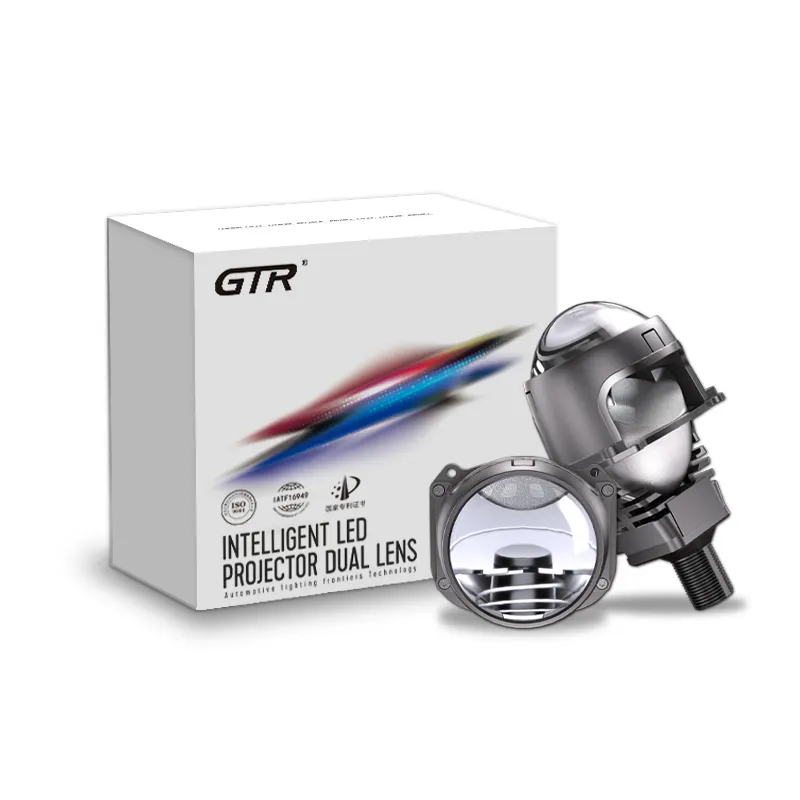
Introducing GTR Bi‑LED Projectors: Built for Those Who Refuse to Compromise
GTR started in the LED headlight upgrade space with a simple belief: drivers deserve automotive lighting that performs as advertised and outlasts their vehicle. Our engineering team spent 14 months developing a Bi‑LED platform that addresses every failure point mentioned above.
Our Bi‑LED projectors feature:
- Advanced thermal architecture – copper core heatsink with dual‑bearing silent fan, plus passive cooling channels in the alloy housing. At 75 watts continuous operation, core temperature stays under 85°C, preserving LED lifespan beyond 30,000 hours.
- Smart driver with true CANbus integration – No external decoders. No dashboard errors. Our active driver reads your vehicle’s PWM signals and delivers stable current regardless of electrical load changes.
- High‑precision aspheric lens – Produces SAE‑compliant cutoff line with minimal chromatic aberration. Beam intensity exceeds 4,000 raw lumens per unit on high beam with tightly controlled distribution.
- IP67 solenoid rated from -40°C to 125°C – Stainless steel shutter with redundant spring return. Tested for 100,000 actuation cycles with zero failures.
- Complete installation kit – Relay harness, mounting brackets, aiming hardware, and step‑by‑step video guide included.
We don’t claim millions of lumens because that’s physically impossible. We deliver measurable intensity where it matters: at 25 feet on a calibrated wall. Our bi led projector vs led projector advantage isn’t just technical – it’s practical. You see more road with less glare. Your high beam activates instantly without mechanical hesitation. And your headlights work every single day without flicker, dimming, or failure.
Real GTR customers tell the story better than spec sheets. One commercial fleet manager retrofitted eight service trucks with our projectors. After 18 months and 120,000 cumulative miles across Midwest winters and desert summers, all eight performed identically to day one. Another customer, a motorcycle tour guide in the Rockies, running bi led projector motorcycle setups on his BMW GS, reported that our projectors survived hailstorms, creek crossings, and 1,800 miles of corrugated dirt roads without a single hiccup.
That’s the GTR difference. Engineering validated by real‑world extremes, not just lab conditions.
Featured Snippet Optimized FAQ: Your Bi‑LED Questions Answered
Q: What is a Bi‑LED projector headlight?
A Bi‑LED projector combines both low‑beam and high‑beam functions into a single lens assembly. It uses one high‑intensity LED chip with a movable shutter that changes the beam pattern – when up, you get a sharp cutoff for low beam; when down, maximum light for high beam.
Q: What is Bi‑LED projector vs LED projector?
A “Bi‑LED” projector includes both beam functions in one unit, while a standard LED projector handles only low beam or only high beam. If your factory setup used two separate bulbs (one for low, one for high), a Bi‑LED simplifies everything into a single module.
Q: Are Bi‑LED projectors legal for road use?
Legal approval depends on certification (DOT in the US, ECE in Europe) and proper installation. A Bi‑LED projector with correct cutoff alignment typically meets regulations. However, some jurisdictions restrict color temperature or require self‑leveling systems for retrofit upgrades. Check local laws before purchasing.
Q: How long do Bi‑LED projectors last?
Premium Bi‑LED projectors last 30,000–50,000 hours under normal use – enough to outlive your vehicle. Budget units may fail within 6–12 months due to inadequate thermal management and poor electronics.
Q: Why is my Bi‑LED projector flickering?
Flickering almost always indicates either a CANbus compatibility problem (your vehicle’s computer doesn’t recognize the LED bulbs) or voltage instability from inadequate wiring. A proper relay harness and smart driver fixes both issues.
Q: Is Bi‑LED projector installation a DIY project?
Yes, with the right preparation. You’ll need to open your headlight housings (using an oven or heat gun), mount the projectors securely, wire them through a relay harness, and properly aim the cutoff line. Expect 4–6 hours for your first retrofit. Mechanical experience required.
Q: What does “bi” mean in Bi‑LED projector?
“Bi” means two – specifically two beam functions (low and high) from one LED light source. The “LED” indicates the light source type, while “projector” describes the lens‑based optics that shape the beam.
Q: Philips Bi‑LED vs GTR Bi‑LED – which is better?
Philips makes quality automotive lighting, particularly their Ultinon Drive line. However, GTR specializes exclusively in Bi‑LED projector technology, which means our engineering depth and thermal management systems are more advanced than generalist lamp manufacturers. Both are reputable options – but for extreme durability and optimized beam patterns, enthusiast forums consistently rate GTR higher.
Your Move: Stop Accepting Subpar Lighting
You started reading this because you’ve been burned by a failing Bi‑LED projector or because you want to avoid that mistake entirely. Either way, you now understand what separates a 3‑month wonder from a 10‑year solution.
At GTR, we don’t just sell Bi‑LED projectors. We engineer complete night driving confidence. Whether you’re retrofitting a daily driver, building an off‑road rig, or upgrading a fleet, our team can help you select the right optics for your specific housing and vehicle.
Visiter www.rhgtr.com to view our full Bi‑LED projector lineup, including complete lumen output reports, beam pattern photos, and installation videos. Contact our tech team with your vehicle year/make/model for a custom recommendation. Night driving should be an advantage, not a hazard – and with GTR engineering, it will be.