Mettre des LED dans les feux antibrouillard semble être une simple mise à niveau. Retirez l'ancienne ampoule halogène, installez une LED plus lumineuse et profitez d'une meilleure visibilité. Pourtant, de nombreux conducteurs découvrent quelque chose d'inattendu : la route semble plus lumineuse, mais voir à travers la pluie, la brume, la poussière ou la neige peut ne pas s'améliorer autant que prévu.
Le problème vient rarement de la technologie LED elle-même. Plus souvent, il s'agit de la relation entre la source lumineuse LED, la géométrie du réflecteur ou du projecteur, la distribution du faisceau, la température de couleur, le contrôle thermique et l'électronique du véhicule. Maîtrisez ces facteurs, et les feux de brouillard LED peuvent devenir une amélioration utile de la visibilité plutôt qu'un simple élément esthétique.
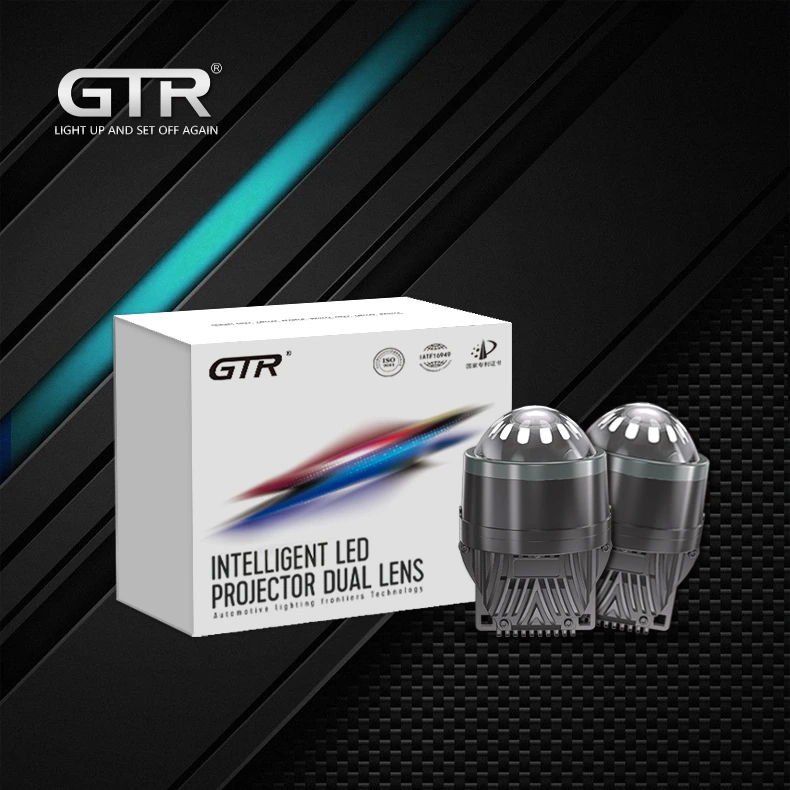
Pourquoi les feux de brouillard LED peuvent-ils paraître lumineux mais mal performer ?
Les feux de brouillard LED peuvent sembler extrêmement lumineux tout en offrant une visibilité décevante lorsque les puces LED ne correspondent pas au point focal optique du boîtier d'origine. Le résultat peut être une lumière dispersée, une luminosité excessive au premier plan, de l'éblouissement ou une couverture horizontale faible au lieu d'un faisceau contrôlé dirigé bas sur la route.
C'est la première erreur que nous voyons commettre aux acheteurs : juger un feu de brouillard à sa luminosité brute.
Imaginez conduire sur une autoroute non éclairée sous une pluie battante. Vos nouvelles ampoules LED produisent un mur blanc éclatant juste devant le pare-chocs. Au début, l'amélioration semble impressionnante.
Puis la visibilité chute.
Les bords de la route deviennent difficiles à distinguer. La lumière réfléchie par l'eau et les gouttelettes en suspension entre en concurrence avec la scène devant vous. Vous avez plus de lumière, mais pas nécessairement plus d'informations utiles parvenant à vos yeux.
Cette différence compte.
Le vrai problème est la lumière utilisable, pas la lumière maximale
Un feu de brouillard n'a pas la même fonction qu'un feu de route. Il doit généralement éclairer la route bas et large tout en contrôlant la lumière vers le haut.
Cela signifie qu'une ampoule LED efficace dans les feux de brouillard nécessite plus que des puces LED à haut rendement.
- Une position d'émission lumineuse compatible avec le réflecteur ou le projecteur d'origine
- Une distribution verticale contrôlée
- Répartition horizontale utile vers les accotements
- Sortie stable après que les LED atteignent leur température de fonctionnement
- Comportement électrique correct pour le véhicule
- Protection contre l'eau, la poussière, les vibrations et les contraintes thermiques
Un produit de 8 000 lumens mal conçu peut donc offrir de moins bonnes performances sur la route qu'une lampe de puissance inférieure dotée d'un contrôle optique supérieur.
Le problème caché des ampoules LED bon marché dans les feux de brouillard
Les ampoules LED bon marché se concentrent souvent sur le flux lumineux annoncé tout en accordant moins d'attention à la géométrie optique, à la gestion thermique, à la qualité du pilote, à l'étanchéité et à la compatibilité avec le véhicule. Ces faiblesses peuvent provoquer de l'éblouissement, un scintillement, des erreurs au tableau de bord, une perte rapide de luminosité, une défaillance prématurée des LED ou un faisceau de phare antibrouillard irrégulier après l'installation.
Cela devient particulièrement important pour les véhicules utilitaires et les camions.
Considérez Les feux antibrouillard à LED pour camions utilisés sur les routes de chantier mouillées, les autoroutes rurales, les fermes, les mines ou les tournées de livraison. Ces lampes subissent des vibrations, des variations de température, de la boue, des projections d'eau et de longs cycles de fonctionnement.
Une lampe qui fonctionne bien lors d'une démonstration de cinq minutes peut se comporter différemment après une heure de fonctionnement continu.
La chaleur change tout
Les LED sont efficaces, mais elles génèrent tout de même de la chaleur.
Cette chaleur doit s'éloigner de la jonction LED en passant par la carte de circuit imprimé et dans le dissipateur thermique. Si la résistance thermique est trop élevée, la température de jonction augmente. La LED peut réduire sa puissance, changer de couleur ou subir une dégradation accélérée.
Dans nos tests d'ingénierie, nous accordons donc une attention particulière à une sortie stable après équilibre thermique plutôt que la luminosité initiale uniquement.
Cette distinction sépare un champion de fiche technique d'une lampe capable de résister à un usage quotidien.
Qu'est-ce qui fait un bon faisceau de feu de brouillard LED ?
Un bon faisceau de feux de brouillard LED doit répartir une lumière utile largement sur la route tout en limitant l'éclairage vers le haut inutile. Un contrôle optique approprié aide les conducteurs à identifier les bords de voie, les obstacles, le marquage routier et les accotements sans créer d'éblouissement excessif ni de point chaud lumineux au premier plan qui peut réduire la vision utile à distance.
Le principe de base est simple.
Le réflecteur ou le projecteur à l'intérieur d'un feu de brouillard a été conçu autour d'une position particulière de la source lumineuse. Déplacez cette source lumineuse, agrandissez-la trop ou faites-la pivoter incorrectement, et le faisceau résultant peut changer.
C'est pourquoi le placement de la puce LED est important.
Pour des informations générales sur les exigences en matière d'éclairage automobile, les acheteurs peuvent consulter la National Highway Traffic Safety Administration et les réglementations locales applicables en matière d'éclairage des véhicules. Les exigences diffèrent selon les marchés, la légalité routière doit donc être vérifiée pour le véhicule et le pays concernés.
Halogène vs LED basique vs éclairage de brouillard LED conçu
| Facteur | Ampoule de feu de brouillard halogène | Remplacement LED à faible coût | Solution LED conçue |
|---|---|---|---|
| Luminosité initiale | Modéré | Souvent élevée | Élevée et contrôlée |
| Précision du faisceau | Correspond généralement aux optiques d'origine | Très variable | Conçu autour de la géométrie optique |
| Efficacité énergétique | Inférieure | Bon | Bon |
| Contrôle thermique | Simple | Variable | Chemin thermique conçu |
| Compatibilité électrique | Généralement simple | Peut créer des erreurs ou un scintillement | Compatibilité véhicule prise en compte |
| Couverture routière utile | Prévisible | Dépend fortement de la conception | Optimisé pour une couverture maîtrisée |
| Durée de vie | Plus court | Très variable | Potentiellement plus long avec une conception thermique appropriée |
Les feux de brouillard doivent-ils être blancs ou jaunes ?
La température de couleur est un autre domaine où le marketing peut submerger l'ingénierie.
Les LED blanc très froid peuvent sembler modernes et visuellement intenses. Cependant, les conducteurs roulant fréquemment sous la pluie, la poussière, la neige ou le brouillard préfèrent parfois des solutions blanc plus chaud ou jaune sélectif, car le contraste perçu et l'éblouissement réfléchi peuvent être ressentis différemment dans des conditions défavorables.
Il n'existe pas de couleur parfaite unique pour chaque conducteur.
Choisissez plutôt en fonction de l'application.
- Conduite urbaine quotidienne : une LED blanche maîtrisée peut offrir un aspect propre de style OEM.
- Pluie et brouillard fréquents : un blanc plus chaud ou un jaune sélectif peut valoir la peine d'être envisagé.
- Environnements tout-terrain : donnez la priorité au contrôle du faisceau et à la visibilité du terrain avant la couleur.
- Flottes commerciales : la constance, la fiabilité, la disponibilité des pièces de rechange et la stabilité thermique peuvent compter davantage que l'apparence.
La compatibilité du véhicule est là où de nombreuses mises à niveau LED échouent
Le fait qu'une ampoule s'adapte à la douille ne signifie pas automatiquement que le système d'éclairage complet est compatible.
Différentes années, finitions, styles de carrosserie et ensembles d'éclairage d'usine peuvent utiliser différents culots d'ampoule, boîtiers, modules de commande et configurations électriques.
Cela devient particulièrement pertinent lors de la recherche de termes tels que feux de brouillard LED pour Ram 1500 ou feux de brouillard LED F150.
Par exemple, certaines générations de Ram utilisent différentes spécifications d'ampoule de feu de brouillard selon l'orientation et le boîtier d'usine. Les véhicules plus récents peuvent également distinguer les ensembles LED d'usine des systèmes halogènes.
Avant l'achat, vérifiez :
- Année, marque, modèle et finition du véhicule.
- Configuration halogène d'usine ou LED d'usine.
- Type de boîtier de feu de brouillard.
- Numéro d'ampoule d'origine.
- Type de connecteur et polarité.
- Espace disponible derrière le boîtier.
- Exigences de surveillance CANbus ou de détection d'ampoule grillée.
- Si la mise à niveau est légale pour un usage routier sur le marché cible.
Pourquoi les camions ont besoin de plus qu'une ampoule LED lumineuse
Les exigences deviennent plus strictes lorsque des LED sont installées sur des pick-ups, des camions commerciaux et des véhicules modifiés.
Feux de brouillard LED pour Ram 1500
Les propriétaires de Ram ne devraient jamais acheter en se fiant uniquement au nom du véhicule.
La génération, l'année modèle, l'orientation des feux de brouillard, l'ensemble d'éclairage d'usine et le style de carrosserie peuvent affecter la compatibilité. Une solution LED qui fonctionne correctement dans une configuration Ram 1500 peut ne pas être le bon choix pour une autre.
Applications des feux de brouillard LED F150
Le même principe s'applique aux applications Ford F-150. Vérifiez la configuration des lampes d'usine et le type d'ampoule plutôt que de supposer que tous les camions d'une large plage d'années partagent un matériel identique.
Feux de brouillard LED pour installations sur pare-buffle
Feux de brouillard LED pour pare-buffle les applications créent un autre défi.
La position de montage modifie la hauteur et l'angle du faisceau.
Une lampe puissante installée trop haut ou mal orientée peut se comporter davantage comme un feu de route auxiliaire que comme un véritable feu de brouillard. La stabilité du montage devient également critique car les vibrations peuvent progressivement modifier l'orientation.
Feux de brouillard LED pour applications de pare-chocs Ranch Hand
Lors de la sélection Feux de brouillard LED pour pare-chocs Ranch Hand configurations, mesurez l'ouverture de montage, la géométrie du support, la profondeur de la lampe, le cheminement du câblage et la plage de réglage disponible.
Ne choisissez pas uniquement en fonction du diamètre de la lampe.
Le pare-chocs fait partie du système d'éclairage car son emplacement de montage détermine où le faisceau atterrit.
Et les feux de brouillard LED pour motos ?
Les motos et les motos d'aventure introduisent différentes contraintes d'ingénierie.
Feux de brouillard LED pour moto les applications bénéficient de dimensions compactes et d'une consommation électrique réduite, mais la résistance aux vibrations, la construction étanche, la sécurité du montage et l'orientation du faisceau deviennent particulièrement importants.
Les motos ont également une capacité de charge limitée par rapport à de nombreux véhicules de tourisme.
L'efficacité a donc une valeur pratique au-delà du marketing.
Ce que les conducteurs remarquent généralement après une mise à niveau appropriée
Dans les communautés d'enthousiastes, chez les installateurs et dans les retours clients, un schéma revient sans cesse : après avoir réellement conduit avec les feux, les conducteurs ont tendance à valoriser un faisceau plus large et plus net plutôt que la luminosité brute.
La réaction typique d'un propriétaire ressemble moins à :
“ Ces LED ont des lumens incroyables. ”
et davantage à :
“ Je peux enfin voir l'accotement et les marquages de voie sans que la lumière se diffuse partout. ”
C'est là l'objectif de performance.
Le but n'est pas de créer le pare-chocs le plus lumineux du parking. Il s'agit de rendre la route plus facile à lire.
Comment GTR aborde l'éclairage antibrouillard LED
Fort de nos années d'expérience dans la fabrication d'éclairage automobile, GTR aborde le développement des feux de brouillard comme un système complet plutôt que comme une compétition de lumens.
Cela signifie considérer ensemble la distribution optique, la géométrie de la source LED, la gestion thermique, l'électronique de commande, la durabilité structurelle, les exigences d'installation et les applications véhicules cibles.
Cette approche systémique est particulièrement précieuse pour les distributeurs et les professionnels du retrofit. Un produit qui génère des plaintes récurrentes de compatibilité peut anéantir la marge réalisée sur sa vente.
Pour les acheteurs B2B, la cohérence compte.
GTR peut accompagner les distributeurs d'éclairage automobile, les chaînes de retrofit, les importateurs et les marques régionales à la recherche de :
- Solutions de feux de brouillard LED pour voitures particulières et camions
- Développement de produits spécifiques à un véhicule
- Exigences différentes en matière de faisceau et de température de couleur
- Coopération OEM/ODM
- Emballage en marque privée
- Approvisionnement en gros pour la distribution sur le marché de l'après-vente
- Assistance technique pour l'installation
FAQ sur les LED dans les feux antibrouillard
Puis-je mettre des ampoules LED dans mes feux antibrouillard ?
Dans de nombreuses applications, des ampoules LED de remplacement physiquement compatibles sont disponibles. Cependant, la seule compatibilité de la douille ne garantit pas une performance de faisceau correcte, une compatibilité électrique, ni la légalité routière. Vérifiez d'abord le boîtier, les spécifications de l'ampoule, le motif de faisceau, l'électronique du véhicule et la réglementation locale.
Les feux antibrouillard LED sont-ils meilleurs que les halogènes ?
Elles peuvent l'être. Des LED bien conçues peuvent offrir une efficacité supérieure, une durée de vie plus longue et un éclairage utile plus puissant. Des remplacements LED mal conçus peuvent produire une distribution de faisceau pire que l'ampoule halogène d'origine.
Quelle couleur de LED est la meilleure pour les feux antibrouillard ?
Le blanc offre une apparence moderne et une forte visibilité générale. Le blanc plus chaud ou le jaune sélectif est souvent préféré par les conducteurs qui rencontrent régulièrement la pluie, le brouillard, la poussière ou la neige. La qualité du faisceau reste plus importante que la couleur seule.
Des feux antibrouillard plus lumineux améliorent-ils la visibilité ?
Pas automatiquement. Une luminosité excessive au premier plan ou une lumière ascendante non contrôlée peut augmenter la réflexion et l'éblouissement. La distribution utile du faisceau importe plus que la revendication de lumens maximale.
Les ampoules LED antibrouillard peuvent-elles provoquer des erreurs au tableau de bord ?
Oui. Certains véhicules surveillent la résistance ou la consommation de courant de l'ampoule. Un pilote LED incompatible peut déclencher des avertissements, un scintillement ou d'autres comportements électriques.
Les feux antibrouillard LED ont-ils besoin de refroidissement ?
Oui. Les LED génèrent de la chaleur au niveau de la jonction du semi-conducteur. Un transfert thermique efficace aide à maintenir une sortie lumineuse stable et une longue durée de vie.
Puis-je utiliser des feux antibrouillard LED sur une barre de protection ?
Oui, si le feu, le système de montage, le câblage, le motif de faisceau et la réglementation locale soutiennent l'application. Un réglage approprié est essentiel car la hauteur et l'angle de montage affectent l'éblouissement et l'éclairage utile de la route.
Les feux antibrouillard LED conviennent-ils aux camions ?
Oui. Les camions peuvent bénéficier d'un éclairage de brouillard LED efficace et durable, en particulier dans des environnements exigeants. Les acheteurs doivent privilégier la résistance aux vibrations, la protection contre les intempéries, la stabilité thermique, le contrôle du faisceau et la compatibilité avec le véhicule.
Arrêtez d'acheter des feux antibrouillard uniquement en fonction des lumens
Si vos clients conduisent sous de fortes pluies, dans l'obscurité rurale, sur des chantiers, dans la neige, la poussière ou sur des routes mal éclairées, la question n'est pas simplement : “ Quelle est la luminosité de cette LED ? ”
La meilleure question est :, “ Quelle quantité de cette lumière atteint la bonne partie de la route après des centaines d’heures d’utilisation réelle ? ”
C’est là que commence une meilleure ingénierie.
Si vous êtes un distributeur d’éclairage automobile, une chaîne de retrofit, un grossiste ou une marque régionale du marché de l’après-vente à la recherche d’une gamme de produits de feux de brouillard LED plus fiable, découvrez les solutions d’éclairage automobile de GTR sur https://www.rhgtr.com. Présentez-nous vos applications véhicules, votre marché cible, vos exigences de montage et vos objectifs de performance. Nous pouvons vous aider à transformer ces exigences en une solution d’éclairage conçue pour la route que vos clients empruntent réellement.