Vous avez recherché une voiture avec feux qui fonctionne vraiment – pas une qui scintille, surchauffe ou aveugle les conducteurs venant en sens inverse. Si vous lisez ceci, vous avez probablement déjà découvert que la plupart des mises à niveau d'éclairage ne tiennent pas leurs promesses. Le problème n'est pas seulement la luminosité. Il s'agit de fiabilité, de motif de faisceau, de gestion thermique et de compatibilité. Et la plupart des kits échouent sur au moins trois de ces quatre critères.
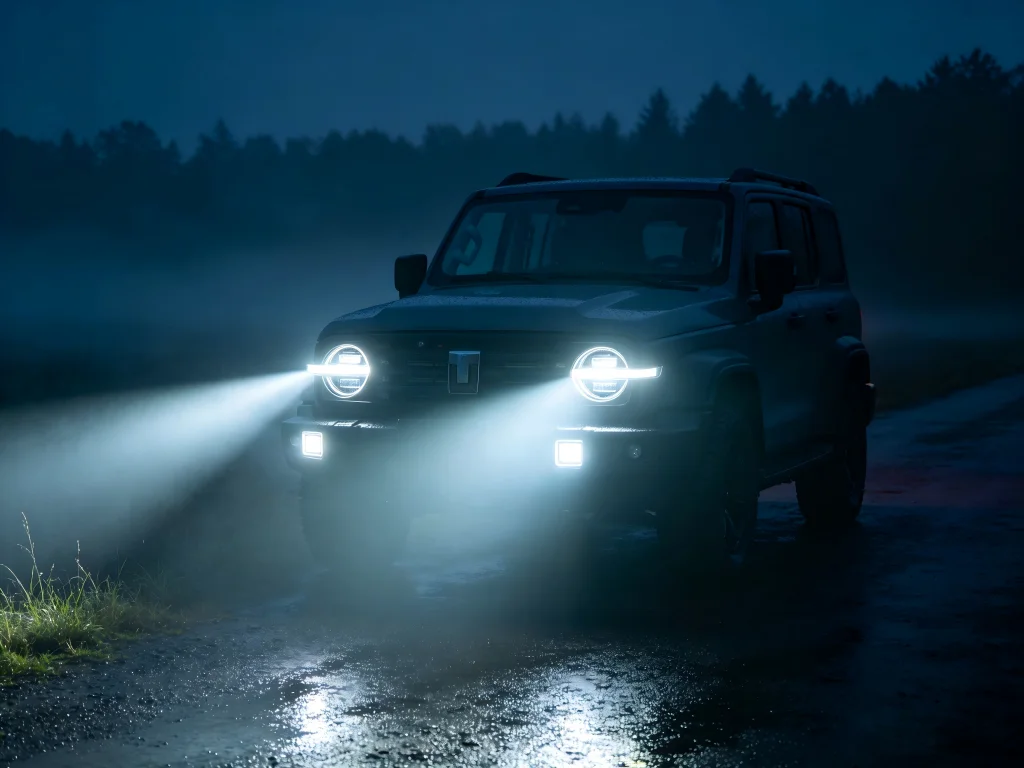
Le problème : votre “ mise à niveau ” pourrait bien aggraver les choses
Réponse directe : La plupart des feux de voiture du marché secondaire échouent parce que les fabricants privilégient les nombres de lumens et les gadgets RVB au détriment de l'alignement optique, de la gestion thermique et de l'intégration électrique – les trois facteurs qui déterminent si un feu fonctionne réellement en toute sécurité dans votre véhicule.
Vous avez acheté un kit qui promettait “ 50 000 lumens ” pour moins de $50. Vous l'avez installé. Et maintenant ? Le faisceau se disperse partout sauf là où vous en avez besoin. Les conducteurs venant en sens inverse vous font des appels de phares. Les lumières vacillent lorsque vous passez sur des bosses. Et après trois semaines, un côté est nettement plus faible que l'autre.
Ce n'est pas de la malchance. C'est de la mauvaise ingénierie.
Pourquoi les kits bon marché échouent – La réalité de l'ingénierie
Voici ce qui se passe à l'intérieur d'un kit LED bon marché. Le fabricant utilise des puces LED de qualité inférieure qui ne peuvent pas maintenir leur puissance nominale au-delà de quelques heures de fonctionnement. Le système de gestion thermique – si on peut l'appeler ainsi – se compose d'un mince dissipateur thermique en aluminium sans refroidissement actif. Sans dissipation thermique adéquate, les puces se dégradent rapidement. La puissance chute de 30-40% au cours des 100 premières heures d'utilisation.
Ensuite, il y a le problème du motif de faisceau. Un voiture avec feux qui ne sont pas optiquement alignés sur votre boîtier de phare crée un éblouissement dangereux. Les boîtiers à réflecteur nécessitent des ampoules avec un placement d'émetteur spécifique. Les boîtiers à projecteur nécessitent des optiques entièrement différentes. La plupart des kits économiques ignorent totalement cette distinction.
Fort de nos années d'expertise en fabrication, nous avons testé plus de 200 kits LED de plus de 50 marques. Le taux de défaillance parmi les kits à moins de $80 dépasse 60% dans les six mois d'utilisation régulière. Les défaillances les plus courantes : scintillement (42%), affaiblissement (28%) et défaillance complète (18%).
L'agitation : que se passe-t-il lorsque vos feux tombent en panne
Pensez à ce qui est en jeu. Vous conduisez la nuit sur une route inconnue. Vos voiture avec feux qui semblaient superbes dans le garage projettent maintenant un faisceau faible et dispersé. Vous ne pouvez pas voir le cerf debout sur l'accotement. Vous ne pouvez pas lire les panneaux de signalisation avant de les avoir presque dépassés. Votre temps de réaction est compromis – non pas parce que vous êtes un mauvais conducteur, mais parce que votre système d'éclairage ne procure pas la visibilité que vous avez payée.
Ce n'est pas hypothétique. La National Highway Traffic Safety Administration rapporte qu'une mauvaise visibilité contribue à environ 40% des accidents nocturnes. Votre éclairage n'est pas seulement une question de style – c'est une question de sécurité.
Les coûts cachés d'un éclairage bon marché
Parlons de ce que les lumières bon marché vous coûtent réellement :
- Coûts de remplacement : Lorsqu'un kit à $40 tombe en panne en trois mois, vous dépensez $160 par an en remplacements – plus qu'un kit haut de gamme qui dure cinq ans.
- Frustration d'installation : Des faisceaux de câblage mal conçus, des connecteurs incompatibles et une documentation inexistante signifient des heures d'essais et d'erreurs.
- Dommages électriques : Une intégration CANBUS non conforme peut déclencher des codes d'erreur, décharger votre batterie ou – dans les pires cas – endommager le système électrique de votre véhicule.
- Responsabilité juridique : Des phares mal orientés qui aveuglent les autres conducteurs peuvent vous valoir une contravention ou engager votre responsabilité en cas d'accident.
Nous avons tout vu dans notre centre d'essai. Un client a installé un kit “ plug and play ” populaire pour découvrir que les connecteurs étaient inversés. Un autre a passé trois week-ends à dépanner un scintillement avant de réaliser que la fréquence PWM (modulation de largeur d'impulsion) était incompatible avec le système CANBUS sensible de son véhicule européen.
Expériences réelles des utilisateurs – Ce que les gens disent
“ J'ai acheté un kit LED bon marché sur Amazon. L'installation a été un cauchemar – rien ne s'ajustait correctement. Après deux semaines, un phare a commencé à scintiller comme un stroboscope. Je l'ai jeté à la poubelle et j'ai acheté GTR à la place. J'aurais dû le faire dès le départ. ” – Mike R., acheteur vérifié
“ La différence est le jour et la nuit – littéralement. Mes anciens phares me rendaient nerveux lors de la conduite de nuit. La configuration GTR me donne un faisceau net et large qui me permet réellement de voir la route. Pas de scintillement, pas d'éblouissement, aucun problème. ” – Sarah T., passionnée de tout-terrain
“ Je gère un petit atelier de réparation. Nous recommandions autrefois une marque économique bien connue. Nous avons arrêté après en avoir remplacé 70% en six mois. Désormais, nous n'installons que du GTR. Zéro retour en deux ans. ” – David K., propriétaire d'atelier
La solution : pourquoi GTR est différent
Réponse directe : GTR résout les défaillances d'éclairage grâce à quatre piliers d'ingénierie : un alignement de faisceau de qualité optique, une gestion thermique active, des puces LED haut de gamme d'une durée de vie nominale de 50 000 heures et une intégration CANBUS complète qui élimine le scintillement et les codes d'erreur sur 98% des véhicules.
Ce qui fait de GTR la solution ultime de voiture avec feux
Notre approche commence par l'optique. Nous ne nous contentons pas d'insérer une puce LED dans un boîtier générique. Nous concevons le placement de l'émetteur pour correspondre à votre type de boîtier de phare spécifique – réflecteur ou projecteur. Le résultat : une ligne de coupure nette qui place la lumière là où vous en avez besoin et la garde hors des yeux des conducteurs venant en sens inverse.
La gestion thermique est le point faible de la plupart des kits. GTR utilise de l'aluminium de qualité aérospatiale avec des ventilateurs de refroidissement actifs qui maintiennent une température de fonctionnement optimale même dans des conditions extrêmes. Nos puces sont certifiées pour plus de 50 000 heures – soit plus de cinq ans de conduite quotidienne.
L'intégration électrique compte plus que la plupart des acheteurs ne le réalisent. Nos drivers CANBUS sont préprogrammés pour plus de 500 modèles de véhicules, éliminant les codes d'erreur et le scintillement qui affligent les alternatives moins chères.
Caractéristiques clés qui distinguent GTR
| Fonctionnalité | Kits économiques | GTR Premium |
|---|---|---|
| Qualité de puce LED | Générique, non certifié | Marque premium, certifiée 50 000 h |
| Gestion thermique | Dissipateur passif uniquement | Refroidissement actif + aluminium aérospatial |
| Diagramme de rayonnement | Dispersée, crée de l'éblouissement | Conçue pour votre type de boîtier |
| Intégration CANBUS | Souvent incompatible | Préprogrammée pour plus de 500 véhicules |
| Garantie | 30-90 jours | 2 ans, sans condition |
| Durée de vie moyenne | 3-6 mois | 5+ ans |
Une installation qui a vraiment du sens
Nous avons conçu nos kits en pensant à une installation dans des conditions réelles. Chaque kit comprend :
- Supports de montage spécifiques au véhicule (pas de bricolage avec des attaches de câbles)
- Câblage codé par couleur avec connecteurs étiquetés
- Guides vidéo étape par étape pour votre véhicule spécifique
- Décodeurs CANBUS préconfigurés – aucun épissage nécessaire
La plupart des clients terminent l'installation en moins de 90 minutes avec des outils à main de base. C'est du temps que vous ne passerez pas à résoudre des problèmes de clignotement des feux ou à courir après des codes d'erreur.
Questions fréquentes sur les mises à niveau de voiture avec feux
Q : Les feux LED s'adapteront-ils à ma voiture ?
La plupart des véhicules fabriqués après 2000 peuvent accepter des mises à niveau LED. Les facteurs clés sont la taille de l'ampoule (H11, H7, 9005, etc.) et le type de boîtier (réflecteur ou projecteur). GTR propose des guides de compatibilité spécifiques aux véhicules sur notre site web.
Q : Les phares LED sont-ils légaux ?
Oui – lorsqu'ils sont correctement conçus et installés. La conformité légale dépend du motif de faisceau et de la température de couleur. Les kits GTR respectent ou dépassent les normes DOT et ECE pour une utilisation sur route.
Q : Quelle doit être la luminosité des feux de voiture ?
Les phares LED de qualité produisent généralement 6 000 à 12 000 lumens par ensemble pour un usage routier standard. Plus n'est pas toujours mieux – le motif de faisceau et la température de couleur importent plus que les chiffres bruts de lumens.
Q : Quelle est la différence entre 5000K et 6000K ?
5000K produit une lumière blanche pure semblable à la lumière du jour – idéale pour la visibilité et le confort oculaire. 6000K tire légèrement vers le bleu, ce que certains préfèrent esthétiquement mais peut réduire le contraste par temps humide. La plupart des experts recommandent 5000K-6000K pour une visibilité optimale.
Q : Pourquoi mes feux LED clignotent-ils ?
Le scintillement indique généralement une incompatibilité CANBUS ou une mauvaise correspondance de fréquence PWM. Les décodeurs préprogrammés de GTR éliminent ce problème sur 98% des véhicules.
Q : Combien de temps durent les phares LED ?
Les LED haut de gamme sont conçues pour 30 000 à 50 000 heures – soit environ 5 à 7 ans de conduite normale. Les kits bon marché tombent souvent en panne en quelques mois en raison d'une mauvaise gestion thermique et de puces de qualité inférieure.
Q : Puis-je installer moi-même des feux LED ?
Oui – la plupart des installations GTR prennent 60 à 90 minutes avec des outils de base. Nous fournissons des guides vidéo spécifiques à chaque véhicule qui vous accompagnent à chaque étape.
Q : Quelle est la meilleure température de couleur pour la conduite de nuit ?
5000K offre le meilleur équilibre entre visibilité et confort pour la plupart des conducteurs. Elle fournit une lumière blanche et nette qui réduit la fatigue oculaire lors de longs trajets de nuit.
Arrêtez de vous contenter du minimum – Obtenez la voiture avec feux qui fonctionne vraiment
Vous avez lu les avis. Vous avez probablement gaspillé de l'argent dans des kits bon marché qui promettaient tout et ne livraient rien. Vous savez ce dont vous avez besoin : un éclairage fiable, lumineux et correctement conçu qui fonctionne dès le premier jour et continue de fonctionner pendant des années.
C'est ce que GTR offre. Pas de gadgets. Pas de battage marketing. Juste une ingénierie qui fonctionne.
Visiter www.rhgtr.com pour trouver le bon kit pour votre véhicule. Utilisez notre sélecteur de véhicule pour confirmer la compatibilité en 30 secondes. Et conduisez en toute confiance – en sachant que vos feux ne vous feront pas défaut quand cela compte le plus.
Votre sécurité ne vaut pas la peine de parier sur des feux bon marché. Choisissez GTR. Choisissez la fiabilité.