Cambiaste a bombillos LED H7 esperando mejor visibilidad. En cambio, obtuviste luces parpadeantes, advertencias de error en el tablero y un patrón de haz que encandila al tráfico que viene en sentido contrario. No estás solo. En foros automotrices y reseñas de clientes, los conductores reportan las mismas frustraciones después de actualizar sus faros H7 a LED. El problema no es la tecnología LED. El problema son los cuáles bombillos LED H7 que elegiste, y si fueron diseñados para funcionar con el sistema eléctrico específico de tu vehículo.
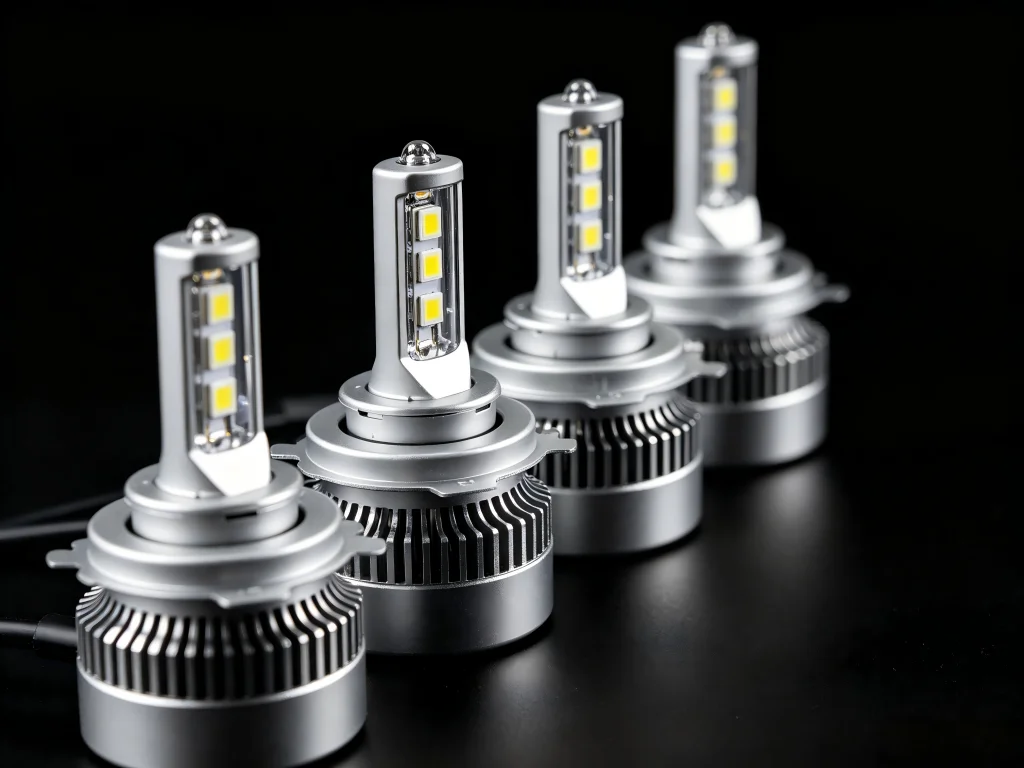
La pesadilla al volante: lo que realmente hacen los bombillos LED H7 baratos a tu auto
Conduces a casa por una carretera oscura. Enciendes las luces de carretera y no pasa nada. O peor aún, tu salpicadero se ilumina como un árbol de Navidad con errores de CANbus. Tu barra de luces LED deja de funcionar. Tus luces de conducción se apagan.
Esto no es hipotético. Un propietario de un Toyota Prado instaló bombillas LED H7 y vio cómo todo su sistema de iluminación auxiliar se apagaba. ¿La solución de su electricista de automóviles? “Volver a poner halógenas”. Un conductor de un Golf GTI informó que su luz de advertencia del salpicadero se quedaba encendida permanentemente tras instalar luces de cruce LED. Un propietario de un Mercedes descubrió que su coche estaba “confundido” por las nuevas bombillas, lo que activaba falsas advertencias de bombilla fundida.
No son incidentes aislados. Son el resultado predecible de comprar bombillas LED H7 que carecen de decodificación CANbus adecuada, gestión térmica y diseño del patrón de haz.
Respuesta directa: ¿Qué hace que los bombillos LED H7 fallen en los vehículos modernos?
Los vehículos modernos utilizan sistemas eléctricos CANbus que monitorizan la resistencia de las bombillas. Las bombillas halógenas consumen mucha potencia (normalmente 55 W). Las bombillas LED consumen mucho menos. Cuando el CANbus detecta esta menor resistencia, asume que la bombilla está fundida y activa un código de error, o corta la alimentación del circuito por completo.
Este es el punto de fallo más común de las bombillas LED H7. Y la mayoría de las marcas económicas no lo solucionan.
Más allá del código de error: tres formas más en que los bombillos LED H7 baratos te fallan
1. Fuga térmica y fallo prematuro. Los chips LED generan calor. Sin una disipación de calor adecuada, ya sea mediante un disipador de alta calidad o un ventilador de refrigeración activo fiable, ese calor degrada los emisores. Un usuario señaló el ruido del ventilador de sus bombillas LED H7 cuando el motor no estaba en marcha. Ese ruido es una señal de advertencia: el ventilador está sufriendo y es probable que el fallo sea inminente. Los diseños sin ventilador de calidad utilizan carcasas totalmente metálicas optimizadas térmicamente con disipadores integrados para eliminar por completo este punto de fallo.
2. Deslumbramiento y patrón de haz deficiente. Los faros de reflector y los faros de proyector tratan la luz de forma diferente. Una bombilla diseñada para uno puede dispersar la luz de forma peligrosa en el otro. Un propietario de un VW Golf GTI informó que tuvo que “bajar las luces debido al deslumbramiento” tras instalar bombillas LED H7. Eso no solo es molesto, sino peligroso para el tráfico que viene en sentido contrario.
3. Problemas de ajuste físico. Algunas bombillas LED H7 son simplemente demasiado voluminosas. Un cliente informó que su bombilla LED “no entra en el casquillo” y necesitó limar la carcasa. Otro descubrió que el collarín giraba tras la instalación, lo que hacía imposible una alineación correcta del haz.
Por qué la computadora de tu vehículo rechaza la mayoría de los bombillos LED H7
Esto es lo que ocurre bajo el capó. El módulo de control de carrocería (BCM) de tu coche realiza una “comprobación en frío” y una “comprobación en caliente” en cada circuito de bombilla. La comprobación en frío mide la resistencia antes de que se encienda la bombilla. La comprobación en caliente monitoriza el consumo de corriente mientras la bombilla está en funcionamiento.
Una bombilla halógena H7 estándar consume unos 55 vatios y presenta un perfil de resistencia específico. La mayoría de las bombillas LED H7 consumen entre 16 y 25 vatios. Esa diferencia hace que el BCM señale una condición de “bombilla fundida”, aunque el LED funcione perfectamente.
Los fabricantes de calidad solucionan esto mediante uno de estos dos métodos:
- Decodificadores CANbus integrados que simulan el perfil de resistencia de una bombilla halógena
- Módulos PWM (modulación por ancho de pulsos) externos que gestionan la señal eléctrica para evitar parpadeos y errores
La diferencia entre un conjunto de luces LED h7 $30 y un conjunto $100+ suele ser exactamente esta: una integración CANbus adecuada frente a una promesa de “plug and play” que no cumple.
Hablando en serio: lo que dicen los conductores sobre las fallas de los bombillos LED H7
Veamos lo que reportan los clientes reales en los principales minoristas:
“El producto es excelente y tal como se describe, muy brillante, mucho mejor que los halógenos originales. Pero, lamentablemente, apareció un error de canbus después de 5 minutos de conducción en un golf mk7.5.”
“Luz brillante y agradable, pero tuve que bajar las luces debido al deslumbramiento. La luz de advertencia de error en el tablero ahora permanece encendida.”
“Funciona bien, muy brillante, pero engaña al merc haciéndole creer que las luces no funcionan.”
“El collarín se mueve en el LED, por lo que gira una vez instalado. Con el módulo adicional… la instalación es muy dolorosa. Los devolví y compré otra marca que fue súper fácil de instalar.”
Estas no son reseñas de marcas sin nombre de mercados internacionales. Son experiencias con productos de marca vendidos a través de los principales minoristas. ¿El hilo conductor? Una ingeniería incompleta que prioriza las especificaciones de brillo por encima de la compatibilidad en el mundo real.
El costo oculto de las afirmaciones de “súper brillo”
Muchas luces LED h7 anuncian recuentos de lúmenes extremos: 20,000 lúmenes, 600% más brillantes que el halógeno. Pero los lúmenes brutos no cuentan toda la historia. Los lúmenes efectivos —la luz que realmente llega a la carretera en un patrón de haz utilizable— son lo que importa.
Las pruebas de la industria muestran que una luz LED H7 de calidad que produce 3,700 lúmenes por bombilla en una carcasa de proyector puede entregar 300% más de intensidad máxima que un halógeno de 55W. La luz LED H7 específica para proyector de Stedi, por ejemplo, logra esto mediante un escudo de corte interno que minimiza la dispersión.
Mientras tanto, una bombilla mal diseñada que anuncia 20,000 lúmenes “brutos” puede dispersar la mitad de esa luz hacia los árboles y los ojos de los conductores que vienen en sentido contrario. No estás obteniendo más luz utilizable, estás obteniendo más luz desperdiciada y más quejas de otros conductores.
Respuesta directa: ¿Cómo elegir bombillos LED H7 que realmente funcionen?
Busque tres cosas: compatibilidad con CANbus integrada o incluida como módulo separado, un patrón de haz diseñado para su tipo específico de faro (reflector vs. proyector) y una gestión térmica que no dependa de un ventilador barato que fallará. La marca también debe ofrecer verificación de compatibilidad específica para el vehículo, no solo afirmaciones de “ajuste universal”.
Esto es lo que debe verificar antes de comprar bombillos LED H7:
- Compatibilidad con CANbus – ¿El kit incluye decodificadores integrados o canceladores de errores externos? Si no es así, espere advertencias en el tablero.
- Diseño del patrón del haz – ¿Está la bombilla diseñada específicamente para alojamientos de reflector o proyector? Un enfoque de talla única rara vez funciona.
- Solución térmica – Los diseños sin ventilador con disipadores de calor integrados eliminan el punto de falla más común. Los ventiladores activos pueden fallar, y cuando lo hacen, el LED se sobrecalienta y muere.
- Dimensiones físicas – ¿Cabe la bombilla en el alojamiento de su faro sin modificaciones? Verifique la profundidad de la base y el tamaño del disipador de calor según las especificaciones de su vehículo.
- Temperatura de color – 5700K-6000K proporciona una luz blanca natural que mejora la visibilidad sin el tinte azul que puede causar fatiga visual.
Por qué los bombillos LED H7 de GTR no tienen estos problemas
Según nuestras pruebas de ingeniería y validación en el mundo real, la diferencia entre las bombillas LED GTR h7 y la competencia se reduce a tres factores críticos:
Patrones de haz diseñados, no iluminación genérica. El kit LED Ultra Series 3 de GTR ofrece un 302% más de intensidad de luz baja que el halógeno estándar en alojamientos de reflector, con lecturas de deslumbramiento cómodamente dentro de los límites seguros para el tráfico que viene en sentido contrario. En alojamientos de proyector, el Ultra 3 logra una mejora del 261% sobre el original. Pruebas independientes clasificaron el GTR Lighting Ultra Two como la bombilla más brillante probada, un increíble 709% más brillante que el original.
Gestión térmica superior. El equipo de ingeniería de GTR utiliza tecnología de chipset TST 7045 personalizada que entrega 4,700 lúmenes brutos a 43 vatios. El diseño térmico garantiza una salida constante sin el ruido del ventilador ni los puntos de falla que afectan a las alternativas más baratas.
Diseñado para vehículos reales, no para condiciones de laboratorio. Cada globo GTR H7 se somete a pruebas de compatibilidad en las principales plataformas de vehículos. ¿El resultado? Instalación plug-and-play sin los errores de CANbus, parpadeo o problemas de ajuste que dominan las reseñas de la competencia.
Una reseña de un cliente lo resume: “Estos son de calidad legítima con un rendimiento de luz sobresaliente. Los he instalado en todos mis vehículos ahora y Auxito [una marca de GTR] es lo real, no basura china barata. El alcance de la luz es perfecto sin deslumbramiento y la temperatura de color es muy blanca”.”
Preguntas frecuentes sobre los bombillos LED H7
P: ¿Funcionarán los globos LED H7 en mi coche sin errores?
R: Solo si incluyen compatibilidad con CANbus. La mayoría de los vehículos modernos (posteriores a 2005) utilizan sistemas CANbus que activarán códigos de error con bombillas LED estándar. Busque bombillas con decodificadores integrados o módulos canceladores de errores incluidos.
P: ¿Cuánto duran los globos LED H7 en comparación con los halógenos?
R: Los globos LED H7 de calidad suelen durar entre 30.000 y 50.000 horas. Las bombillas halógenas duran entre 500 y 1.000 horas. Eso significa que podría reemplazar sus halógenos 30-50 veces antes de necesitar reemplazar un juego LED de calidad.
P: ¿Por qué parpadean mis globos LED H7?
R: El parpadeo casi siempre es un problema de CANbus o PWM (modulación por ancho de pulso). La computadora de su vehículo envía una señal pulsada para verificar el estado de la bombilla, y la menor resistencia del LED hace que parpadee en respuesta. Un decodificador CANbus adecuado o un módulo PWM soluciona esto.
P: ¿Son legales los globos LED H7 para uso en carretera?
R: En Australia, muchos globos LED H7 están marcados como “no aprobados por ADR – solo para uso fuera de carretera”. Siempre verifique el estado de certificación del producto específico para su jurisdicción. Los productos GTR están diseñados para cumplir o superar los estándares aplicables.
P: ¿Cuál es la diferencia entre los globos LED H7 de 5000K y 6000K?
R: 5000K es blanco puro; 6000K tiene un ligero tinte azul. Para máxima visibilidad y mínima fatiga visual, generalmente se prefiere 5000K-5700K. El tinte azul de 6000K+ puede reducir el contraste y hacer que los objetos sean más difíciles de distinguir a distancia.
P: ¿Puedo instalar los globos LED H7 yo mismo?
R: Sí, si la bombilla es una coincidencia de tamaño 1:1 real con el halógeno original. Algunas bombillas son demasiado voluminosas y requieren modificación. La serie CSP Mini de GTR, por ejemplo, está diseñada para una instalación sencilla en carcasas ajustadas.
P: ¿Necesito ajustar mis faros después de instalar los globos LED H7?
R: Sí. Incluso con una ingeniería perfecta del patrón de haz, la diferente posición de la fuente de luz puede requerir un ajuste vertical para evitar el deslumbramiento. Esto es normal y debería tomar minutos con una herramienta básica.
Deja de comprometer tu seguridad al conducir de noche
No actualizaste a los globos LED H7 para lidiar con errores del tablero, luces parpadeantes y un patrón de haz que es peor que tus halógenos antiguos. Actualizaste para ver mejor, conducir más seguro y nunca preocuparte por el reemplazo de bombillas nuevamente.
Los globos LED H7 de GTR ofrecen lo que otras marcas prometen: instalación plug-and-play, funcionamiento sin errores y patrones de haz diseñados para tu tipo específico de faro. Pruebas independientes confirman que están entre las bombillas LED para faros más brillantes y confiables disponibles.
No desperdicies otra noche conduciendo con visibilidad comprometida. No te conformes con bombillas que confunden la computadora de tu auto o dispersan la luz hacia el tráfico que viene en sentido contrario.
Consigue los globos LED H7 que realmente funcionan. Visita https://www.rhgtr.com para encontrar el ajuste correcto para tu vehículo y experimentar la diferencia que marca una ingeniería adecuada.