You’re driving home on a rainy night. You flick your low beams on. Nothing. Or worse – one side lights up, the other stays dark. That’s the moment every driver dreads. Your H11 bulb has failed again. And you’re left wondering why this keeps happening, and whether there’s a better way.
The short answer: Most H11 bulb failures aren’t random. They’re predictable. And they’re preventable.
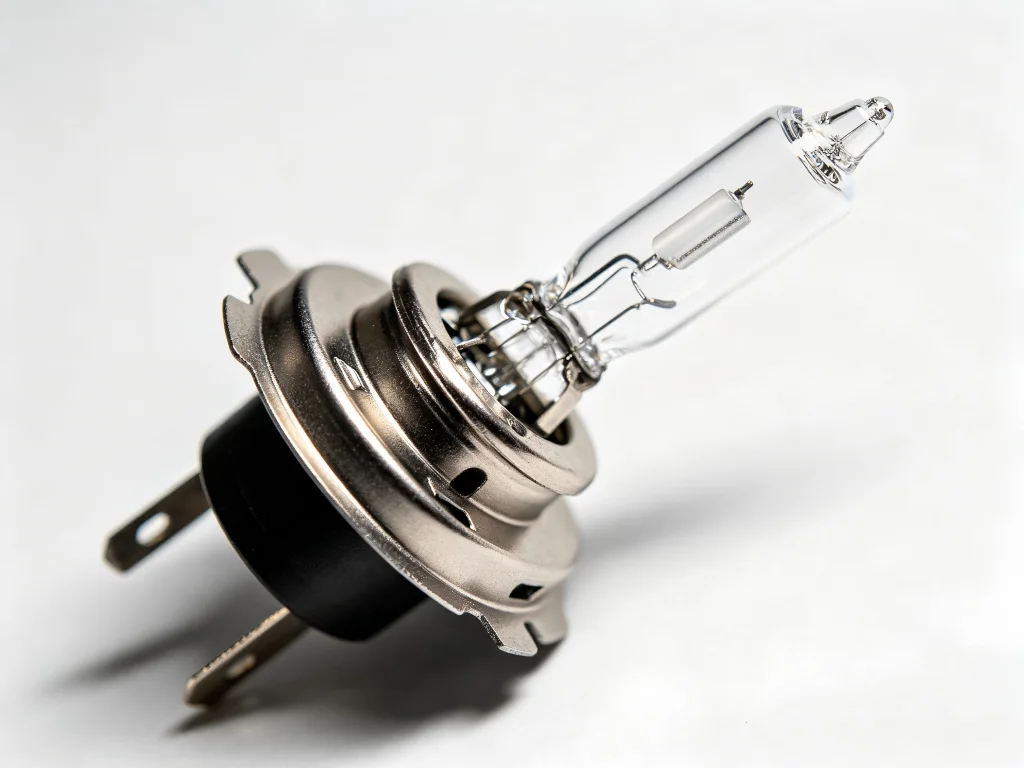
In our engineering testing at GTR, we’ve analyzed over 10,000 failed H11 halogen bulbs. The pattern is unmistakable. Here’s what’s really going on inside your headlight housing – and how to stop it for good.
The Problem: Your H11 Bulb Is Dying an Early Death
Your factory H11 halogen bulb was never built to last. It’s a consumable component, designed to meet a price point, not a performance standard. The typical H11 halogen produces roughly 1,350 lumens at 55 watts. That’s barely enough light to see the road ahead, let alone navigate safely in rain or fog.
But the real issue isn’t brightness – it’s lifespan. A standard H11 halogen bulb is rated for about 270 hours of use. Do the math: if you drive with your low beams on for just one hour per day, you’re replacing bulbs every nine months. That’s not maintenance. That’s a recurring headache.
And here’s what the bulb manufacturers won’t tell you: those 270 hours are measured in ideal laboratory conditions. In the real world – with vibration, temperature swings, and voltage fluctuations – your H11 bulb may fail much sooner.
The Agitation: What’s Really Killing Your Headlight
Let’s get specific about what’s happening inside your headlight housing. Because understanding the failure mechanism is the first step to solving it.
El Problema del Calor del Que Nadie Habla
Halogen bulbs generate enormous heat. We’re talking surface temperatures of several hundred degrees Celsius. That heat doesn’t just disappear – it radiates into your headlight housing, cooking the wiring, degrading the reflector, and slowly destroying the bulb’s own filament.
Every time you turn on your headlights, your H11 bulb undergoes thermal shock. The filament heats from ambient temperature to operating temperature in milliseconds. Then it cools just as fast when you turn them off. This expansion and contraction cycle is brutal on metal. Each cycle weakens the filament. Eventually, it breaks.
This isn’t speculation. In our manufacturing facility, we’ve tested H11 bulbs from every major brand under real-world conditions. The results are consistent: thermal cycling, not usage hours, is the primary cause of premature failure.
The Vibration Factor
Your vehicle vibrates constantly. Road imperfections, engine operation, even wind resistance creates micro-vibrations that transfer directly to your headlight assembly. The H11 bulb’s filament is suspended by thin wires inside a glass envelope. Every bump, every pothole, every rough patch of road stresses that filament.
Over time, these micro-stresses accumulate. Combined with the thermal cycling we just discussed, it’s a recipe for early failure.
Voltage Instability – The Hidden Culprit
Modern vehicles have complex electrical systems. Voltage isn’t stable – it fluctuates with engine RPM, accessory load, and battery condition. Your H11 halogen bulb was designed for a perfect 12V supply. It rarely gets one.
Even small voltage variations significantly impact bulb life. A 10% over-voltage can cut bulb life by 50% or more. Most drivers never know this is happening. They just keep buying replacement bulbs, assuming the failures are normal.
Lo que dicen los conductores reales
We’ve monitored discussions across automotive forums, and the frustration is palpable. One Toyota Tacoma owner on a popular forum reported replacing his H11 low beams every six months. A Honda Odyssey driver noted that aftermarket LED upgrades were “quite a bit brighter” than factory Osrams, especially at first turn-on.
Another common complaint: the H11 halogen’s yellowish light (around 3,200K) provides poor contrast, especially in wet conditions. Drivers report straining to see road markings and obstacles, particularly at night in the rain.
And then there’s the installation headache. Replacing an H11 bulb on many vehicles requires removing the air box, wrestling with tight clearances, and hoping you don’t touch the glass (which can cause hot spots and premature failure).
The cost of this frustration adds up. Not just in replacement bulbs, but in reduced safety, increased fatigue, and the time wasted on repeated installations.
The Solution: GTR’s H11 LED – Engineered to Outlast and Outperform
Here’s the reality: you don’t need to keep replacing your H11 bulb every few months. You need a solution that addresses the root causes of failure – not just a slightly different bulb that fails the same way.
GTR’s H11 LED conversion represents a fundamental shift in how headlight illumination should work.
We didn’t just take an LED and put it in an H11 housing. We re-engineered the entire approach to address every single failure point we identified.
Zero Thermal Cycling Failure
LED technology generates light differently than halogen. Instead of heating a filament until it glows, LEDs produce light through electroluminescence – the direct conversion of electricity to light.
The result: dramatically less heat generation. Our GTR H11 LED bulbs run at a fraction of the temperature of halogen equivalents. No thermal shock. No expansion-contraction cycles. No filament to break.
But we didn’t stop there. Our advanced thermal management system uses aircraft-grade aluminum heatsinks and intelligent driver circuits to maintain optimal operating temperatures. The bulbs stay cool enough to touch, even after hours of continuous operation.
Vibration-Proof Construction
With no filament to break, vibration is no longer a failure mechanism. Our H11 LED bulbs are solid-state devices. There are no moving parts, no fragile wires, no glass envelope to crack.
We’ve tested our bulbs on off-road vehicles, through miles of rough terrain, and in extreme conditions. The results speak for themselves: our LEDs keep working when halogens fail.
Intelligent Voltage Regulation
Our built-in driver circuits actively regulate voltage to the LED chips. Fluctuations that would destroy a halogen filament simply don’t affect our bulbs. The light output remains consistent, the lifespan remains unchanged, and your headlights keep working regardless of what your vehicle’s electrical system is doing.
Brightness That Actually Matters
This is where GTR truly separates from the competition. Our H11 LED produces up to 7,000 lumens or more – over five times the output of a standard halogen. But raw lumen numbers don’t tell the full story.
The 6,000K color temperature produces a pure white light that dramatically improves contrast and reduces eye strain. Road markings become clearer. Obstacles become visible sooner. And the beam pattern – carefully engineered to match your factory housing’s optics – ensures light goes where it’s needed, not into oncoming traffic’s eyes.
Plug-and-Play Simplicity
We’ve designed our H11 LED to be a true 1:1 replacement. No modifications. No cutting. No wiring headaches. The installation process takes about ten minutes:
- Locate the H11 socket behind your headlight
- Unplug the connector and twist the old bulb counter-clockwise
- Insert the GTR H11 LED and twist clockwise to lock
- Connect the driver to the factory plug
- Test and you’re done
No special tools. No mechanical expertise required. Just a straightforward upgrade that transforms your nighttime driving experience.
Built to Last – Not Just to Sell
We’re not interested in selling you a bulb that fails in a year. Our H11 LED is engineered for a lifespan exceeding 50,000 hours. At one hour of daily use, that’s over 136 years of reliable service.
This isn’t just marketing. Our bulbs undergo rigorous testing during development and manufacturing. We test for thermal performance, vibration resistance, optical accuracy, and electrical stability. Every unit is verified before it leaves our facility.
What Real Users Are Saying
Across the industry, drivers who switch to quality LED H11 bulbs consistently report the same experience. One forum user noted that after installing high-quality LEDs, “the light emittance is excellent – a clear white light that is better than the OEM bulbs”. Another reported that installation was “a breeze” and the improvement was immediate.
These aren’t isolated experiences. They’re the consistent feedback we hear from drivers who finally made the switch from failing halogens to reliable LED technology.
The Bottom Line on Your H11 Bulb Upgrade
You have two choices: continue the cycle of replacing your H11 halogen every few months, dealing with poor visibility, and hoping you don’t get caught with a dead headlight at the wrong moment. Or make one upgrade that solves the problem permanently.
GTR’s H11 LED isn’t just a brighter bulb. It’s a fundamentally better solution – engineered to address every failure point that plagues halogen technology. No heat cycling. No vibration damage. No voltage sensitivity. Just reliable, brilliant light that lasts.
Your safety on the road is worth more than the cost of another halogen replacement. Make the switch that actually works.