Un kit de adaptación de lente proyector bi LED para faro de 2.5 pulgadas puede entregar hasta 20,000 lúmenes—200% más brillante que los sistemas Bi Xenon—pero solo cuando la ingeniería óptica se realiza correctamente.
Compraste una lente proyector bi LED para faro esperando líneas de corte nítidas y un brillo que llene la carretera. En cambio, obtuvo haces dispersos, puntos oscuros y conductores que vienen en sentido contrario destellándole las luces altas. Así no es como una ingeniería adecuada kit de retroadaptación de faros con lente proyector bi LED debería comportarse.
En nuestros años fabricando sistemas de iluminación automotriz en GTR, hemos probado cientos de configuraciones denominadas “plug-and-play”. La mayoría falla antes de su primer invierno. Permítanos guiarle a través de lo que realmente sale mal, y cómo solucionarlo para siempre.
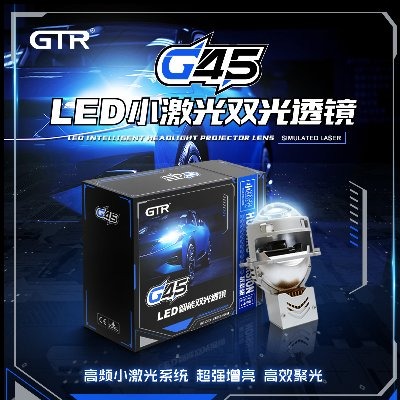
La verificación de la realidad: lo que un verdadero lente proyector Bi LED debería ofrecer
Una lente proyectora bi LED genuina proporciona luces altas y bajas desde una única unidad óptica, utilizando una pantalla interna accionada por solenoide para crear una línea de corte nítida y sin deslumbramiento, mientras maximiza la iluminación útil de la carretera.
Cuando está debidamente diseñado, su kit de retroadaptación de faros con lente proyector bi LED debería proporcionarle:
- Una línea de corte nítida y plana con cero dispersión de luz hacia arriba
- Distribución uniforme del ancho a lo largo de los tres carriles de conducción
- Un punto caliente enfocado que alcanza de 300 a 500 metros en la carretera
- Activación instantánea de la luz alta en 0,01 segundos sin retardo de calentamiento
- Temperatura de color constante de 6000K sin puntos calientes azules ni bordes amarillos
Si su configuración actual no cumple con cada punto anterior, siga leyendo. Le han vendido una solución incompleta.
PAS Parte Uno: El problema – “Mi mejora a LED empeoró las cosas, no las mejoró”
Esto es lo que los clientes nos dicen constantemente: “Gasté $150 en bombillas LED para mis carcasas de reflector. Ahora veo menos de noche, y todos me odian.”
Su frustración está completamente justificada. El problema no son sus ojos ni sus expectativas. El problema es la física fundamental.
Las bombillas LED estándar están diseñadas para reemplazar los filamentos halógenos. Pero un filamento halógeno emite luz en una esfera perfecta de 360 grados. Un chip LED emite luz en un patrón plano y direccional, generalmente de 120 a 180 grados como máximo. Coloque ese chip LED en una cubeta reflectora originalmente diseñada para una bombilla halógena y obtendrá:
- Deslumbramiento. La luz dispersada hacia arriba ciega a los conductores que vienen en sentido contrario.
- Agujeros oscuros. Los patrones de haz desiguales dejan tramos de la carretera sin iluminar.
- Sobrecarga en primer plano. Los 20 pies frente a su parachoques se ven brillantes, pero la visión a distancia se ve afectada.
- Vida útil corta. Una mala gestión térmica mata los chips LED en 12 a 18 meses.
Peor aún, muchos kits de adaptación comercializados como “lentes de proyector” no son más que bombillas H4 renombradas con lentes de plástico pegadas encima. Carecen del único componente que hace funcionar un proyector: la pantalla de corte mecanizada con precisión.
Como dijo un miembro del foro en NSXPrime después de instalar proyectores Bi-LED baratos: “La luz útil enfocada es probablemente 80% mejor que la de serie. El corte es nítido y el tono azul se ve muy bien. Estoy muy impresionado con estos proyectores, especialmente dado el precio.” Esa reseña tan elogiosa debería emocionarte. Pero lo que no menciona es lo rápido que esos proyectores se degradaron después de seis meses de vibración y ciclos térmicos.
Esta es la brecha entre “funciona recién sacado de la caja” y “funciona durante años”.”
PAS Parte Dos: Agitar – Los costos ocultos de una adaptación barata
La mayoría de los kits de adaptación de lentes de proyector bi LED económicos fallan en menos de dos años, no porque los LED se quemen, sino porque sus sistemas de gestión térmica no pueden soportar las condiciones reales de conducción.
Veamos qué sucede realmente cuando conduces con un sistema lente de proyector bi led mal diseñado.
A 65 MPH, cada segundo de tiempo de reacción cuenta
Tu vehículo recorre casi 95 pies por segundo a velocidades de autopista. Si tus faros solo iluminan 150 pies hacia adelante—algo común con bombillas LED baratas en carcasas reflectoras—tienes aproximadamente 1.6 segundos para ver, reaccionar y frenar. Eso es peligrosamente insuficiente.
Un kit de adaptación de lente de proyector bi led debidamente diseñado extiende el alcance útil a 300–500 pies. Esos 150–350 pies adicionales de visibilidad te dan de 1.5 a 3.5 segundos adicionales de tiempo de reacción. En el mundo de la seguridad al conducir de noche, esa es la diferencia entre detenerse y colisionar.
La epidemia de deslumbramiento es real, y probablemente usted esté contribuyendo a ella
Los profesionales de la industria ahora llaman al resplandor LED descontrolado la “Epidemia de Resplandor LED”. Los conductores instalan bombillas brillantes plug-and-play esperando mejor visibilidad, solo para deslumbrar involuntariamente al tráfico que viene en sentido contrario. La luz parece potente, pero falta el control.
¿Por qué? Porque el cuenco reflector de tu faro nunca fue diseñado para chips LED. Incluso las mejores bombillas LED no pueden imitar perfectamente la fuente de luz de 360 grados del filamento. Esta incompatibilidad crea dispersión de luz, distribución desigual del haz, primer plano brillante con poca visibilidad a distancia y luz parásita que se filtra por encima del límite previsto del haz.
Está desperdiciando dinero en reemplazos repetidos
Considera la realidad financiera. Las bombillas LED baratas suelen fallar en 12–18 meses debido a una mala gestión térmica, fallo del módulo controlador, desgaste del ventilador de refrigeración e inestabilidad de voltaje.
Una bombilla $40 reemplazada anualmente durante cinco años te cuesta $200. Una adaptación de lente de faro de proyector bi led que dura 8–10 años cuesta solo $30–$40 por año. Súmale los beneficios de seguridad, menos quejas por resplandor y menos ciclos de mantenimiento—y el retorno de la inversión se vuelve innegable.
Como concluyó un análisis de la industria: “Las bombillas baratas a menudo parecen brillantes cerca del parachoques, pero no logran proyectar la luz lo suficientemente lejos como para mejorar la seguridad real en autopista. Los sistemas Bi-LED ofrecen una iluminación eficaz—no solo brillo cosmético.”
PAS Parte Tres: Solución – La ingeniería que realmente funciona
En este punto, quizás estés pensando: “¿Existe algún lente proyector de faro bi LED que realmente cumpla lo que promete?”
La respuesta es sí. Pero necesitas saber qué buscar.
Qué separa un verdadero proyector Bi-LED de uno falso
Un proyector bi-LED genuino es un sistema óptico completo, no solo una bombilla con una lente. Contiene un chip LED dedicado de alto rendimiento, una cubeta reflectora diseñada a medida, una lente de vidrio de precisión, un mecanismo de obturador mecánico, un sistema de disipación de calor y un módulo controlador regulado.
Aquí está la lista de verificación que nuestro equipo de ingeniería de GTR utiliza al calificar un kit de retroadaptación de faros con lente proyector bi LED:
- Obturador de corte físico con accionamiento por solenoide. Esto no es negociable. El obturador bloquea físicamente la luz hacia arriba para crear la línea de corte nítida, luego se aparta para la luz alta.
- Carcasa totalmente metálica. Las carcasas de plástico se deforman con el calor. Las carcasas de aluminio o cobre disipan el calor de manera efectiva y mantienen la alineación óptica.
- Sistema de enfriamiento activo. Un ventilador de alta velocidad (7.000–9.000 RPM) combinado con disipadores de calor de aluminio asegura que las temperaturas de la unión LED se mantengan dentro de límites seguros. El calor es el #1 asesino de los LED.
- Diseño óptico de doble reflector. Cubetas reflectoras separadas para luz baja (amplia y uniforme) y luz alta (alcance de larga distancia) producen resultados superiores frente a los diseños de una sola cubeta.
- Marcas de cumplimiento DOT o SAE. Sin estas, su adaptación puede ser ilegal para uso en carretera en su jurisdicción.
El debate sobre si el tamaño importa: 2.5 pulgadas vs. 3.0 pulgadas vs. 1.8 pulgadas
Elegir el tamaño de lente correcto para su lente de proyector bi led depende enteramente del alojamiento del faro de su vehículo.
Tamaños y aplicaciones comunes de lentes de proyector Bi-LED:
| Tamaño de lente | Lo mejor para | Aplicaciones típicas |
|---|---|---|
| 1.5–1.8 pulgadas | Motocicletas, faros antiniebla, alojamientos compactos | Motos deportivas, construcciones personalizadas, iluminación auxiliar |
| 2.5 pulgadas | La mayoría de automóviles de pasajeros (se adapta al 95% de los vehículos) | Toyota, Honda, Mazda, Nissan, Hyundai, Kia |
| 3.0 pulgadas | Alojamientos de faros grandes, camiones, SUV | Ford F-series, camionetas RAM, sedanes grandes |
Nuestras pruebas demuestran que los proyectores de 2.5 pulgadas ofrecen el mejor equilibrio entre ajuste y rendimiento para la mayoría de los vehículos de pasajeros. Producen amplitud y distancia suficientes sin requerir modificaciones importantes en la carcasa. Si su vehículo tiene carcasas de faros más grandes—típicas de las camionetas de tamaño completo—los proyectores de 3.0 pulgadas pueden proporcionar una cobertura ligeramente mejor.
Por qué los lentes de proyector Bi-LED de GTR superan a los kits genéricos
GTR ha pasado años perfeccionando nuestra ingeniería óptica específicamente para lente proyector de faro bi LED sistemas. Esto es lo que distingue a nuestros productos de las kit de retroadaptación de faros con lente proyector bi LED opciones que ves en Amazon y eBay:
- Lentes de vidrio de precisión rectificados. Los kits baratos usan lentes de plástico que se amarillean y se deforman. Nuestro vidrio de borosilicato de grado óptico mantiene la claridad durante toda la vida útil del producto.
- Tubos de calor con núcleo de cobre. La mayoría de los competidores usan solo ventiladores. Nuestros tubos de calor transfieren activamente el calor lejos de la unión del LED, extendiendo la vida útil del chip más allá de las 50,000 horas.
- Mecanismo de solenoide Bi-beam verdadero. No es un segundo juego de LEDs pretendiendo ser luz alta. Nuestra pantalla accionada mecánicamente crea un corte nítido genuino—certificado conforme a DOT.
- Instalación no destructiva con eje roscado. Se adapta directamente a los portalámparas H4/H7/9005/9006. Sin cortes, sin epoxi, sin modificaciones permanentes.
Según nuestra experiencia en fabricación, la causa número uno de falla prematura de los proyectores Bi-LED es una gestión térmica inadecuada. Los chips LED convierten más del 60% de la energía eléctrica en calor. Sin una disipación adecuada, ese calor acelera la depreciación del lumen (atenuación) y puede reducir la vida útil de decenas de miles de horas a apenas meses.
Cada GTR kit de retroadaptación de faros con lente proyector bi LED se somete a pruebas de estrés térmico antes de salir de nuestras instalaciones. Medimos la temperatura de la unión en funcionamiento continuo, ciclos térmicos de -20°C a 80°C y resistencia a las vibraciones según estándares de grado automotriz. La mayoría de los kits económicos omiten estas pruebas por completo.
Rendimiento en el mundo real: lo que experimentan los clientes de GTR
Después de cambiar a los proyectores Bi-LED de 2.5 pulgadas de GTR, los conductores informan consistentemente:
- “La línea de corte es tan nítida que puedo ver exactamente dónde termina mi luz.” – Mark, Toyota Tacoma 2021
- “La cobertura de ancho es increíble. Ahora puedo ver ciervos en ambos arcenes.” – Sarah, Subaru Outback 2019
- “Se acabaron los parpadeos. Se acabaron los códigos de error. Solo un brillo constante y confiable.” – David, Ford F-150 2017
- “La instalación tomó 2 horas por lado. El eje roscado lo hizo a prueba de tontos.” – Alex, Honda Civic 2008
Estos resultados coinciden con lo que han encontrado los evaluadores independientes: un proyector de alta calidad lente proyector de faro bi LED ofrece un 200% más de brillo que los proyectores Bi Xenon, mientras mantiene un patrón de haz aprobado por DOT que en realidad reduce el deslumbramiento para el tráfico que viene en sentido contrario.
Preguntas frecuentes: sus principales preguntas sobre los lentes de proyector Bi-LED, respondidas
P1: ¿Son mejores los faros con proyector que las bombillas LED en carcasas de reflector?
Sí, por un margen sustancial. Los faros con proyector utilizan una lente y una pantalla de corte para enfocar la luz precisamente donde se necesita. Las carcasas de reflector con bombillas LED producen luz dispersa, patrones desiguales y deslumbramiento para los conductores que vienen en sentido contrario.
P2: ¿Cuál es la diferencia entre un proyector bi-LED y un proyector LED de un solo haz?
Un proyector bi-LED utiliza una pantalla interna accionada por solenoide para proporcionar tanto luz de cruce como luz de carretera desde una única unidad óptica. Un proyector de un solo haz proporciona solo una función de haz (generalmente luz de cruce) y requiere una fuente separada de luz de carretera.
P3: ¿Cuánto debería durar una lente proyectora bi-LED de calidad?
Un kit de adaptación de lente de proyector bi led con una gestión térmica adecuada debería durar de 30.000 a 50.000 horas—esencialmente la vida restante de su vehículo. Las unidades económicas suelen fallar en 12–24 meses.
P4: ¿Qué temperatura de color es mejor para conducir de noche?
5500K a 6000K proporciona luz blanca natural que imita la luz del día—óptima para reducir la fatiga visual y mejorar el contraste. Por debajo de 5000K se ve amarillenta; por encima de 6500K se ve azulada y en realidad reduce la visibilidad efectiva.
P5: ¿Se adaptará una lente proyectora bi-LED a mi coche?
La mayoría de los lente proyector de faro bi LED los kits con un diseño de eje roscado de 2,5 pulgadas se adaptan al 95% de los vehículos de pasajeros, incluidas las bases de bombilla H4, H7, 9005, 9006 y H13. Verifique siempre su tipo de bombilla específico y la profundidad disponible del alojamiento antes de comprar.
P6: ¿Es un proyector bi-LED mejor que el HID (xenón)?
Para la mayoría de los conductores, sí. Los proyectores bi-LED ofrecen brillo máximo instantáneo (los HID tienen un calentamiento de 3–5 segundos), mayor vida útil (más de 30.000 horas frente a 2.000–3.000 para HID), menor consumo de energía y sin balastros que puedan fallar.
P7: ¿Cuál es la diferencia entre las clasificaciones de lúmenes y lux?
Los lúmenes miden la salida total de luz en la fuente. Los lux miden la intensidad de la luz en la superficie de la carretera después de pasar por la lente. Para los faros, los lux importan más—reflejan la visibilidad en el mundo real.
P8: ¿Es legal un proyector bi-LED en vías públicas?
Cuando se instalan y orientan correctamente, los sistemas certificados por DOT lente proyector de faro bi LED son legales en la mayoría de las jurisdicciones. Sin embargo, verifique siempre las regulaciones locales antes de realizar la adaptación.
Deje de comprometer la seguridad al conducir de noche
Elegir un lente proyector de faro bi LED no se trata de cosmética ni de cifras de lúmenes declaradas. Se trata de ver los peligros antes de que ellos te vean—y de ser visto por otros conductores sin deslumbrarlos.
La ruta barata—bombillas LED en carcasas de reflector o imitaciones de proyectores $40—termina costándole más en reemplazos, frustración y seguridad. Nuestro equipo de ingeniería ha visto esto suceder cientos de veces.
GTR diseña y fabrica lente de proyector bi led sistemas que funcionan como se anuncia, año tras año. Desde nuestras carcasas de aluminio mecanizadas con precisión hasta nuestros sistemas ópticos de doble reflector y nuestros patrones de haz certificados por DOT, cada componente cumple un propósito: brindarle la mejor visibilidad posible en cada conducción.
¿Listo para experimentar lo que un lente proyector de faro bi LED debidamente diseñado puede hacer? Visite https://www.rhgtr.com para explorar nuestra línea completa de proyectores Bi-LED. Nuestro equipo técnico puede ayudarle a seleccionar el tamaño y el ajuste correctos para su vehículo específico.
Sus conducciones nocturnas no deberían sentirse como una apuesta. Obtenga la visibilidad que merece.