You have narrowed it down. You know you want an led light for motorcycle upgrade. The problem is the market is flooded with options that all claim the same things: “600% brighter,” “plug-and-play,” “error-free.” Most of them are lying, or at best, telling a half-truth. After years of manufacturing and testing motorcycle lighting systems, we have watched riders waste hundreds of dollars on upgrades that made their night vision worse. This guide exists to prevent that. Here is how to separate a genuine optical upgrade from a repackaged bulb with a marketing budget.
The First Decision: Drop-In Bulb or Full Assembly?
A drop-in LED bulb costs $30–$80 and reuses your stock reflector. A full LED headlight assembly costs $100–$300 and replaces the entire optical system. The drop-in almost always underperforms because your stock reflector was engineered for a halogen filament, not an LED chip.
This is the fork in the road that determines everything else. Walk into any forum thread about motorcycle LED upgrades and you will find the same pattern: riders who bought a drop-in bulb complaining about scattered light, dark spots, and oncoming traffic flashing their high beams. Riders who bought a complete assembly describing the difference as transformative.
The engineering reason is straightforward. A halogen filament emits light from a tiny, linear point. Your reflector bowl is a precision mirror shaped around that exact point. An LED chip emits from a flat surface that sits millimeters away from where the filament was. That small displacement is enough to break the beam pattern entirely. Light that should project forward scatters upward and sideways .
A full LED assembly solves this because the reflector or projector was designed around the LED source from the beginning. The optics and the light source are a matched pair, not an uneasy compromise.
There is a middle path: projector-style drop-in bulbs with a small lens built into the bulb itself. These can produce a cleaner cutoff than a bare LED board in a reflector housing, but they are still a small lens inside a bowl built for something else. Expect improvement, not transformation .
Decoding the Spec Sheet: What Actually Matters
Ignore raw lumen claims. Look for effective lumens, beam pattern documentation, and sustained wattage. A 4,000-lumen system with precise optics outperforms a 10,000-lumen bulb that scatters light into trees and oncoming windshields.
Lumens vs. Lux vs. Usable Light
Raw lumens measure total light output in all directions. They tell you almost nothing about what reaches the road. Lux measures intensity at a specific point. For motorcycle riding, what matters is how much light lands on the asphalt ahead of you, in the pattern your eyes need, without blinding anyone else .
When a manufacturer only publishes a raw lumen number and a glowing product photo, they are hiding the only metric that matters: beam pattern. Ask for a wall shot. Ask for a road shot. If they cannot provide one, the optical engineering does not exist.
The Color Temperature Trap
6000K–6500K looks modern and white in a garage. On wet asphalt at night, it performs poorly. The blue-rich spectrum reflects off water droplets and creates glare that reduces your own visibility. For real-world riding conditions—rain, fog, wet roads—4300K–5000K provides better contrast and penetration .
Some premium systems offer switchable color temperature. This is not a gimmick. A rider who commutes in dry weather and tours in rain benefits from having both options available.
Thermal Engineering: The Specification Nobody Advertises
LEDs generate intense heat at the chip junction. Unlike a halogen, which radiates heat forward through the glass, an LED dumps heat backward into its base. If that heat is not moved away, the chip degrades. Output drops. Color shifts toward blue. Eventually the light fails .
Look for a copper heat pipe, a die-cast aluminum heatsink with adequate surface area, and a fan with sealed bearings. Fanless designs can work for low-output units, but a high-output motorcycle headlight needs active cooling. The fan is a moving part living in dust and vibration, so quality matters more here than anywhere else on the light.
Comparison Table: Drop-In Bulb vs. Full LED Assembly
| Factor | Drop-In LED Bulb | Full LED Assembly |
|---|---|---|
| Costo típico | $30–$80 | $100–$300 |
| Installation time | 20–30 minutes | 30–60 minutes |
| Beam pattern quality | Unpredictable; depends on stock reflector | Engineered and verified |
| Glare risk to oncoming traffic | High with most reflector housings | Low with proper cutoff |
| Gestión térmica | Compromised by compact housing | Designed for sustained output |
| Compatibilidad con CANbus | Often requires add-on resistors | Native integration available |
| Long-term reliability | Variable; fans and drivers fail | Higher; tested as a system |
| Legal compliance (DOT/ECE) | Gray area in most markets | Documented when applicable |
The Hidden Costs of Cheap LED Upgrades
Budget lighting has a way of extracting payment later. Here is what the $25 eBay special actually costs you.
Fan failure. The cooling fan is the first component to die. It spins in dust, heat, and vibration. When it stops, the chip cooks. Output fades over weeks. One day you flick the switch and nothing happens .
CANbus conflicts. Modern motorcycles monitor current draw. An LED draws a fraction of what the system expects. The bike thinks the bulb is burned out. It throws a warning, cuts power, or triggers a flicker that makes your headlight look like a strobe. On some Kawasaki models, the Reserve Lighting Unit toggles between beams constantly, creating a maddening flicker that no “error-free” marketing claim prevents .
Moisture intrusion. Heat cycling pulls moisture past inadequate seals. Condensation clouds the lens. Water contacts the driver circuit. In severe cases, outgassing from cheap plastics coats the inside of your expensive headlight housing with a film that cannot be removed .
The replacement cycle. A $25 bulb that fails in eight months, replaced by another $25 bulb that fails in ten, costs more than a $150 system that works for five years. The math is simple. The frustration is not.
How to Read a Beam Pattern (The Test Anyone Can Do)
Park your motorcycle on a flat surface, facing a wall, about ten feet back. Turn on the low beam. Look at the shape on the wall.
What you want: A flat, horizontal cutoff line across the top of the beam. Light below the line, darkness above it. The brightest portion of the beam should sit slightly below the cutoff, where the road ahead will be.
What you do not want: A soft, fuzzy cloud with no distinct edge. Light bleeding above the cutoff line. A hot spot directly in front of the tire with darkness beyond it. Any of these mean the beam pattern is broken, regardless of how bright the light appears .
This test takes five minutes and reveals more about a lighting system than any spec sheet. If you are buying a light and cannot perform this test before purchase, demand that the manufacturer show you the result.
What the Long-Distance Riders Know
In our conversations with touring riders and commuters who cover serious mileage, a few themes emerge consistently.
They stop chasing brightness. The riders who log 20,000 kilometers a year do not talk about lumens. They talk about whether they can see the texture of the road surface at 80 km/h. They talk about whether oncoming traffic flashes them. They talk about whether the light still works after two rainy seasons.
They buy once. The most common regret we hear is not “I spent too much.” It is “I wish I had bought the right thing the first time.” The $40 bulb that lasted six months was not a savings. It was a tuition payment.
They notice the cutoff. A proper cutoff line is not just about being polite to other drivers. It is about putting light where your eyes need it. When light scatters above the cutoff, it is wasted. It illuminates signs, trees, and oncoming windshields instead of the road surface where hazards live.
Preguntas frecuentes
Can I put an LED bulb in my stock motorcycle headlight housing?
Physically, yes, if the base matches (H4, H7, HS1). Optically, the result depends entirely on whether the LED chip sits at the exact focal point your reflector was designed for. Most do not. If you insist on a drop-in, choose one with an adjustable chip position and verify the beam pattern against a wall before riding .
Are full LED headlight assemblies street legal?
Legality varies by jurisdiction. In the United States, a DOT marking on the lens indicates compliance. In Europe, look for ECE approval. Many drop-in LED bulbs occupy a gray area because they are not certified in the housing they are installed in. A full assembly that carries the appropriate marking is the safer legal choice .
Why does my LED headlight flicker or trigger a dashboard warning?
Your motorcycle’s CANbus system expects a certain current draw from the headlight. An LED draws far less. The system interprets this as a failed bulb. Solutions include a CANbus-compatible driver built into the light, or an add-on resistor module. The built-in solution is preferable because it generates less heat and takes up less space .
How long should a quality motorcycle LED headlight last?
A well-engineered system with proper thermal management should deliver 5,000–10,000 hours of usable output. Cheap units with inadequate cooling often fail within 500–1,000 hours. The difference is almost entirely in the heatsink and fan design, not the LED chip itself .
Do I need auxiliary lights if I upgrade my headlight?
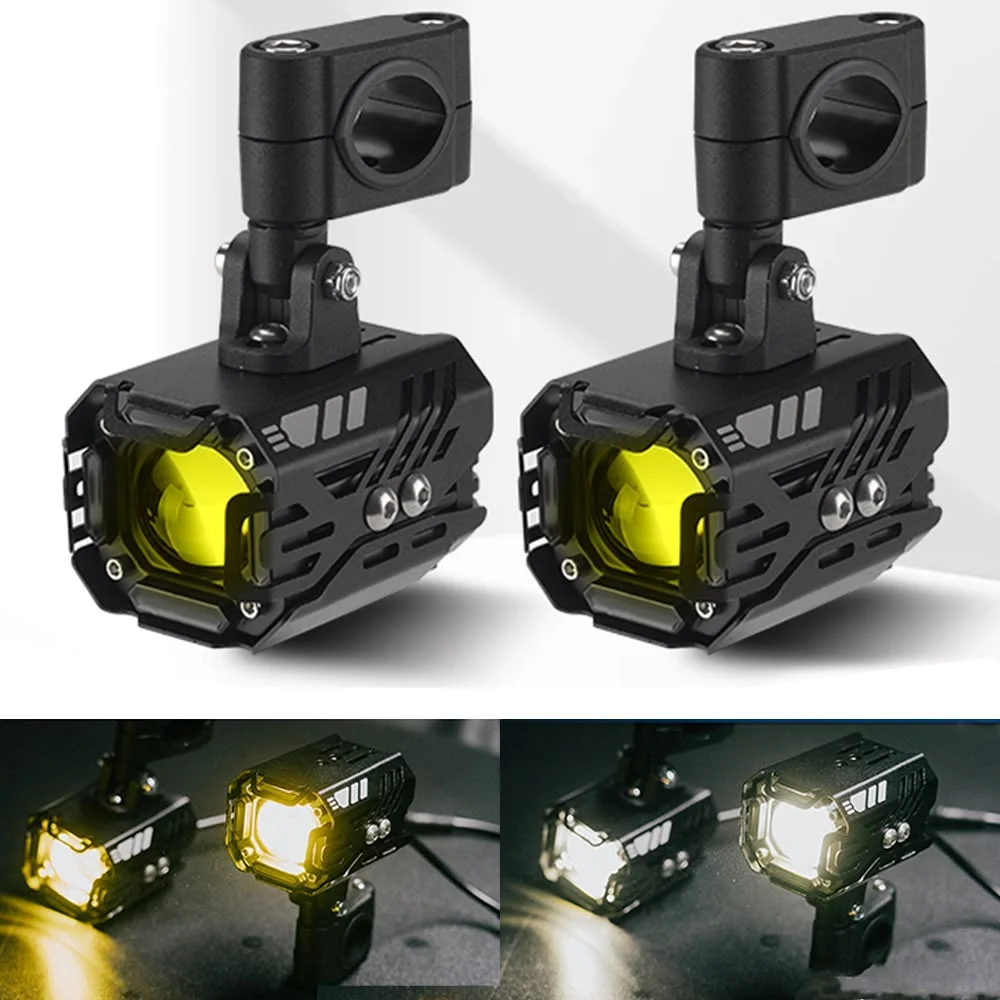
For highway riding, a good headlight is sufficient. For adventure riding, rural night riding, or any situation where you need to see the edges of the road, auxiliary lights fill in the peripheral gaps that even a good headlight misses. They also increase your conspicuity to other drivers during daylight .
What is the ideal color temperature for a motorcycle headlight?
4300K–5000K offers the best balance of contrast and weather penetration. 6000K provides a modern white look with sharp contrast on dry roads but performs worse in rain and fog. Anything above 6500K looks blue and compromises real-world visibility .
Why GTR Exists in This Conversation
We started GTR because we were tired of the same cycle: rider buys cheap light, rider is disappointed, rider buys another cheap light, rider gives up and assumes LED technology is overhyped. The technology is not the problem. The engineering is.
Every GTR motorcycle lighting system is built around a single principle: the light source and the optic must be designed together. We do not sell a universal bulb and hope your reflector cooperates. We do not publish lumen numbers without beam pattern documentation. We do not ship a product until it has survived thermal soak, vibration testing, and real-world road evaluation.
For riders in hot, humid climates—Southeast Asia, the southern United States, coastal regions—our cooling systems are overbuilt on purpose. A fan that survives a mild European summer is not the same fan that survives Manila traffic in April. We build for the conditions our customers actually ride in, not the conditions that make a spec sheet look good.
Buy Once. See the Road. Stop Thinking About Your Headlight.
The best lighting upgrade is the one you install and then forget about. It works every night. It does not flicker. It does not blind anyone. It does not die in a year. It just puts light on the road, exactly where you need it, for as long as you own the bike.
Browse the full GTR motorcycle lighting range at https://www.rhgtr.com. Every product page includes beam pattern documentation, fitment guidance, and honest specifications. If you are unsure which system matches your motorcycle, our team answers technical questions with engineering answers, not sales scripts.
Your next night ride deserves better than a gamble. Choose the light that was built for the road, not the shelf.