Conducir a través de niebla, lluvia intensa, salpicaduras de la carretera o nieve puede convertir una carretera familiar en una pared de incertidumbre. Una lámpara antiniebla LED bien diseñada podría mejorar la visibilidad de campo cercano, reducir la fatiga visual y ayudar a los conductores a identificar los bordes de los carriles y los peligros de la carretera antes. Pero el brillo por sí solo no resuelve el problema. El control del haz, la temperatura de color, la estabilidad térmica y el ajuste correcto importan igualmente.
Ahí es donde muchos conductores cometen el error en la actualización. Reemplazan una bombilla halógena débil con el LED de mayor lúmenes que puedan encontrar, solo para descubrir deslumbramiento, luz dispersa, errores en el tablero, mal rendimiento en clima húmedo o falla prematura del LED.
El objetivo real no es crear más luz. Es poner luz útil donde el conductor la necesita.
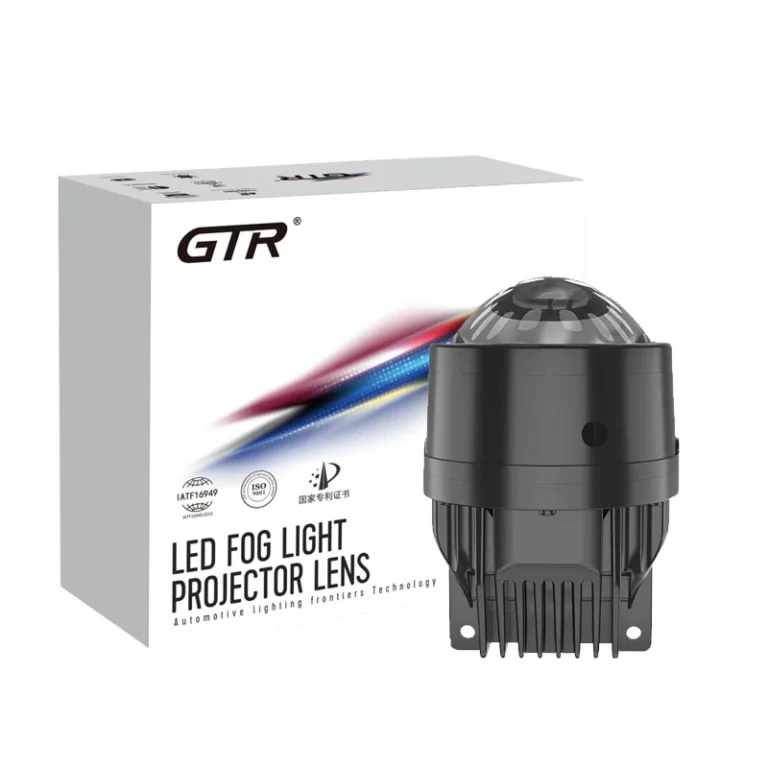
Por qué sus faros antiniebla de fábrica pueden sentirse casi inútiles
Una lámpara antiniebla débil generalmente falla por una de tres razones: baja salida útil, mala distribución del haz o componentes envejecidos. Una bombilla de luz antiniebla LED de calidad puede mejorar la visibilidad, pero solo cuando la posición del LED, la compatibilidad con la carcasa, el control de calor y el patrón del haz trabajan juntos como un sistema óptico completo.
Imagina una situación común.
Estás conduciendo a casa por una carretera mojada de dos carriles. No hay farolas. La niebla comienza a formarse sobre el pavimento. Tus faros reflejan la luz hacia ti, mientras que tus luces antiniebla de fábrica añaden poco más que un brillo pálido cerca del parachoques.
Reduces la velocidad porque el borde del carril se vuelve difícil de leer.
Aquí es exactamente donde una luz antiniebla LED para coche bien diseñada puede marcar una diferencia significativa.
Las luces antiniebla están montadas bajas por una razón. Su trabajo es iluminar la carretera inmediatamente delante y hacia los lados sin enviar luz excesiva hacia arriba. Cuando el patrón óptico está controlado, el conductor recibe una iluminación útil en primer plano en lugar de una nube brillante de deslumbramiento reflejado.
Problema: Más lúmenes no siempre significan mejor visibilidad
Los listados en línea a menudo compiten con números.
10,000 lúmenes. 20,000 lúmenes. 30,000 lúmenes.
Esas cifras se ven impresionantes en una página de producto. No te dicen automáticamente cuánta luz útil llega a la carretera.
Un LED puede generar una salida bruta fuerte mientras produce un haz deficiente dentro de un reflector existente. Si los chips LED están en la posición incorrecta en relación con el punto focal del reflector, la carcasa puede dispersar esa luz.
El resultado podría ser un punto caliente brillante en primer plano, deslumbramiento excesivo y menos visión de distancia útil.
En nuestras pruebas de ingeniería, prestamos mucha atención a la relación entre la posición del emisor LED y el área focal óptica original. Pequeñas diferencias en la colocación de los chips pueden cambiar el patrón proyectado más de lo que los compradores esperan.
El peligro oculto de una mala actualización de faros antiniebla LED
Una bombilla antiniebla LED mal adaptada puede parecer más brillante mientras empeora la visibilidad real de conducción. El brillo excesivo en primer plano puede reducir la percepción de distancia, la luz dispersa hacia arriba puede crear deslumbramiento en la niebla, y una gestión térmica inestable podría causar que la salida caiga después de que la bombilla alcance la temperatura de funcionamiento.
Esto crea un ciclo frustrante.
El conductor ve una diferencia dramática inmediatamente después de la instalación y asume que la mejora funciona. Después de diez o veinte minutos, sin embargo, el calor se acumula alrededor de los chips LED.
Un diseño térmico deficiente puede reducir la potencia para proteger los componentes electrónicos.
El brillo disminuye.
Ahora la salida operativa real es muy diferente de la salida anunciada en frío.
Por eso los compradores serios deberían evaluar una bombilla LED antiniebla como un sistema térmico y óptico en lugar de una simple bombilla electrónica.
El calor es el enemigo que no puedes ver
Los LED producen menos calor radiante que las bombillas de filamento tradicionales, pero sus uniones semiconductoras aún generan calor. Ese calor debe alejarse del chip LED.
Una ruta térmica típica se ve así:
Chip LED → PCB → interfaz térmica → estructura de aluminio o cobre → disipador de calor → aire circundante.
Si algún punto se convierte en un cuello de botella, la temperatura de la unión aumenta. Una temperatura de operación más alta podría reducir la estabilidad de la salida y acortar la vida útil del componente.
Por eso un reemplazo compacto de bombilla LED antiniebla aún necesita una estructura de enfriamiento cuidadosamente diseñada.
Faros antiniebla LED blancos vs. amarillos: ¿Cuál resuelve mejor el problema?
Las luces antiniebla LED blancas generalmente proporcionan una apariencia moderna y un fuerte contraste visual en carreteras despejadas, mientras que la luz amarilla selectiva o amarillo cálido puede sentirse más cómoda en niebla, lluvia y nieve. La mejor elección depende del clima, el entorno de conducción, el diseño de la carcasa y las prioridades de visibilidad del conductor.
| Factor | Luz antiniebla LED blanca | Luz antiniebla LED amarilla |
|---|---|---|
| Rango de color típico | 5000K–6500K | 2700K–3500K |
| Apariencia | Blanco limpio y moderno | Tono amarillo cálido / ámbar |
| Carreteras nocturnas despejadas | Muy buena claridad visual | Buena |
| Niebla / Lluvia intensa | Depende en gran medida del control del haz | A menudo más cómodo para la vista |
| Contraste de señales de tráfico | Fuerte | De moderado a fuerte |
| Mejor comprador | Mejora general para calle y estilo | Conductor frecuente en mal tiempo |
No seleccione la temperatura de color por sí sola.
Un haz controlado de 6000K podría superar a una bombilla amarilla mal diseñada. Asimismo, un LED amarillo eficiente en una carcasa compatible puede proporcionar un excelente confort en mal tiempo.
La óptica es lo primero. El color es lo segundo.
Cómo elegir una bombilla de faro antiniebla LED que realmente funcione
Antes de comprar, siga el siguiente proceso:
- Confirme el tamaño original de la bombilla. Consulte el manual del propietario, la marca de la bombilla existente o una base de datos confiable de ajuste de vehículos.
- Inspeccione el conector y las pestañas de bloqueo. Las bombillas de aspecto similar no siempre son intercambiables.
- Verifique el espacio libre trasero disponible. Los disipadores de calor y ventiladores grandes pueden interferir con cubiertas, revestimientos o componentes circundantes.
- Evalúe la posición del chip LED. El emisor debe coincidir estrechamente con la posición óptica esperada por el alojamiento original.
- Verifique el diseño térmico. La salida estable después de una operación prolongada importa más que un número espectacular al inicio.
- Verifique la compatibilidad eléctrica. Algunos vehículos pueden requerir electrónica compatible con CANBUS o componentes adicionales.
- Verifique las regulaciones locales. La legalidad de la adaptación de LED varía según el mercado y la aplicación.
Para principios generales de iluminación automotriz, los compradores pueden consultar SAE International y las regulaciones locales aplicables de iluminación de vehículos antes de modificar vehículos de carretera.
H11, H8 y otras bombillas de faros antiniebla: No adivine
Las búsquedas de led fog light bulb h11 y led fog light bulb h8 son comunes porque estas familias de bombillas aparecen en muchos vehículos.
Sin embargo, los compradores no deben asumir que cada producto H8, H9, H11 o H16 es universalmente intercambiable.
El conector puede verse similar, pero los requisitos de vataje, la geometría de bloqueo, la profundidad del alojamiento, el monitoreo eléctrico y la configuración del vehículo pueden diferir.
Esto se vuelve aún más importante para los distribuidores.
Un mayorista no sufre por una bombilla incorrecta. Un error de ajuste puede crear cientos de devoluciones.
Para la compra B2B, el mapeo de aplicaciones debe tratarse como parte de la calidad del producto.
¿Qué pasa con una Ford F-150 2019?
La frase bombilla de luz antiniebla LED 2019 ford f150 ilustra por qué la verificación de ajuste es importante.
Muchas referencias de ajuste del mercado de accesorios listan una aplicación tipo 9140/H10 para ciertas configuraciones de luz antiniebla del Ford F-150 2019 en lugar de H11. El equipo de fábrica también puede variar según el nivel de acabado y el paquete de iluminación.
Nunca compre una H11 solo porque otro propietario de un F-150 usó una.
Verifique primero la configuración real del vehículo.
Los autos y las motocicletas necesitan un pensamiento diferente
Lámpara antiniebla LED para autos
Una lámpara antiniebla de automóvil generalmente funciona dentro de un sistema óptico y eléctrico más grande. La geometría de la carcasa, la posición del parachoques, el monitoreo CANBUS, la impermeabilización y la consistencia del haz izquierdo-derecho pueden afectar el resultado final.
Una buena bombilla de luz antiniebla LED para automóvil por lo tanto, necesita más que una alta salida.
Necesita una integración predecible.
Lámpara antiniebla LED para motos
A lámpara antiniebla LED para bicicleta se enfrenta a otro desafío: la vibración.
Las motocicletas pueden exponer las luces auxiliares a vibración continua, agua, polvo, calor y residuos directos de la carretera. Las dimensiones compactas también limitan el espacio de refrigeración.
Al evaluar una bombilla de luz LED antiniebla para moto, considere:
- Construcción resistente a la vibración
- Protección contra agua y polvo
- Soportes estables o puntos de montaje
- Baja carga eléctrica
- Dirección controlada del haz
- Disipación de calor compacta
- Conectores resistentes a la intemperie
Por qué las bombillas LED antiniebla baratas a menudo decepcionan después de la instalación
Los primeros diez segundos pueden vender una bombilla LED.
Los siguientes seis meses revelan si fue diseñada correctamente.
Los problemas comunes que vemos en el mercado de accesorios incluyen parpadeo, interferencia de radio, controladores inestables, intrusión de humedad, discrepancia de color entre bombillas, disipadores de calor sobredimensionados, conectores débiles y degradación térmica.
Para conductores individuales, eso significa otro reemplazo.
Para los distribuidores, significa reclamaciones de garantía, reseñas negativas, costos de servicio al cliente y daño a la reputación de la marca.
Por eso los compradores profesionales tienden a mirar más allá del precio unitario.
Cómo GTR aborda la iluminación antiniebla LED
En GTR, nuestro enfoque comienza con la aplicación en lugar de una cifra de lúmenes de marketing.
Basados en nuestros años de experiencia en la fabricación de iluminación automotriz, creemos que cuatro factores deben trabajar juntos: control óptico, estabilidad térmica, confiabilidad eléctrica y ajuste práctico.
Para distribuidores, mayoristas, cadenas de retroadaptación y marcas de iluminación automotriz, la consistencia se vuelve aún más importante que el rendimiento de una sola muestra.
Los lotes de producción necesitan un color LED estable. Los conectores necesitan tolerancias confiables. Los controladores necesitan un comportamiento eléctrico consistente. El empaque y la información de aplicación deben reducir errores de ajuste.
GTR también puede apoyar a clientes B2B que requieren selección de productos, configuraciones específicas del mercado, marca, empaque y cooperación OEM/ODM.
Preguntas frecuentes: Preguntas sobre lámparas antiniebla LED
¿Las bombillas LED son buenas para los faros antiniebla?
Sí, una bombilla LED correctamente emparejada puede funcionar bien en un alojamiento de luz antiniebla compatible. El patrón de haz, la gestión térmica, la temperatura de color y los requisitos legales deben considerarse antes de la actualización.
¿Es mejor amarillo o blanco para la niebla?
La luz amarilla o cálida puede sentirse más cómoda en niebla densa y lluvia, mientras que los LED blancos proporcionan una apariencia limpia y una visibilidad general fuerte. El control del haz sigue siendo más importante que el color solo.
¿Puedo reemplazar mi bombilla halógena antiniebla por LED?
A menudo sí, pero la compatibilidad debe verificarse. Confirme el tipo de casquillo, el espacio del alojamiento, el sistema eléctrico, el rendimiento del haz y las regulaciones viales locales.
¿Son iguales las bombillas LED antiniebla H8 y H11?
Pertenecen a una familia de bombillas estrechamente relacionada y algunos productos LED admiten múltiples aplicaciones. Sin embargo, los compradores deben verificar la bombilla original, el conector, la geometría de bloqueo, los requisitos de energía y la información de ajuste del fabricante.
¿Por qué parpadea mi bombilla LED antiniebla?
El parpadeo puede provenir del monitoreo de bombillas del vehículo, controladores LED incompatibles, malas conexiones eléctricas o comportamiento del voltaje. Algunos vehículos pueden requerir una solución CANBUS compatible.
¿Por qué mis luces antiniebla LED se volvieron más tenues después de conducir?
La protección térmica puede reducir la potencia del LED cuando las temperaturas internas aumentan. Una buena ingeniería térmica ayuda a mantener una salida más estable durante la operación prolongada.
¿Puedo instalar yo mismo una bombilla de luz antiniebla LED?
Muchas bombillas de reemplazo están diseñadas para una instalación simple. Sin embargo, el acceso puede variar según el vehículo. Algunos autos requieren acceso al guardabarros o al parachoques, por lo que la instalación profesional puede ser más práctica.
¿Cuánto tiempo debería durar una luz antiniebla LED?
La vida útil depende de la calidad del LED, la electrónica del controlador, la temperatura de funcionamiento, el sellado, la vibración y el uso. Trate con cautela las afirmaciones de vida útil extremadamente altas anunciadas, a menos que estén respaldadas por pruebas térmicas realistas.
No esperes a la próxima tormenta para encontrar tu luz más débil
Una mejora de las luces antiniebla debería ofrecerle más que un parachoques más brillante. Debe proporcionar una iluminación controlada, un rendimiento estable, un montaje fiable y confianza cuando el clima se vuelve adverso.
Si usted es un distribuidor, mayorista de iluminación automotriz, cadena de retrofit o marca de posventa que busca una lámpara antiniebla LED solución más fiable, GTR puede ayudarle a construir la combinación de productos adecuada para su mercado.
Explore las soluciones de iluminación automotriz GTR en GTR Automotive Lighting y analizar sus tipos de bombillas, vehículos objetivo, requisitos de rendimiento, embalaje y necesidades OEM/ODM antes de su próximo pedido al por mayor.
Una mejor iluminación antiniebla comienza antes de que llegue la niebla. Construya una solución de iluminación en la que sus clientes confíen cuando la visibilidad sea lo más importante.