You bought an HID kit expecting brilliant white light. Instead, you got flickering, radio static, or bulbs that fire up once and never again. If that sounds familiar, you are not alone. In our engineering testing, we see the same failure patterns repeat across nearly every aftermarket HID lighting system.
The problem is almost never the bulb itself. It is the ballast, El wiring, o las voltage delivery from your vehicle. This guide explains exactly why HID lighting fails and how to fix it properly.
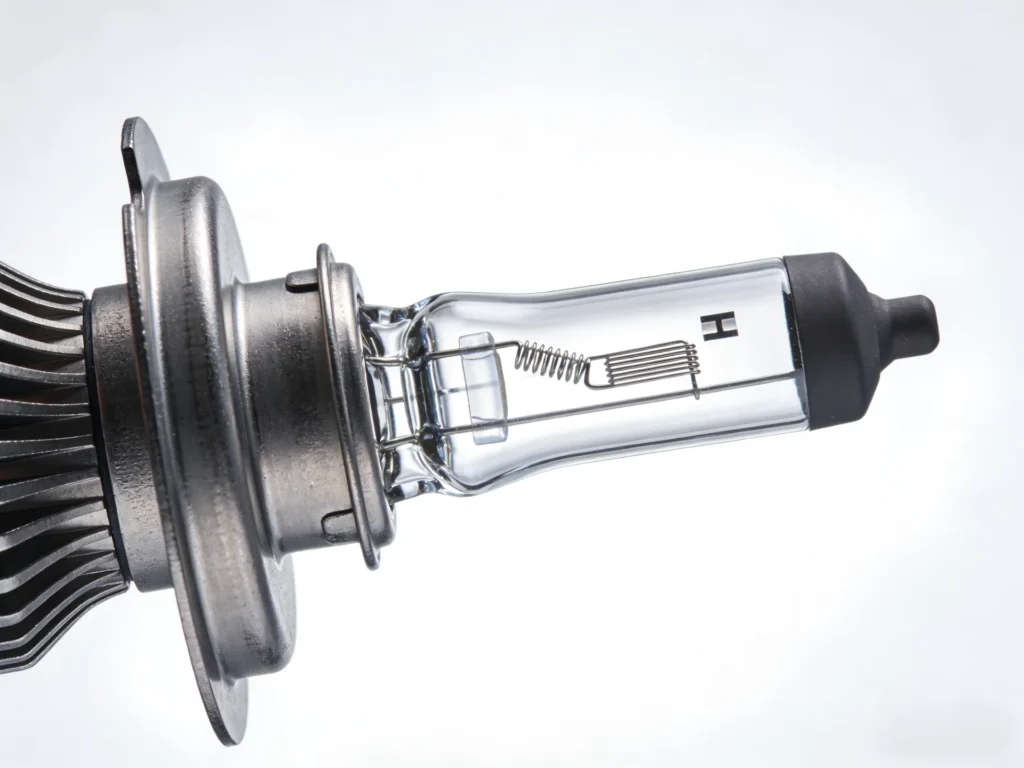
Why Your HID Lighting Flickers (And Why It Keeps Getting Worse)
HID lighting flickers because the ballast cannot maintain a stable arc when the input voltage fluctuates, a condition common in modern vehicles that use Pulse Width Modulation (PWM) to control headlight circuits.
Here is what happens inside your vehicle. Modern cars, especially from 2010 onward, do not send simple 12-volt power to the headlights. They send rapid on-off pulses to control brightness and extend bulb life. A halogen filament handles this fine because it has thermal inertia — it stays hot between pulses. An HID arc does not. The arc extinguishes during the off-cycle and reignites during the on-cycle. That is the flicker you see.
Most cheap HID kits ignore this reality entirely. The included ballast expects smooth DC power. When it gets pulsed voltage instead, it oscillates between trying to fire the arc and shutting down. Over weeks and months, this cycling destroys the ballast capacitors and eventually the bulb itself. You replace the bulb. The new one flickers too. The cycle continues.
The Hidden Cost of Cheap Ballasts
A ballast is not a simple transformer. It is an electronic control system that must perform three distinct jobs: strike the initial arc (requiring thousands of volts), regulate current during warm-up, and maintain steady output during operation. Cheap ballasts cut corners on the strike circuit and the filtering stage. They work for a few weeks. Then the capacitors degrade, and the flickering begins.
The aftermarket is flooded with $30 “complete HID kits.” If you calculate what is actually inside them, the ballast alone should cost more than that. Something has been left out. Usually, it is the pulse-width modulation filtering and the thermal protection.
Why Your HID System Takes So Long to Restart (Or Won’t Restart At All)
HID bulbs require a cool-down period of 10 to 20 minutes before they can restrike, and cheap igniters often fail to generate sufficient voltage after the initial warm-up cycle.
This is one of the most misunderstood aspects of HID lighting. A hot HID lamp has internal gas pressure far higher than when it is cold. That pressure makes the arc harder to strike. The ballast must generate significantly higher voltage to reignite a hot bulb than a cold one. Ventilation inside the housing matters enormously here. A tightly sealed projector housing traps heat and extends the restrike delay.
But here is where quality separates from junk. A properly designed igniter generates consistent high-voltage pulses regardless of temperature. A cheap igniter may fire reliably when cold and fail completely when hot. You drive into a tunnel, the lights briefly cut, and then you are sitting in the dark waiting for a restart that never comes.
The Radio Static Problem Nobody Warns You About
HID ballasts operate at high frequencies. Without proper electromagnetic shielding, they broadcast that interference directly into your vehicle’s electrical system. The result is AM radio static, sometimes FM interference, and occasionally erratic behavior from other electronic modules.
Shielded ballast housings and filtered input stages solve this. Unshielded plastic ballasts create it. When you see a bare circuit board through a clear plastic case, expect interference.
What Actually Fixes HID Lighting Reliability
The solution is not another bulb. The solution is a complete system designed for real-world voltage conditions.
1. PWM Filtering (The Flicker Killer)
A PWM module sits between your vehicle’s wiring and the HID ballast. It absorbs the pulsed voltage and outputs smooth, stable current. GTR’s anti-flicker modules use a capacitor-based smoothing circuit inside a die-cast aluminum housing. The difference is not subtle. Either the flicker stops, or it does not.
2. Ballast Quality (The Longevity Factor)
A quality HID ballast uses:
- Potting compound to protect against moisture and vibration
- High-grade capacitors rated for automotive temperature ranges
- Proper electromagnetic shielding to prevent radio interference
- Consistent igniter output for hot restrike reliability
In our manufacturing testing, we run ballasts through 500+ hot-restrike cycles and thermal cycling from -40°F to 221°F. Most budget ballasts fail within the first 100 cycles.
3. Proper Wiring and Connections
Stock halogen wiring was never designed for HID current draw. It works. But it works the way a bicycle works for highway commuting. It gets you there, barely, and everything wears out faster. A relay harness draws power directly from the battery and uses the factory signal only as a trigger. This eliminates voltage drop and protects your vehicle’s factory wiring.
The GTR Difference: Engineering for Real Vehicles
GTR was founded by engineers who were tired of replacing cheap HID kits every six months. Our approach is different: we build ballasts and modules that account for the electrical reality of modern vehicles.
Our PWM modules are fully potted in die-cast aluminum. The connections are over-molded and corrosion-resistant. The braided mesh insulation protects wiring from heat and abrasion. These are not cosmetic features. They are the difference between a lighting upgrade that lasts years and one that lasts months.
We test every batch in-house. Not just for light output. For flicker resistance. For hot restrike reliability. For electromagnetic interference. For thermal performance under sustained load.
Preguntas frecuentes
Why does my HID light flicker only when the engine is running?
Engine running produces variable voltage (13.5V to 14.5V) and introduces alternator ripple. A quality ballast with a wide input range and filtering handles this. A cheap one does not. The flicker is your ballast reacting to voltage fluctuation it was not designed to manage.
Can I install HID bulbs in my factory halogen housing?
You can physically install them, but the beam pattern will be wrong. Halogen reflectors focus light from a filament point source. HID arcs emit from a different geometry. The result is scattered light and glare for oncoming drivers. This is unsafe and illegal in many jurisdictions.
How long should HID bulbs actually last?
Quality HID bulbs are rated for 2,000 to 3,000 hours. Cheap bulbs may last 500 hours or less. But bulb life is meaningless if the ballast fails first, which is the more common failure point in low-quality systems.
What is the difference between D3S and D2S bulbs?
D3S bulbs contain mercury-free chemistry and use a different base connector. D2S bulbs contain mercury. Both produce comparable light output. D3S is the newer standard and is required in many current vehicles.
Do I need a relay harness with my HID kit?
In most cases, yes. The relay harness protects your factory wiring from the higher current draw of HID ballasts and ensures stable voltage delivery. Without one, you risk damaging your vehicle’s electrical system and experiencing inconsistent performance.
Stop Replacing. Start Fixing.
Every time you buy another cheap HID kit, you are paying for the same failure. The flicker returns. The ballast dies. The cycle repeats.
The real fix is a properly engineered system: PWM filtering, quality ballast, correct wiring. That is exactly what GTR builds.
Visite https://www.rhgtr.com to see the difference between a lighting upgrade and a lighting solution. Your vehicle deserves the right one.