Su La bombilla HID fue una vez un cambio de juego: nítida, brillante e inspiradora de confianza en carreteras oscuras. Pero últimamente, algo ha cambiado. El haz se ve más débil. El color pasó de blanco puro a un tono rosado inquietante. Tal vez un lado parpadea al encender, o peor, no logra encenderse por completo. Si esto te suena familiar, no estás solo. Y el problema es más urgente de lo que crees.
No lo notaste hasta que casi era demasiado tarde
Esto es lo que pasa con las bombillas HID: no fallan como las bombillas halógenas. Un filamento halógeno se quema de repente: un momento tienes luz, al siguiente no. Las bombillas HID se degradan gradualmente. El arco dentro de la cápsula llena de xenón pierde intensidad con el tiempo, pero la disminución es tan lenta que tus ojos se adaptan a la salida decreciente. No te das cuenta de lo pobre que se ha vuelto tu visibilidad hasta que estás al volante de un coche de préstamo con faros nuevos.
Imagina esto: son las 2 AM en una carretera rural. La lluvia cae más fuerte de lo que pronosticaron. Tu bombilla HID para coche ha perdido casi el 40% de su salida de lúmenes original, pero no lo has notado porque la disminución ocurrió durante 18 meses. Un ciervo se acerca al arcén. Captas el destello de sus ojos una fracción de segundo más tarde de lo que lo habrías hecho con bombillas nuevas. Esa fracción de segundo es la diferencia entre frenar a tiempo y una colisión.
Esto no es alarmismo. Es física.
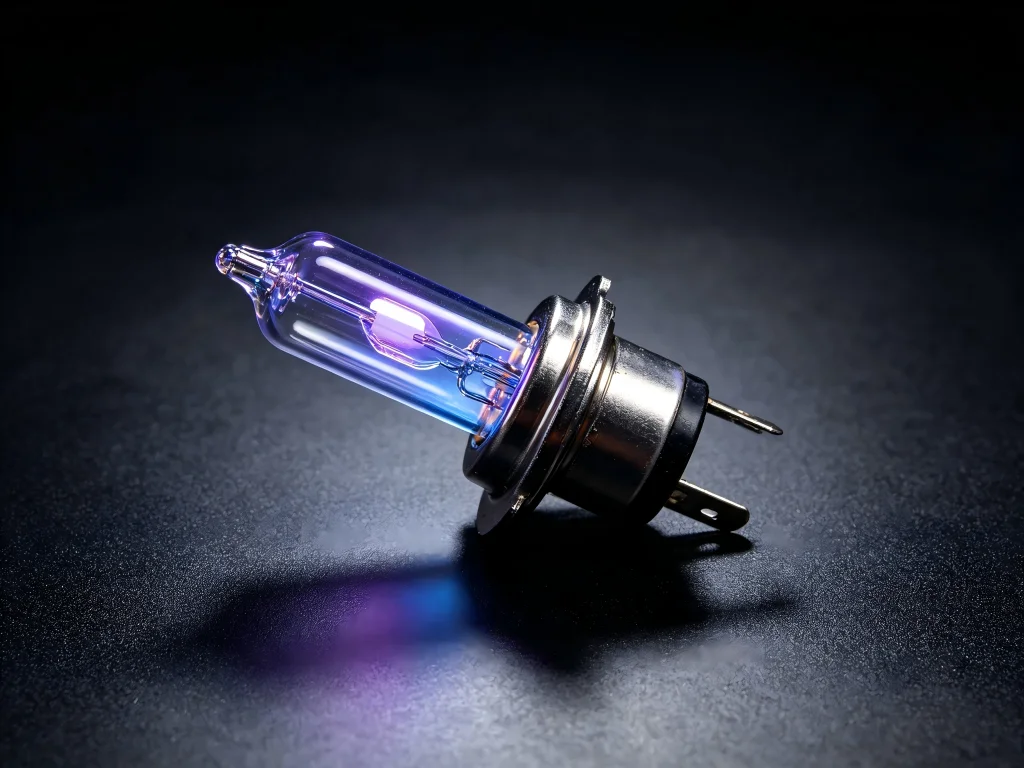
Las bombillas HID producen luz mediante un arco eléctrico entre dos electrodos dentro de una cápsula de cuarzo llena de gas xenón y sales metálicas. Con el tiempo, los electrodos se erosionan. Las sales se agotan. El arco se vuelve inestable. ¿El resultado? Parpadeo, cambio de color (de blanco a rosa o púrpura) y una caída gradual pero significativa en la salida de luz útil.
Los datos son contundentes: una bombilla HID de fábrica al 75% de su vida útil nominal puede producir menos de la mitad de la iluminación vial útil que una nueva. Sin embargo, tu tablero no muestra ninguna luz de advertencia. Tu vehículo pasa la inspección. Y sigues conduciendo, noche tras noche, con visión comprometida.
Por qué los reemplazos baratos lo empeoran todo
La mayoría de los conductores responden a las bombillas HID que se atenúan comprando el reemplazo más barato que encuentran en línea. Eso es un error que cuesta más que dinero.
Las bombillas HID de baja calidad generalmente usan balastos de CC (corriente continua) y cápsulas de arco mal alineadas. La geometría del punto de arco no coincide con lo que fue diseñada tu carcasa de proyector. El resultado es luz dispersa que:
- Crea puntos calientes peligrosos que no iluminan la carretera de manera uniforme
- Produce deslumbramiento que ciega a los conductores que vienen en sentido contrario
- No alcanza el brillo completo o parpadea durante el funcionamiento
- Se quema prematuramente—a veces en cuestión de meses
Una publicación en un foro que encontramos captura la frustración perfectamente: “Compré un par de D2S baratos en Amazon. Uno parpadeó desde el primer día. El otro murió en tres semanas. El vendedor desapareció. Ahora estoy haciendo el trabajo dos veces y pagando más a largo plazo.” Esta es una historia que escuchamos repetidamente, y es totalmente evitable.
Luego está el dolor de cabeza de la instalación. Los sistemas Xenon HID operan a aproximadamente 85 voltios durante el funcionamiento normal y requieren hasta 23,000 voltios para encenderse. Manejar una bombilla barata con un conector suelto o un aislamiento deficiente no es solo inconveniente: es un peligro legítimo de descarga eléctrica.
La solución GTR: bombillas HID diseñadas según estándares OEM+
Aquí es donde GTR entra en escena. Basados en años de experiencia en fabricación de iluminación automotriz, hemos construido nuestros La bombilla HID reemplazos para abordar cada punto de falla que las bombillas baratas tienen mal.
Tecnología AC real para máxima vida útil
Los sistemas HID de equipo original utilizan balastros de corriente alterna (CA). La CA distribuye la carga eléctrica de manera uniforme entre ambos electrodos, extendiendo significativamente la vida útil de la bombilla. Muchos kits de posventa reducen costos usando balastros de corriente continua (CC), que erosionan un electrodo más rápido, acortando drásticamente la vida útil de la bombilla. Cada GTR La bombilla HID está diseñado para funcionamiento con CA, igualando o superando las especificaciones del OEM.
Cápsulas de arco alineadas por láser para un patrón de haz perfecto
El patrón de haz no se trata solo de brillo, sino de hacia dónde va la luz. Si la cápsula de arco dentro de la bombilla está incluso ligeramente inclinada en relación con la base, la salida de luz se dispersa. Las bombillas GTR cuentan con cápsulas alineadas individualmente con láser y bases de cerámica que resisten la deformación por calor. El resultado es un haz ajustado y enfocado que ilumina la carretera exactamente donde la necesitas, no los árboles, no los ojos de los conductores que vienen en sentido contrario.
Temperatura de color de precisión: 4300K a 6000K
La temperatura de color importa más que la estética. Las sales de haluro dentro de la cápsula HID determinan el color de la luz. GTR ofrece múltiples clasificaciones Kelvin, incluyendo:
- 4300K – Blanco puro de especificación OEM, óptimo para visibilidad en todo tipo de clima
- 5000K – Blanco nítido con un toque de luz diurna, excelente reproducción cromática
- 6000K – Blanco hielo, nuestro más popular para máxima claridad
Una idea errónea común es que un Kelvin más alto equivale a una luz más brillante. No es así. La salida de luz (lúmenes) en realidad disminuye a medida que se superan los 6000K. Las bombillas GTR ofrecen lúmenes utilizables máximos a la temperatura de color que elijas, no solo un color bonito que sacrifica la visibilidad.
Construidas para durar: más de 2,500 horas de rendimiento fiable
Las bombillas HID suelen durar de 2,000 a 3,000 horas, aproximadamente cinco años de conducción promedio. Las bombillas GTR están diseñadas para cumplir o superar esa vida útil, con un riguroso control de calidad en cada etapa de producción. A diferencia de las bombillas halógenas que se queman después de 400 a 1,000 horas, una bombilla HID de calidad de GTR ofrece años de iluminación constante y confiable.
Conductores reales, resultados reales
“Reemplacé mis bombillas D2S de fábrica con GTR 5000K. La diferencia fue inmediata. El haz es más amplio, el corte es más nítido, y realmente puedo ver los bordes de la carretera en autopistas sin iluminación. No me di cuenta de cuánto se habían degradado mis bombillas viejas hasta que vi las nuevas.” — Mark T., Colorado
“Tuve un problema de parpadeo durante meses. Probé dos marcas baratas diferentes. Nada funcionó. Finalmente instalé bombillas GTR y el parpadeo desapareció inmediatamente. Debería haber hecho esto desde el principio.” — Sarah L., Texas
Estos no son testimonios seleccionados. Reflejan lo que escuchamos consistentemente de clientes que hicieron el cambio de bombillas de oferta a GTR.
Tu lista de verificación para reemplazar bombillas HID
Antes de ordenar, esto es lo que necesitas saber:
- Identifica tu tipo de bombilla – D1S, D2S, D3S, D4S, u otra variante. Consulta el manual del propietario o usa nuestro buscador de bombillas. Las bombillas D1 y D3 tienen encendedores integrados en la base; las D2 y D4 dependen de encendedores externos.
- Iguala la temperatura de color – Si reemplazas una bombilla, iguala la clasificación Kelvin de la bombilla existente para evitar iluminación desigual.
- Reemplaza en pares – Incluso si solo falló un lado, reemplaza ambas. Las bombillas envejecidas tienen diferentes niveles de salida, y un par desigual compromete la visibilidad.
- Manipula con cuidado – Nunca toques el vidrio con los dedos desnudos. Los aceites de la piel crean puntos calientes que acortan la vida de la bombilla.
No esperes hasta que no puedas ver
Las bombillas HID que se atenúan no son solo una molestia: son un peligro para la seguridad que se agrava con cada milla que conduces. El declive gradual engaña a tu cerebro para que acepte una iluminación inadecuada como “normal”. Pero lo normal no es suficiente cuando navegas por carreteras sin iluminación, lluvia intensa o vida silvestre impredecible.
GTR La bombilla HID Los reemplazos están disponibles en todos los tamaños principales de la serie D, con tecnología de CA de ingeniería de precisión, cápsulas alineadas por láser y temperaturas de color de 4300K a 6000K. Cada bombilla está respaldada por un riguroso control de calidad y un compromiso con el rendimiento que iguala o supera los estándares del equipo original.
Su visibilidad no es negociable. No se conforme con imitaciones baratas que fallan cuando más las necesita.
Explore la línea completa de bombillas HID GTR en https://www.rhgtr.com y recupere la confianza de conducción nocturna que merece. Reemplace sus bombillas hoy mismo, antes de que la carretera le recuerde por qué la visibilidad es importante.