You’re cruising down a dark two-lane highway. The only thing between you and the deer standing in the middle of the road is a pair of halogen bulbs that barely reach 100 feet. You lean forward, squinting, gripping the wheel a little tighter. This is not how driving should feel.
If you’re searching for the best LED headlights, you already know something is wrong. The factory halogens on your car or truck were adequate when they rolled off the assembly line. But after a few years of use — and compared to what modern LED technology can deliver — they feel dangerously inadequate.
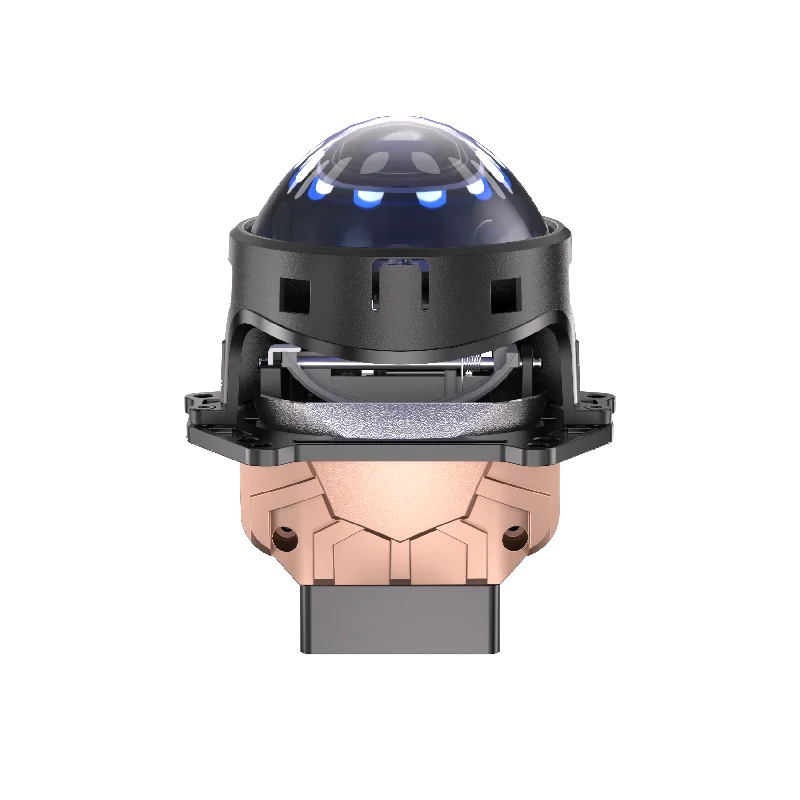
This guide is not another affiliate-driven listicle. Based on our engineering testing and years of manufacturing expertise in automotive lighting, we are going to walk you through exactly why your current headlights are failing you, what makes a proper LED upgrade actually work, and why the GTR Lighting Ultra 3 represents the best LED headlights solution for drivers who refuse to compromise on safety.
The Problem: Your Halogen Headlights Are a Liability
Factory halogen bulbs output roughly 1,000 to 1,500 lumens on low beam — and that light degrades by up to 30% over the bulb’s lifetime. That means the headlights you trusted when your car was new are now casting a dim, yellowish glow that barely illuminates the road ahead.
Here is what that looks like in real-world driving:
- You cannot see obstacles — debris, animals, pedestrians — until you are already on top of them
- Rain or fog turns your headlights into a reflective haze rather than a useful tool
- Oncoming traffic with modern LED headlights temporarily blinds you, leaving you guessing about the road ahead
- Highway driving at 65 mph means you are covering 95 feet per second — your halogens give you maybe two seconds of reaction time
This is not hyperbole. A halogen bulb’s light output diminishes gradually, so you may not even notice you are driving with compromised visibility until something goes wrong. The problem compounds in older vehicles where the lens has yellowed or the reflector has degraded.
And here is the kicker: most drivers do not realize that the “brightness” they see from their headlights is not just about lumens. It is about where that light lands.
The Beam Pattern Deception
Your headlight housing — whether projector or reflector — was engineered around the exact position of a halogen filament. The filament is a tiny, specific point of light. When you drop in an LED bulb that places its light source even a few millimeters off that position, the entire beam pattern breaks down.
The result? Light scatters everywhere except where you need it. You get glare that blinds oncoming drivers, dark spots in your field of vision, and a false sense of security because the light looks “bright” when you glance at the headlights from outside.
This is why so many drivers upgrade to LEDs and feel disappointed — or worse, get flashed constantly by other drivers.
The Agitation: What Cheap LED “Upgrades” Actually Cost You
Walk into any auto parts store or browse Amazon, and you will find LED headlight kits for $30, $40, or $50. The listings scream about “50,000 lumens” and “800% brighter.” They have thousands of reviews. They look like a bargain.
They are not a bargain. They are a gamble with your safety.
Here is what actually happens with cheap LED headlights:
- Thermal throttling — The bulb runs hot. Really hot. Without proper thermal management, the LED chip dims itself to prevent failure. That “50,000-lumen” bulb might deliver 15,000 lumens for the first five minutes, then drop to 8,000 as it heats up. You are not getting what you paid for.
- Fallo prematuro — Cheap bulbs use cheap components. The driver circuitry fails. The fan seizes. The LED itself burns out. We have seen $15 kits die in six months. Meanwhile, a quality LED headlight should last 50,000 hours or more.
- CANbus nightmares — Modern vehicles monitor their lighting circuits. Install an LED bulb that draws less power than a halogen, and your car thinks the bulb is burned out. You get dashboard error messages, flickering, or the light simply refuses to turn on. Cheap kits may not include CANbus resistors, leaving you stranded with a “solution” that does not work.
- Glare and legal issues — Poor beam patterns are not just annoying to other drivers. In many regions, they can fail vehicle inspections or attract fines. More importantly, they make the road less safe for everyone.
One Reddit user put it bluntly after installing a no-name Amazon kit: “The light was bright, but it scattered everywhere. I could see the trees on the side of the road clearly, but the pavement in front of me was a mess of dark spots. I returned them after one night.”
Another forum member described their experience with cheap LEDs: “They flickered constantly. The fan noise was audible inside the cabin. After two weeks, one of them just died. I wasted my time and money.”
These stories are everywhere. And they all share the same root cause: treating LED headlights as a commodity rather than an engineered system.
The Cost of Doing It Wrong
Let us add this up. You buy a $40 kit. It flickers, so you buy a $20 CANbus resistor kit. The beam pattern is still wrong, so you buy a $50 pair of bulbs from a different brand. You have now spent $110 — more than a quality kit would have cost — and you still have subpar headlights.
Meanwhile, you have been driving for weeks or months with compromised visibility. What is that worth? What is a near-miss with a deer worth? What is the peace of mind of actually seeing the road worth?
This is the real cost of cheap LED headlights. It is not the purchase price. It is the safety you sacrificed while trying to save a few dollars.
The Solution: What Actually Makes the Best LED Headlights
The best LED headlights solve four problems simultaneously: they match the halogen filament position exactly, they manage heat effectively, they work with your vehicle’s electronics, and they deliver consistent, usable light output.
After testing dozens of LED headlight kits across projector and reflector housings — in everything from sedans to heavy-duty trucks — one name consistently rises to the top: GTR Lighting Ultra 3.
Why the GTR Lighting Ultra 3 Is Different
The GTR Lighting Ultra 3 uses a proprietary custom TST 7045 chip that employs thermal separation technology. This places the LED die on a separate thermal plane from the driver circuit. The result: the bulb runs cooler than competitors drawing the same wattage. Cooler operation means consistent brightness. No thermal throttling. No dimming after five minutes of use.
The numbers back this up. The Ultra 3 delivers 4,700 raw lumens en 5750K color temperature, drawing 43 watts of power. In real-world testing, the Ultra 3 recorded 3,960 max lux in a Honda Civic reflector housing — that is 742% brighter than stock halogen. The bulb also retains 87% of its initial brightness after a typical 27-minute drive.
But raw numbers tell only part of the story. What matters is where that light goes.
Beam Pattern Precision
The Ultra 3’s chip placement is engineered to match the halogen filament position with 1:1 precision. In projector housings, this delivers a razor-sharp cutoff line. In reflector housings, it provides even light distribution without dark spots or excessive glare.
One forum user who installed the Ultra 3 in their vehicle noted: “The color is fantastic — more reflective on road stripes than other LEDs I have used. Beam width is broader than the Morimoto. Cannot find any dark spots in the lighting.”
Another driver reported: “The cutoff is razor sharp and I have not had anyone flashing their lights back.”
This is what the best LED headlights deliver: visibility without apology and without annoyance to other drivers.
Built for Real-World Conditions
The Ultra 3 operates across a 9-40V DC voltage range, making it compatible with virtually any 12V or 24V vehicle electrical system. It includes built-in CANbus compatibility, eliminating the flickering and error messages that plague cheaper kits.
Whether you drive a Jeep Wrangler JK, JL, or TJ; a 2012 Honda Civic; a Ram 1500; a Toyota FJ Cruiser; or a Land Rover Defender, the Ultra 3 is available in the correct bulb size — H11, 9005, 9006, H4, H13, and more — to match your vehicle.
And unlike the $40 Amazon specials, the Ultra 3 comes with real engineering behind it. This is not a rebranded generic bulb. It is purpose-built by a company that has been in automotive lighting for over a decade.
Frequently Asked Questions About the Best LED Headlights
What is the most important factor when choosing LED headlights?
Beam pattern accuracy matters more than raw lumens. The best LED headlights replicate the halogen filament position exactly. If the light source is misaligned, even the brightest bulb will perform poorly and create dangerous glare.
Are all LED headlights plug-and-play?
No. Many vehicles require CANbus compatibility to prevent error messages and flickering. Quality kits like the GTR Ultra 3 include built-in CANbus compatibility. Always verify your vehicle’s electrical system requirements before purchasing.
What color temperature is best for LED headlights?
Most experts recommend 5000K to 6000K for a clean white light that improves visibility without excessive blue tint. The GTR Ultra 3 operates at 5750K — pure white that enhances contrast without looking ricer-blue or scattering excessively in fog and rain.
How long should quality LED headlights last?
Premium LED headlights typically last 30,000 to 50,000 hours. That is the entire life of the vehicle for most drivers. Cheap bulbs may fail in six months.
Will LED headlights blind oncoming traffic?
Properly designed LED headlights with accurate beam patterns will not blind other drivers. Poorly designed bulbs or incorrect installations will. The GTR Ultra 3’s 1:1 filament positioning ensures the beam stays where it belongs — on the road, not in other drivers’ eyes.
¿Puedo instalar faros LED yo mismo?
Most LED headlight upgrades are designed for DIY installation. However, proper alignment is critical. Even the best LED headlights will perform poorly if aimed incorrectly. Follow the manufacturer’s instructions carefully, and consider professional installation if you are unsure.
¿Funcionan los faros LED en clima frío?
Yes. LEDs perform well in cold conditions. In fact, they generate less heat than halogens, which can be an advantage in preventing ice buildup — though some premium housings include heating elements for extreme conditions.
Stop Compromising on Visibility
You have read the reviews. You have seen the glowing (pun intended) recommendations. You know that the best LED headlights are not the cheapest ones — they are the ones that actually work.
The GTR Lighting Ultra 3 is not the cheapest LED headlight kit on the market. It is not even the second cheapest. But it is the one that delivers what every driver actually wants: consistent, reliable, powerful illumination that makes night driving feel safe again.
Do not waste time and money on bulbs that flicker, dim, scatter light, or die after six months. Do not drive another night squinting at the road, hoping you see the deer before it sees you.
Visite https://www.rhgtr.com to find the right GTR Lighting Ultra 3 fitment for your vehicle. Your night driving should be confident, not anxious. Make the upgrade that actually works.