You installed new LED headlights expecting better vision. Instead, you got blinding glare, a flickering dashboard, and light that feels bright up close but leaves the road ahead dangerously dark. This happens more often than manufacturers admit. In our engineering tests across hundreds of vehicle platforms, the root cause is almost never the bulb itself—it’s a fundamental mismatch between what your car expects and what aftermarket LEDs deliver. Here’s what’s actually going wrong and how a properly engineered bi functional LED headlight solves all of it.
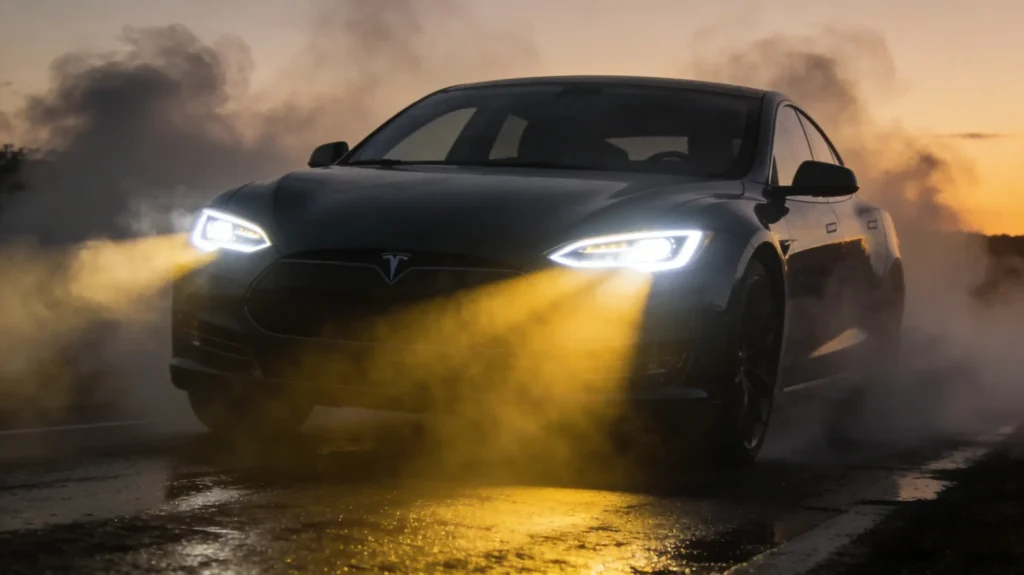
The 2 AM Reality Check: Three Problems You Shouldn’t Have to Live With
Most drivers discover the hard way that not all LED upgrades are created equal. Here’s what real owners report after installing budget kits.
1. Blinding Oncoming Traffic (And Getting Flashed Constantly)
By far the most dangerous and common complaint about aftermarket LEDs is uncontrolled glare that blinds other drivers. Modern headlight housings are designed around halogen filaments that sit at a precise focal point. Drop an LED chip into that same housing, and the light scatters unpredictably—excessive glare for oncoming traffic, overly bright light close to the car, and dark spots further down the road. One driver on a Subaru forum described the nightmare: “The more I research, the more I come across people running into issues with LED replacement bulbs blowing up CAN Bus, BIU, and other electrical system acronyms”.
2. Flickering Lights and Dashboard Warning Errors
Modern vehicles use a CAN bus system to monitor electrical components. Halogen bulbs draw predictable current—typically around 55W. LEDs consume far less power. This difference confuses the vehicle’s monitoring system, triggering intermittent flickering, “bulb out” warnings, or headlights turning off unexpectedly. The flickering isn’t a defect in your car—it’s a compatibility issue caused by the LED kit not properly communicating with your vehicle’s computer.
3. Heat Damage That Melts Housings and Kills Bulbs in Months
There’s a dangerous myth that LEDs don’t get hot. They do—just differently. Halogens radiate heat forward; LEDs concentrate heat at the base, near the chip and driver electronics. Budget kits with undersized heat sinks or cheap cooling fans trap heat inside the housing. Over time, this causes rapid brightness loss, fan failure, melted plastic housings, and complete bulb failure within months rather than the 30,000+ hours promised.
Why Cheap “Plug-and-Play” Kits Keep Failing You
Understanding what separates a reliable bi functional LED headlight from a frustration machine comes down to three engineering fundamentals most budget kits get wrong.
Beam Pattern Engineering: Why “Bright” Isn’t the Same as “Usable”
A cheap LED bulb may claim 20,000 lumens, but if the light scatters instead of focusing, you won’t see farther—you’ll just blind oncoming traffic. A quality bi functional LED projector lens produces an extremely wide beam with a razor-sharp cutoff line that keeps light on the road and out of other drivers’ eyes, plus a bright, focused hotspot for distance visibility. The difference isn’t subtle: a bad beam pattern has blotchy distribution, a blurry cutoff, and dark spots where hazards hide.
In the real world, one owner of Oracle Lighting’s bi-LED projector noted: “This light looks really nice on the JK, its easy to install. Very bright halo and very bright projection led on the road, way better than the factory Halogen or Amazon no-brand headlights… the beam cutoff is very strong so you can notice it move”. That sharp cutoff is the signature of proper optical engineering.
| Feature | Poor Beam Pattern | Quality Bi-LED Pattern |
|---|---|---|
| Cutoff Line | Blurry, scattered, wavy | Razor-sharp and flat |
| Width | Narrow, tunnel-like | Very wide, edge to edge |
| Distribution | Blotchy with dark spots | Smooth and even |
| Hotspot | Weak, diffuse, or misplaced | Bright and well-defined |
Thermal Management: The Silent Killer of LED Headlights
Quality bi-LED systems use active cooling with properly engineered heat sinks and thermal separation. GTR’s Ultra 3, for instance, features custom TST 7045 chips with thermal separation technology that places the LED die on a separate thermal plane from the driver circuit—running cooler than competitors drawing the same wattage. Budget kits? They rely on passive aluminum fins that can’t handle continuous use. “Poor thermal design can cause rapid brightness loss, cooling fan failure, electronic driver damage, and complete bulb failure within months,” notes industry research.
CAN Bus Compatibility: Why Your Car Thinks the Bulb Is “Out”
When you swap LEDs into a modern vehicle, the CAN bus system checks bulb resistance. LEDs draw too little current, so the computer flashes warnings or pulses the lights—a phenomenon called hyper-flashing. Properly engineered kits include built-in CAN bus decoders or error-canceling modules that simulate halogen load and filter diagnostic pulses, eliminating flicker without requiring external resistors that just convert electricity into heat. External load resistors are a problematic workaround at best—they get dangerously hot and don’t address the root cause.
What Real Drivers Are Saying (The Honest Feedback No Marketing Team Will Show You)
Across forums like SubaruForester.org and TundraSolutions.com, a clear pattern emerges. One Tundra owner installed a bi-LED kit and immediately lost fog lamp function, writing: “Fog lamps functioned properly until the LED headlights were installed… I just reinstalled the old halogen lamps and the fog lamps popped right on”. Another Forester owner warned: “People running into issues with LED replacement bulbs blowing up CAN Bus, BIU, and other electrical system acronyms”.
These aren’t isolated incidents. They’re the predictable result of plugging LEDs into systems designed for halogens without proper engineering consideration.
How GTR’s Bi Functional LED Headlight Solves Every Problem Above
After years of manufacturing automotive LED lighting since 2009, GTR Lighting has engineered solutions that address the three core failure points of aftermarket LEDs—optics, electronics, and thermal management. Based in Atlanta, GA, GTR has built a 4.7-star reputation across nearly 300 reviews by refusing to compromise on these fundamentals.
Beam Pattern That Won’t Blind Anyone—But Will Light Up the Road
GTR’s bi-LED projectors produce an extremely wide, well-distributed beam pattern with a sharp cutoff line, ensuring safe low-beam operation without oncoming glare. Independent testing by BulbFacts confirmed: “The Ultra 3s produced a clean, focused beam with sharp cutoff lines and excellent width. There was minimal scatter, and the hotspot was strong without being blinding”. Glare readings measured at 380 lux—comfortably within safe limits for oncoming drivers. Low beams reached 1498 lux (a 302% increase over standard halogen), and high beams peaked at 2456 lux (up 180%).
Advanced Thermal Management That Actually Works
GTR’s thermal separation technology keeps LED chips cool even under continuous operation. The custom TST 7045 chip places the LED die on a separate thermal plane from the driver circuit—engineered to run cooler than competitors drawing the same wattage. Across the board, GTR products are between 2-5 times as bright as OEM headlights, but brightness doesn’t come at the cost of reliability.
True Plug-and-Play with CAN Bus Compatibility
GTR bi-LED systems are engineered with built-in CAN bus decoders, eliminating the need for external load resistors that create heat and fail prematurely. The Carbide Series headlights feature factory mounting points and connections for a completely plug-and-play installation experience—same fitment, no unnecessary panel gaps, and no dashboard warning lights. All Carbide Series headlights are DOT-compliant and come with a 2-year warranty backed by GTR’s Atlanta-based support team.
How to Identify a Quality Bi Functional LED Headlight: A Buyer’s Checklist
Before you spend money on another disappointing upgrade, verify these five engineering criteria.
- Check for a sharp cutoff line in beam pattern photos — not just marketing claims, but actual wall-beam images showing clean horizontal cutoff without glare scatter.
- Verify CAN bus compatibility for your specific vehicle make and model — what works on a Ford may fail on a Mercedes due to PWM differences.
- Look for active thermal management — copper heat sinks and thermal separation technology, not passive aluminum fins.
- Confirm DOT/SAE compliance — legal certification ensures the beam pattern meets federal safety standards.
- Demand a warranty from a US-based support team — if something fails, you need someone who answers the phone.
Frequently Asked Questions About Bi Functional LED Headlights
Q: Are bi functional LED headlights legal for road use?
Yes, when they are DOT-compliant and properly aimed. All GTR Carbide Series headlights meet DOT, SAE, and FMVSS108 standards, ensuring legal operation on US roads.
Q: Will bi-LED headlights work with my factory wiring?
Most quality bi-LED systems are designed for plug-and-play installation using factory connections. GTR products, for example, are engineered to work with OEM wiring configurations without modification.
Q: Why do my LED headlights flicker after installation?
Flickering almost always indicates a CAN bus compatibility issue. The vehicle’s computer sends diagnostic pulses that LEDs misinterpret. Built-in decoders or error-canceling modules resolve this by simulating the electrical load of halogen bulbs.
Q: How long should quality bi-LED headlights last?
High-quality LED projector lenses typically last 30,000 to 50,000 hours, far exceeding halogen (500-1,000 hours) and xenon (2,000-5,000 hours) lamps.
Q: Can I install bi-LED projectors myself?
Yes, quality kits are designed for DIY installation with basic hand tools. GTR Carbide Series headlights feature factory mounting points and plug-and-play connections—no cutting or splicing required.
Q: What does “bi-functional” actually mean?
A bi-functional LED headlight integrates both low beam and high beam into a single projector unit using a mechanical shutter or solenoid. When the shutter is up, it blocks part of the light (low beam). When the shutter drops, full light passes through (high beam). For context on alternative technologies, you can read more about the differences between single-beam and dual-beam systems on Wikipedia’s headlamp beam systems overview.
Stop Compromising on Night Safety—Upgrade to Engineering You Can Trust
You shouldn’t have to choose between blinding oncoming traffic and seeing the road ahead. You shouldn’t tolerate flickering dashboards or worry about melting your headlight housings. A properly engineered bi functional LED headlight solves all of these problems—because it was designed from the ground up to work with modern vehicle electronics, not against them.
GTR Lighting has spent over a decade engineering automotive LED solutions that actually deliver on their promises. DOT-compliant. CAN bus compatible. Thermally optimized. Backed by a 2-year warranty and US-based support. Visit www.rhgtr.com to find the right bi-LED upgrade for your vehicle—and finally experience night driving the way it was meant to be.