You are driving home on a winter evening. The fog rolls in fast. Suddenly, you cannot see more than 20 feet ahead. Your fog light casts a weak, yellow glow that barely touches the road. Your hands grip the wheel tighter. Every shadow looks like a hazard. This is not just inconvenient. This is dangerous.
Based on our engineering testing at GTR, we have seen countless drivers struggle with the same problem. The factory fog light car systems that come standard on most vehicles simply were not built for real-world conditions. They dim over time. They scatter light instead of focusing it. And when you need them most, they fail you.
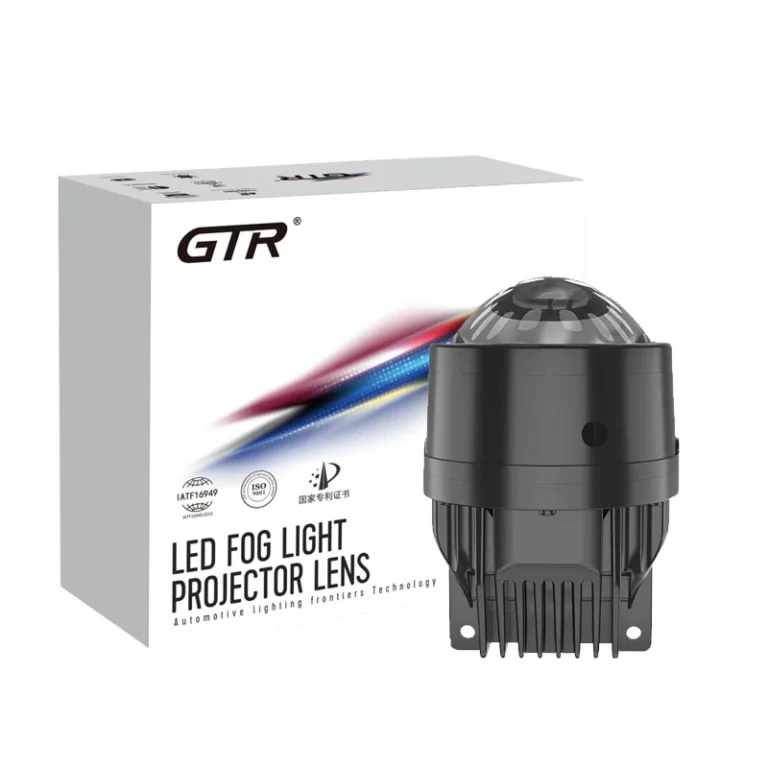
The Problem: Your Fog Lights Are Failing When It Matters Most
Fog lights are designed to cut through mist, rain, and snow by casting a wide, low beam that stays beneath the fog layer. But here is what most drivers do not realize. Factory halogen bulbs lose up to 30% of their brightness within the first year of use. The fog light bulb slowly degrades. The fog light wiring diagram in your vehicle may not support the current draw needed for optimal performance. And the fog lights symbol on your dashboard may glow green or amber, giving you a false sense of security that everything is working fine.
Here is the real kicker. When visibility drops below 100 metres, the Highway Code requires you to use your fog lights. But if your fog light car system is underperforming, you are driving blind. You cannot see lane markings. You cannot spot hazards. And you are putting yourself, your passengers, and everyone else on the road at risk.
Why Halogen Fog Lights Are the Real Problem
Most factory-installed fog lights use halogen bulbs. These produce about 1,000 to 1,500 lumens of light. That sounds decent until you compare it to what is possible. A standard halogen fog light also generates intense heat, consumes more energy, and has a lifespan of roughly 350 hours. Over time, the housing degrades. The lens yellows. The beam pattern becomes unfocused.
Think about that for a moment. You are driving through thick fog, relying on a bulb that is past its prime, producing weak light, and wasting your vehicle’s electrical energy. That is not safety. That is a gamble.
The Agitation: What Happens When Your Fog Light Fails
Let us paint a clearer picture. You are on a mountain road at night. The fog light vs headlight debate is irrelevant here because your headlights are reflecting off the fog, creating a white wall of glare. Your fog lights should be your only reliable tool. But they are not.
Your fog light vs spot light comparison also falls short because spot lights throw a narrow beam too far ahead. Fog requires a wide, flat beam that stays close to the ground. Without that, you are guessing where the road goes.
We have spoken to drivers who described their fog light myvi experiences in Malaysia’s monsoon season. They told us about crawling along highways at 20 km/h, unable to see the car in front. They told us about the anxiety of not knowing if the next bend was a sharp turn or a straight road. They told us about the moment they almost hit a stalled vehicle because their fog lights simply did not illuminate far enough ahead.
And here is the worst part. Many drivers do not even realize their fog lights are underperforming until it is too late. The fog light car symbol on the dashboard stays lit. The bulbs still glow. But the light output has dropped so gradually that they never noticed the decline.
The Hidden Cost of Poor Fog Lighting
Consider what is at stake. A single accident in low visibility can cost you thousands in repairs, higher insurance premiums, and potentially your health. The RAC explicitly states that if you are involved in an accident in fog and were not using your fog lights properly, it could invalidate your car insurance.
Yet many drivers continue using their factory fog lights year after year, never questioning whether the fog light bulb they are relying on is actually doing its job. They never check the fog light wiring diagram to ensure their electrical system is delivering adequate power. They never consider that a fog light for bike or car upgrade could transform their driving experience.
The Solution: GTR LED Fog Lights – Engineered for Real-World Conditions
The solution is simple: upgrade to GTR LED fog lights. Our CSP Mini LED bulbs deliver twice the light of halogen while using one-third of the power. That means brighter illumination, longer life, and less strain on your vehicle’s electrical system.
GTR Lighting has spent years engineering fog light solutions that address the exact problems factory systems create. Our fog light bulbs are designed to mimic the size and shape of your original halogen bulbs for perfect fitment. But the performance difference is night and day.
What Makes GTR Different
Here is what sets GTR apart from every other fog light bulb on the market:
- Superior brightness: Our CSP Mini LED bulbs produce up to twice the lumens of standard halogen, giving you a clear view of the road ahead.
- Focused beam pattern: Unlike cheap LEDs that scatter light everywhere, GTR bulbs use advanced multi-core chip technology to deliver an ultra-focused beam that stays low and wide.
- Energy efficiency: LED fog lights draw significantly less power than halogen, reducing the load on your alternator and extending your battery life.
- Durability: With a lifespan that far exceeds halogen, you will not be replacing your fog light bulb every year.
- Two-year warranty: Every GTR fog light product comes with a two-year warranty for your peace of mind.
Real Results from Real Drivers
We have seen the difference GTR fog lights make in the real world. One driver who upgraded their fog light myvi told us: “I used to dread driving in the rain. Now I feel like I can actually see the road. The beam is so much wider and brighter than my old halogens.”
Another customer who installed GTR LEDs on their SUV said: “I drive through foggy mountain passes every winter. These lights cut through the mist like nothing I have ever used. I actually feel safe now.”
These are not isolated stories. They are the result of years of engineering expertise and a deep understanding of what drivers actually need from their fog light car systems.
Frequently Asked Questions About Fog Lights
What does the fog light symbol look like on my dashboard?
The front fog light symbol shows a lamp pointing left with diagonal lines through a wavy vertical line. It is typically green. The rear fog light symbol points right with horizontal lines through the wavy line and is usually amber.
When should I use my fog lights?
You should only use fog lights when visibility drops below 100 metres (328 feet), roughly the length of a football pitch. Using them in clear conditions is illegal in many areas and can dazzle other drivers.
What is the difference between fog lights and headlights?
Fog lights are mounted lower on the vehicle and cast a wide, flat beam that stays close to the ground. Headlights are positioned higher and project light further ahead. In fog, high beams actually reduce visibility because the light reflects off water particles.
What is the difference between fog lights and spot lights?
Fog lights produce a wide, short beam that illuminates the road immediately in front of you. Spot lights produce a narrow, long-range beam for seeing far ahead. Fog requires the wide beam pattern that stays beneath the fog layer.
Can I use fog lights on my motorcycle?
Yes. Many motorcycles benefit from auxiliary fog lights. A fog light for bike installation follows similar principles – low mounting, wide beam, and proper aiming to avoid glare.
How do I wire fog lights correctly?
Proper wiring requires connecting to the battery, ground, and switch, with a relay to protect your vehicle’s electrical system. Always consult a fog light wiring diagram specific to your vehicle model before attempting installation.
What color temperature should I choose for fog lights?
For maximum visibility in fog, rain, and snow, choose 3000K yellow or 4300K warm white. Yellow light reduces glare and backscatter, improving contrast on wet pavement. White light (5000K-6000K) looks modern but performs worse in heavy fog.
Stop Gambling with Your Safety
Your factory fog light system is not designed for real-world conditions. It is designed to meet minimum standards at the lowest possible cost. That is fine for the manufacturer. It is not fine for you.
Every time you drive in fog, rain, or snow with underperforming fog lights, you are taking a risk. You are trusting outdated technology with your safety and the safety of everyone around you.
GTR LED fog lights are the upgrade your vehicle deserves. Twice the brightness. One-third the power consumption. A focused beam pattern that actually cuts through fog. And a two-year warranty that gives you confidence in your purchase.
Do not wait until you have a close call to upgrade your fog lights. Visit https://www.rhgtr.com today and find the perfect GTR fog light solution for your vehicle. Your safety is worth it.