You’ve decided to upgrade your fog lamp. Good. Now comes the hard part: sorting through a market flooded with options that look identical on a screen but perform nothing alike on a dark, rain-soaked road. We’ve manufactured lighting components for over a decade, and we’ve seen the same purchasing mistakes repeat across thousands of orders. This guide exists to help you avoid them.
The difference between a fog lamp that lasts five years and one that fails in five months rarely shows up in the product photo. It lives in the materials, the thermal design, the sealing, and the optical engineering—details that sellers rarely advertise and buyers rarely ask about. Let’s change that.
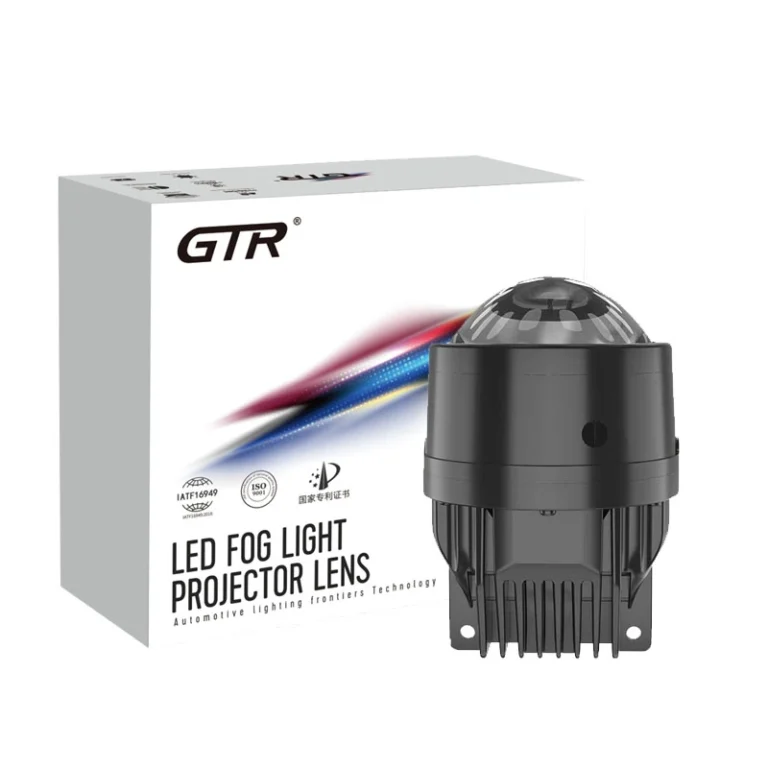
Halogen vs. HID vs. LED: The Real Trade-Offs
LED fog lamps offer the best combination of lifespan, efficiency, and instant-on performance for most drivers. Halogen remains the cheapest entry point but delivers the shortest life and weakest output. HID sits in the middle—bright but complex, with warm-up delays and ballast failure risks that make it increasingly hard to justify.
Here’s how the three technologies compare on the factors that actually affect ownership:
| Factor | Halogen | HID/Xenon | LED |
|---|---|---|---|
| Lifespan | 300–1,000 hours | 2,000–3,000 hours | 30,000–50,000 hours |
| Color Temp | ~3,000K (yellow) | 4,300–8,000K | 3,000–6,500K |
| Warm-up | Instant | 3–10 seconds | Instant |
| Power Draw | 35–55W | 35W + ballast | 10–30W |
| Heat Output | Very high | High | Low |
| Installation | Easy | Difficult (ballast, wiring) | Easy–Moderate |
| Canbus Issues | Rare | Common | Model-dependent |
Halogen’s appeal is simplicity and cost. But a halogen fog lamp is a consumable. You will replace it. The question is whether you replace it once or three times before you admit the technology is the problem.
HID offers more light, but the ballast adds a failure point. Ballasts sit in the engine bay, exposed to heat and vibration. When they fail—and they do—you’re not replacing a bulb. You’re diagnosing a system. For a fog lamp application, where the light sits low and exposed to moisture, the added complexity rarely pays off.
LED wins on total cost of ownership, but only if the thermal design is competent. A cheap LED lamp with an undersized heatsink will degrade faster than a halogen bulb. The technology isn’t magic. The engineering behind it is what matters.
Where Cheap Fog Lamps Fail (and How to Spot It Before You Buy)
Low-cost fog lamps typically fail in three predictable ways: insufficient thermal management causes LED output to drop or the emitter to die, poor sealing allows moisture intrusion that clouds the lens and corrodes electronics, and imprecise optics scatter light upward—creating glare instead of usable road illumination.
We’ve torn down competitor lamps in our lab. The patterns are consistent.
The Thermal Lie
A fog lamp housing is a hostile environment. It’s small, enclosed, and mounted near the road surface where ambient temperatures climb. LEDs generate heat at the emitter junction, and that heat must travel through a thermal path—typically a metal-core PCB, thermal paste, and a heatsink—before dissipating into the housing and surrounding air.
Budget lamps cut corners here. Thin aluminum. Minimal paste. No thermal path from the PCB to the housing body. The result is predictable: the LED junction temperature rises, output drops, and the color shifts. In our accelerated life testing, we’ve seen cheap lamps lose over 30% of their initial output within the first few hundred hours of operation.
What to look for instead: a die-cast aluminum housing that acts as a heatsink, visible thermal interface material, and a manufacturer willing to discuss operating temperature ratings. If the listing doesn’t mention thermal design at all, assume it wasn’t a priority.
The Sealing Problem
Fog lamps live in the splash zone. Road spray, puddles, pressure washers—the housing must resist all of it while also managing internal pressure changes as the lamp heats and cools. A rigid seal that blocks water but doesn’t allow pressure equalization will eventually pull moisture in through the weakest point.
IP ratings matter, but they’re only meaningful if the manufacturer actually tests to them. An IP67 rating means the lamp survives temporary immersion. IP68 means continuous immersion under specified conditions. For a fog lamp, IP67 should be the floor, not the ceiling.
Internal fogging is the visible symptom of seal failure. If you see condensation behind the lens after a temperature swing, the lamp is already compromised. Water and electronics don’t coexist peacefully.
The Optics Gap
This is the most overlooked failure mode because it’s invisible on a product page. A fog lamp’s beam pattern must be low and wide, with a sharp horizontal cut-off to prevent glare. Cheap lamps use generic reflectors that produce a blob of light with no defined upper edge. The lamp looks bright when you test it against a garage wall. On the road, that brightness scatters into oncoming drivers’ eyes while leaving the foreground underlit.
Proper fog lamp optics—whether projector-based or precision reflector—place light where it belongs: on the road surface ahead, below the eye level of oncoming traffic. The cut-off should be sharp enough to see clearly against a wall. If the beam edge is fuzzy or climbs upward, the lamp will glare.
The Fitment Trap: Why “Universal” Often Means “Doesn’t Quite Fit”
Universal fog lamps rely on brackets and adapters that rarely match a specific vehicle’s mounting points precisely. The result is vibration, misalignment, and beam patterns that shift over time—turning a lighting upgrade into a recurring alignment problem.
Vehicle-specific fitment eliminates this variable. When a lamp is designed for the Innova Reborn, Avanza, Xpander, or Yaris Bakpao, the bracket geometry matches the bumper’s mounting locations. The lamp sits at the intended angle. The beam aims where it should without shimming or improvisation.
We produce both universal and vehicle-specific kits, and the difference in customer feedback is stark. Universal kits generate more installation questions, more alignment complaints, and more returns. Vehicle-specific kits generate reviews that say “bolted right in” and “no adjustment needed.”
If you’re buying for a popular model, insist on a vehicle-specific fitment. The extra cost upfront is less than the time you’ll spend chasing a rattle or re-aiming a lamp that won’t stay put.
Wattage, Lumens, and the Numbers That Mislead
Here’s a secret from inside the industry: the wattage printed on a fog lamp box is often fiction. We’ve tested lamps labeled “150W” that drew 35W on a meter. We’ve tested “10,000 lumen” claims that measured closer to 2,000.
Why does this happen? Because there’s no standardized enforcement for aftermarket lighting claims in many markets. Sellers inflate numbers because buyers compare numbers. It’s a race to the bottom of the spec sheet.
What should you look at instead?
- Measured power draw. A reputable manufacturer will state actual wattage, not “equivalent” wattage. Our 3-inch Bi-LED fog lamp draws 55W total—measured, not marketed .
- Color temperature consistency. A lamp that claims 3000K should produce warm white light, not yellow-ish white that shifts as it heats. Cheap LEDs change color as junction temperature rises.
- Beam pattern documentation. Ask for a photometric report or a beam shot against a wall. If the seller can’t provide one, they haven’t tested the optics.
- Certifications. IATF 16949 and ISO 9001 indicate a manufacturing system that controls consistency. These aren’t marketing badges—they require audited processes.
One more number to ignore: “lifespan” claims measured in hours. A lamp rated for 50,000 hours sounds impressive until you realize that rating assumes ideal thermal conditions. In a real fog lamp housing, thermal design determines whether you get 5,000 hours or 50,000. The rating on the box tells you nothing about the housing it’s installed in.
The GTR Standard: What We Test Before a Lamp Ships
We don’t expect buyers to take our word for quality. We expect them to compare. Here’s what happens to every GTR fog lamp design before it reaches production:
Photometric validation. We measure beam patterns in a calibrated darkroom. The cut-off line, the width of the beam, and the intensity distribution across the road surface are documented and compared against our internal standards and relevant SAE guidelines where applicable.
Thermal cycling. Lamps run through repeated heat-up and cool-down cycles in environmental chambers. We monitor output degradation and color shift. A lamp that loses more than a defined percentage of output during cycling doesn’t pass.
Ingress testing. Spray and immersion tests verify sealing. We also test the breathable membrane that equalizes pressure without admitting water—a component that cheap lamps often omit entirely.
Vibration simulation. Fog lamps endure constant vibration from road surfaces. We mount lamps on shaker tables and run profiles that simulate rough pavement over extended periods. Mounting points and internal solder joints must survive without failure.
Fitment verification. For vehicle-specific kits, we test on actual vehicles. The bracket must align with factory mounting points. The connector must match the factory harness. The installed lamp must sit at the correct angle without adjustment.
This process costs more than assembling a generic lamp from catalog parts. It’s also why our lamps don’t generate the return rates that generic products do.
Frequently Asked Questions
Is it legal to upgrade my fog lamps to LED?
In most markets, yes—provided the lamp produces white or amber light, is aimed correctly, and is used only in reduced-visibility conditions. Some jurisdictions have specific regulations regarding color and intensity. Check your local vehicle codes before installation, and avoid any lamp that produces blue, red, or flashing light.
Do I need a relay harness for LED fog lamps?
For most LED fog lamps drawing under 30W per side, the factory wiring and switch can handle the load without a relay. However, if your vehicle’s fog lamp circuit was designed for higher-wattage halogens and you’re concerned about the switch contacts, a relay harness adds a layer of protection. It’s not mandatory for low-draw LEDs, but it’s cheap insurance.
Why do my new LED fog lamps flicker or throw an error code?
Some vehicles monitor fog lamp current draw and interpret the lower draw of an LED as a burned-out bulb. This triggers a dash warning or flicker. Canbus-compatible LEDs include circuitry to mimic the expected load. If you’re installing on a vehicle known for sensitive monitoring—many modern Toyotas and Hondas—confirm Canbus compatibility before purchase.
Can I install fog lamps myself, or do I need a shop?
For vehicle-specific kits with plug-and-play harnesses, DIY installation is realistic for most people with basic hand tools. The process typically involves removing bumper trim or wheel well liners, unbolting the old lamp, connecting the new one, and testing. If the kit requires splicing wires or fabricating brackets, professional installation is safer.
What’s the difference between a fog lamp and a driving light?
Fog lamps are designed for low-speed use in reduced visibility. They produce a wide, low beam with a sharp cut-off to illuminate the road surface without reflecting light back into the driver’s eyes. Driving lights are auxiliary high beams intended for clear conditions at higher speeds—they throw light far ahead and should never be used in fog or traffic.
How do I aim a fog lamp correctly?
Park on level ground facing a wall about 5 meters away. Turn on the fog lamps. The top edge of the beam pattern should be at or slightly below the height of the lamp itself. If the cut-off climbs above that line, the lamp is aimed too high and will glare. Most vehicle-specific kits require no adjustment, but a quick check confirms proper aim.
Buy Once, or Buy Again
The fog lamp market rewards research and punishes haste. A $30 lamp that fails in eight months costs more than a $90 lamp that lasts five years—not just in replacement cost, but in the time you spend diagnosing flickers, re-aiming beams, and wondering why your visibility never improved.
If you’re upgrading a vehicle you plan to keep, treat the fog lamp as a system, not a bulb. The housing, the thermal path, the sealing, and the optics all determine whether the light that reaches the road is useful or just bright. The difference between those two outcomes is engineering.
Browse the full GTR fog lamp lineup at https://www.rhgtr.com to find vehicle-specific fitments for popular models, or contact our team for distributor and fleet pricing. If you’re replacing a lamp that failed early, tell us what went wrong—we’ll help you choose the specification that prevents a repeat.