Vielleicht haben Sie es auch schon gespürt. Dieses langsame, schleichende Grauen, wenn die Sonne hinter der Baumgrenze verschwindet und Ihre Scheinwerfer aufflackern - und eine schwache, gelbe Pfütze kaum zwanzig Meter vor Ihnen auftaucht. Sie lehnen sich in Ihrem Sitz nach vorne, drücken die Knöchel fester auf das Lenkrad und blinzeln in die Schwärze, die sich nicht so dick anfühlen sollte. Ein Bi-LED-Projektor für das Auto ist kein Luxusgimmick. Er ist ein echtes Sicherheitsupgrade für Menschen, die es leid sind, mit dem zu spielen, was sie nicht sehen können.
Wir bei GTR haben Jahre damit verbracht, eine Beleuchtung zu entwickeln, die bei Regen, Nebel, Bergpässen und leeren Autobahnen funktioniert, wo die nächste Straßenlaterne fünfzig Meilen entfernt ist. Wir haben auch gesehen, was passiert, wenn Autofahrer Scheinwerfern vertrauen, die sich seit Jahrzehnten nicht weiterentwickelt haben. In diesem Artikel geht es darum, was dort oben tatsächlich passiert - und was man dagegen tun kann.
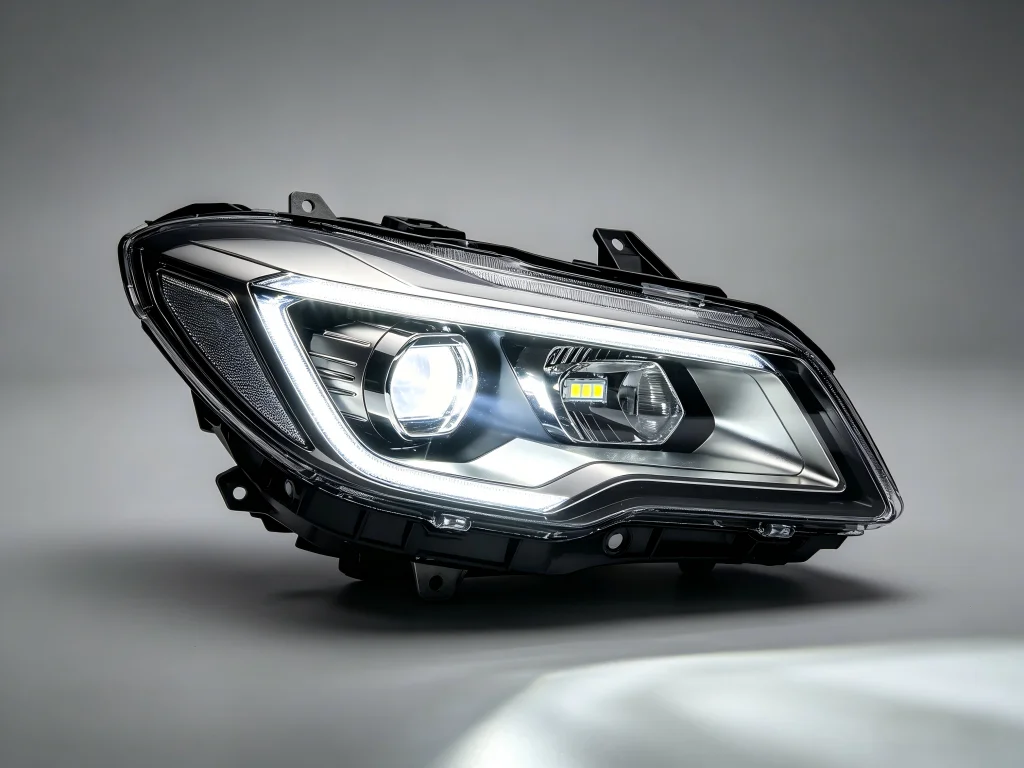
Die nächtliche Fahrt, über die niemand spricht
Die meisten Werks-Halogenscheinwerfer erzeugen zwischen 700 und 1.200 Lumen. Eine Qualität Bi-LED-Projektor-Scheinwerfer für Auto-Setup kann 3.000 bis 6.000 Lumen durch Präzision Optik schieben, Platzierung Licht genau dort, wo Sie es brauchen - nicht in die Bäume oder direkt in den Gegenverkehr gestreut.
Halogenlampen funktionieren, indem sie einen Wolframfaden erhitzen, bis er glüht. Dieser Prozess ist von Natur aus ineffizient: Etwa 90% der Energie werden zu Wärme, und nur 10% werden zu sichtbarem Licht. Mit der Zeit zersetzt sich der Glühfaden. Das Wolfram lagert sich langsam auf der Innenseite des Glaskolbens ab, wodurch die Lampe dunkler wird und die Leistung weiter sinkt. Die meisten Autofahrer bemerken dies nicht, da der Rückgang allmählich erfolgt - Monat für Monat wird der Lichtstrahl schwächer, gelber und kürzer.
Bei unseren technischen Tests haben wir Halogenlampen mit weniger als 60% ihrer Nennleistung nach nur 18 Monaten regelmäßiger Nutzung gemessen. Der Besitzer hatte keine Ahnung. Sie hatten sich einfach daran gewöhnt, mit immer weniger Informationen zu fahren, die durch ihre Augen kommen - sie wurden unbewusst langsamer, vermieden Nachtfahrten oder machten sich Vorwürfe, dass sie “nachts nicht gut sehen”.”
Die sekundenschnelle Mathematik, die Ihnen niemand zeigt
Bei einer Geschwindigkeit von 60 km/h legt ein Fahrzeug 88 Fuß pro Sekunde zurück. Wenn Ihr Abblendlicht effektiv 150 Fuß weit leuchtet - was für alte Halogenlampen großzügig ist - haben Sie etwa 1,7 Sekunden Zeit, um ein Objekt zu erkennen, es zu verarbeiten, zu entscheiden und zu reagieren. Das ist nicht genug. Studien von Organisationen wie der AAA Foundation for Traffic Safety zeigen immer wieder, dass Halogenscheinwerfer, insbesondere ältere, bei Geschwindigkeiten über 40 km/h auf unbeleuchteten Straßen die Gefahren auf der Fahrbahn nicht ausleuchten können.
Wenn Sie auf einen Bi-LED-Projektor aufrüsten, erhöht sich die effektive Wurfweite je nach Gerät auf 250-350 Fuß. Das 1,7-Sekunden-Fenster dehnt sich auf fast 3 Sekunden aus. Auf dem Papier mag das nicht dramatisch klingen. In einer regnerischen Nacht, wenn ein Reh mitten auf der Fahrbahn stehen bleibt, ist dies der Unterschied zwischen einer knappen Entscheidung und einem Zusammenstoß.
Was im Inneren eines schwachen Scheinwerfers wirklich vor sich geht
Gelbes Licht, Tunnelblick und das Blendungsproblem
Halogenlicht liegt auf der Farbtemperaturskala zwischen 3.000 K und 3.200 K - ein warmer, bernsteingelber Ton. Das menschliche Auge nimmt Kontraste bei gelbem Licht anders wahr. Die Farben bleichen aus. Der Rand der Straße, wo Kies auf Gras trifft oder wo ein Fußgänger in dunkler Kleidung stehen könnte, wird zu einer trüben Mischung aus Schatten.
Bi-LED-Projektoren arbeiten mit 5.500 K bis 6.500 K, was dem natürlichen Tageslicht am Mittag sehr viel näher kommt. Dabei geht es nicht darum, modern auszusehen - es geht darum, wie Ihr visueller Kortex Informationen verarbeitet. Bei Tageslicht verengen sich die Pupillen etwas stärker, was die Tiefenwahrnehmung schärft. Details, die bei Halogenlicht verschwimmen würden - ein Schlagloch, ein nasser Laubfleck, ein liegengebliebenes Auto ohne Reflektoren - werden klar und deutlich.
Und dann ist da noch die Blendung. Bei Reflektorscheinwerfern, wie sie in den meisten Halogensystemen verwendet werden, wird das Licht von einer spiegelnden Oberfläche in einem relativ unkontrollierten Strahl gebündelt. Der Lichtstrahl wird nach oben und außen gestreut. Bei Projektorscheinwerfern hingegen wird das Licht mit Hilfe einer präzise geformten Reflektorschale und einer konvexen Linse durch eine mechanische Abschirmung gebündelt. Das Ergebnis ist eine rasiermesserscharfe horizontale Linie am oberen Ende des Lichtstrahls - unten helle Straße, oben saubere Dunkelheit. Entgegenkommende Fahrer werden nicht geblendet. Sie werden nicht geblitzt. Jeder sieht besser.
Die wahren Zahlen hinter dem Upgrade
Wir lassen jeden Projektor mit einem kalibrierten Luxmeter durch eine standardisierte Testwand in 25 Fuß Entfernung laufen - keine Herstellerangaben, sondern gemessene Intensität am Hotspot. So sieht ein typischer Vergleich aus, der auf unseren Testdaten und validierten Branchen-Benchmarks basiert:
| Lichtquelle | Typisches Abblendlicht Lux @ 25ft | Effektive Wurfweite | Farbtemperatur | Lebenserwartung |
|---|---|---|---|---|
| Gealterter Halogen-Reflektor | 250-400 Lux | ~120-150 ft | 2,800-3,200K | 500-1.000 Stunden |
| Neuer Halogen-Reflektor | 500-700 Lux | ~160-180 ft | 3,000-3,200K | 500-1.000 Stunden |
| Bi-LED-Projektor der Einstiegsklasse | 1.000-1.500 Lux | ~200-250 ft | 6,000-6,500K | 20.000-30.000 Stunden |
| GTR Bi-LED-Projektorlinse | 2.000-3.200 Lux | 280-350 Fuß | 5,500-6,000K | 30.000+ Stunden |
Quelle: GTR-internes photometrisches Testprotokoll; Vergleichszahlen wurden anhand der SAE J1383-Beleuchtungsleistungsstandards validiert. Als Referenzwert gelten etwa 2.000+ Lux bei 25 Fuß als Schwellenwert, ab dem sich die Fernsicht bei Nachtfahrten wirklich verändert.
Die Qual des “Gut Genug” - Was schwache Scheinwerfer tatsächlich kosten
Wenn aus “Ich kann gut sehen” ein “Ich habe es gar nicht gesehen” wird”
Das folgende Szenario hören wir immer wieder von Kunden, die umgestiegen sind, und wir haben es selbst bei Produktvalidierungsfahrten erlebt: Sie sind um 22 Uhr auf einer zweispurigen Landstraße unterwegs. Keine Straßenlaternen. Ihre Halogenlampen tun ihren Dienst. Sie glauben, dass Sie gut sehen können - bis ein Bock dreißig Meter vor Ihnen hinter einer Hecke hervorkommt. Sie treten auf die Bremse. Vielleicht verpassen Sie ihn. Vielleicht aber auch nicht.
Die erschreckende Wahrheit ist, dass “gut sehen” unter Halogenlicht eine Illusion ist, die durch das Auffüllen von Lücken durch das Gehirn entsteht. Ihr visuelles System ist bemerkenswert in der Mustererkennung, aber es braucht Photonen, um damit arbeiten zu können. Wenn Sie es mit zu wenigen füttern, fängt es an zu raten. Diese dunkle Form auf der Schulter? Ihr Gehirn könnte es für einen Briefkasten halten. In Wirklichkeit könnte es ein Radfahrer ohne Reflektoren sein.
Dies ist keine hypothetische Annahme. Nach Angaben der National Highway Traffic Safety Administration ist die Zahl der tödlichen Fußgängerunfälle bei Dunkelheit etwa dreimal so hoch wie bei Tageslicht, bereinigt um das Verkehrsaufkommen. Ein erheblicher Teil dieser Unfälle ist auf Fahrzeuge mit Standard-Halogenbeleuchtung zurückzuführen. Der gemeinsame Nenner ist nicht rücksichtsloses Fahren, sondern unzureichende Sichtweite bei Fahrgeschwindigkeit.
Die DIY-Nachrüstungsfalle
Aus Frust über die schwachen Halogenlampen greifen viele Autofahrer zur billigsten Lösung: LED-Lampen, die direkt in das werkseitige Halogengehäuse eingesetzt werden. Wir verstehen den Drang. Es ist eine $40-Lösung, die Helligkeit verspricht. Was sie liefert, ist in den allermeisten Fällen eine Sauerei.
Halogen-Reflektorschalen sind für die spezifische Geometrie eines Halogenglühfadens ausgelegt - ein winziger, genau positionierter Lichtzylinder. Eine LED-Glühbirne hat Chips auf zwei oder vier Seiten und strahlt das Licht in einem völlig anderen Muster ab. Setzt man eine LED-Glühbirne in einen Halogenreflektor ein, so wird der Lichtstrahl unvorhersehbar gestreut. Man erhält ein fleckiges Licht mit intensiven Hot Spots und dunklen Lücken. Schlimmer noch: Die Hell-Dunkel-Grenze verschwindet teilweise, sodass Streulicht nach oben in den Gegenverkehr gesprüht wird. Der Fahrer hinter Ihnen ist nicht nur verärgert, er ist auch teilweise geblendet.
In den Enthusiastenforen und Werkstätten, die wir besuchen, wird “LED-Lampe im Halogengehäuse” immer wieder als einer der häufigsten Nachrüstungsfehler genannt. Der kurzfristige Helligkeitsgewinn geht auf Kosten der Lichtsteuerung, der Legalität und der Sicherheit aller anderen Verkehrsteilnehmer.
Die Lösung: Was einen Bi-LED-Projektor wirklich ausmacht
Ein Bi-LED-Projektor behebt die Ursache, nicht das Symptom. Er ersetzt das gesamte optische System - nicht nur die Glühbirne - durch eine integrierte Einheit, die von Grund auf mit LED-Lichtabstrahlungsmustern entwickelt wurde.
Das mechanische Herz: Wie ein Projektor zwei Aufgaben erfüllt
Das “bi” in bi LED-Projektor bezieht sich auf die Fähigkeit des Geräts, sowohl Abblend- als auch Fernlicht aus einer einzigen Lichtquelle zu erzeugen. Dabei handelt es sich nicht um eine elektronische Dimmung oder einen Trick mit zwei Glühfäden. Es handelt sich um ein genial einfaches mechanisches System:
- Der LED-Chip arbeitet mit konstanter, voller Leistung. Es gibt keinen “Energiesparmodus”. Der Emitter läuft immer mit maximaler Leistung.
- Im Inneren des Projektors befindet sich ein solenoidgesteuerter Shutter. Im Abblendlichtmodus wird die Blende angehoben, wodurch der obere Teil des Lichts physisch blockiert wird und die scharfe, flache Hell-Dunkel-Grenze entsteht. Im Fernlichtmodus fährt die Magnetspule die Blende nach unten und gibt den gesamten, ungehinderten Lichtstrahl für eine maximale Reichweite frei.
- Der Übergang erfolgt augenblicklich. Keine Verzögerung beim Aufwärmen. Wenn Sie den Fernlichtschalter betätigen, schnappt der Verschluss innerhalb von Millisekunden zu.
Es handelt sich um dieselbe grundlegende Architektur, die auch in hochwertigen OEM-LED-Projektorsystemen von Herstellern wie Koito und Hella zu finden ist - angepasst und verfeinert für den Nachrüstmarkt. Der Shutter-Mechanismus in einem Qualitätsgerät ist für Hunderttausende von Zyklen ausgelegt, was die Lebensdauer des Fahrzeugs selbst bei normalem Gebrauch weit übersteigt.
Warum das Material der Linse wichtiger ist, als man denkt
In jedem Autoteilemarkt finden Sie Projektoren mit Kunststofflinsen zu verlockenden Preisen. Hier ist der Grund, warum wir sie nicht verwenden: Der gebündelte Strahl eines Hochleistungs-LED-Chips erzeugt im Brennpunkt erhebliche Wärme. Standard-Kunststofflinsen - selbst solche aus optischem PMMA - haben eine relativ niedrige Erweichungstemperatur. Bei monatelangem Gebrauch können sie sich mikroskopisch verformen, wodurch die Hell-Dunkel-Grenze verzerrt und der Hotspot gestreut wird.
GTR-Projektoren verwenden hochglänzende Glaslinsen mit Antireflexionsbeschichtungen, wie man sie auch in optischen Präzisionsinstrumenten findet. Glas hat eine viel höhere Wärmetoleranz und behält seine optischen Eigenschaften auf unbestimmte Zeit bei. Der Unterschied zeigt sich an der Testwand: Ein Glasobjektiv erzeugt eine chirurgisch scharfe Hell-Dunkel-Grenze ohne chromatische Aberration am Rand, während Kunststoffobjektive oft einen leichten violetten Rand und eine weichere Hell-Dunkel-Grenze aufweisen.
Strahlenmuster in der realen Welt: Wie “gut” tatsächlich aussieht
Auf unserer Testwand - einer genormten weißen Fläche in genau 25 Fuß Entfernung vom Projektor - erzeugt ein richtig eingestellter Bi-LED-Projektor einen Strahl mit diesen Eigenschaften:
- Flaches, horizontales Abschneiden mit einem kleinen “Step-up” auf der rechten Seite (für LHD-Fahrzeuge), das die Straßenschilder beleuchtet, ohne die entgegenkommenden Fahrer zu blenden.
- Breite, gleichmäßige Verteilung von Kante zu Kante, typischerweise über 3+ Fahrspuren der Beleuchtungsbreite in der Entfernung.
- Ein konzentrierter Hotspot knapp unterhalb der Grenzlinie, wo die Lux-Werte über 2.000 liegen - der Bereich, der bestimmt, wie weit Sie Objekte auf der Straße erkennen können.
- Kein Streulicht oberhalb des Grenzwerts. Nichts in Augenhöhe des entgegenkommenden Fahrers.
Das Strahlenmuster ist keine abstrakte technische Information. Es entscheidet darüber, ob Sie das Reh auf dem Seitenstreifen bemerken, bevor oder nachdem es auf Ihre Fahrspur kommt. Es ist der Unterschied zwischen einer sicheren Nachtfahrt und einem nervösen Kriechen.
Einbau: Was man für die Nachrüstung eines Bi-LED-Projektors braucht
Der Einbau eines Bi-LED-Projektors ist aufwändiger als das Austauschen einer Glühbirne, aber für einen kompetenten Heimwerker mit grundlegenden Werkzeugen und Geduld durchaus machbar. Der Prozess umfasst in der Regel das Öffnen des Scheinwerfergehäuses, die Montage des Projektors in die vorhandene Reflektorschale, die Verdrahtung mit dem werksseitigen Kabelbaum und das erneute Abdichten der Linse.
Die häufigste Sorge, die wir hören, betrifft das Öffnen des Scheinwerfers selbst. Moderne Scheinwerfergehäuse sind mit Butylkautschuk versiegelt - einem biegsamen, hitzereaktiven Dichtungsmittel, das bei etwa 100-120 °C erweicht. Die typische Methode besteht darin, den Scheinwerfer in einen Ofen zu stellen oder eine Heißluftpistole zu verwenden, um den Umfang gleichmäßig zu erwärmen, und dann die Linse vorsichtig aus dem Gehäuse zu heben. Das klingt einschüchternd. In der Praxis ist es mit Geduld und der richtigen Vorbereitung ganz einfach.
Für Fahrzeuge mit H4-Glühbirnenfassungen ist das GTR Bi-LED-Projektor-H4-Montagesystem als Direktgewinde-Montage konzipiert. Der Projektor gleitet durch die vorhandene Glühbirnenöffnung und wird mit einer Sicherungsmutter von hinten befestigt - keine dauerhafte Änderung der Reflektorschale. Dies bedeutet, dass die Installation bei Bedarf rückgängig gemacht werden kann.
Die Verkabelung ist in der Regel Plug-and-Play: Der Eingangsstecker des Projektors wird direkt an die werksseitige H4-Buchse (oder eine gleichwertige Buchse) angeschlossen, mit einem separaten Auslösedraht für das Fernlichtmagnetventil, der in den Fernlichtstromkreis des Fahrzeugs eingesteckt wird. Keine externen Vorschaltgeräte, keine Relais-Kabelbäume (für die meisten Standardanwendungen) und keine CANbus-Fehler, wenn Qualitäts-Treiber verwendet werden.
Profi-Tipps aus unserer Werkstatt
- Testen Sie alles, bevor Sie es versiegeln. Schalten Sie die Projektoren auf dem Prüfstand ein, bevor Sie die Gehäuse schließen. Überprüfen Sie das Abblendlicht, die Betätigung der Fernlichtklappe und die Ausrichtung der Drehung. Einen verdrehten Scheinwerfer zu reparieren, nachdem der Scheinwerfer versiegelt wurde, ist ein Problem, das Sie nicht haben wollen.
- Ausrichten vor dem Kleben. Montieren Sie die Scheinwerfer vorübergehend wieder am Fahrzeug und richten Sie sie gegen eine Wand, bevor Sie neue Dichtungsmasse auftragen. Die Hell-Dunkel-Grenze des Scheinwerfers sollte waagerecht und leicht unterhalb der Höhe der Scheinwerfermitte bei 25 Fuß liegen.
- Feuchtigkeitsmanagement ist keine Option. Fügen Sie dem Gehäuse vor dem Versiegeln ein Trockenmittelpaket oder ein Gore-Tex-Belüftungspflaster hinzu. Temperaturschwankungen führen zu Kondensation, und versiegelte Scheinwerfer ohne Belüftung beschlagen irgendwann von innen.
Was ist mit der Bi-LED-Projektor-Lasertechnologie?
Wahrscheinlich haben Sie schon einmal “Bi-LED-Projektor-Laser”-Angebote gesehen und sich gefragt, ob Laser das nächste große Ding ist oder nur Marketing-Lärm. Die Realität liegt irgendwo dazwischen.
In der aktuellen Kfz-Beleuchtung bezieht sich der Begriff Laser“ im Zusammenhang mit Bi-LED-Projektoren in der Regel auf eine zusätzliche Laserdiode, die ein Phosphorelement anregt und einen extrem intensiven, eng gebündelten Lichtstrahl erzeugt - in der Regel nur für die Fernlichtfunktion. Es ist ein Zusatz zum normalen LED-Abblendlicht, kein Ersatz dafür. Echte Laserscheinwerfer (wie sie in ausgewählten BMW- und Audi-Flaggschiffen zu finden sind) arbeiten nach diesem Prinzip und können Reichweiten von über 600 Metern erreichen.
Bei Bi-LED-Projektor-Lasereinheiten auf dem Nachrüstmarkt fügt die Laserkomponente in der Regel einen Bleistiftstrahl hinzu, der bei Aktivierung des Fernlichts weit auf die Straße strahlt. Das Abblendlicht bleibt LED-gesteuert. Unsere Tests haben ergeben, dass ein gut konzipiertes lasergestütztes Gerät die effektive Fernlichtreichweite im Vergleich zu einem Standard-Bi-LED-Projektor um 80 bis 150 Meter erhöhen kann. Die zusätzlichen Kosten sind jedoch beträchtlich, und für die meisten Fahrer - vor allem für diejenigen, die nicht regelmäßig auf völlig unbeleuchteten Autobahnen fahren - übersteigt ein hochwertiger Bi-LED-Projektor ohne Laser bereits die Anforderungen an ein sicheres Fahren bei Nacht.
Der entscheidende Nachteil: Lasergestützte Projektoren müssen präzise ausgerichtet werden. Ein falsch ausgerichtetes Laserelement wirft intensives Licht in den Gegenverkehr oder auf Verkehrsschilder, was zu gefährlicher Blendung führt und Ihre eigene Sichtbarkeit durch Reflexion verringert. Wenn Sie sich für einen Laser entscheiden, ist eine professionelle Ausrichtung dringend anzuraten.
Fragen, die sich Autofahrer vor dem Umstieg stellen
Sind Bi-LED-Projektoren straßenzugelassen?
In den meisten Rechtsordnungen fallen Nachrüstungen mit Projektoren in eine Grauzone. Ein ordnungsgemäß installierter Bi-LED-Projektor mit einer scharfen, blendfreien Hell-Dunkel-Grenze und korrekter Ausrichtung wird in der Regel nicht die Aufmerksamkeit der Behörden auf sich ziehen, da er andere Fahrer nicht blendet. Der gesetzliche Standard ist jedoch von Land zu Land unterschiedlich. In den USA werden Beleuchtungsprodukte für den Nachrüstungsmarkt vom Verkehrsministerium (DOT) nicht einzeln zertifiziert; die Hersteller zertifizieren die Einhaltung der FMVSS 108-Normen selbst. Die Produkte von GTR erfüllen oder übertreffen die einschlägigen photometrischen Normen, einschließlich SAE J1383 für Lichtverteilung und Lichtstärke. Wir empfehlen Ihnen, Ihre lokalen Vorschriften zu überprüfen. In vielen europäischen und asiatischen Märkten mit strengeren periodischen technischen Kontrollen wird eine E-Zertifizierung auf dem Projektor selbst erwartet, und viele Produkte (einschließlich der internationalen Produktlinie von GTR) tragen diese.
Passt ein Bi-LED-Projektor in mein Auto?
Die Kompatibilität hängt in erster Linie von den Abmessungen Ihres Scheinwerfergehäuses und dem Typ des Lampensockels ab. Die gängigsten Nachrüstgrößen sind 3,0-Zoll-, 2,5-Zoll- und 1,8-Zoll-Projektoren. Die 3,0-Zoll-Größe (oft als “Standardgröße” bezeichnet) passt in die meisten Fahrzeuge mit runden oder großen rechteckigen Scheinwerfergehäusen. Der 2,5-Zoll-Scheinwerfer ist beliebt für engere Räume, Nachrüstungen von Nebelscheinwerfern und Motorräder. Die 1,8-Zoll-Größe ist eine Nischengröße - sie wird hauptsächlich für Vierfachscheinwerfer oder sehr kompakte Gehäuse verwendet.
Bei den Glühlampensockeln sind H4 und H7 die weltweit am meisten verbreiteten Typen in Personenkraftwagen. GTR bietet direkt passende Montagesysteme für H4-, H7-, 9005/9006- und H11-Sockel an. Wenn Sie unsicher sind, messen Sie die lichte Innentiefe Ihres Scheinwerfergehäuses (von der Linse bis zur hinteren Abdeckung) und vergleichen Sie sie mit der für den Projektor angegebenen Tiefe. Eine kurze Faustregel: Wenn das Gehäuse mindestens 140 mm tief ist, passt ein 3-Zoll-Projektor mit ziemlicher Sicherheit hinein. Wenn die Tiefe zwischen 110 mm und 140 mm liegt, sollten Sie die 2,5-Zoll-Option in Betracht ziehen.
Muss ich mein Scheinwerfergehäuse dauerhaft ändern?
Mit dem GTR-Gewindeschaft-Montagesystem lautet die Antwort für die meisten Fahrzeuge nein. Der Projektor gleitet durch die vorhandene Lampenöffnung und wird mit einer hinteren Sicherungsmutter befestigt. Es ist kein Schneiden, Bohren oder eine dauerhafte Änderung des Reflektors erforderlich.
Wie lange halten die Bi-LED-Projektoren tatsächlich?
Die LED-Strahler in einem hochwertigen Bi-LED-Projektor sind für 30.000 bis 50.000 Stunden Dauerbetrieb ausgelegt. In der Praxis ist das länger als die typische Lebensdauer eines Fahrzeugs. Der Magnetverschlussmechanismus ist für über 500.000 Zyklen ausgelegt - das entspricht dem 50-maligen Umschalten des Fernlichts pro Tag über 27 Jahre. Das praktischere Problem ist die Treiberelektronik; Qualitätsgeräte verwenden versiegelte Halbleitertreiber mit thermischem Überlastungsschutz, und Ausfälle sind selten. Die meisten Garantieansprüche, die wir sehen, beziehen sich auf das Eindringen von Feuchtigkeit durch unsachgemäße Versiegelung bei der Installation, nicht auf das Versagen von Komponenten.
Was ist der Unterschied zwischen 6.000K und 5.500K Farbtemperatur?
6.000 K erzeugen ein reines, kühles weißes Licht mit einem leichten Blaustich an der Hell-Dunkel-Grenze - das Aussehen, das die meisten Menschen mit “modernen LED” verbinden. 5.500K ist etwas wärmer und entspricht eher dem natürlichen Tageslicht zur Mittagszeit, mit einer geringfügig besseren Kontrastwahrnehmung bei nassen Bedingungen. Der Unterschied ist subtil. In unseren Tests haben die meisten Fahrer den Unterschied nicht bemerkt, es sei denn, die beiden Varianten stehen nebeneinander. Wir bieten beide Optionen an, da die Ästhetik des Fahrzeugs und die örtlichen Vorschriften für die eine oder andere Variante sprechen. In Bezug auf die reine Leistung bei Regen und Nebel hat 5.500K einen leichten Vorteil, da kürzere (blaue) Wellenlängen bei Feuchtigkeit stärker streuen.
Kann ich Bi-LED-Projektoren auch in Nebelscheinwerfer einbauen?
Ja - GTR stellt spezielle Bi-LED-Projektoren für Nebelscheinwerfer in 2,0-Zoll- und 2,5-Zoll-Form her. Diese erzeugen einen breiten, flachen Lichtkegel mit einer sehr scharfen Hell-Dunkel-Grenze, die speziell für niedrige Einbaupositionen entwickelt wurde, bei denen das Ziel darin besteht, die Fahrbahn direkt auszuleuchten, ohne Rückstreuung im Nebel zu erzeugen. Sie verfügen über den gleichen Bi-LED-Shutter-Mechanismus, der Ihnen ein Abblendlicht für Nebel und ein Fernlicht für Zusatzscheinwerfer aus derselben Einheit bietet.
Warum GTR? Weil die Details verbinden
Inzwischen haben Sie gesehen, dass ein Bi-LED-Projektor keine Massenware ist. Der Unterschied zwischen einem Gerät, das $45 kostet, und einem, das $150+ kostet, liegt nicht im Markenaufschlag, sondern in der optischen Konstruktion, der Materialqualität und den Fertigungstoleranzen, die sich bei jedem Schritt des Lichtwegs ergeben.
GTR stellt seine Projektorlinsen in Guangdong, China, in Anlagen her, die Produktion und Forschung und Entwicklung unter einem Dach vereinen. Diese vertikale Integration bedeutet, dass wir den gesamten Prozess kontrollieren - vom LED-Emitter-Binning (Auswahl von Chips mit konsistenter Farbe und Leistung) über die CNC-Bearbeitung der Reflektorschalen bis hin zur photometrischen Endprüfung. Jeder Projektor, der unsere Produktionslinie verlässt, durchläuft eine 8-Punkte-Qualitätsprüfung, wobei die Fehlerquote unter 0,1% liegt. Wir entwickeln jede Saison 3-5 neue Produktiterationen und verfeinern kontinuierlich die Strahlenmuster auf der Grundlage von Rückmeldungen aus der Praxis von Installateuren, Händlern und Endverbrauchern auf mehreren Kontinenten.
Für unsere Projektoren gilt eine 18-monatige Direktaustausch-Garantie - für defekte Geräte ist kein Rückversand erforderlich - und unsere Produkte sind nach mehreren internationalen Standards zertifiziert, darunter CCC, E-Mark (für die Einhaltung europäischer Vorschriften), DOT (für die Selbstzertifizierung in Nordamerika), SONCAP (für den nigerianischen Markt) und GCC (für die Länder des Golf-Kooperationsrats). Unsere gesamte Produktlinie ist nach IP68 wasserdicht, d. h. die Projektoreinheit selbst ist vollständig gegen das Eindringen von Staub und ständiges Eintauchen in Wasser abgedichtet und nicht nur spritzwassergeschützt.
Wir begrüßen auch OEM- und ODM-Partnerschaften. Ganz gleich, ob Sie ein Händler sind, der unsere neuesten Bi-LED-Projektor-Lasereinheiten für Ihren regionalen Markt mit einem White-Label versehen möchte, oder eine Werkstattkette, die eine maßgeschneiderte Montagelösung für eine bestimmte Fahrzeugplattform sucht, unser F&E-Team kann maßgeschneiderte Lösungen mit einer typischen Vorlaufzeit von 15-35 Arbeitstagen für Volumenaufträge entwickeln.
Mach die Nacht wieder zu deiner
Sie sind mit weniger Informationen gefahren, als Ihnen zusteht. Jeder schwache, gelbe Lichtstrahl, der 120 Meter vor Ihnen in Dunkelheit übergeht, ist ein Kompromiss, den Sie sich nicht ausgesucht haben - er wurde Ihnen von kostensenkenden Ingenieuren und einer Glühlampentechnologie, die in den 1960er Jahren ihren Höhepunkt erreichte, aufgezwungen.
Die Lösung liegt nicht in einer helleren Glühbirne. Es ist ein intelligenteres optisches System, das das Licht, das Sie schon immer hätten haben sollen, genau dorthin bringt, wo es hingehört: auf die Straße, über die Schultern und weit genug voraus, damit Sie tatsächlich auf das reagieren können, was auf Sie zukommt.
Stöbern Sie in unserem vollständigen Katalog von Bi-LED-Scheinwerfern für Autos - vom 3-Zoll-GTR S35 bis zur laserunterstützten G45-Serie - und finden Sie das passende Produkt für Ihr Fahrzeug und Ihre Fahrbedingungen unter https://www.rhgtr.com. Möchten Sie Ihre spezifische Anwendung besprechen? Wenden Sie sich über das Kontaktformular auf unserer Website an unser technisches Supportteam. Wir verkaufen nicht einfach nur Projektoren - wir helfen Ihnen dabei, dass der Strahl stimmt, die Installation sauber ist und die Nachtruhe eingehalten wird.
Ihre Scheinwerfer haben Sie lange genug belogen. Bringen wir es in Ordnung.
Referenzen und weiterführende Literatur
1. SAE International. (2022). SAE J1383: Leistungsanforderungen für Kraftfahrzeugscheinwerfer. https://www.sae.org/standards/content/j1383_202206/ - Dem Industriestandard entsprechende photometrische Prüfverfahren für das Lichtbild und die Lichtstärke von Scheinwerfern.
2. NHTSA. (2024). Fakten zur Verkehrssicherheit: Fußgänger. https://crashstats.nhtsa.dot.gov/Api/Public/ViewPublication/813560 - Jährliche Daten über tödliche Fußgängerunfälle, einschließlich der Unfallraten bei Dunkelheit.
3. Royalin-Beleuchtung. (2025). Wie misst man die Helligkeit eines Bi-LED-Projektorobjektivs richtig? - Referenzmethode für Lux-basierte Projektorentests in Standardentfernung.
4. Scheinwerfer-Revolution. (2025). Sind die LED-Scheinwerfer der Carbide-Serie von GTR Lighting überhaupt gut? - Unabhängige Prüfung von Scheinwerferbaugruppen der GTR-Carbide-Serie durch Dritte.