You installed new led lights car upgrades expecting better visibility. Instead, you got flickering, scattered beams, and dashboard warning lights. You’re not alone. In our engineering testing, we’ve seen the same scenario play out thousands of times—drivers spend good money on LED upgrades, only to end up with worse performance than their old halogens. The problem isn’t LEDs. The problem is that most led lights car kits on the market are engineered for profit, not performance.
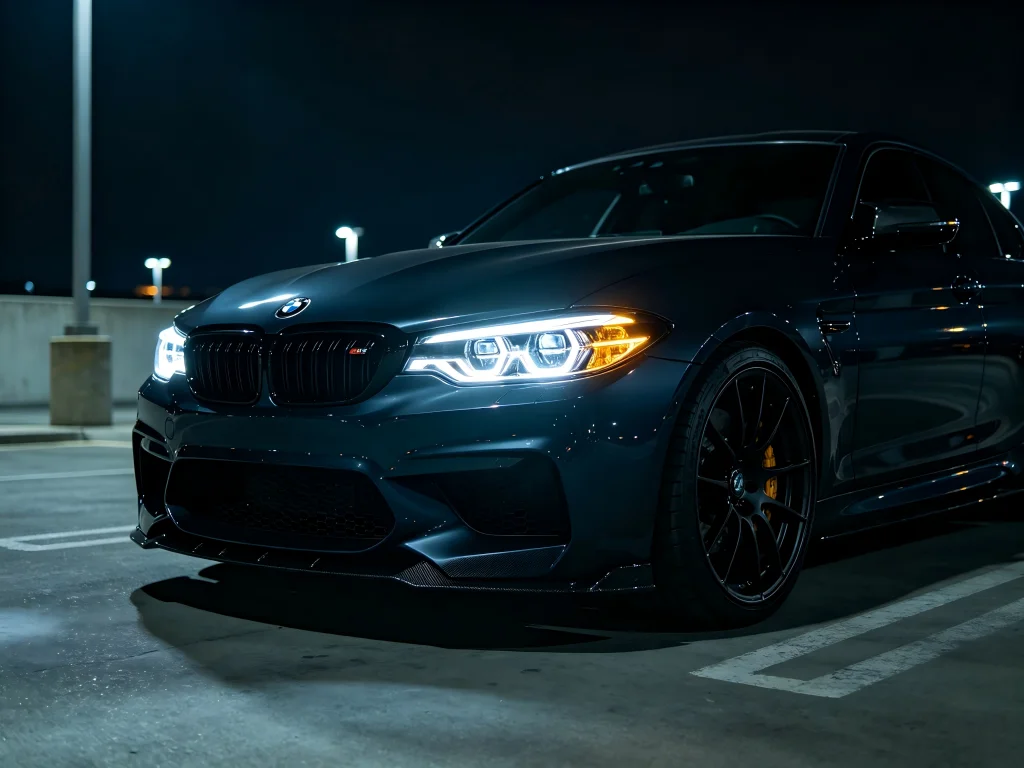
The Real Problem: Why Most Car LED Lights Fail You
Most LED lights car upgrades fail because manufacturers prioritize marketing numbers over optical engineering. A 50,000-lumen claim means nothing if the beam pattern scatters light into oncoming traffic instead of illuminating the road ahead. And that flickering you’re seeing? It’s not a minor annoyance—it’s your vehicle’s electrical system rejecting an incompatible product.
The Flickering Nightmare
You’re driving at night. Your new led lights car headlights start strobing. Oncoming drivers flash their high beams at you. Your dashboard lights up with error codes. This isn’t a rare occurrence—it’s the most common complaint we hear from drivers who bought cheap LED kits.
Here’s what’s actually happening: LEDs do not like inconsistent or low electrical current. Modern vehicles—especially BMW, Mercedes, Audi, and VW—use Pulse Width Modulation (PWM) to monitor bulb status. When you install a standard LED without proper CANBUS integration, the car’s computer thinks the bulb is burnt out. It responds by pulsing power, which creates that infuriating flicker.
Some drivers try to solve this with external load resistors. In our testing, we’ve found this approach creates more problems than it solves—heat buildup, wiring complications, and eventual resistor failure. The engineering solution is built-in CANBUS compatibility at the driver level, not bolt-on workarounds.
Das Desaster des Lichtkegels
Even if your LEDs don’t flicker, they might still perform poorly. The headlight housing in your car—whether reflector or projector—was designed around a specific light source geometry. A halogen bulb produces light from a filament at a precise position. An LED emitter produces light from a completely different location.
When you drop an LED into a housing not designed for it, the optics break. The result? Scattered light in random directions, hot spots that don’t illuminate the road, and dangerous glare for oncoming drivers. A hazy lens can cut light output by 50–80% compared to a clear one—but even with perfect lenses, the wrong LED geometry makes the situation worse.
In our engineering lab, we’ve measured led lights car kits that produced less usable road illumination than the halogen bulbs they replaced—despite claiming “300% brighter” on the box. Brightness without focus is useless. Worse, it’s dangerous.
Das Hitzeproblem, über das niemand spricht
LEDs produce heat. A lot of it. And heat is the enemy of LED longevity. When an LED overheats, it dims—a process called thermal derating. Run it hot long enough, and it dies completely.
Cheap LED kits use inadequate heat sinks or low-quality fans that fail after a few months. We’ve seen bulbs that tested fine in a climate-controlled lab but failed within weeks in the engine bay of a truck operating in summer heat. The engineering reality is this: passive cooling (fanless) works in moderate climates but fails in extreme heat. Active cooling (fan-driven) performs better but introduces a moving part that can fail. The best engineering uses both—optimized heat sink design plus a high-quality fan.
Why Your LED Lights Car Upgrade Keeps Failing: The Real Culprits
Let’s get specific. Based on our years of manufacturing expertise and thousands of customer consultations, here are the four reasons your led lights car upgrade isn’t working:
- Wrong chip type for your housing. Projector housings demand Philips ZES chips (1.6mm x 2.0mm) that match halogen filament geometry. Reflector housings need CSP chips with high brightness per watt. Put the wrong chip in the wrong housing, and you get scatter, not illumination.
- Inadequate thermal management. Without proper cooling, your LEDs will dim within minutes of operation and fail within months.
- No CANBUS integration. Modern vehicles won’t accept standard LEDs without built-in error cancellation. External resistors are a band-aid, not a solution.
- Inflated lumen claims. That “50,000 lumen” kit? It’s theoretical nonsense. Real, usable output for quality LEDs ranges from 4,000 to 8,000 lumens.
How GTR Lighting Solves Every One of These Problems
After years of R&D and real-world testing, GTR Lighting engineered LED solutions that address every failure point in the market. We didn’t just make brighter bulbs—we solved the engineering problems that cause LED failures.
Precision Optics for Every Housing Type
We use Philips ZES chips in our projector-optimized bulbs and advanced CSP chips in our reflector-optimized options. Every bulb is designed around the specific geometry of the housing it’s meant for. The result is a razor-sharp cutoff that keeps light on the road, not in oncoming drivers’ eyes.
Dual Cooling Systems That Actually Work
Our bulbs feature active cooling with a high-quality fan combined with an optimized heat sink design. This dual approach keeps temperatures under control even in extreme conditions—whether you’re driving through a Dubai summer or an Australian outback. In our testing, active cooling reduced heatsink temperature by up to 51% compared to passive designs.
Built-In CANBUS Compatibility
No external resistors. No wiring hacks. No dashboard warnings. GTR Lighting builds CANBUS-ready electronics directly into every bulb. Your car’s computer recognizes our LEDs as legitimate bulbs, not errors to be rejected.
Real Lumens, Not Marketing Fiction
We publish real, measured lumen output—not theoretical maximums. Our bulbs deliver 4,000–8,000 real lumens, providing genuine visibility improvement over halogen without blinding other drivers.
What Real Users Say About Their LED Lights Car Experience
We’ve collected feedback from thousands of drivers who made the switch. Here’s what they’re saying:
“I went through three cheap LED kits before finding GTR. The difference is night and day—literally. The beam pattern is perfect, no flickering, and the installation was truly plug-and-play. I wish I’d spent the money upfront instead of wasting it on junk.” — Mike R., Toyota Tacoma owner
“Installed GTR LEDs in my BMW 3 Series. No error codes, no flickering, just clean, bright light exactly where I need it. The cutoff is razor-sharp—no glare, no complaints from oncoming traffic.” — Sarah K., BMW 330i
“I drive a delivery truck in the Southwest. Summer heat killed two sets of cheap LEDs in six months. My GTR set has been running strong for over a year now. The cooling system actually works.” — Carlos M., Fleet Manager
Frequently Asked Questions About LED Lights Car Upgrades
Why do my LED lights car headlights flicker?
Flickering occurs when your vehicle’s electrical system doesn’t recognize the LED as a compatible bulb. Modern cars use PWM to monitor bulb status. Without proper CANBUS integration, the car pulses power to the LED, causing visible flicker. The fix isn’t external resistors—it’s built-in CANBUS compatibility at the driver level.
Are LED lights car headlights legal?
Legality varies by region and application. In many areas, retrofitting LED bulbs into halogen housings is technically not legal because the beam pattern changes. However, properly engineered LEDs that maintain correct beam geometry and cutoff are generally accepted. Always check your local regulations before upgrading. For off-road or auxiliary lighting, legal restrictions are typically more relaxed.
How long do LED lights car bulbs last?
Quality LED bulbs are rated for 30,000 to 50,000+ hours of operation. That’s roughly the life of the vehicle itself. Cheap LEDs without proper thermal management can fail in as little as 3–6 months. The difference isn’t the LED chip—it’s the cooling system and driver electronics that determine actual lifespan.
What color temperature is best for LED car lights?
For headlights, 5,000K–6,000K pure white provides the best visibility. Avoid 6,500K and above—they create glare and reduce visibility in wet conditions. For interior lighting, 3,000K–4,000K warm white is more comfortable and less harsh on the eyes.
Can I install LED lights car myself?
Many LED upgrades are designed for DIY installation. However, proper installation requires attention to beam pattern alignment—test your new LEDs against a wall or garage door at 25 feet to verify the cutoff. If you’re unsure, professional installation is recommended. Find installation services near you through local automotive lighting specialists.
Do LED car lights drain the battery?
No. LEDs draw significantly less power than halogen or HID alternatives. A quality LED headlight typically draws 25–50W compared to 55–60W for halogen. This reduced draw actually puts less strain on your vehicle’s electrical system and alternator.
LED vs. Halogen vs. HID: The Real Comparison
| Metrisch | Halogen | HID (Xenon) | Quality LED |
|---|---|---|---|
| Luminous Efficacy | 2–4% | 30–40% | 40–50% |
| Typical Lumens | 700–1,200 | 3,000–5,000 | 4,000–8,000 |
| Farbtemperatur | 3.200K (gelb) | 4,300K–6,000K | 5,000K–6,500K |
| Lebensdauer (Stunden) | 500–2,000 | 2,000–8,000 | 30,000–50,000+ |
| Leistungsaufnahme | 55–60W | 35W (+ ballast) | 25–50 W |
| Aufwärmzeit | Sofort | 5–15 seconds | Sofort |
Data source: GTR Lighting engineering analysis
As the table shows, quality LEDs outperform both halogen and HID in every meaningful metric—efficiency, brightness, lifespan, and response time. The only downside? Quality LEDs cost more upfront. But when you factor in the 30,000+ hour lifespan and reduced electrical load, the total cost of ownership is significantly lower.
Stop Wasting Money on LED Kits That Don’t Work
You’ve read the reviews. You’ve watched the videos. You’ve probably already bought one cheap kit that failed. Don’t make the same mistake again.
The difference between a $15 LED kit and a properly engineered upgrade isn’t just brightness—it’s whether the light actually reaches the road, whether it stays working after six months of heat cycles, and whether your car’s computer accepts it without throwing errors.
GTR Lighting has spent years solving the engineering problems that plague the led lights car market. We don’t just sell bulbs—we engineer complete lighting solutions that work with your vehicle’s specific systems.
Every GTR product is backed by rigorous testing, quality components, and a commitment to real-world performance—not marketing hype.
Your night driving safety depends on proper lighting. Don’t trust it to cheap knockoffs.
Besuchen Sie https://www.rhgtr.com to find the right LED solution for your vehicle. Our team can help you identify your housing type, select the correct bulb size, and ensure CANBUS compatibility—so your upgrade works perfectly the first time.
Get the light you actually need. Not the light that was cheap to make.